The Indoor–Outdoor Living Room 2026 represents a new era of residential design where boundaries dissolve and living spaces become fluid, expressive, and deeply connected to their surroundings. No longer treated as separate zones, interiors and exteriors merge into a single architectural experience shaped by curved lines, sculptural forms, and artistic intent. This evolution reflects a growing desire for homes that feel open, immersive, and emotionally engaging, while still remaining refined and highly functional.
In 2026, indoor–outdoor living rooms are defined by originality and design confidence. Sweeping glass walls, organic layouts, and custom designer furniture transform everyday living areas into curated environments that feel more like modern galleries than traditional rooms. Natural light, tactile materials, and seamless transitions create spaces that respond to both nature and contemporary lifestyles. This article explores the most creative, unusual, and modern approaches to indoor–outdoor living rooms, highlighting innovative ideas that redefine comfort, luxury, and architectural beauty for the future.
1. The Future Of Indoor–Outdoor Living Rooms In 2026
I see the indoor–outdoor living room 2026 as a fully integrated spatial concept rather than a trend. These living rooms are designed to function equally well inside and outside, creating a continuous environment that supports relaxation, entertaining, and daily life. Large openings, flexible layouts, and climate-adaptive materials make these spaces practical year-round, especially in regions with mild or variable weather.
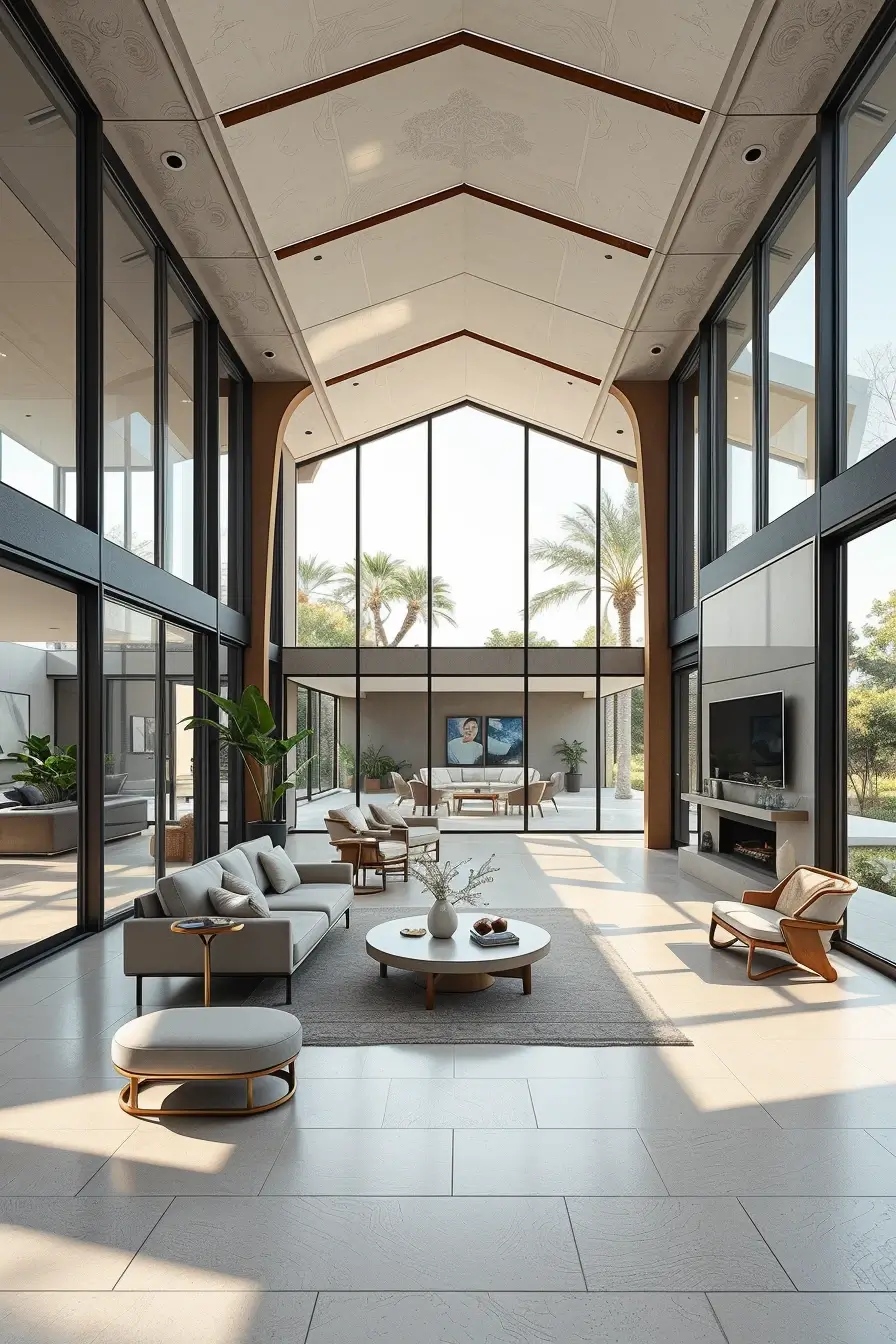
From a design standpoint, I prioritize layouts that eliminate visual and physical barriers. Modular seating systems, low-profile storage, and multifunctional zones allow the living room to expand outdoors without losing comfort or coherence. I often specify weather-resistant fabrics, stone or porcelain surfaces, and architectural shading systems that enhance durability while maintaining a refined aesthetic.
In my professional experience, this approach aligns with insights shared by Architectural Digest and Dwell, both of which emphasize adaptability and long-term usability as key markers of good design. I agree with many U.S.-based designers who note that the future of living spaces lies in flexibility and emotional comfort, not excess. A well-designed indoor–outdoor living room feels calm, intentional, and effortless.
What I would add to this concept is integrated smart climate control that responds to changing outdoor conditions automatically. Subtle heating, cooling, and ventilation systems can make these spaces truly usable in every season without disrupting the design language.
2. Seamless Transitions Between Interior And Exterior Spaces
When I design seamless transitions, my goal is to make the boundary between interior and exterior almost imperceptible. This is achieved through consistent materials, aligned sightlines, and level flooring that visually and physically connects the living room to terraces or patios. In modern indoor–outdoor living rooms, this continuity improves flow and enhances everyday usability.
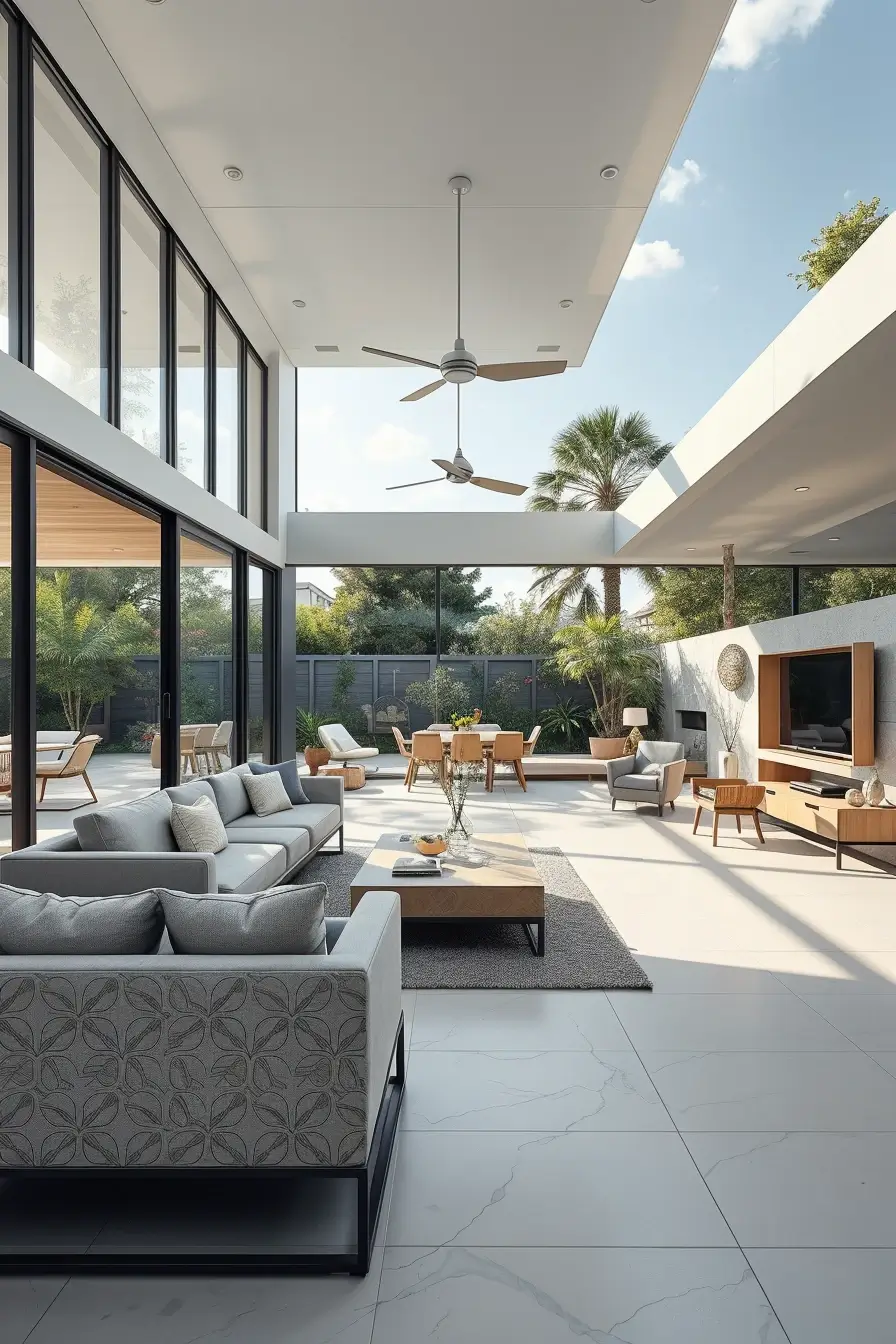
I carefully select sliding or pivoting glass wall systems, recessed floor tracks, and concealed thresholds to avoid interruptions. Furniture placement plays a crucial role as well. I often extend indoor seating arrangements outward using matching or complementary outdoor sofas, lounge chairs, and side tables to reinforce the sense of one unified space.
From my perspective, this design strategy reflects recommendations from leading U.S. architecture firms that advocate for spatial clarity and simplicity. I have seen firsthand how clients respond positively to spaces that feel open yet grounded, especially when natural light and airflow are allowed to move freely.
What is often missing here is thoughtful outdoor lighting that mirrors interior schemes. I would include dimmable, warm-toned fixtures outdoors to ensure the transition remains cohesive after sunset.
3. Curved Architectural Forms Defining Modern Living Zones
Curved architecture has become one of the most defining elements of designer indoor–outdoor living rooms in 2026. I use soft, sculptural curves to subtly define living zones without relying on walls or sharp separations. These forms guide movement naturally and create a sense of calm and fluidity across spaces.
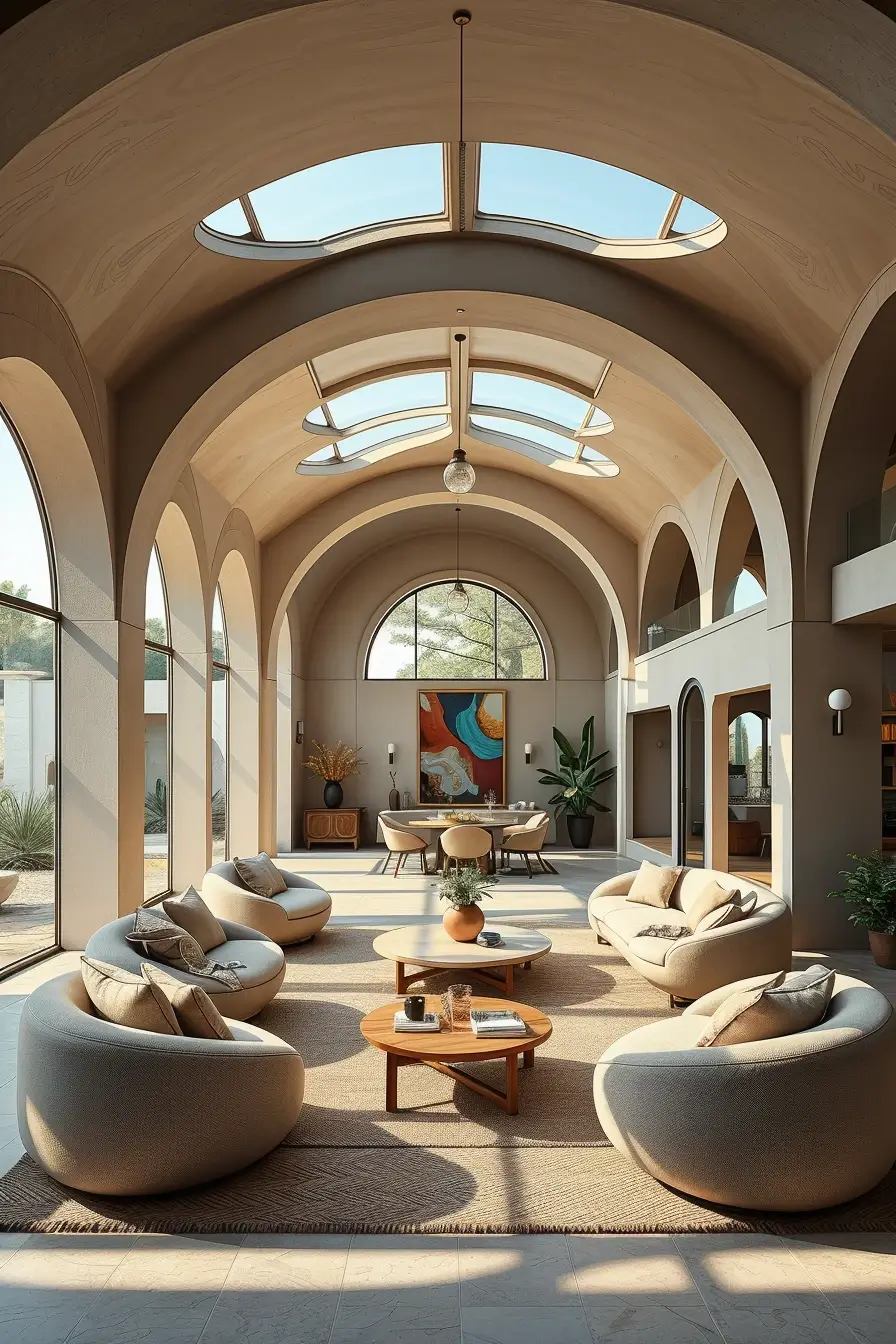
In practice, I incorporate curved walls, rounded columns, and arched openings that extend from the interior into the exterior. Built-in curved benches, sculptural fireplaces, and organically shaped planters reinforce this architectural language. These elements are not decorative alone; they help organize space while maintaining openness.
I personally appreciate how curved forms are supported by contemporary design research, including insights from Dezeen, which highlights their psychological comfort and visual softness. In my work, clients often describe curved spaces as more welcoming and intuitive, especially in shared living areas.
To enhance this concept further, I would add curved outdoor pergolas or canopies that echo interior architectural lines, strengthening the visual dialogue between inside and outside.
4. Sculptural Walls And Organic Partitions As Design Statements
Sculptural walls and organic partitions allow me to introduce artistic expression while maintaining spatial flexibility. In unique indoor–outdoor living rooms, these elements act as functional art pieces that guide circulation, provide privacy, or frame views without enclosing the space.
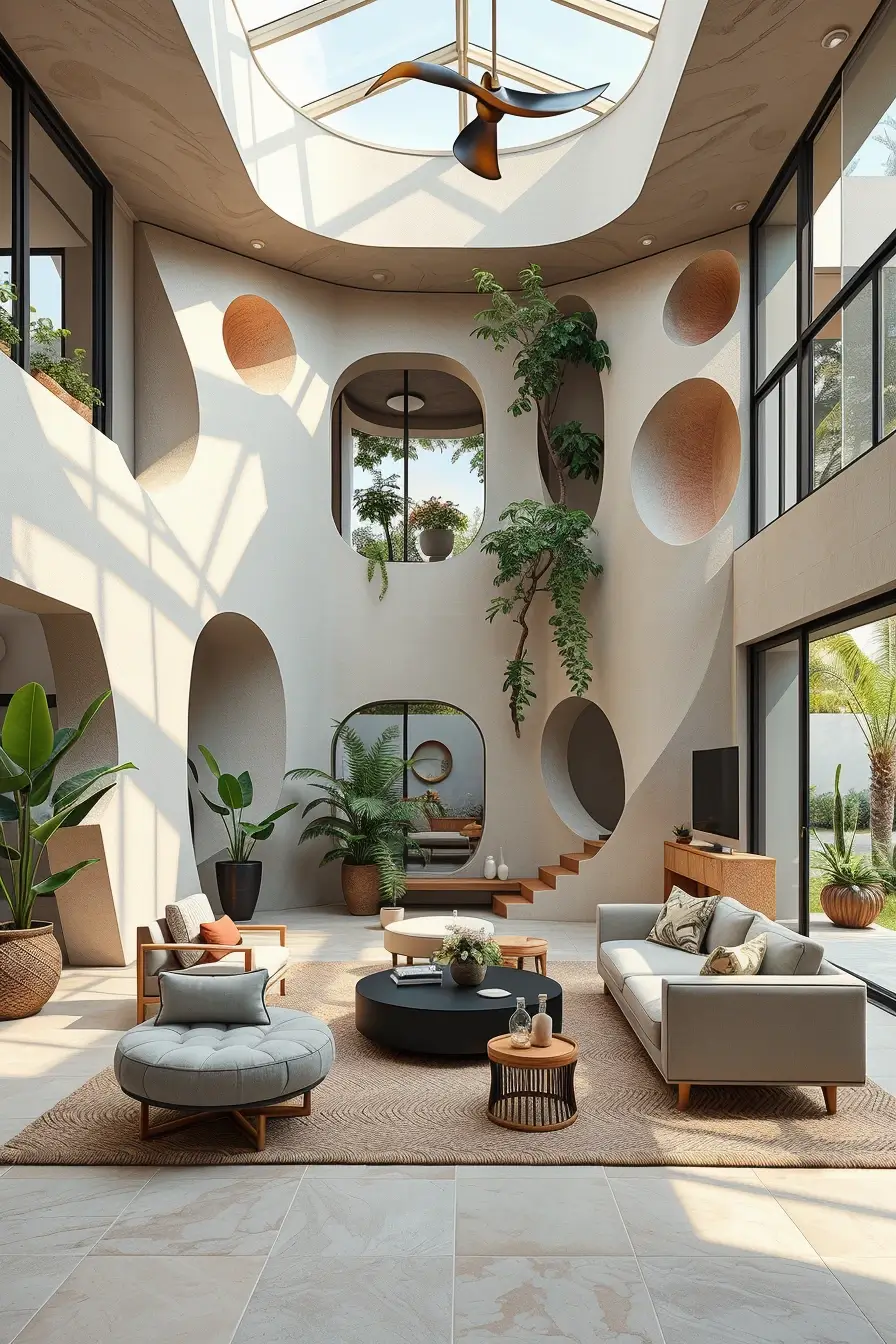
I often design partitions using textured plaster, ribbed concrete, or layered wood slats that continue outdoors. These surfaces interact beautifully with natural light and shadows, adding depth and movement throughout the day. Their organic shapes soften transitions and reduce the need for traditional walls.
From my professional standpoint, this approach aligns with the growing emphasis on tactile materials discussed in Interior Design Magazine. I find that sculptural partitions elevate the emotional quality of a space, making it feel curated rather than constructed.
What I would add here is integrated greenery within these partitions. Vertical planting or встроенные кашпо can enhance the organic feel and strengthen the connection to nature.
5. Artistic Floor Continuity From Living Room To Terrace
Floor continuity is one of the most effective tools I use to visually unify indoor and outdoor areas. In artistic indoor–outdoor living rooms, extending the same flooring material from the living room to the terrace creates a strong sense of cohesion and spatial expansion.
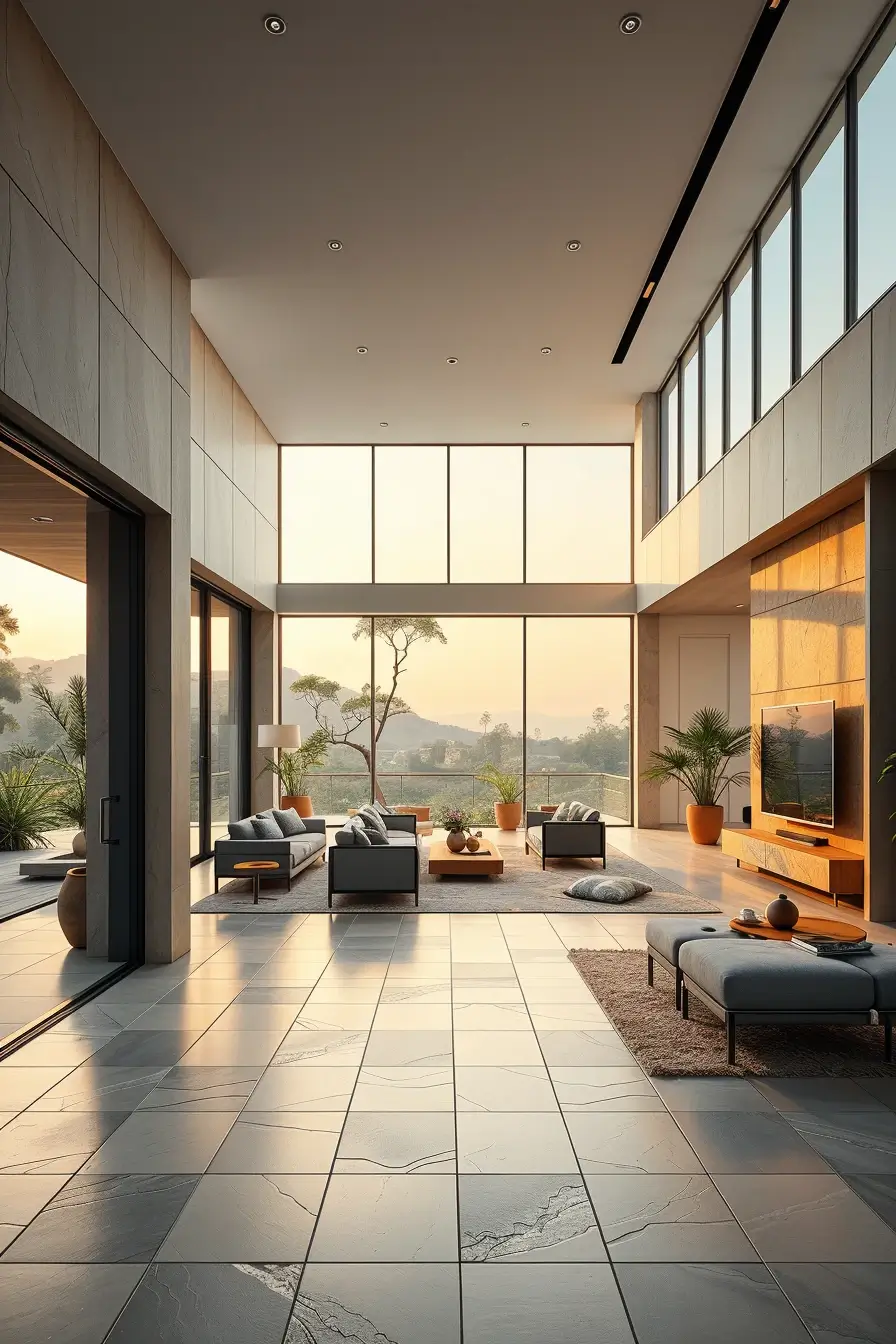
I typically specify large-format porcelain tiles, natural stone, or high-performance composite materials that perform well in both environments. The key is consistency in color, texture, and joint alignment. This approach not only looks refined but also simplifies maintenance and improves accessibility.
Based on my experience and guidance from U.S. design professionals, continuous flooring enhances perceived space and supports minimalist, modern layouts. I have seen how this simple decision dramatically improves the overall impact of a living area.
To complete this section, I would recommend incorporating subtle floor-level lighting outdoors. This detail highlights textures at night and reinforces continuity after dark.
6. Glass Architecture That Dissolves Boundaries With Nature
When I work with glass architecture in indoor–outdoor living room 2026 concepts, my main objective is to visually dissolve the boundary between the built environment and nature. Expansive glazing systems allow landscapes, courtyards, or gardens to become an active part of the living room experience. This approach enhances daylight, improves spatial perception, and supports a strong emotional connection to the outdoors.
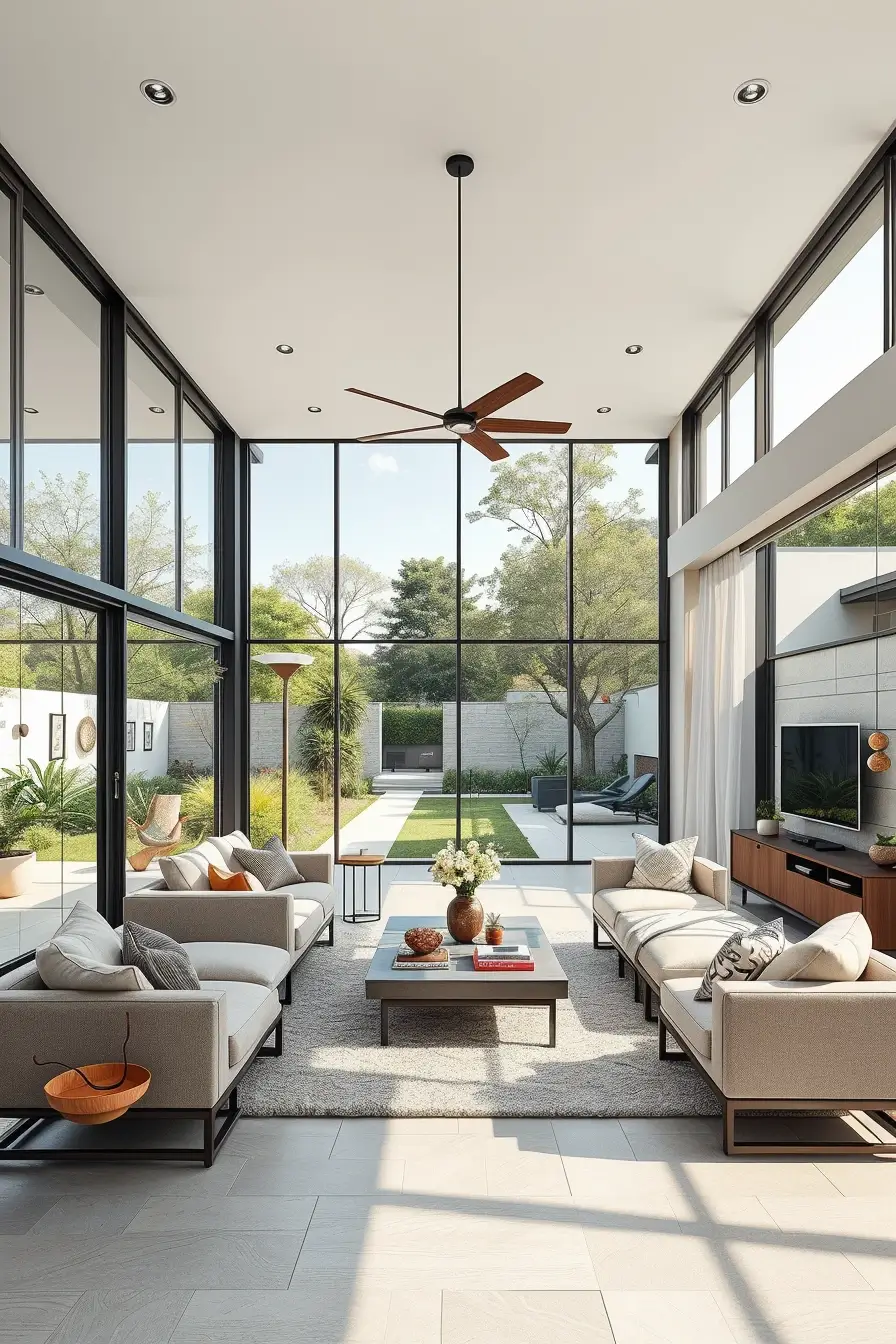
I usually specify floor-to-ceiling glass walls, corner glazing without visible frames, and retractable glass panels that fully open when needed. These systems are combined with high-performance coatings for thermal control and privacy. The glass itself becomes a design element, framing views while maintaining comfort and energy efficiency.
From my professional perspective, this aligns with recommendations from leading U.S. architectural studios and publications like Dwell, which emphasize transparency and visual continuity as defining features of future residential design. I have seen how clients feel more relaxed and engaged when their living space visually extends into greenery or open sky.
What I would add to this section is the integration of automated shading systems. Smart blinds or external louvers are essential to control glare and heat while preserving the openness that glass architecture provides.
7. Designer Curved Sofas For Fluid Indoor–Outdoor Layouts
Curved sofas are one of the most effective tools I use to support fluid layouts in modern indoor–outdoor living rooms. Their shape naturally encourages movement and conversation while echoing the architectural curves often present in these spaces. Unlike rigid, linear seating, curved sofas adapt well to open-plan environments that flow outdoors.
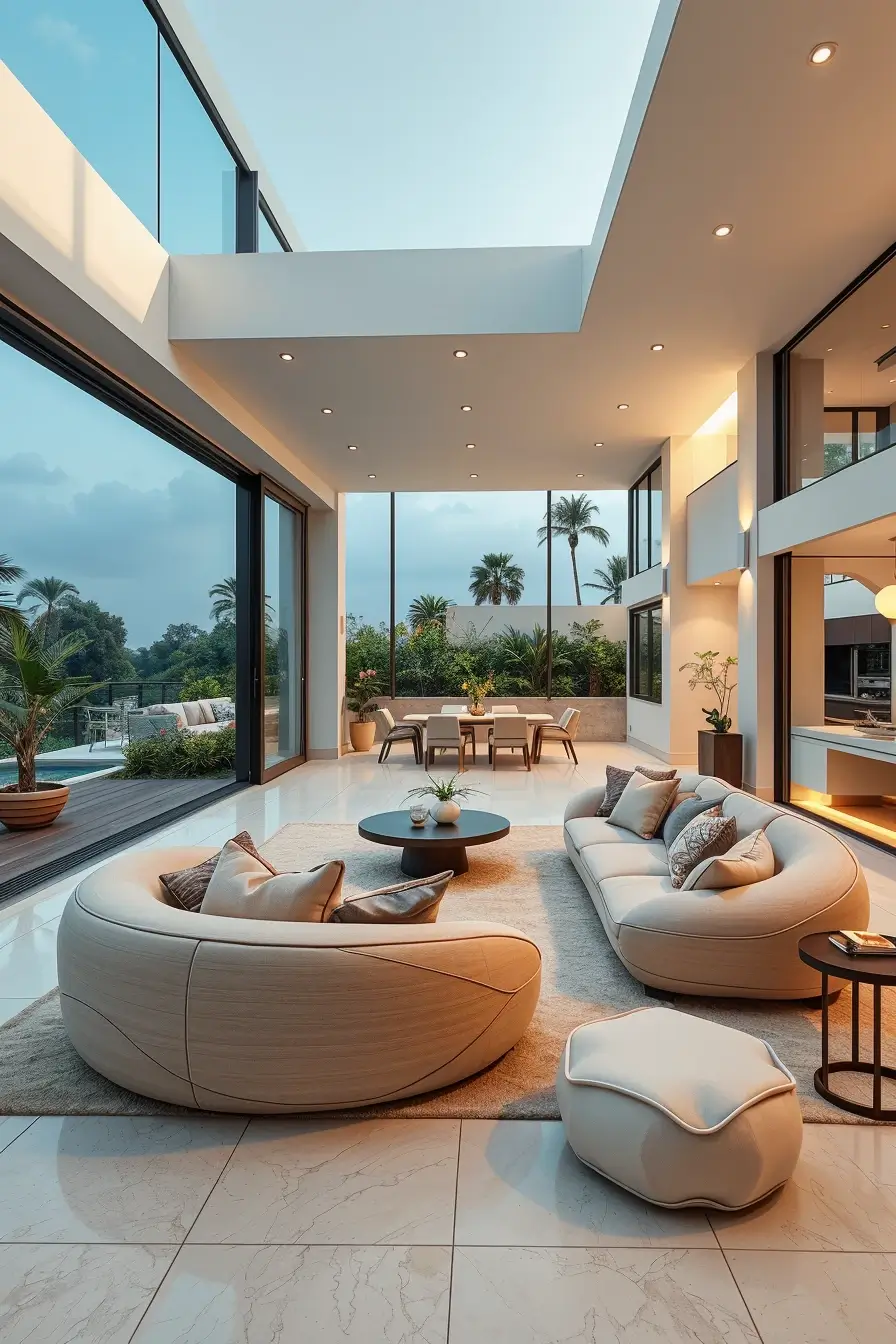
I focus on modular, designer-grade curved sofas upholstered in durable, performance fabrics suitable for both interior and covered exterior use. These pieces often anchor the living zone, helping define space without walls. Paired with low sculptural tables and flexible lounge chairs, they create a balanced and inviting arrangement.
In my experience, designers featured in Architectural Digest frequently highlight curved seating as a way to soften modern interiors and enhance human interaction. I fully agree, as curved sofas consistently improve spatial harmony and comfort in my projects.
What could strengthen this concept further is the addition of movable accent seating that mirrors the sofa’s curves. This allows layouts to shift easily depending on how the space is used.
8. Statement Furniture As Functional Art Pieces
In unique indoor–outdoor living rooms, statement furniture plays a dual role as both functional necessity and artistic expression. I treat these pieces as focal points that elevate the entire space while remaining practical for everyday use. The key is selecting designs that feel sculptural without overpowering the room.
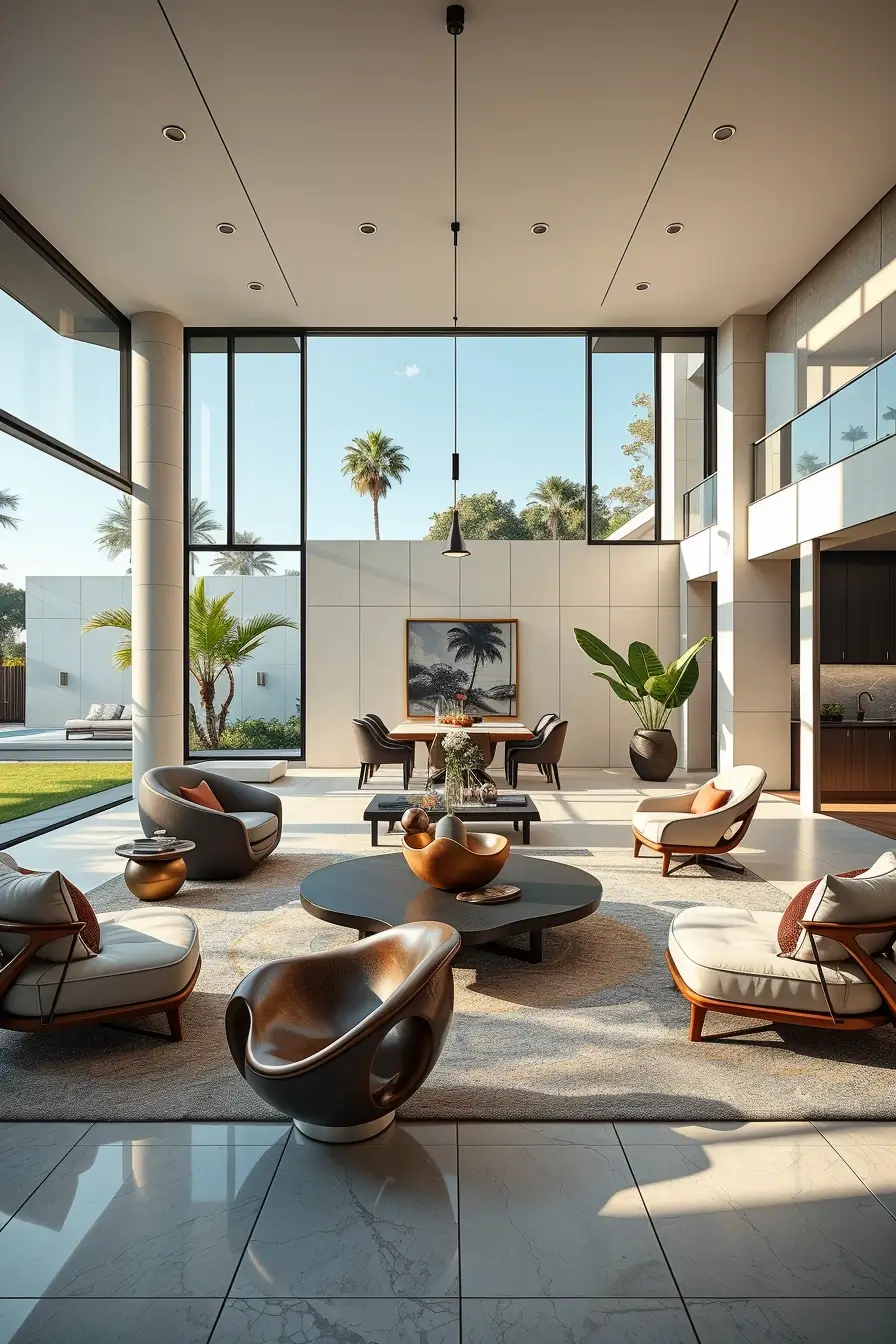
I often incorporate handcrafted lounge chairs, monolithic coffee tables, or custom shelving units made from stone, wood, or composite materials. Each piece is chosen for its form, texture, and proportion, ensuring it complements the surrounding architecture. Outdoors, I extend this idea with sculptural benches or tables designed to withstand weather exposure.
From my professional viewpoint, this approach reflects the growing influence of collectible design discussed in Interior Design Magazine. I have found that thoughtfully chosen statement furniture gives clients a stronger emotional connection to their space.
What I would add here is better coordination between indoor and outdoor statement pieces. Using related materials or forms across both zones reinforces visual continuity.
9. Indoor–Outdoor Living Rooms With Gallery-Inspired Styling
Gallery-inspired styling allows me to introduce a curated, artistic atmosphere into designer indoor–outdoor living rooms. Instead of traditional decoration, I focus on composition, negative space, and intentional placement. This creates a refined environment that feels calm yet expressive.
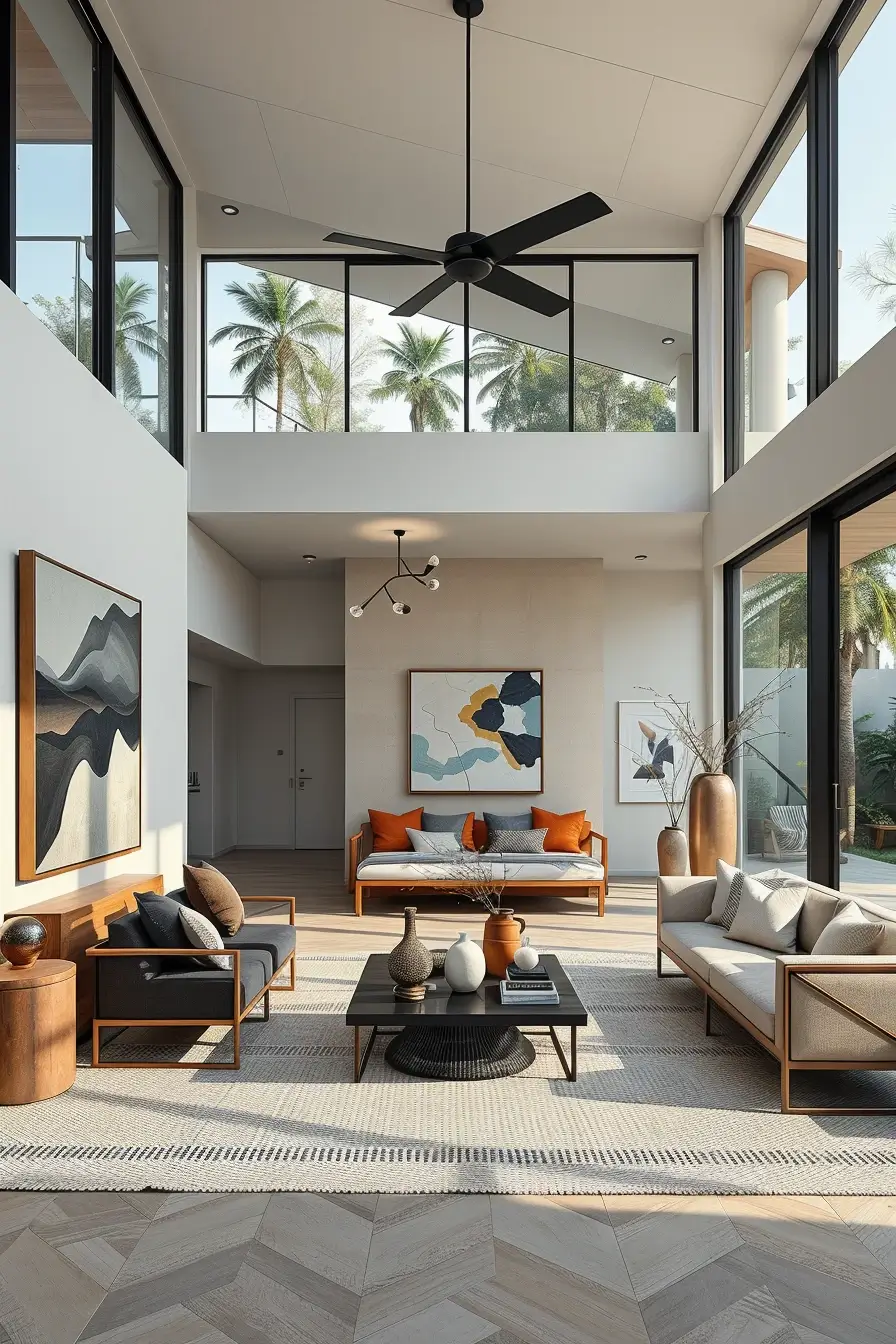
I treat walls, partitions, and even outdoor facades as display surfaces for large-scale artwork or sculptural objects. Furniture is arranged to support clear sightlines, much like in a gallery setting. Neutral backgrounds, controlled color palettes, and strategic lighting ensure each element has room to breathe.
Personally, I draw inspiration from museum-like residential projects featured in Dezeen and similar platforms. I believe this styling approach works particularly well in indoor–outdoor spaces because it prevents visual clutter while highlighting architectural beauty.
What I would add to enhance this concept is adjustable lighting that can shift focus between art and architecture depending on time of day or mood.
10. Original Ceiling Designs That Flow Outdoors
Ceiling design is often overlooked, but in creative indoor–outdoor living rooms, it becomes a critical unifying element. I design ceilings that visually extend from the interior to the exterior, reinforcing continuity and architectural intent. This approach makes the entire space feel cohesive and thoughtfully designed.
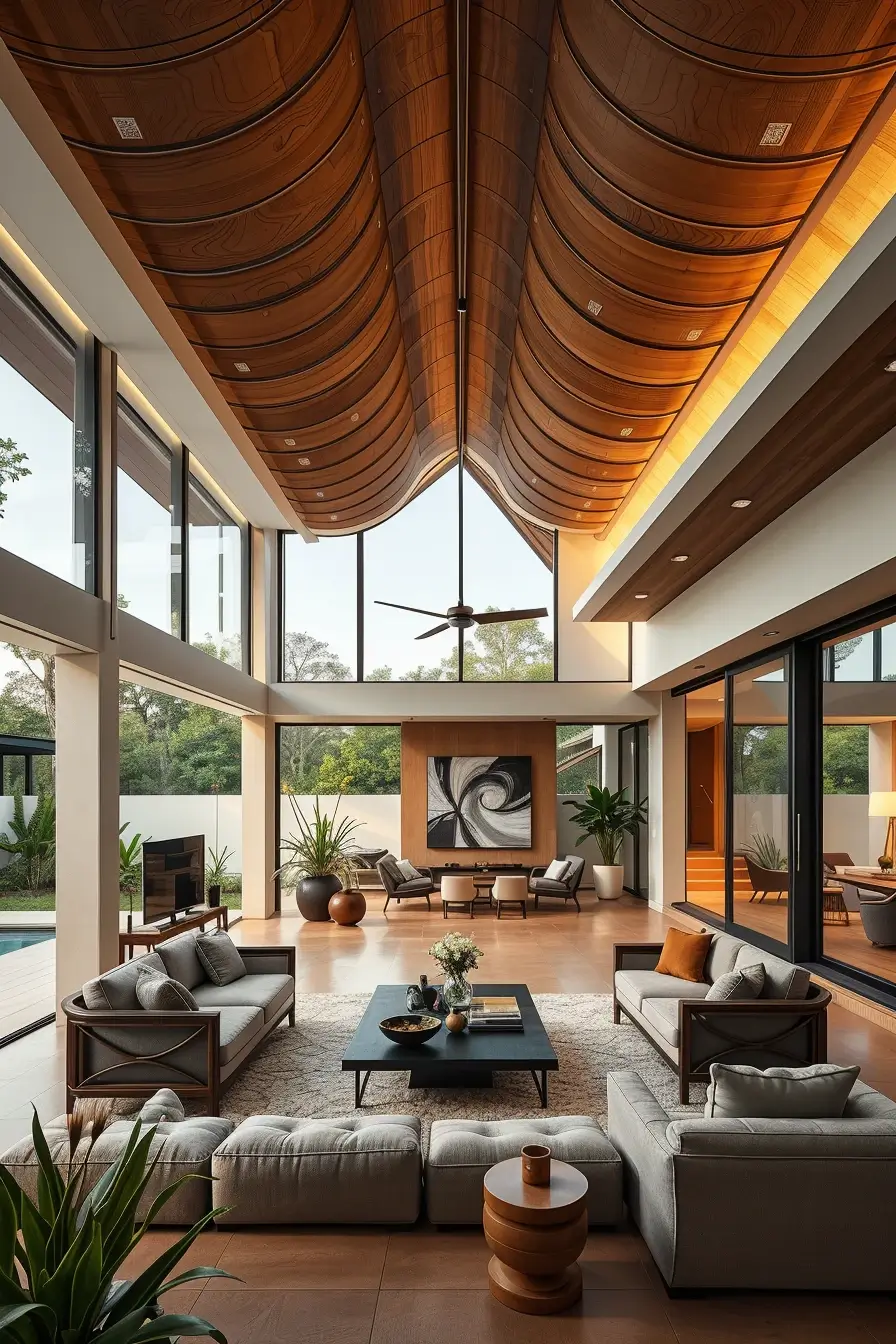
I commonly use wood slats, textured panels, or smooth sculptural surfaces that continue beyond glass walls into covered terraces. Integrated lighting, such as recessed lines or concealed LED strips, enhances depth and highlights ceiling geometry without distraction.
Based on my experience and guidance from U.S. design professionals, a well-designed ceiling can significantly elevate spatial quality. I have seen how clients respond positively when overhead elements feel intentional rather than purely functional.
To complete this section, I would recommend incorporating acoustic treatments into ceiling designs. This improves comfort, especially in large open spaces that blend indoors and outdoors.
11. Sculptural Lighting Concepts For Day-To-Night Living
I approach sculptural lighting as one of the most practical yet expressive tools in an indoor–outdoor living room. In 2026, lighting is no longer purely functional but acts as a visual connector between interior and exterior zones. I design lighting layouts that evolve throughout the day, providing soft ambient illumination in the morning and layered, atmospheric light in the evening, ensuring the space remains usable and inviting at all hours.
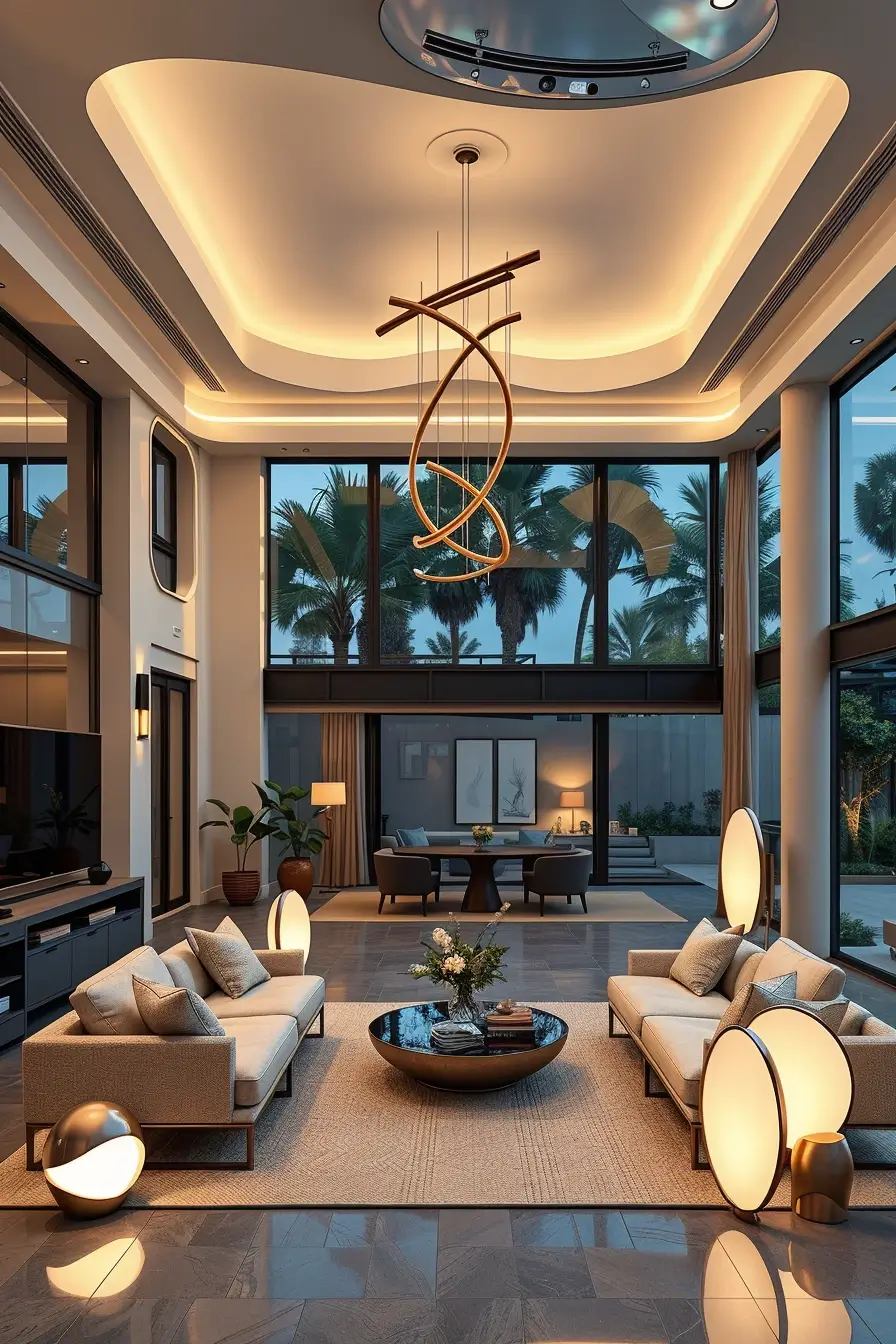
I carefully select lighting elements with curved, organic silhouettes, including suspended sculptural pendants, integrated LED coves, and freestanding outdoor floor lamps. These fixtures help define seating areas, guide circulation, and emphasize architectural features without overwhelming the space. Materials like frosted glass, matte metal, and translucent stone allow light to feel diffused and natural, which is essential for maintaining harmony between indoor comfort and outdoor openness.
From my experience, designers frequently emphasize adaptive lighting systems. Architectural Digest and Interior Design Magazine have highlighted the importance of dimmable and smart-controlled lighting to support flexible lifestyles. I agree with this approach, as it allows homeowners to adjust mood and function seamlessly without altering the layout itself.
What I would add to this section is a stronger focus on integrating lighting controls into architectural elements such as built-in seating or pergola structures, ensuring technology remains visually discreet while enhancing usability.
12. Natural Light As A Core Design Element In 2026
I treat natural light as a primary design material rather than a secondary consideration. In indoor–outdoor living rooms for 2026, I prioritize layouts that maximize daylight penetration while controlling glare and heat. Large openings, thoughtful orientation, and layered shading solutions allow the space to feel open and comfortable throughout the year.
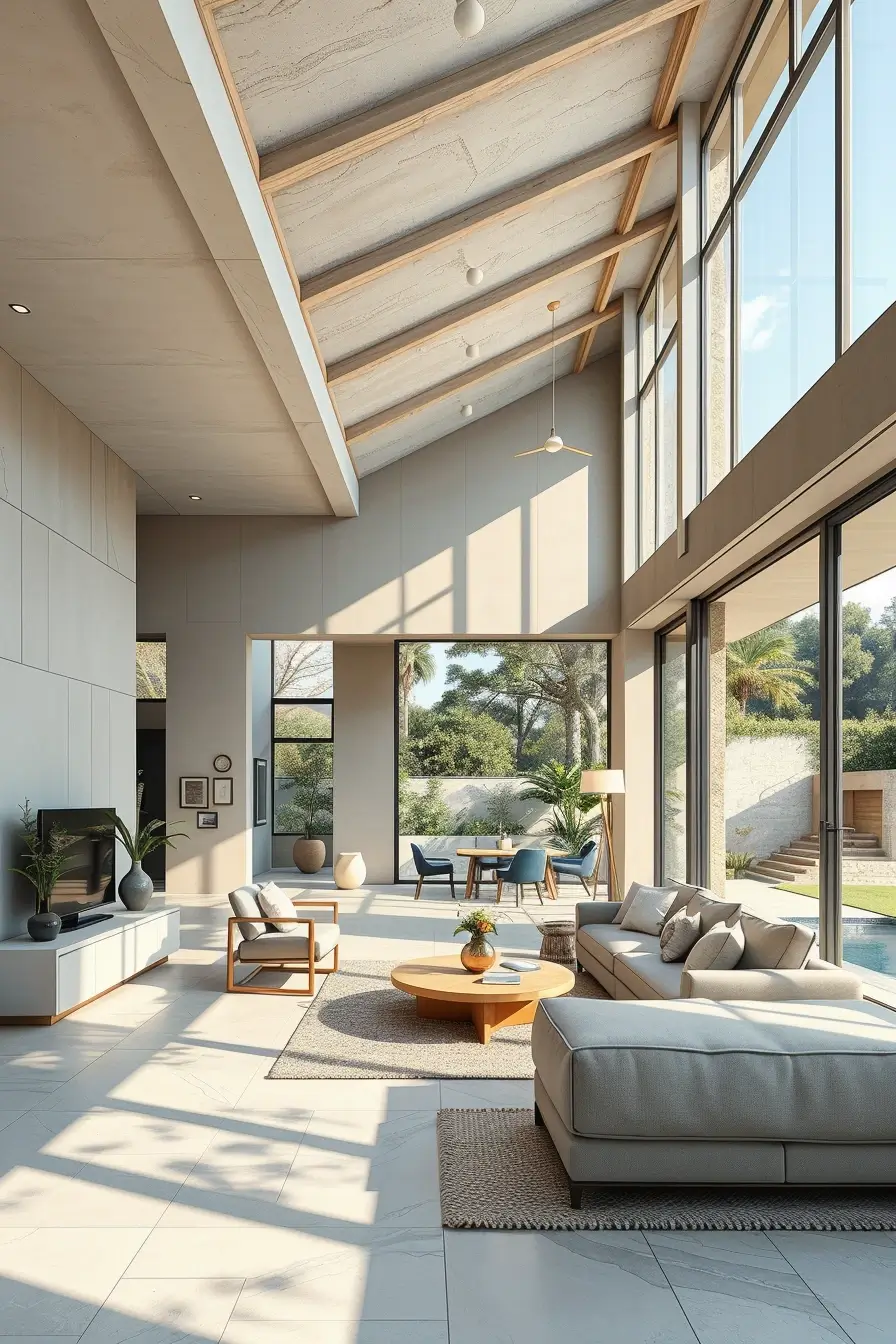
I incorporate floor-to-ceiling glazing, clerestory windows, and open-air transitions that allow sunlight to travel deep into the interior. Furniture placement is intentional, with low-profile seating and sculptural tables that do not block light paths. I often use light-reflective surfaces such as polished plaster, stone, or subtle metallic finishes to amplify daylight without creating harsh reflections.
Based on my professional practice, many US-based designers now emphasize circadian-friendly interiors. Publications like Dwell note that natural light improves both wellbeing and spatial perception. I have found that clients respond positively to spaces that feel energized during the day and calm in the evening without relying heavily on artificial lighting.
To strengthen this section, I would recommend including adjustable exterior shading systems such as movable louvers or retractable canopies to better control seasonal light variations.
13. Organic Shapes Influencing Furniture And Architecture
I see organic shapes as a defining characteristic of the indoor–outdoor living room 2026. These forms soften transitions and reduce the visual rigidity often associated with modern architecture. Curved walls, rounded platforms, and fluid spatial layouts create a sense of movement that feels intuitive rather than imposed.
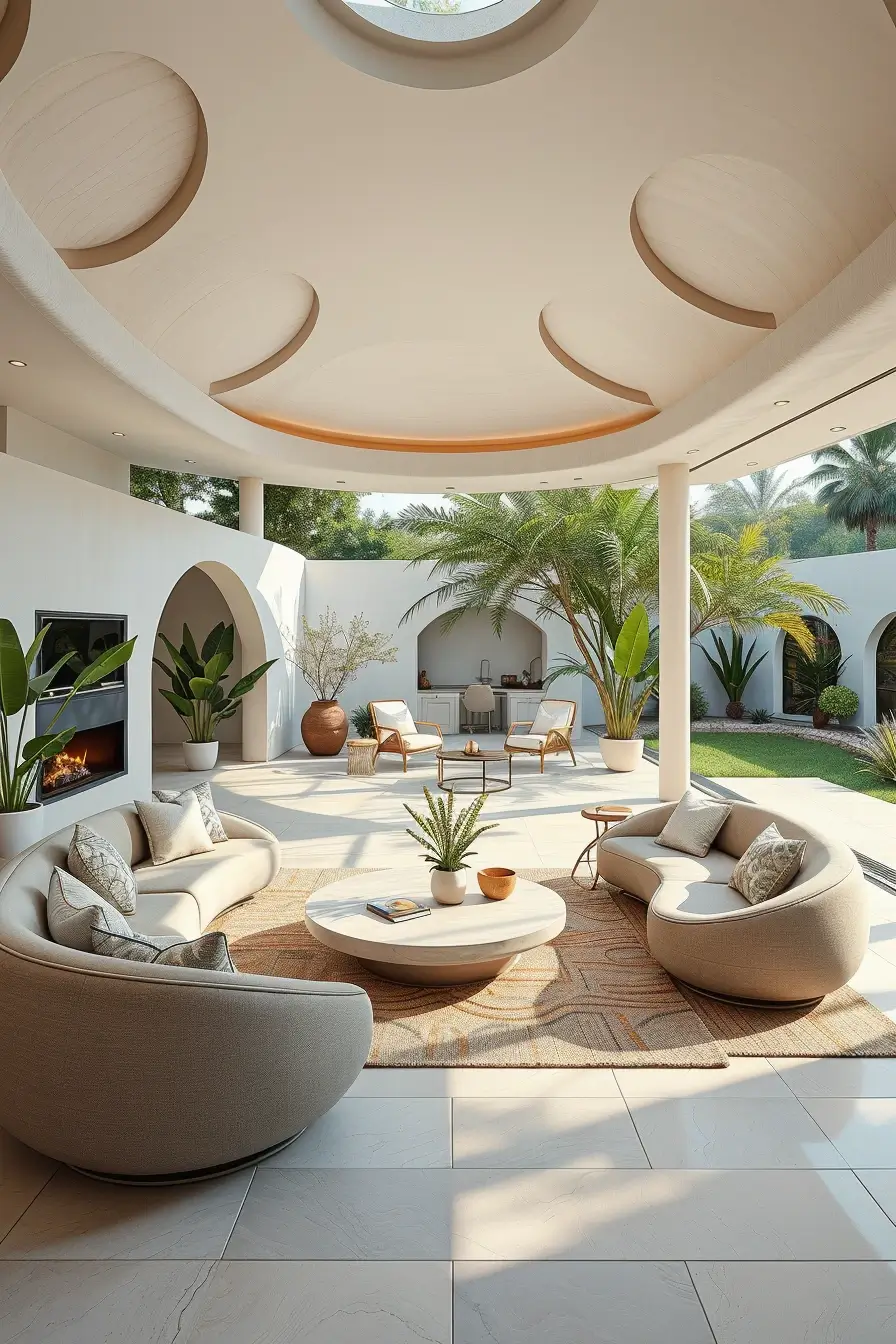
I select furniture with sculptural curves, including rounded sectionals, oval coffee tables, and organically contoured lounge chairs. Architectural elements such as arched openings or curved ceiling planes echo these forms, creating visual continuity between built-in features and movable furnishings. Materials like wood, upholstered textiles, and molded composites reinforce the tactile quality of these shapes.
From my perspective, this approach aligns with insights from designers featured in Dezeen, who emphasize that curved design enhances comfort and emotional connection to space. I have personally observed that clients feel more relaxed and engaged in environments that avoid sharp angles and strict symmetry.
What could be added here is a deeper exploration of custom-made furniture pieces, as bespoke solutions allow organic forms to be tailored precisely to spatial constraints and lifestyle needs.
14. Indoor–Outdoor Living Rooms With Artistic Fire Features
I use artistic fire features as focal points that anchor indoor–outdoor living rooms both visually and functionally. In 2026, fire elements are less about traditional fireplaces and more about sculptural installations that provide warmth, ambiance, and identity to the space.
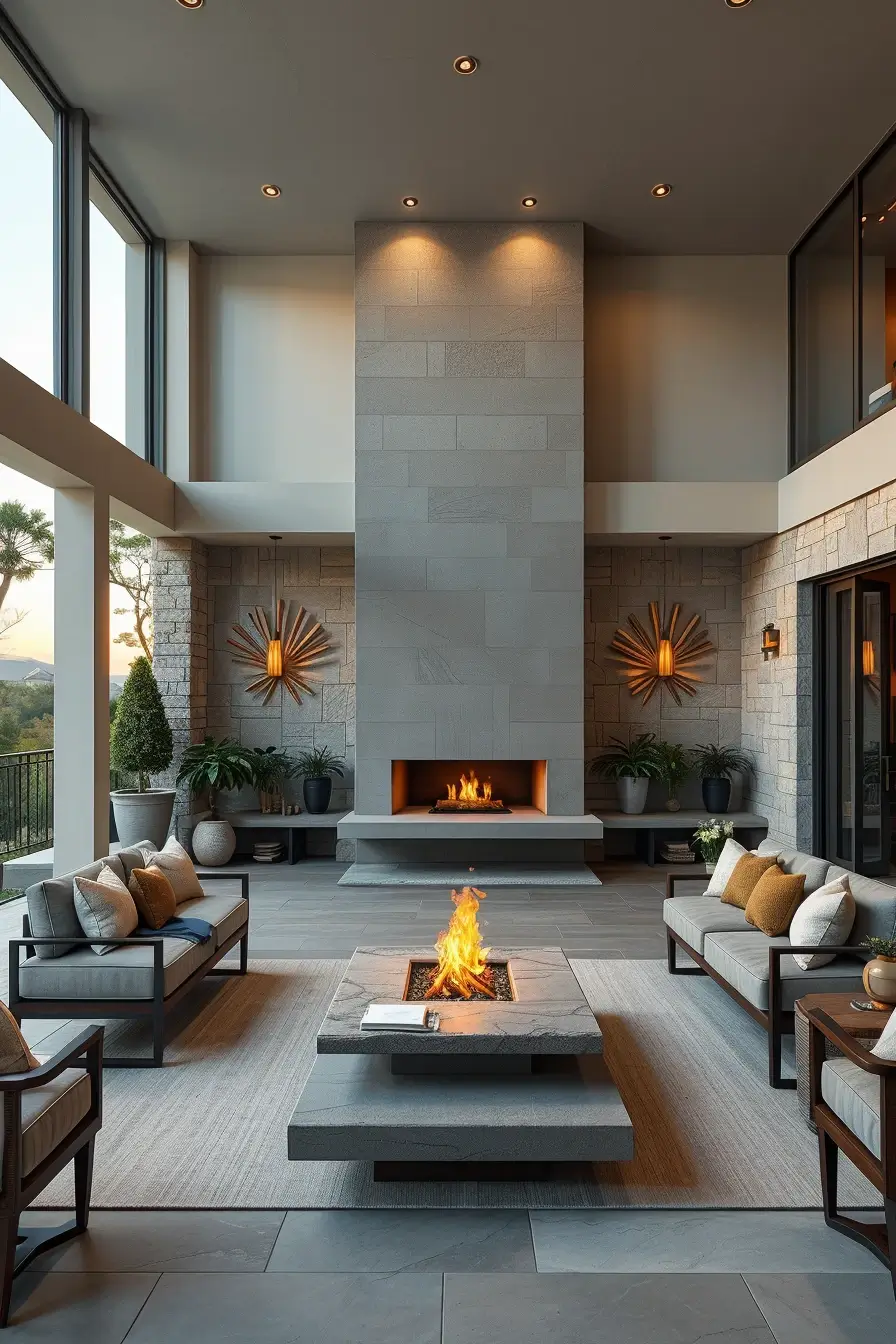
I often integrate linear fire pits, suspended fireplaces, or sculptural concrete fire bowls that can be viewed from both inside and outside. These elements encourage gathering and naturally define seating zones. Materials such as stone, plaster, and heat-resistant glass help maintain a refined aesthetic while ensuring durability across environments.
In my experience, fire features are frequently highlighted by designers in publications like Architectural Digest as essential for extending outdoor usability into cooler seasons. I find that when designed thoughtfully, they enhance both comfort and perceived luxury without overpowering the space.
To complete this concept, I would recommend incorporating subtle fire-adjacent lighting and integrated seating to ensure safety and visual balance after dark.
15. Curved Sliding Doors And Innovative Opening Systems
I consider curved sliding doors and innovative opening systems to be essential for achieving seamless indoor–outdoor integration. These systems allow spaces to transform effortlessly, supporting flexible living without sacrificing comfort or energy efficiency.
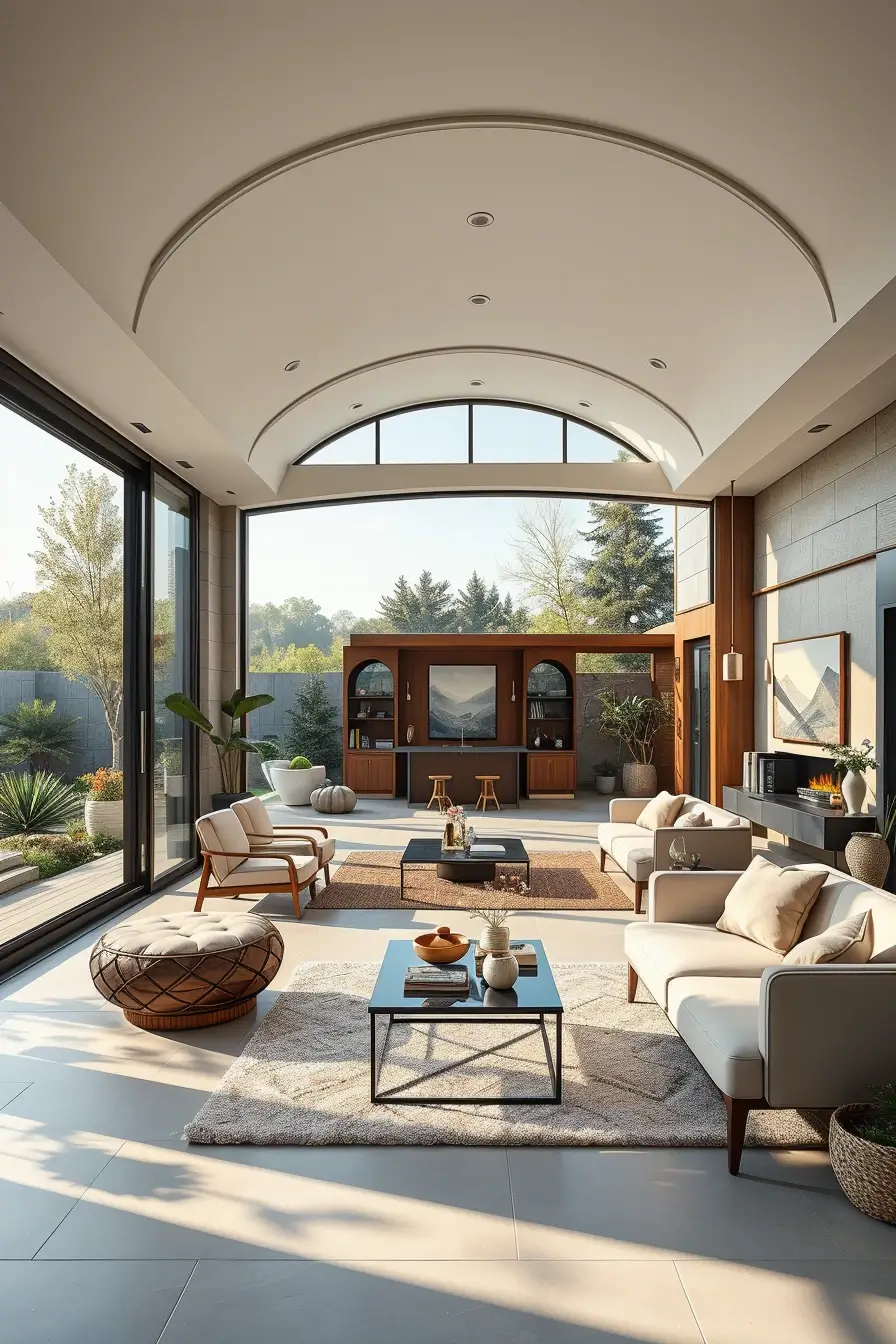
I specify large-scale curved glass panels, pivot doors, and recessed track systems that visually disappear when open. Frames are minimal, often finished in matte metal or color-matched tones to blend with surrounding architecture. These solutions ensure uninterrupted views while maintaining thermal and acoustic performance.
From my professional standpoint, manufacturers featured in Interior Design Magazine emphasize advancements in glazing technology that allow for larger spans and smoother operation. I have found that investing in high-quality systems significantly improves daily usability and long-term satisfaction.
What I would add is a stronger focus on threshold detailing, ensuring flooring transitions remain flush and safe while preserving visual continuity between interior and exterior surfaces.
16. Modern Material Blends For Interior And Exterior Harmony
I see material continuity as a critical factor in creating a convincing indoor–outdoor living room in 2026. When interior and exterior materials visually and tactilely relate to each other, the transition feels intentional rather than forced. I design these spaces so that materials flow naturally, supporting both durability and aesthetic cohesion across zones.
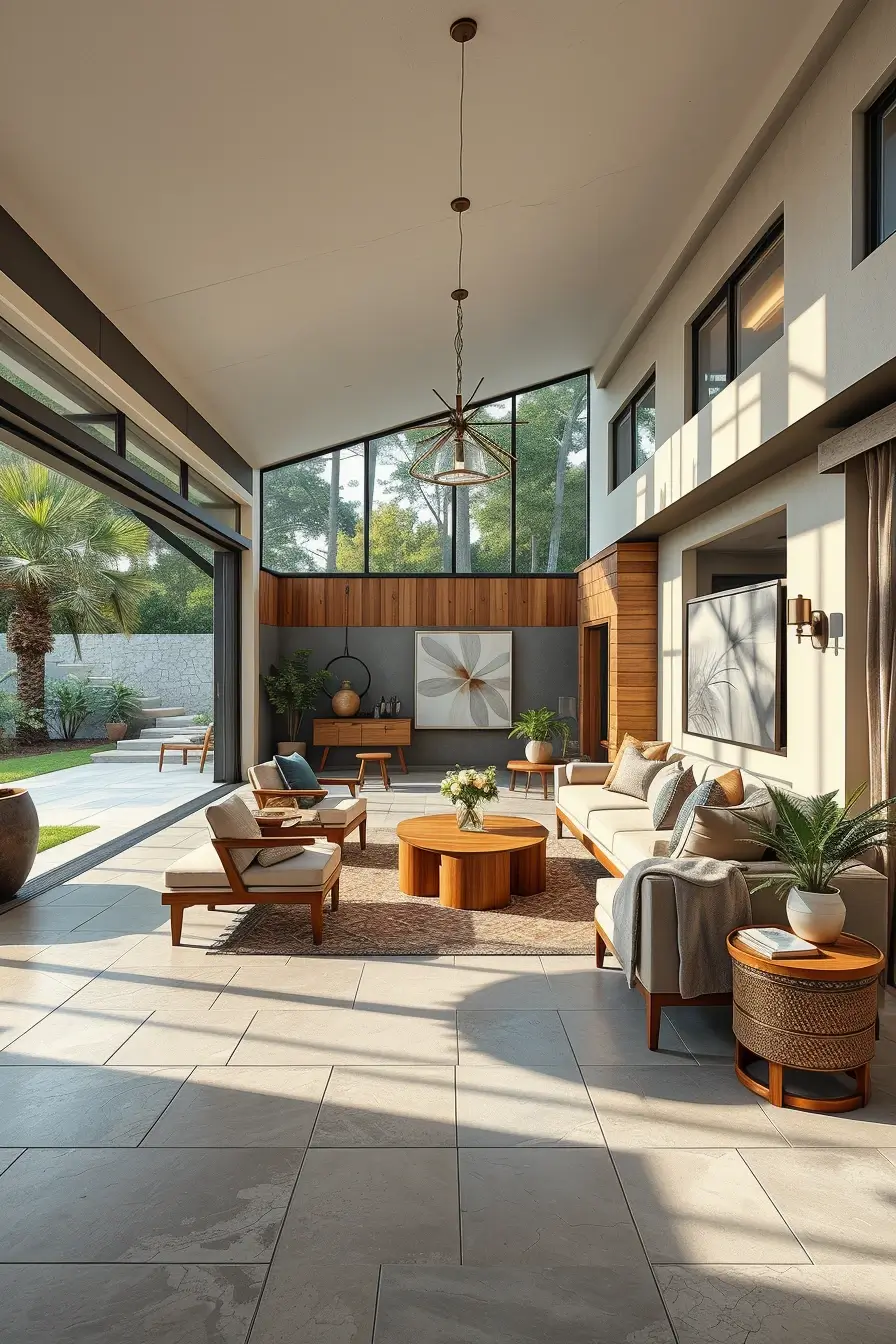
I typically combine large-format stone, architectural concrete, treated wood, and high-performance composites that perform well indoors and outdoors. Flooring often extends seamlessly from the interior living room to the terrace, while wall finishes echo similar textures with adjusted technical specifications. Furniture materials are selected to complement this palette, ensuring consistency without repetition.
From my professional experience, leading US designers featured in Interior Design Magazine emphasize material storytelling as a core principle of modern design. I have found that clients appreciate spaces where materials feel honest and unified, reinforcing a sense of calm and visual clarity.
What I would add here is greater emphasis on testing samples in real lighting conditions, as material perception can shift significantly between interior and exterior environments.
17. Textural Contrast Between Soft Interiors And Raw Outdoor Surfaces
I intentionally use textural contrast to define zones while preserving openness in indoor–outdoor living rooms. In 2026, contrast is less about color and more about how surfaces feel and interact. This approach allows each area to maintain its identity while contributing to a cohesive whole.
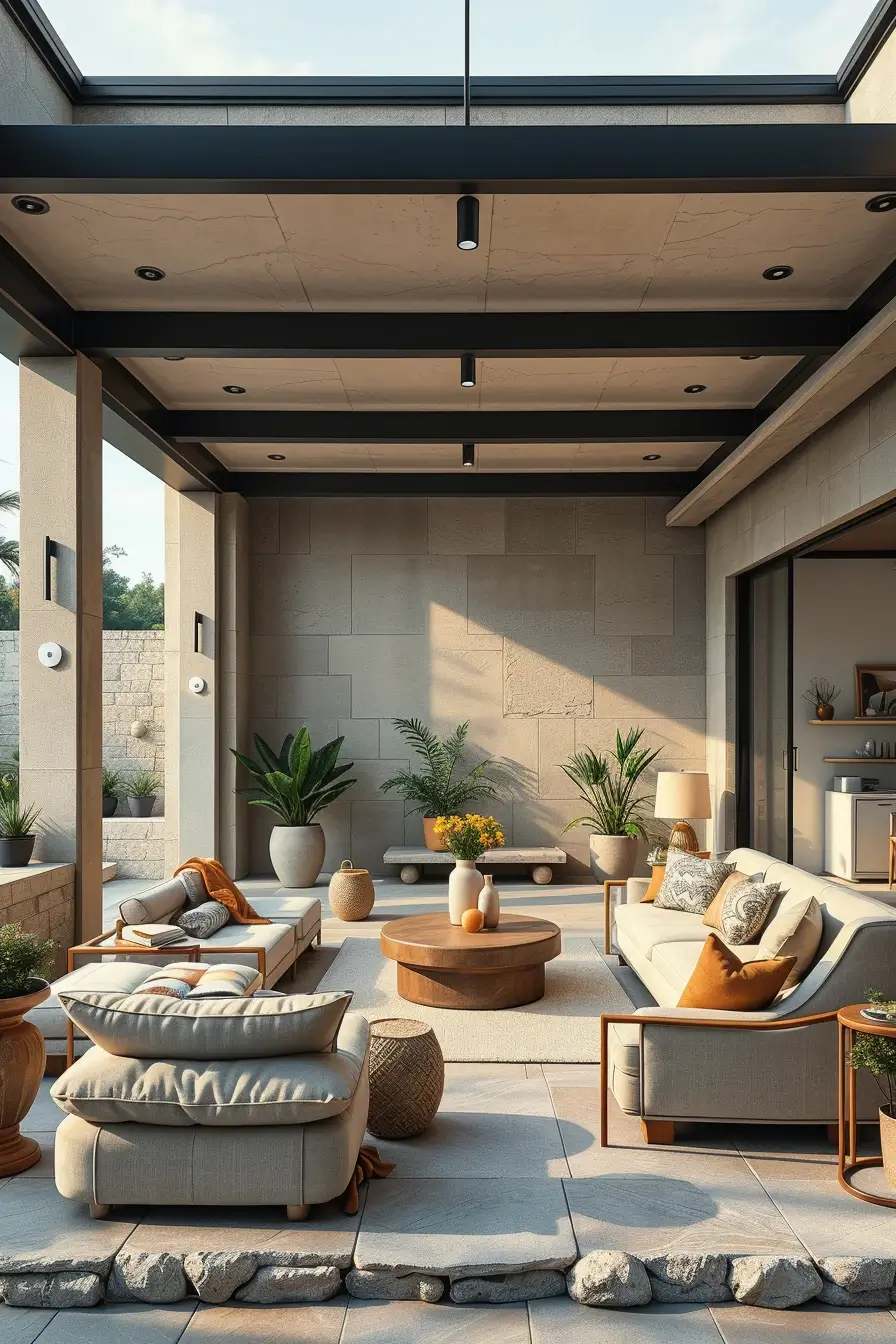
Inside, I rely on soft textiles, upholstered seating, and refined finishes that enhance comfort and acoustic performance. Outdoors, I contrast this softness with raw materials such as textured stone, brushed concrete, or ribbed plaster walls. These differences subtly signal transitions without the need for physical barriers.
Based on my experience, publications like Dwell consistently highlight texture as a key sensory element in contemporary living spaces. I agree with this perspective, as textural contrast enriches spatial experience and prevents minimalist designs from feeling flat or impersonal.
To strengthen this section, I would suggest incorporating layered outdoor textiles, such as weather-resistant rugs or cushions, to soften exterior zones without compromising durability.
18. Unique Indoor–Outdoor Living Rooms With Sculptural Columns
I use sculptural columns as both structural and artistic elements in indoor–outdoor living rooms. In 2026, columns are no longer hidden or purely functional but are designed to enhance spatial rhythm and visual interest. They help organize open layouts while reinforcing architectural identity.
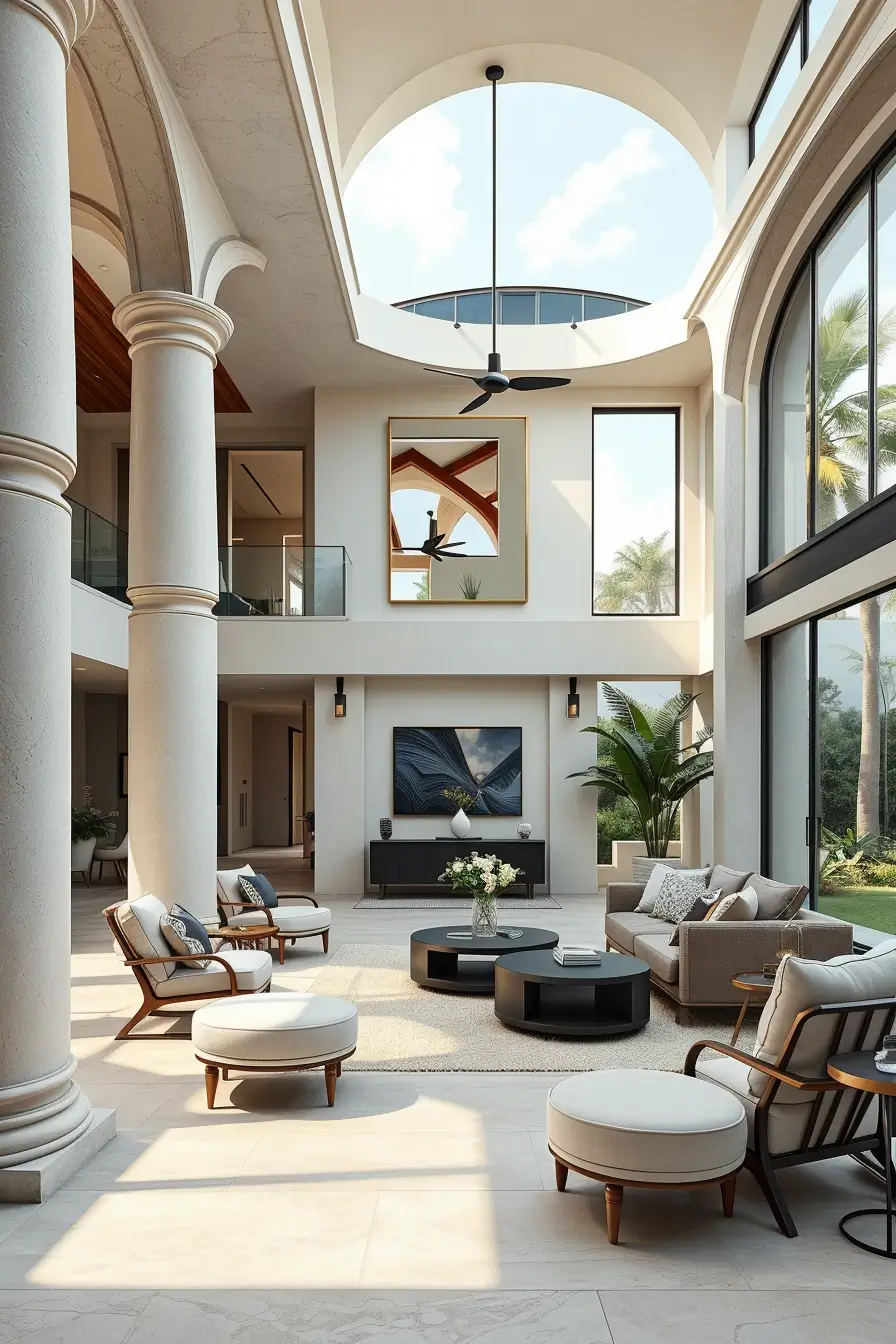
I design columns with rounded profiles, custom finishes, or integrated lighting to ensure they contribute aesthetically. Positioned strategically, they frame seating areas, support roof structures, or guide movement between interior and exterior spaces. Materials such as plaster, stone, or smooth concrete allow columns to feel sculptural rather than heavy.
From my professional standpoint, designers featured in Architectural Digest increasingly use expressive structural elements to define modern luxury spaces. I have observed that clients respond positively to columns that feel intentional and artistic rather than structural necessities.
What could be added here is the integration of built-in shelving or seating into column designs, enhancing functionality while preserving sculptural quality.
19. Artistic Use Of Stone, Concrete, And Plaster Finishes
I consider stone, concrete, and plaster essential materials for creating artistic indoor–outdoor living rooms in 2026. These finishes offer durability while allowing for expressive forms and subtle surface variation. I use them to create spaces that feel grounded yet refined.
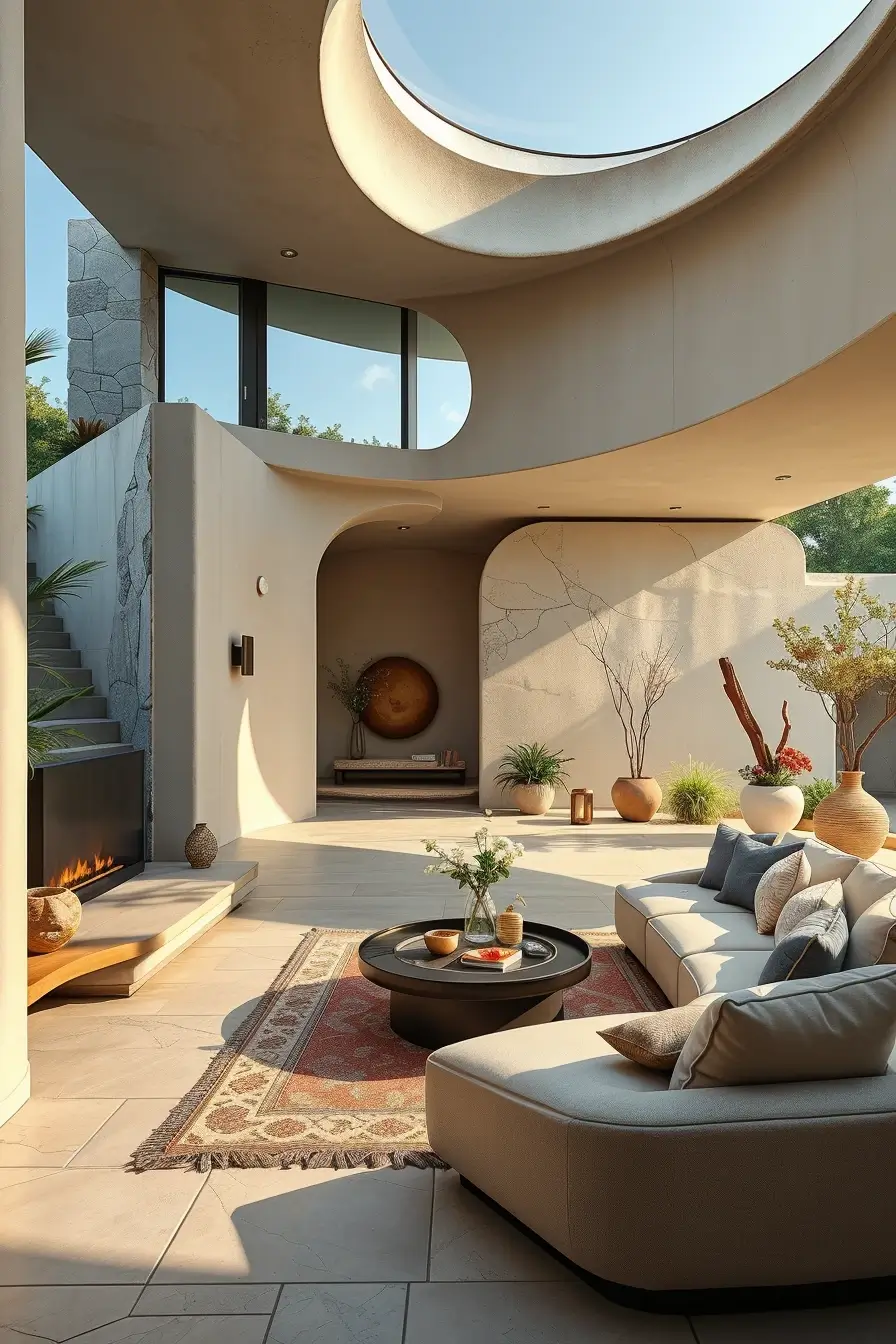
I often apply plaster to curved walls, use concrete for integrated seating or platforms, and select stone with natural veining for feature surfaces. These materials work together to create depth and character without relying on excessive decoration. Furniture and decor are chosen to complement these finishes rather than compete with them.
In my experience, US-based designers frequently emphasize craftsmanship when working with these materials. According to Interior Design Magazine, hand-applied finishes add authenticity and uniqueness to modern interiors. I fully support this approach, as it results in spaces that feel bespoke and timeless.
To complete this section, I would recommend highlighting maintenance strategies, ensuring clients understand how to preserve the beauty of these materials over time.
20. Designer Color Palettes Inspired By Nature And Art
I approach color palettes in indoor–outdoor living rooms as emotional tools rather than decorative afterthoughts. In 2026, designers increasingly draw inspiration from natural landscapes and contemporary art to create spaces that feel expressive yet balanced.
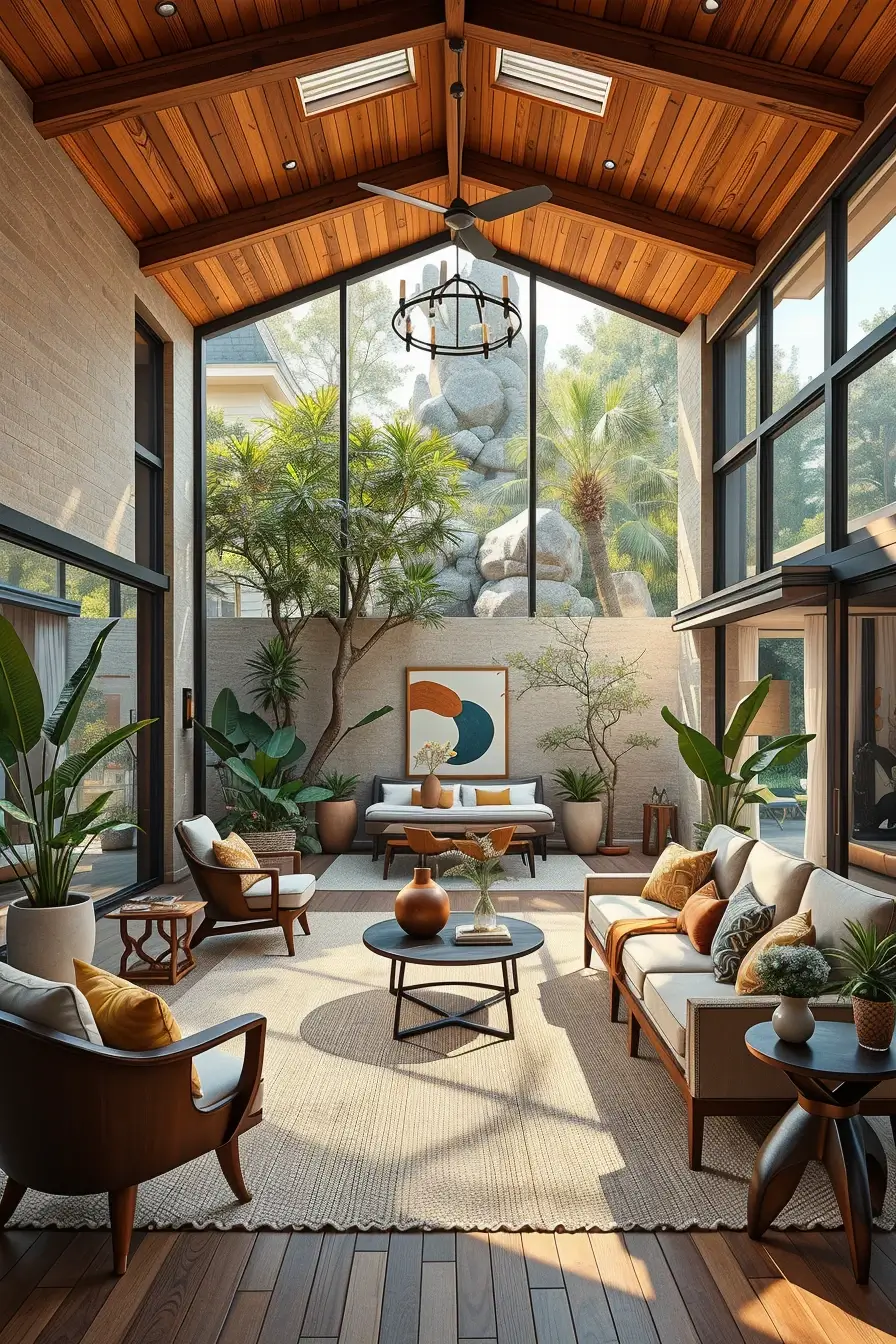
I work with layered neutrals, muted earth tones, and soft mineral shades that transition smoothly between interior and exterior. Accent colors are introduced through furniture, art pieces, or architectural details, allowing flexibility without overwhelming the space. This strategy supports longevity and adaptability.
From my professional experience, design experts featured in Dwell emphasize restrained palettes as a foundation for timeless interiors. I have found that clients appreciate color schemes that feel calm, sophisticated, and easy to live with over time.
What I would add is a recommendation to test color samples in both daylight and evening conditions, as lighting dramatically affects perception across indoor and outdoor environments.
21. Indoor–Outdoor Living Rooms With Custom-Made Furniture
I see custom-made furniture as the foundation of successful indoor–outdoor living rooms in 2026. These spaces rely on precise proportions, fluid transitions, and materials that perform equally well indoors and outdoors. By designing furniture specifically for the space, I ensure continuity between zones while maintaining comfort, durability, and a strong visual identity that supports year-round use.
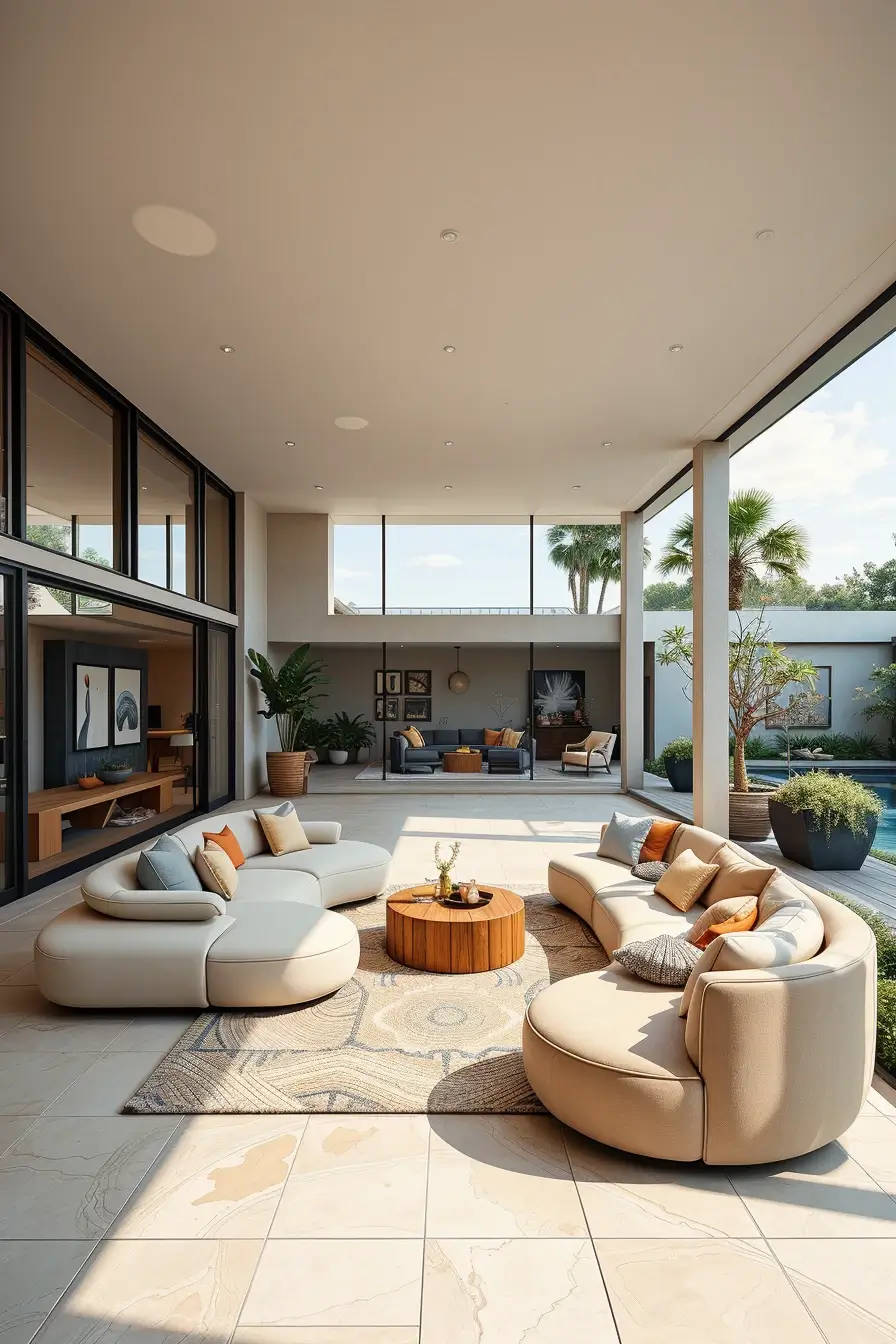
In my projects, I prioritize curved sectional sofas, modular lounge systems, and sculptural tables crafted from weather-resistant wood, stone composites, or high-performance textiles. Each piece is designed to echo the architecture, often with rounded edges and organic silhouettes that visually soften the boundary between interior and exterior. Built-in seating, integrated side tables, and concealed storage help keep the space functional without visual clutter.
From my experience, custom furniture elevates these living rooms from trend-driven to timeless. Designers frequently highlighted by Architectural Digest emphasize that bespoke solutions allow spaces to feel intentional rather than adapted, and I agree. When furniture is designed for its environment, the room feels cohesive, calm, and intuitively usable.
To strengthen this concept further, I would add custom outdoor rugs with architectural patterns and integrated lighting within furniture bases to enhance usability during evening hours without disrupting the sculptural aesthetic.
22. Creative Zoning Without Visual Barriers
Creative zoning without visual barriers is essential when designing indoor–outdoor living rooms that feel open yet purposeful. I approach zoning through subtle architectural cues rather than walls, allowing airflow, light, and views to remain uninterrupted while still defining functional areas.
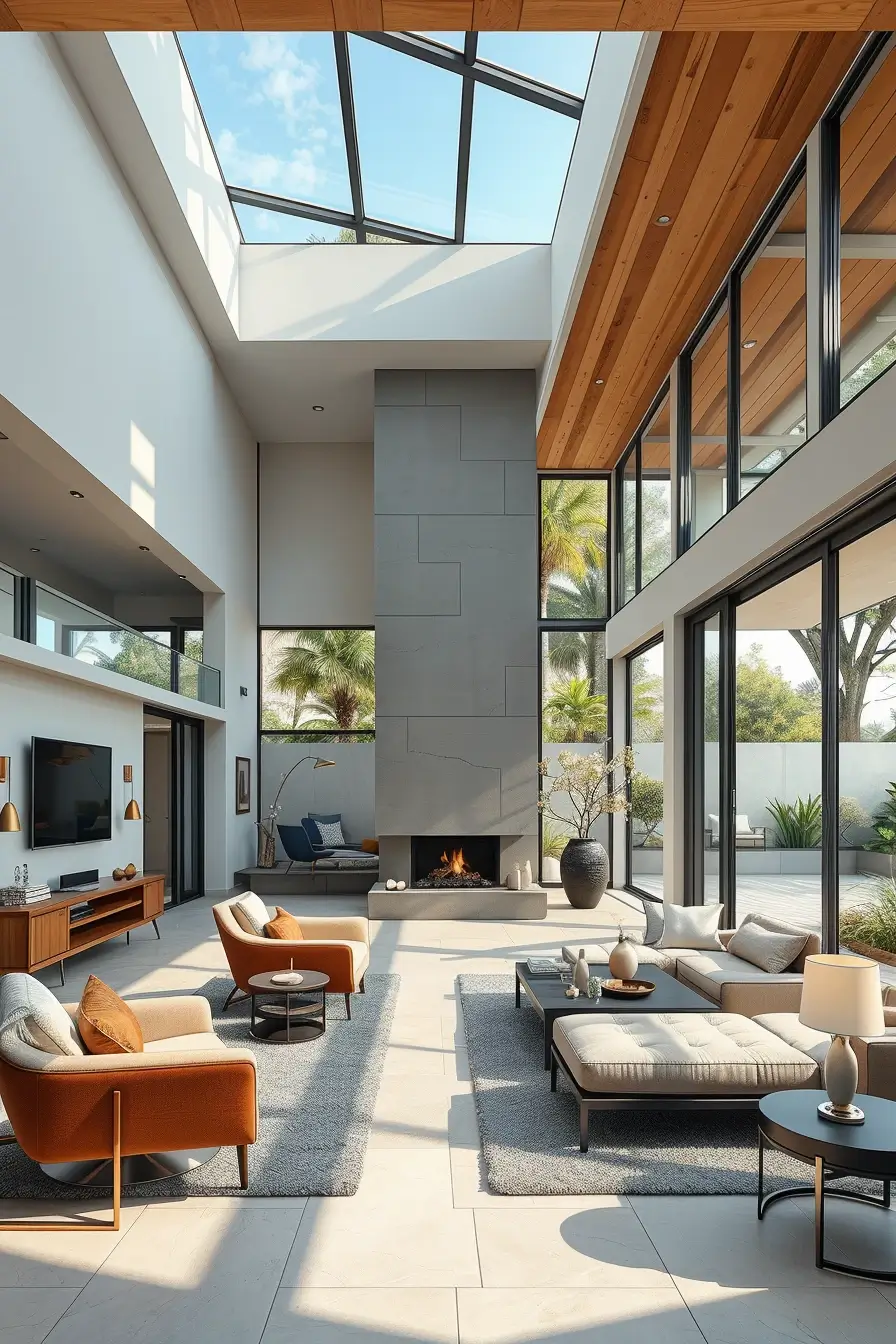
In practice, I rely on ceiling height variations, changes in floor materials, and furniture placement to guide movement. Low-profile sofas define lounge areas, while elongated dining tables or floating fireplaces act as spatial anchors. Sliding glass walls, pivot doors, or retractable panels remain invisible when open, preserving a continuous visual field.
I’ve found that this approach aligns with what leading designers featured in Dezeen describe as “spatial clarity through restraint.” Personally, I see it as a way to let the architecture breathe while still offering structure. The result is a living room that adapts effortlessly to social gatherings, quiet evenings, or seasonal changes.
What could enhance this section further is the addition of integrated ceiling tracks for sheer curtains or movable fabric panels, allowing flexible zoning when privacy or shade is needed without introducing rigid divisions.
23. Elevated Indoor–Outdoor Living With Sunken Seating Areas
Sunken seating areas bring a sense of intimacy and architectural depth to indoor–outdoor living rooms, especially in 2026 designs focused on experience rather than excess. I use sunken zones to create a natural gathering point that feels protected while remaining visually connected to the surrounding space.
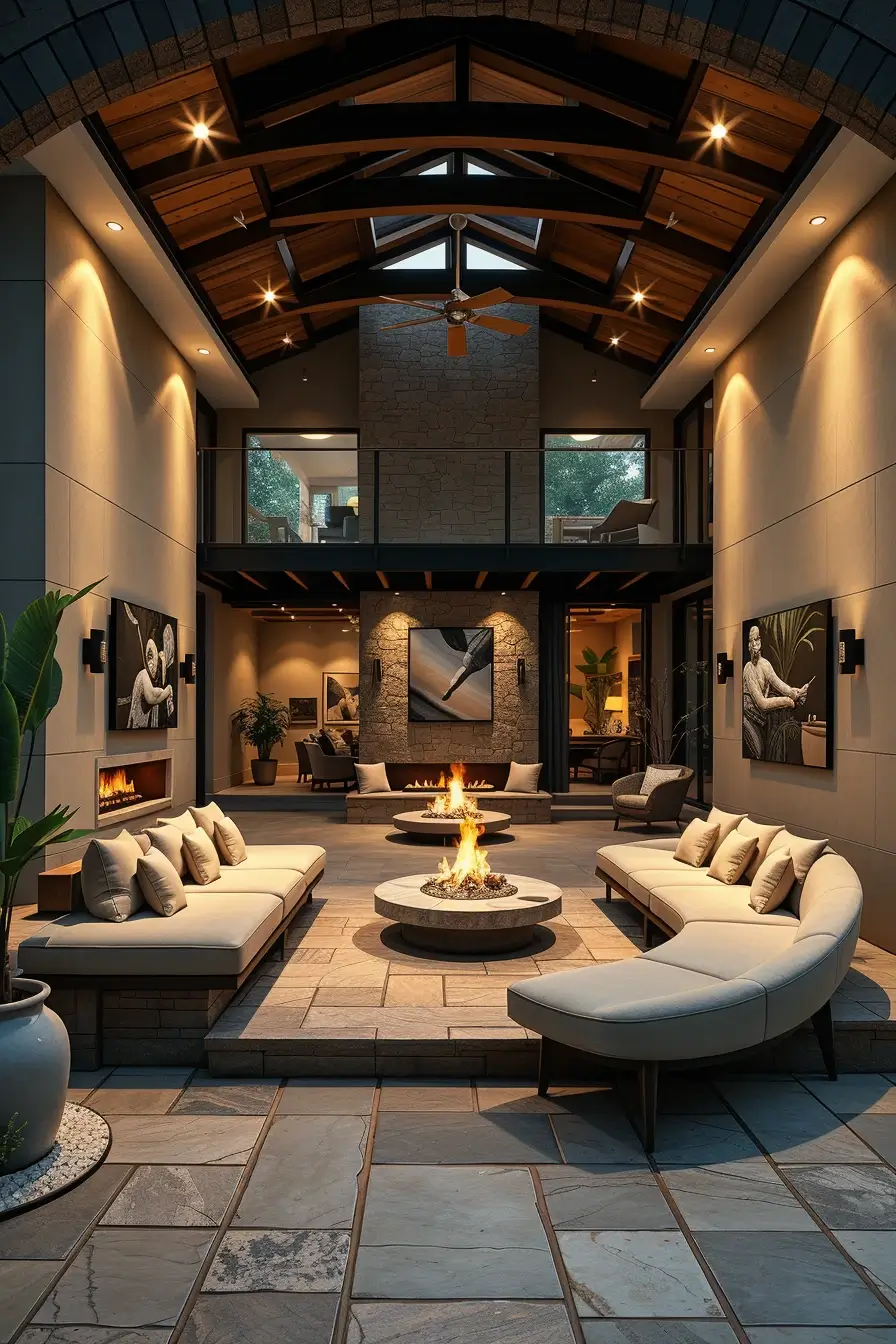
These seating areas typically feature wraparound benches with plush cushions, layered textiles, and integrated steps that double as informal seating. Materials such as polished concrete, stone, or wood define the recessed area, while hidden drainage and heating systems ensure year-round comfort and practicality.
From my perspective, sunken seating encourages conversation and emotional connection. Design experts from Dwell often note that lower seating zones psychologically promote relaxation, and I’ve seen this firsthand. Clients consistently gravitate toward these spaces as the heart of the home.
To complete this concept, I would add discreet floor-level lighting and integrated fire or heat elements to enhance usability during cooler evenings without overpowering the sculptural design.
24. Architectural Greenery Integrated Into Living Spaces
Architectural greenery has evolved beyond decorative plants into a structural element of indoor–outdoor living rooms. I now integrate greenery directly into walls, ceilings, and transitions to create spaces that feel alive, calming, and environmentally responsive.
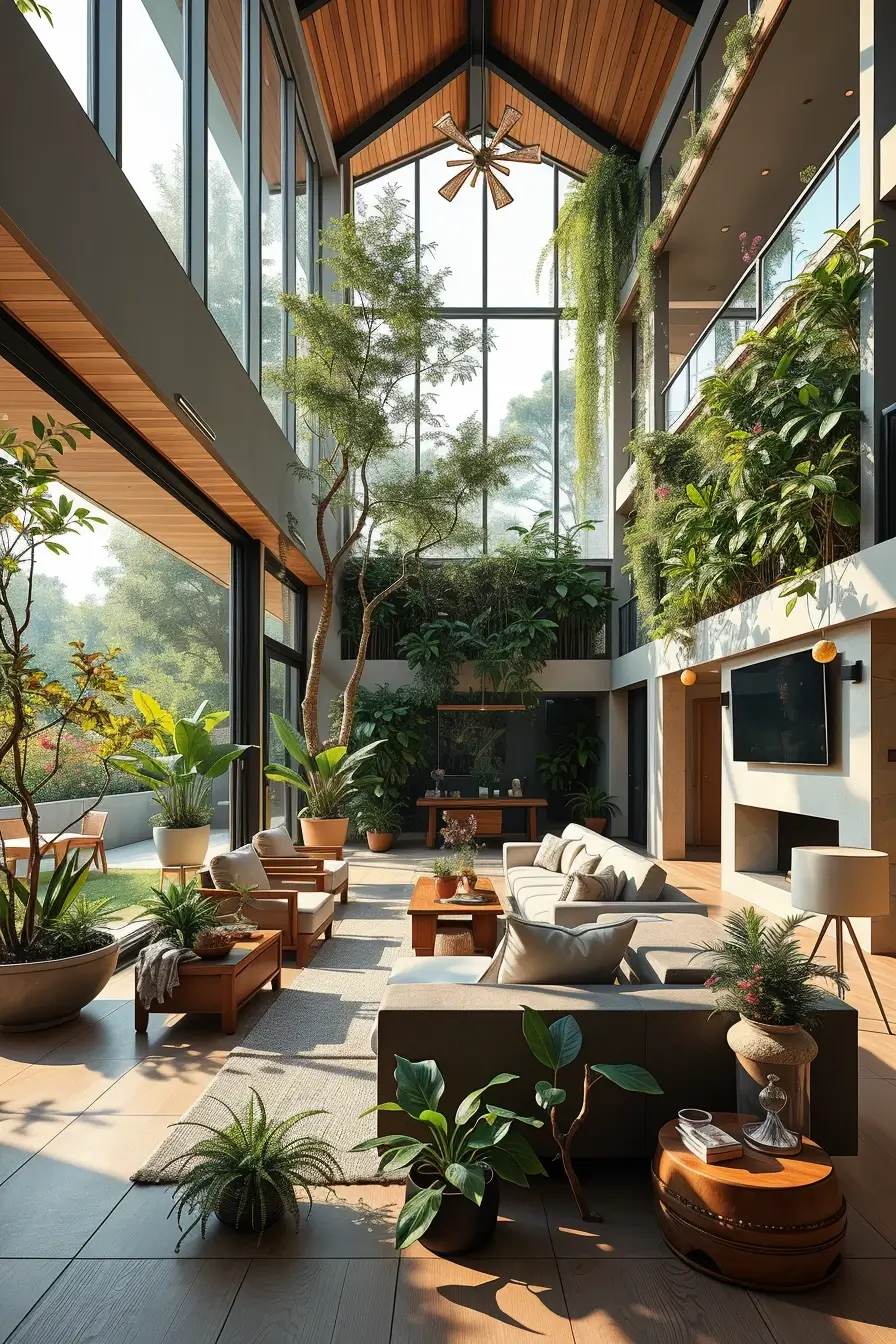
In my designs, I use built-in planters, vertical green walls, and indoor trees positioned to frame views and soften architectural lines. The furniture palette remains neutral so that greenery becomes the focal point, while irrigation and lighting systems are fully concealed to maintain a clean aesthetic.
Personally, I find that greenery changes how a space is experienced over time. As designers featured in House Beautiful often highlight, living elements introduce movement and seasonality that static materials cannot. I see this as essential for creating emotionally engaging living rooms in 2026.
What I would add here is the inclusion of climate-adaptive plant species paired with smart sensors to optimize maintenance and ensure long-term visual impact with minimal effort.
25. Artistic Water Features Enhancing Indoor–Outdoor Flow
Artistic water features play a subtle yet powerful role in connecting indoor and outdoor living areas. I use water not as decoration, but as a spatial tool that enhances sensory continuity through sound, reflection, and movement.
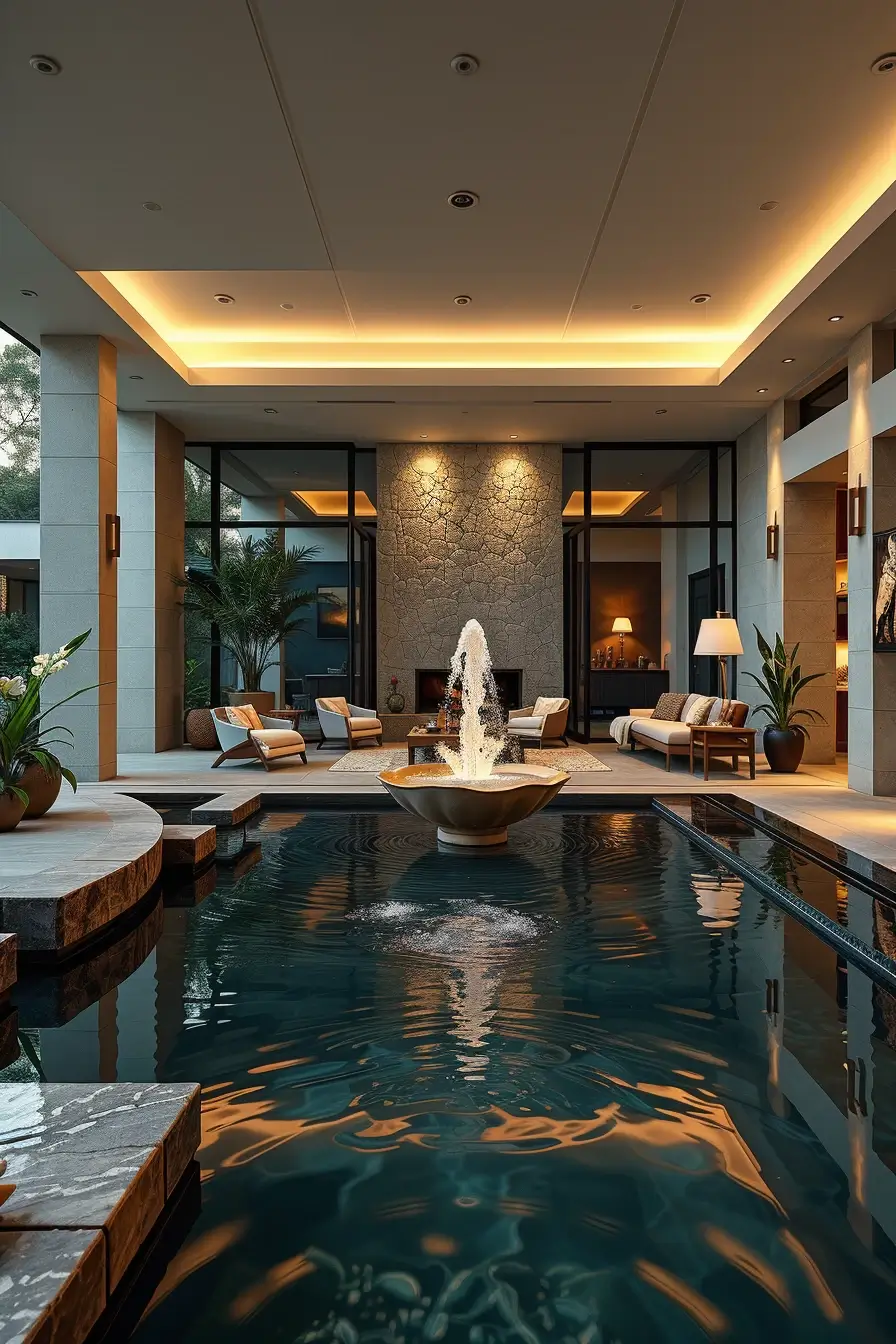
These features often include linear reflecting pools, shallow water channels running alongside seating areas, or sculptural fountains integrated into walls. Materials such as stone, concrete, and metal ensure durability while reinforcing a modern, refined aesthetic that aligns with contemporary architecture.
From my experience, water features introduce a sense of calm and luxury that feels understated rather than performative. Many US-based landscape architects emphasize the psychological benefits of water, and I’ve seen how even minimal installations dramatically improve the atmosphere of a space.
To elevate this section further, I would incorporate temperature-controlled water systems and subtle underwater lighting to extend usability into the evening and cooler seasons.
26. Unique Indoor–Outdoor Living Rooms With Statement Art Pieces
I consider statement art pieces a defining element of indoor–outdoor living rooms in 2026, especially when the goal is to create a space that feels curated rather than purely functional. These environments benefit from bold artistic elements that anchor the design and provide visual continuity across interior and exterior zones.
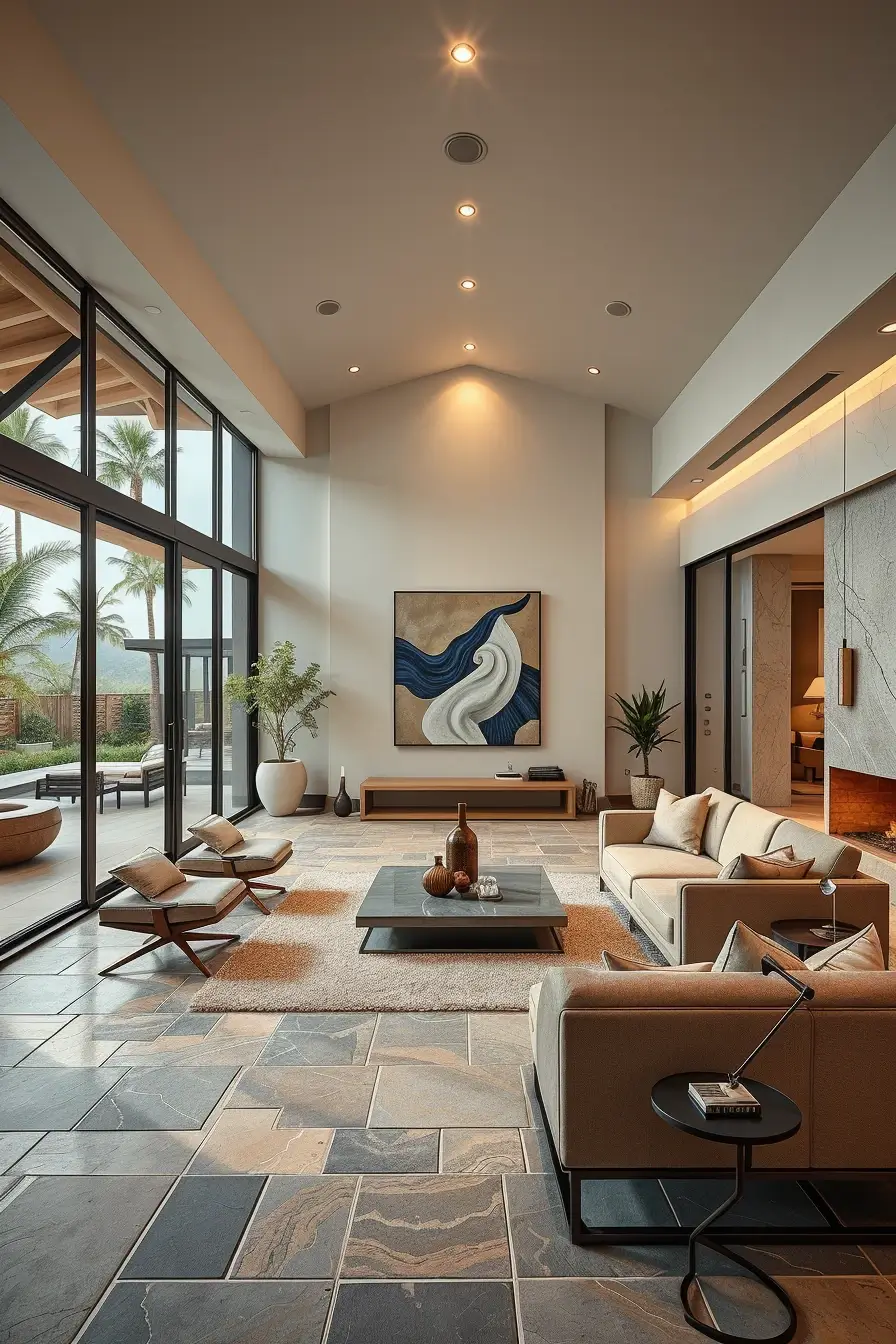
In my work, I integrate large-scale sculptures, textured wall art, or freestanding installations made from stone, metal, or ceramic. These pieces are often positioned at transition points such as near sliding glass walls or outdoor lounges, ensuring they remain visible from multiple perspectives. The furniture remains intentionally understated so the artwork can command attention without competition.
From my experience, statement art transforms a living room into a personal gallery. Designers frequently referenced by Interior Design Magazine emphasize that art should be experienced in motion, not just observed, and indoor–outdoor layouts make that possible. I’ve found that clients connect more deeply with spaces that reflect artistic identity rather than trends.
To strengthen this concept, I would add adjustable accent lighting specifically designed to highlight art pieces during evening hours without overwhelming the surrounding architecture.
27. Modern Technology Hidden Within Artistic Design
In 2026, technology is essential in indoor–outdoor living rooms, but it should never dominate the visual experience. I focus on embedding modern systems seamlessly within architectural and artistic elements so comfort and performance coexist with refined design.
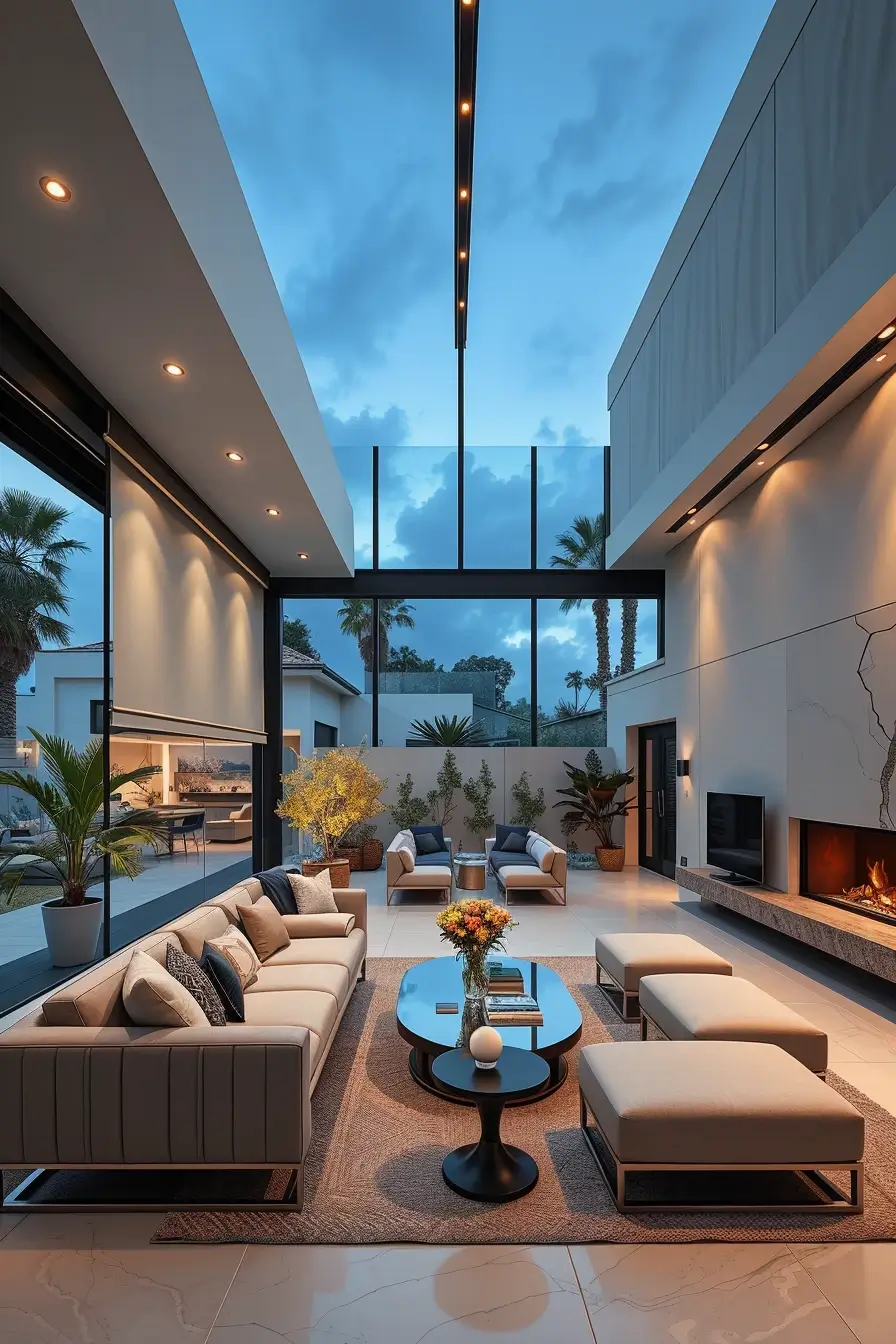
I incorporate concealed speakers within sculptural walls, climate control systems hidden in ceilings, and retractable screens integrated into custom cabinetry. Smart lighting, shading, and audio systems are controlled discreetly, allowing the space to shift from day to night without visible devices disrupting the aesthetic.
Personally, I believe technology should feel intuitive and invisible. Many technology-forward designers featured in Wired Home emphasize that the best smart homes are those you don’t notice, and I fully agree. When technology blends into the design, the living room feels calm, intentional, and future-ready.
What I would add here is greater emphasis on adaptive systems that respond automatically to weather, light levels, and occupancy, enhancing comfort without requiring manual input.
28. Indoor–Outdoor Living Rooms Designed As Sculptural Experiences
I approach some indoor–outdoor living rooms as sculptural compositions rather than traditional rooms. In these designs, architecture, furniture, and circulation work together as a single artistic gesture that unfolds as you move through the space.
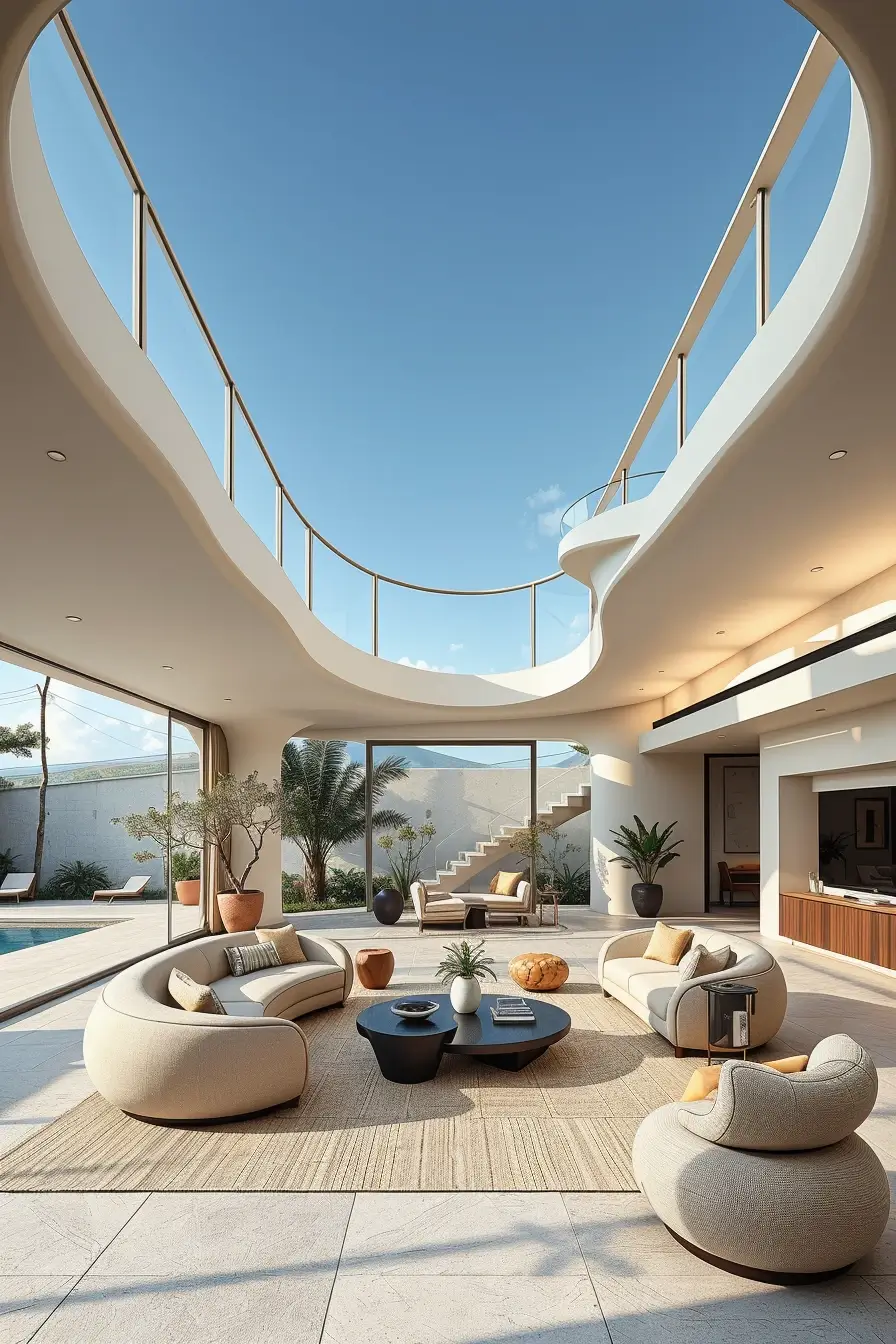
Curved walls, flowing ceilings, and organic transitions define these environments. Furniture follows the same sculptural logic, with rounded sofas, asymmetrical tables, and integrated seating that feels carved rather than placed. Every element contributes to a cohesive spatial narrative.
From my professional experience, sculptural spaces leave a lasting impression because they engage emotion as much as function. Designers often highlighted by Dezeen describe this approach as experiential architecture, and I see it as central to the evolution of luxury living rooms in 2026.
To enhance this section, I would include more discussion on how lighting design reinforces sculptural forms through shadow, reflection, and depth throughout the day.
29. Sustainable And Innovative Design Solutions For 2026
Sustainability is no longer optional in indoor–outdoor living rooms; it is an expectation. I integrate sustainable and innovative solutions that enhance performance while supporting the aesthetic goals of modern, designer spaces.
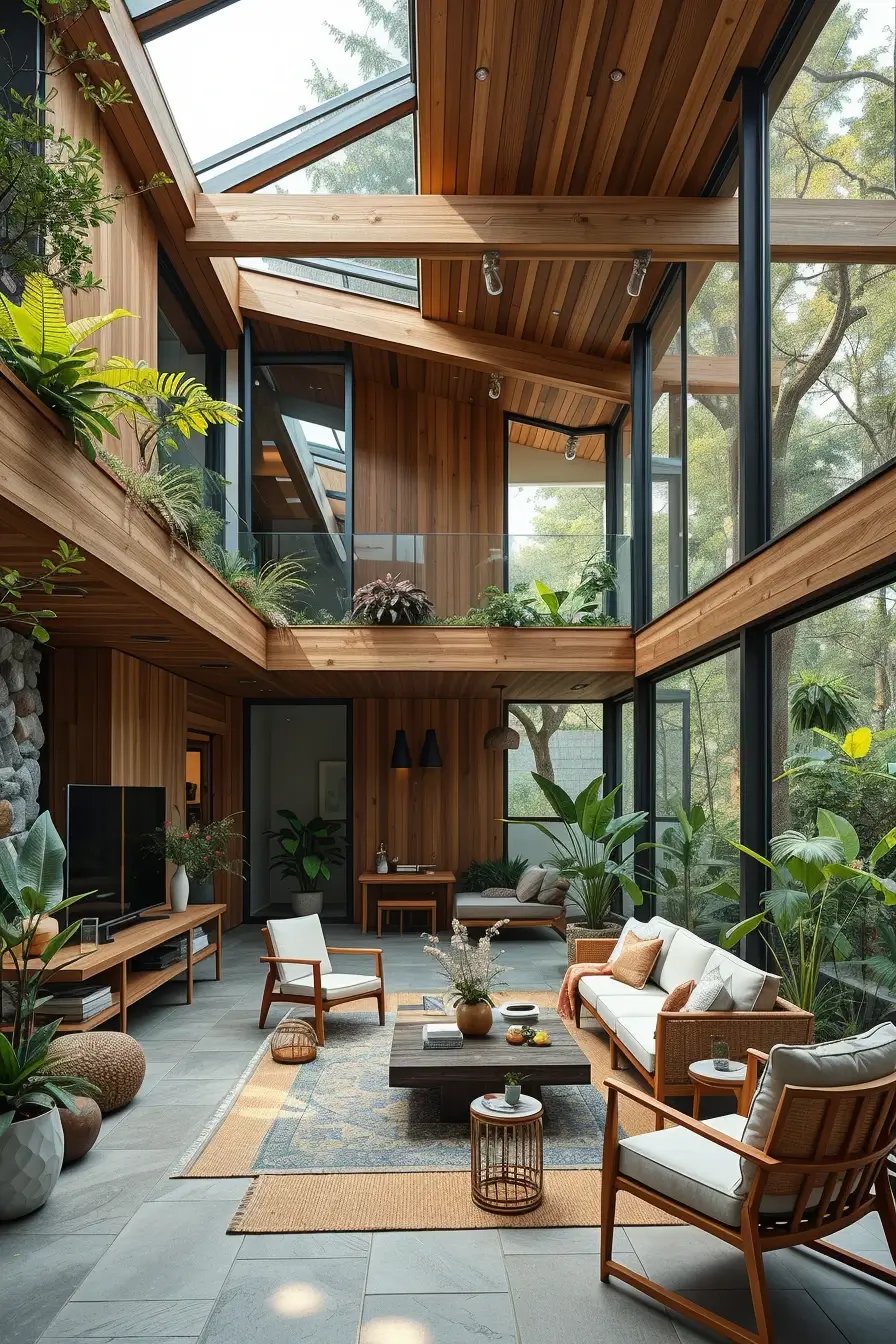
I prioritize recycled materials, low-impact composites, energy-efficient glazing, and passive ventilation strategies. Furniture is selected for longevity, often crafted from responsibly sourced wood or recyclable metals. Outdoor fabrics are durable, fade-resistant, and environmentally conscious without compromising comfort.
In my view, sustainable design aligns naturally with high-quality living. Publications like Architectural Digest increasingly highlight eco-conscious luxury, and I’ve seen how clients value spaces that reflect both responsibility and refinement. Sustainable choices often result in calmer, more balanced environments.
What could be added here is the integration of energy-generating surfaces such as solar glass or discreet photovoltaic elements to further support self-sufficient living spaces.
30. The New Definition Of Luxury Indoor–Outdoor Living Rooms
Luxury in 2026 is defined less by excess and more by intention, comfort, and originality. I see indoor–outdoor living rooms evolving into highly personalized environments that prioritize experience, flow, and emotional connection over visual extravagance.
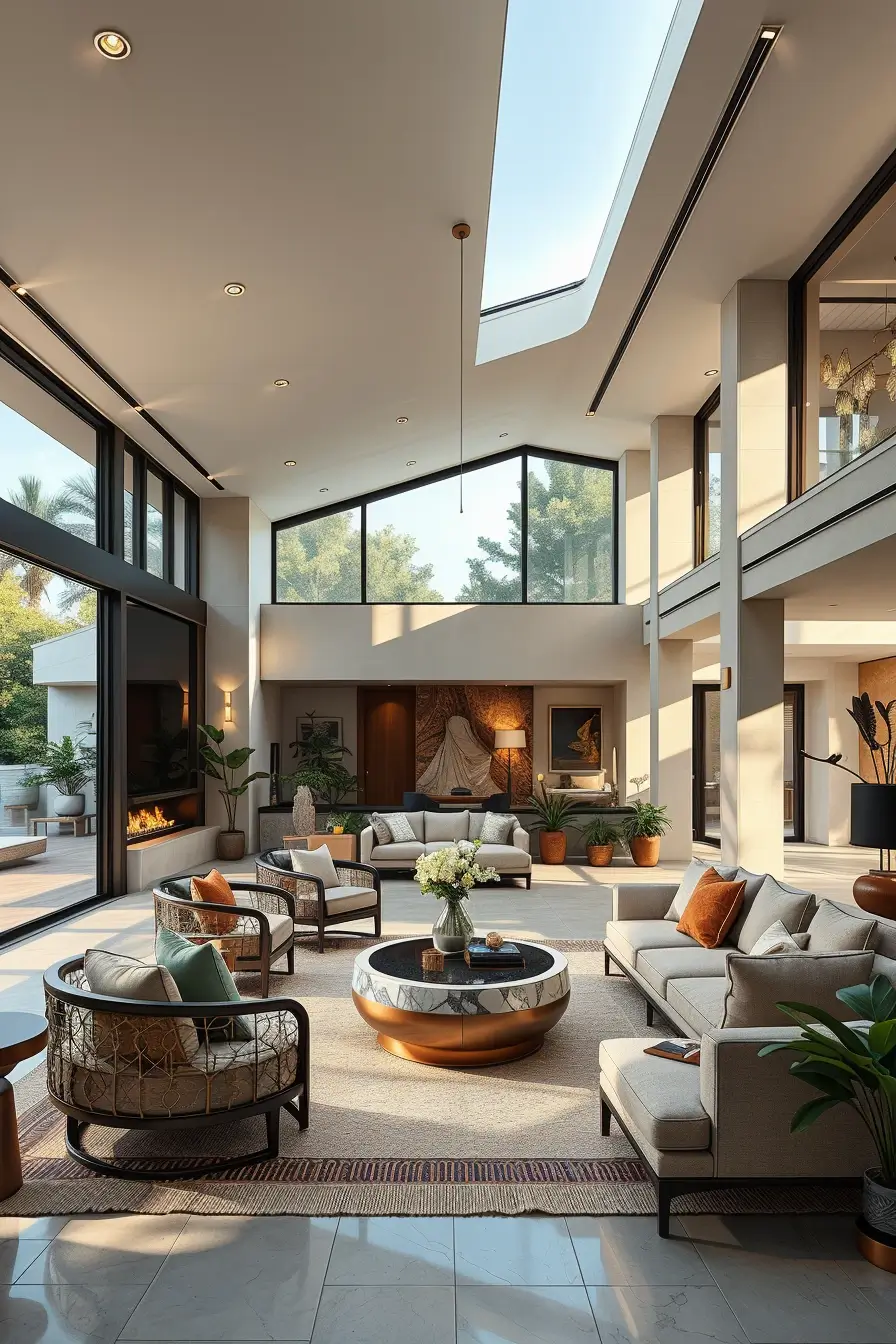
These spaces combine sculptural architecture, custom furniture, integrated nature, and invisible technology to create seamless transitions between inside and outside. Materials are tactile, layouts are fluid, and every element serves a purpose while contributing to a cohesive whole.
From my perspective, the most successful luxury spaces feel effortless. Designers across leading US studios consistently emphasize restraint, authenticity, and craftsmanship, and I find this philosophy essential when shaping modern living rooms that truly endure.
To complete this vision, I would focus on tailoring each design to the lifestyle of its users, ensuring flexibility, adaptability, and long-term relevance rather than fixed, trend-driven solutions.
The Indoor–Outdoor Living Room 2026 redefines how we experience space, comfort, and design by turning the home into a fluid, artistic environment without clear boundaries. Through sculptural forms, curved architecture, and thoughtful integration with nature, these living rooms become immersive experiences rather than static interiors. As design continues to move toward originality and emotional connection, indoor–outdoor living rooms stand as a symbol of modern luxury—where creativity, functionality, and architectural expression come together to shape the future of living.