The garden barbecue area 2026 is no longer just a place to grill—it has evolved into a fully designed outdoor lifestyle space where architecture, comfort, and creativity come together. Modern homeowners are rethinking the traditional backyard barbecue, transforming it into a stylish destination that feels as intentional as an interior room. From sculptural grills and seamless outdoor kitchens to lounge-inspired seating and atmospheric lighting, today’s barbecue areas are designed to impress and invite.
In 2026, garden barbecue spaces reflect a strong focus on modern design, unique layouts, and designer details that elevate outdoor entertaining. Clean lines, innovative materials, and smart integrations allow these areas to function beautifully while making a bold visual statement. Whether minimalist and architectural or warm and nature-integrated, the latest garden barbecue concepts are all about creating an unforgettable outdoor experience that blends function, aesthetics, and personality.
1. The Evolution Of Garden Barbecue Areas In 2026
In 2026, I see garden barbecue areas evolving into complete outdoor environments rather than isolated cooking spots. The design is more intentional, with clear zoning for cooking, dining, and relaxation. I focus on layouts that feel architectural and permanent, using clean lines, structured flooring, and visual continuity with the house. These spaces are practical because they allow movement, storage, and social interaction without clutter or confusion.
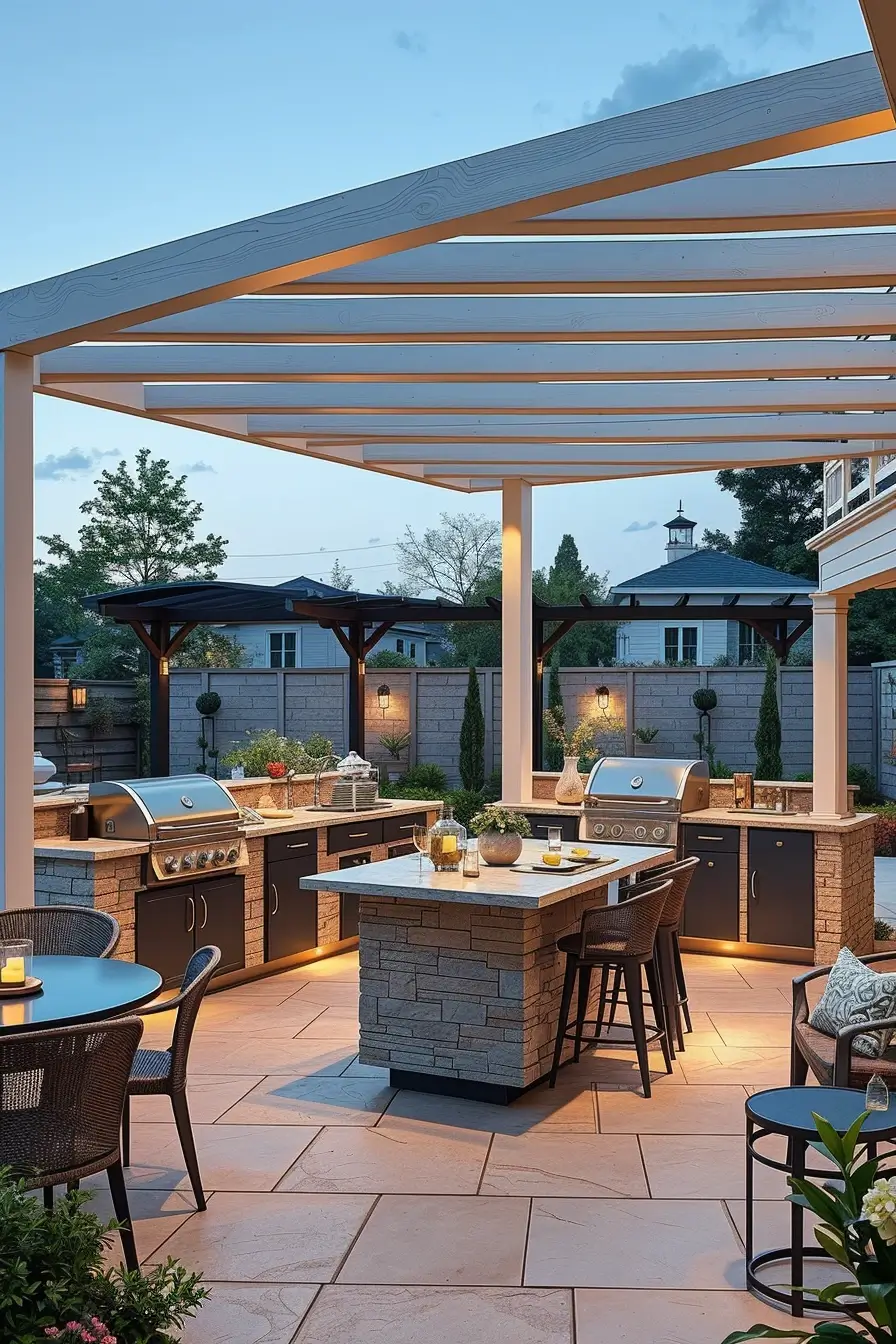
When selecting elements, I prioritize built-in grills, weather resistant cabinetry, and durable countertops such as sintered stone or sealed concrete. I include pergolas or light architectural canopies to define the area and provide shade. Furniture is low profile and modular, making it easy to adapt the space for both casual family meals and larger gatherings.
From my experience, this shift reflects what many US landscape architects have highlighted in recent outdoor living reports, especially the idea that outdoor kitchens should mirror indoor comfort and organization. I personally recommend treating the barbecue area as an extension of the home, not an accessory, which immediately elevates both usability and visual value.
What I would add to this type of space is layered lighting, including ambient perimeter lights and focused task lighting at the grill. This detail is often missing but essential for making the area functional and inviting well into the evening.
2. Architectural Garden Barbecue Zones With Built-In Design
Architectural barbecue zones in 2026 rely on built-in structures that feel integrated into the garden’s layout. I design these areas with symmetry and proportion in mind, often anchoring them with masonry walls or concrete frames. This approach increases durability and creates a sense of permanence, which is especially useful for year round outdoor use.
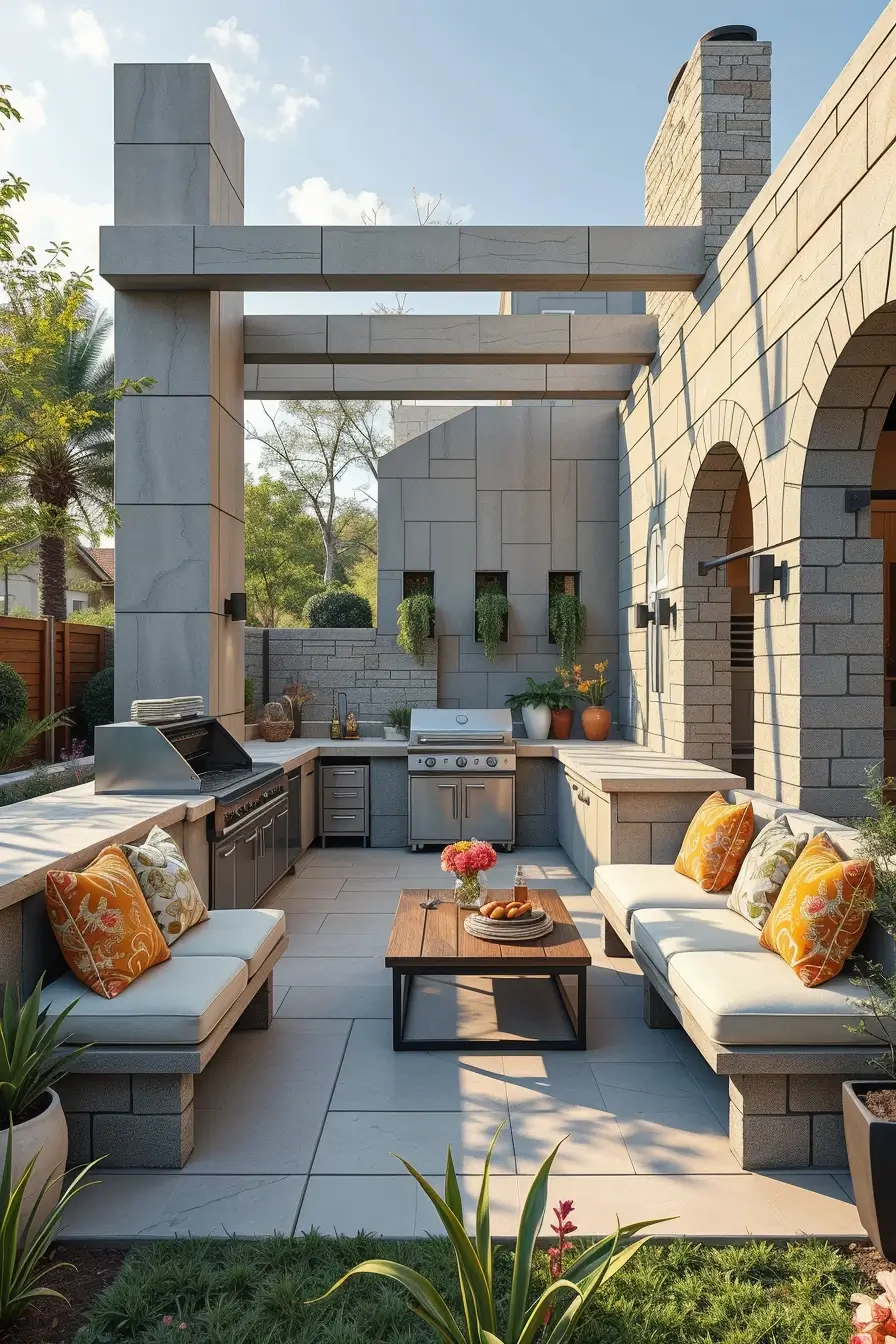
I typically include a built-in grill, prep counter, concealed storage, and a recessed sink, all aligned within a single architectural volume. Seating is often fixed or semi-fixed, such as concrete benches with outdoor cushions, because it reinforces the architectural concept and reduces visual noise.
In my professional view, this type of design works best for homeowners who value order and longevity. Design publications like Architectural Digest have repeatedly emphasized that built-in outdoor kitchens increase property value and reduce long term maintenance, which aligns with my own project experience.
To complete this setup, I would add vertical elements such as textured wall panels or integrated planters. These additions soften the architecture and help the barbecue zone blend naturally with the surrounding landscape.
3. Minimalist Garden Barbecue Areas With Clean Geometry
Minimalist garden barbecue areas in 2026 focus on clean geometry and visual restraint. I design these spaces using simple shapes, open layouts, and a limited color palette to ensure clarity and calm. The practicality comes from eliminating unnecessary elements, which makes the space easy to maintain and intuitive to use.
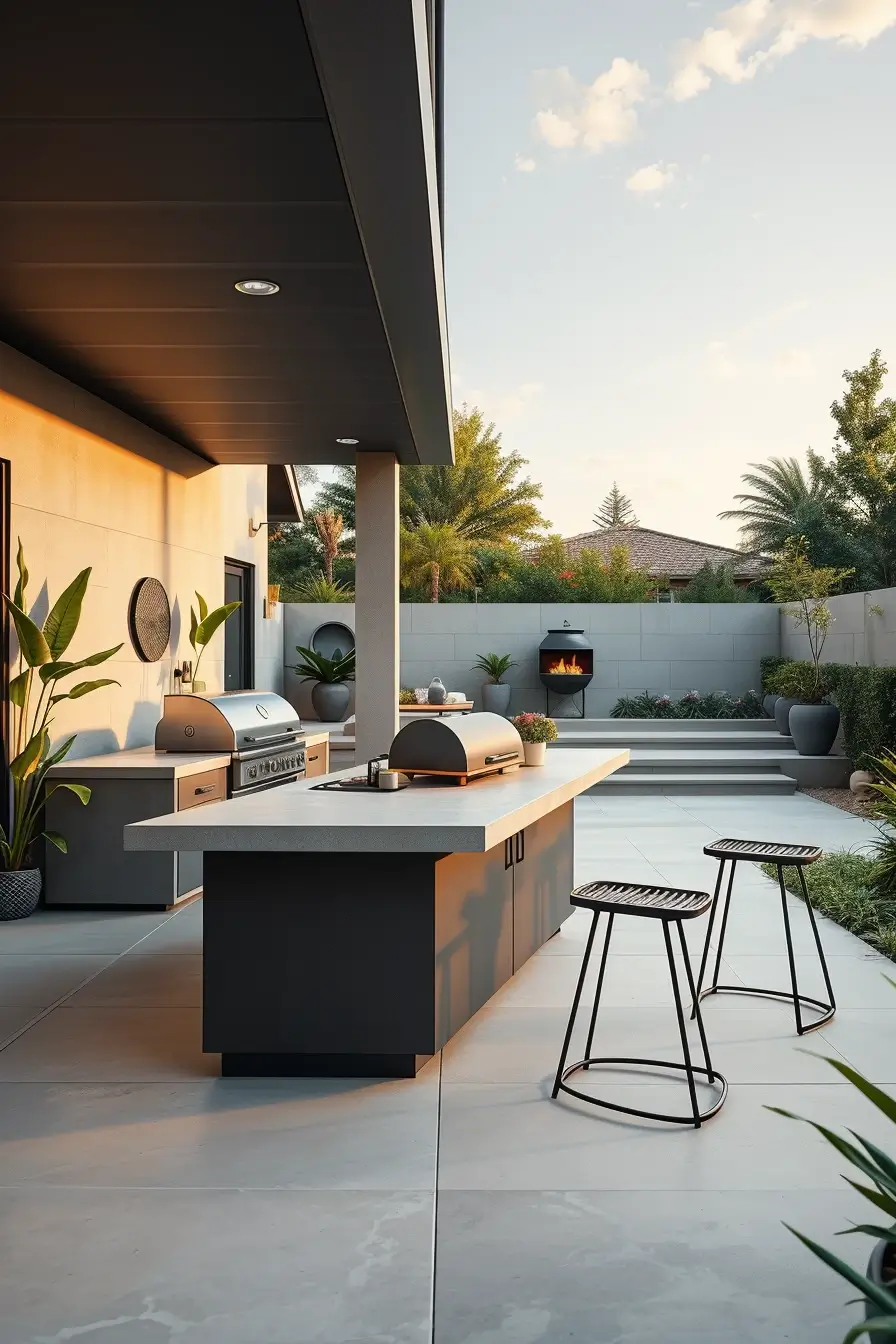
Each item is chosen for both function and form. I prefer a single linear grill island, integrated storage without visible handles, and streamlined outdoor stools or benches. Materials such as smooth concrete, matte metal, and large format paving reinforce the minimalist aesthetic while remaining highly durable.
Personally, I find that minimalist barbecue areas are ideal for modern homes with strong architectural lines. Designers featured in Dwell often note that minimal outdoor spaces encourage more frequent use because they feel uncluttered and adaptable, which matches my observations on completed projects.
What is often missing here is warmth, so I recommend adding subtle texture through wood accents or soft outdoor textiles. This maintains minimalism while improving comfort and visual balance.
4. Sculptural Barbecue Installations As Outdoor Art
Sculptural barbecue installations transform the grill into a focal point of the garden. In 2026, I see more homeowners embracing bold forms that function as both cooking equipment and outdoor art. These designs are practical because they consolidate cooking functions into a single, visually striking structure.
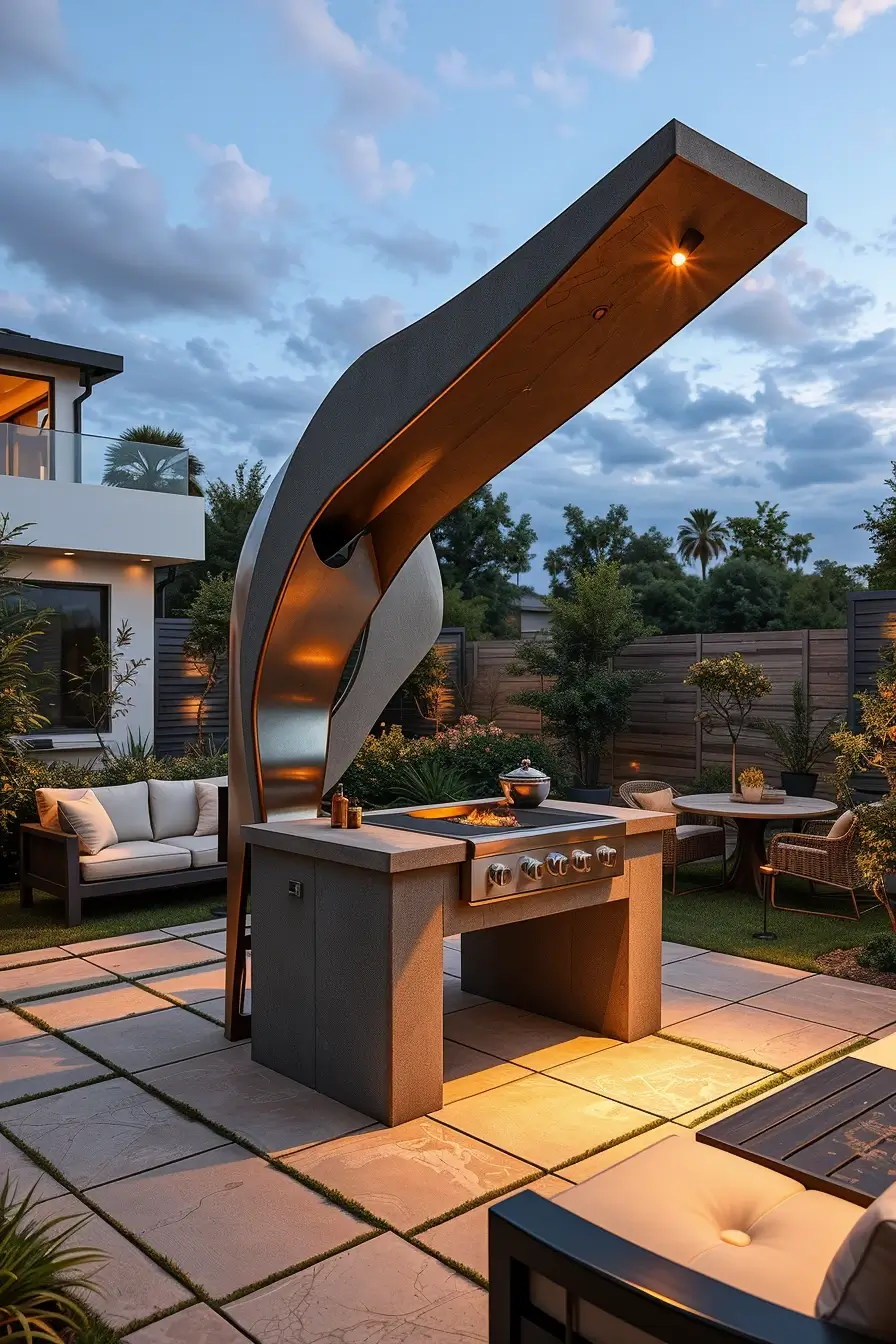
I usually work with custom metal or cast concrete grills, curved countertops, and asymmetrical bases. Furniture is kept intentionally simple so it does not compete with the sculptural element. The surrounding space is open, allowing the installation to be viewed from multiple angles.
From my perspective, this approach appeals to clients who see design as self expression. Landscape designers featured in Dezeen often highlight sculptural outdoor elements as a way to create identity, and I agree that this strategy gives the garden a memorable character.
To enhance this concept, I would add controlled lighting that highlights the form of the barbecue at night. Without proper lighting, the sculptural impact is often lost after sunset.
5. Luxury Garden Barbecue Areas With Hotel-Inspired Styling
Luxury barbecue areas in 2026 draw strong inspiration from boutique hotels and resorts. I design these spaces to feel indulgent yet relaxed, with generous proportions and a clear sense of comfort. The layout usually includes a cooking zone, dining area, and lounge section, all visually connected.
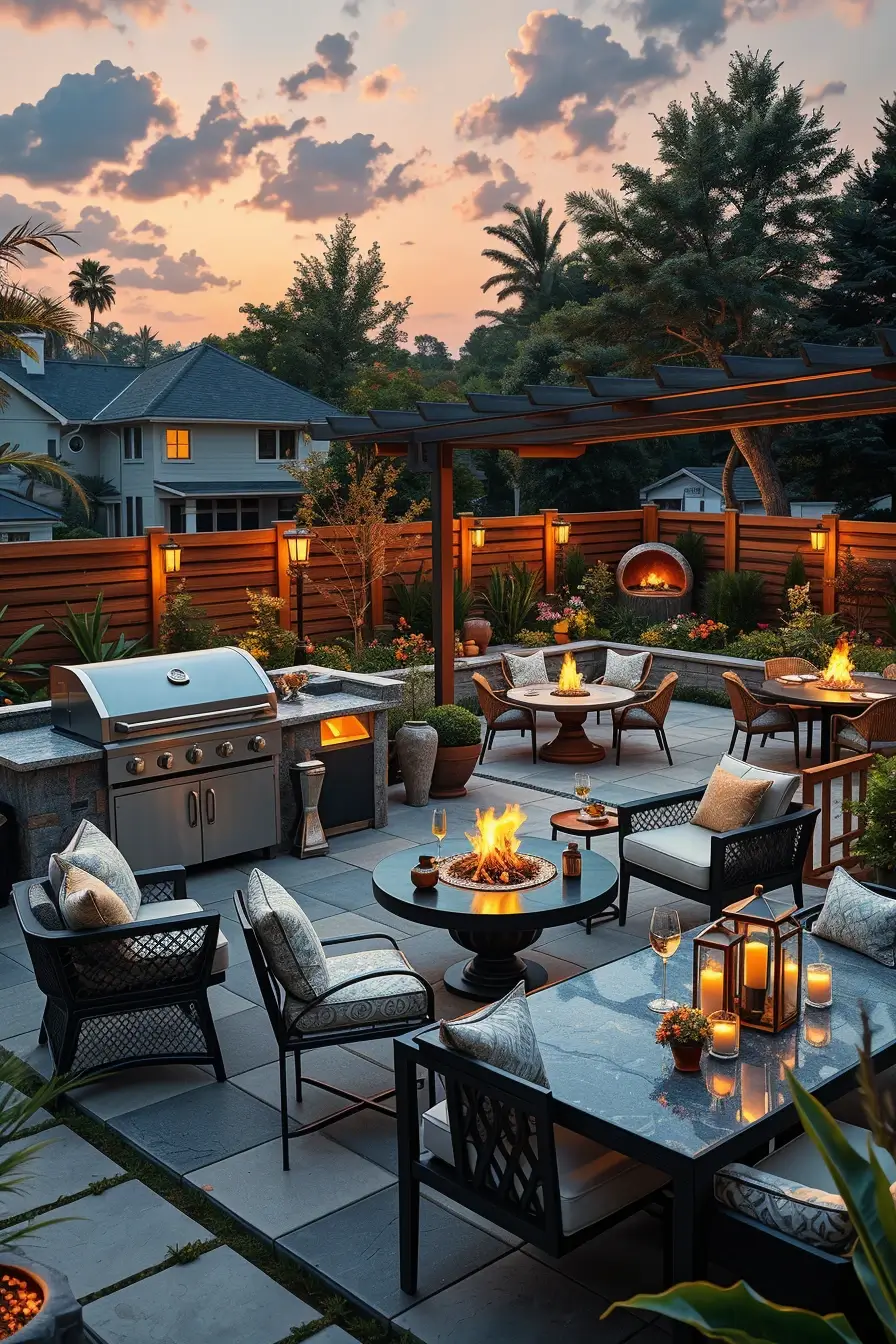
Furniture selection is critical here. I include upholstered outdoor seating, large dining tables, stone or porcelain countertops, and premium grills with multiple cooking zones. Accessories such as outdoor rugs and integrated fire features reinforce the hospitality feel while remaining weather appropriate.
In my experience, this style resonates with clients who entertain frequently. Hospitality design experts in the US often stress that outdoor spaces should encourage lingering, and I apply this by prioritizing comfort and visual cohesion over minimalism.
6. Modern Garden Barbecue Spaces With Integrated Seating
In modern garden barbecue spaces for 2026, I increasingly focus on integrated seating as a core design element rather than an afterthought. These areas are planned so that cooking, dining, and conversation happen within a single, cohesive zone. I design layouts where seating is positioned close enough to the grill to encourage interaction, yet far enough to remain safe and comfortable. This approach improves usability and creates a natural social flow.
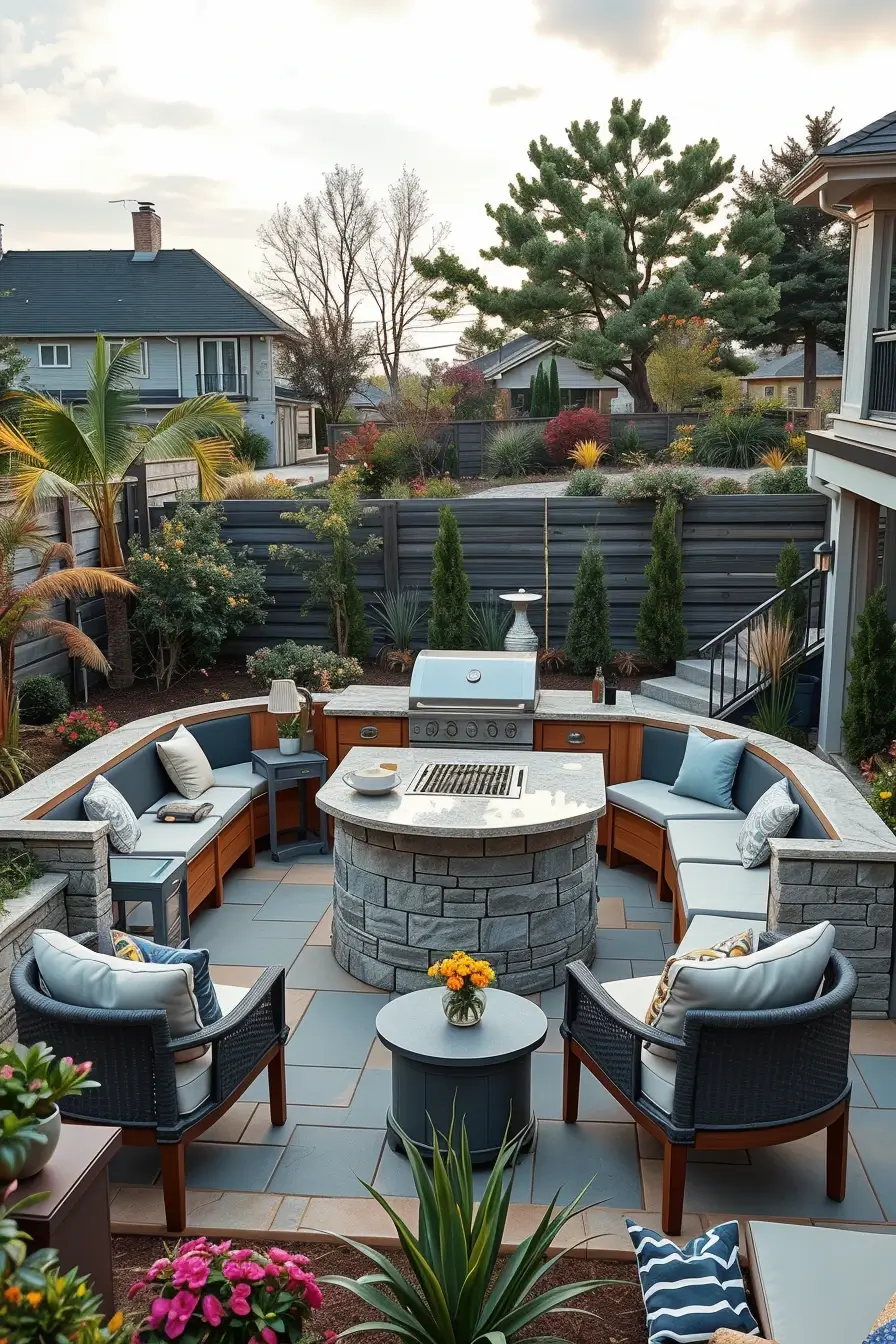
I usually incorporate built-in benches, wraparound seating, or low-profile sectional sofas made specifically for outdoor use. Integrated seating reduces the need for extra furniture and keeps the space visually clean. I prefer materials like concrete bases with removable cushions, wood-clad seating platforms, or stone edges that double as casual perches during gatherings.
From my professional experience, integrated seating dramatically changes how often these spaces are used. Designers featured in Better Homes and Gardens often point out that people stay longer in outdoor areas when seating feels intentional and comfortable. I have seen this firsthand in projects where clients use the barbecue area not just for cooking, but for everyday relaxation.
What I would add here is subtle separation between seating and cooking zones, such as a change in flooring material or a low divider. This small detail improves safety while preserving openness.
7. Smart Garden Barbecue Areas With High-Tech Features
Smart technology plays a significant role in garden barbecue areas in 2026, and I approach it as a tool for convenience rather than spectacle. These spaces are designed to simplify cooking, monitoring, and ambiance control. I integrate technology in a way that feels discreet and intuitive, ensuring the space remains welcoming and not overly technical.
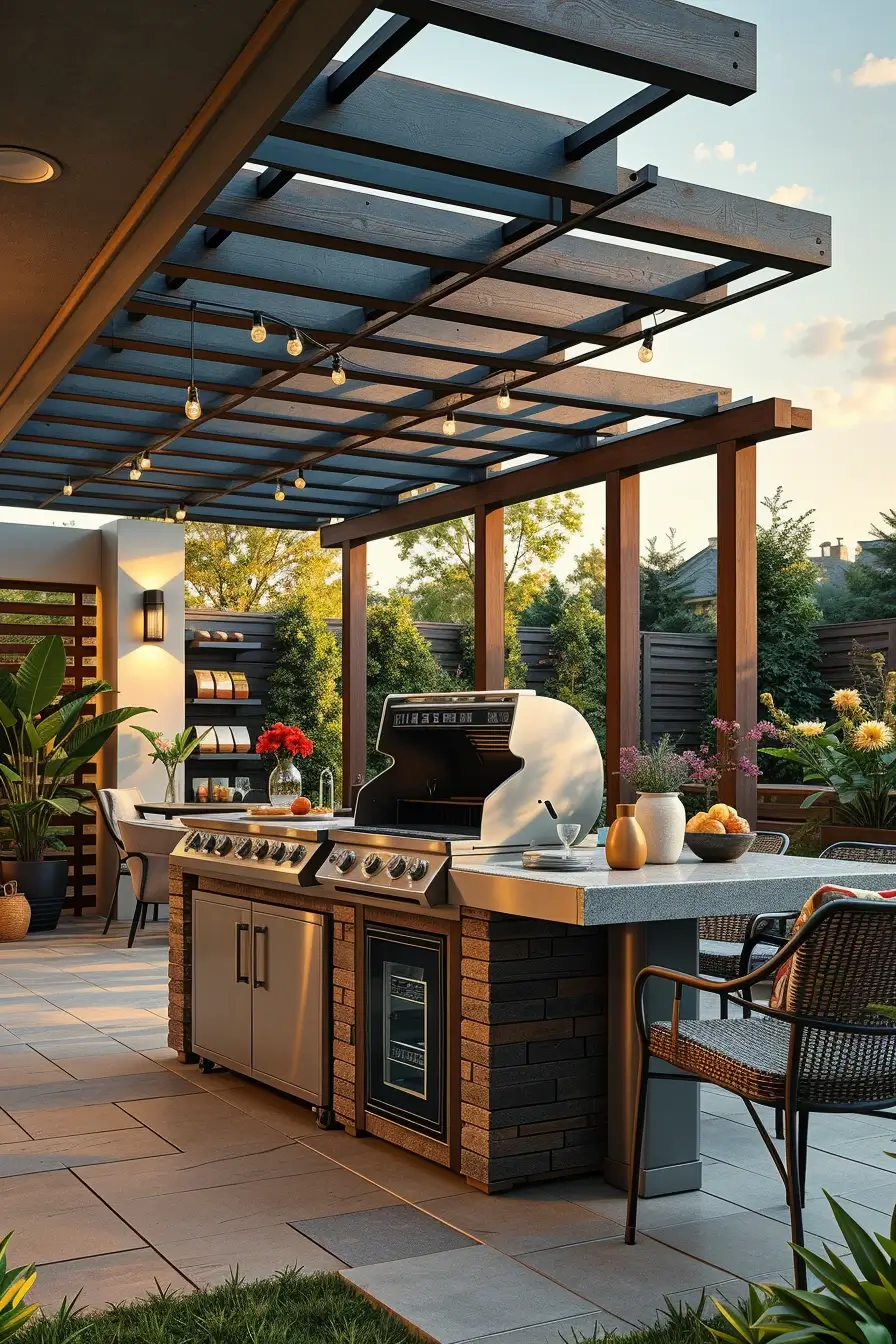
Typical features I include are smart grills with temperature control, built-in digital thermometers, weather-resistant screens, and app-controlled lighting. I also recommend integrated sound systems and automated pergolas that respond to sun or rain. Each feature serves a clear purpose and enhances the user experience without visual clutter.
In my opinion, high-tech barbecue areas appeal most to homeowners who value efficiency. Industry insights from outlets like The Spruce emphasize that smart outdoor technology increases confidence for less experienced cooks, which aligns with my own observations on client satisfaction.
What is often missing is proper protection for technology, so I always suggest concealed wiring, waterproof housings, and shaded installation zones to ensure longevity and reliability.
8. Floating And Cantilevered Barbecue Area Designs
Floating and cantilevered barbecue designs introduce a sense of lightness and innovation into garden spaces in 2026. I use these concepts to visually separate the barbecue area from the ground, creating a striking modern effect. Despite their appearance, these designs are highly functional when engineered correctly.
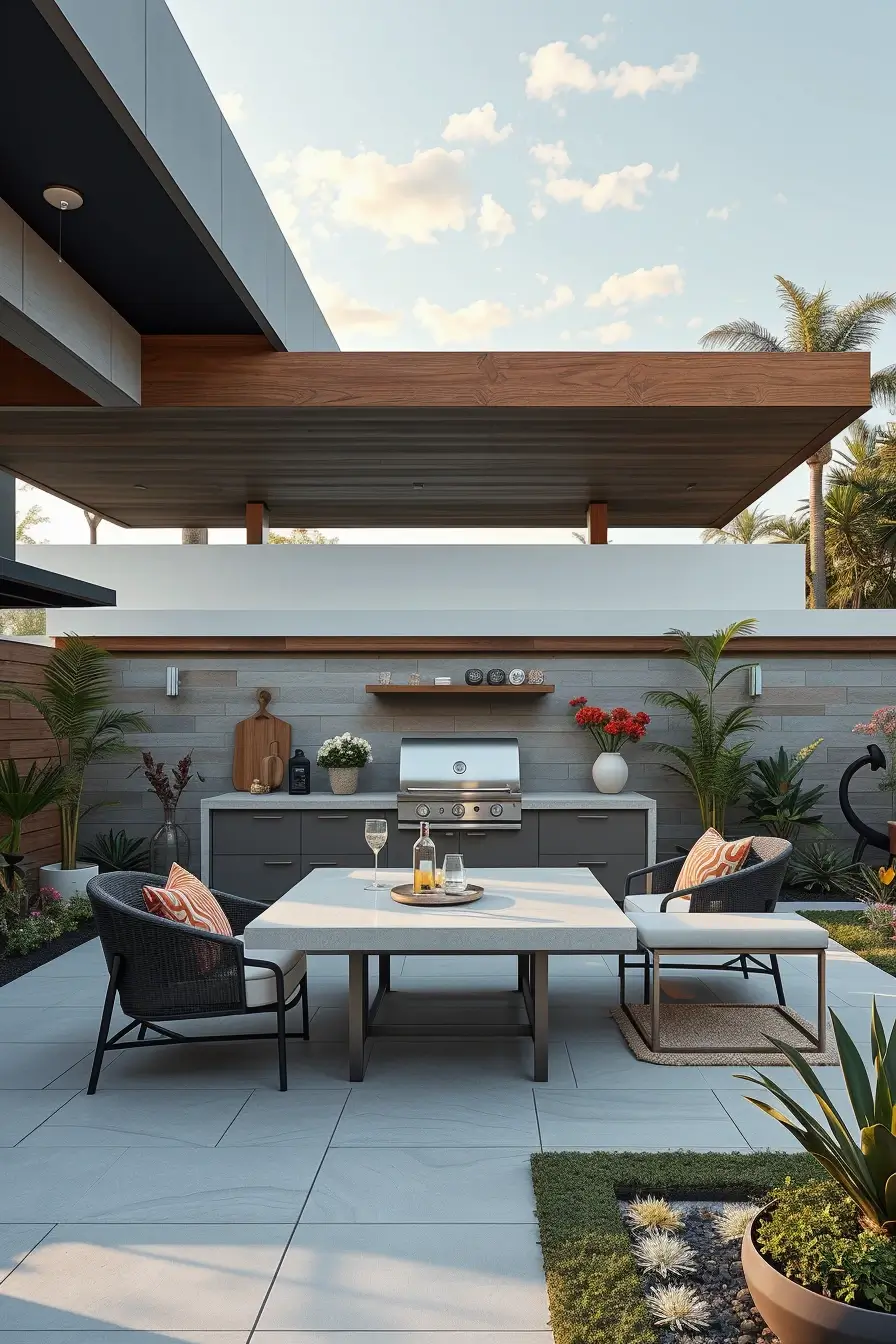
I often specify cantilevered countertops, floating grill islands, and suspended shelving anchored to structural walls. Furniture remains minimal to reinforce the floating effect, typically featuring slim frames and neutral tones. The result is a barbecue area that feels architectural and contemporary.
From my experience, these designs work best in gardens with strong modern architecture. Design professionals featured in Dezeen frequently highlight floating elements as a way to achieve visual drama without excess decoration, and I agree with this philosophy.
What I would still add is thoughtful night lighting beneath floating elements. This not only enhances safety but also emphasizes the design concept after dark.
9. Designer Garden Barbecue Areas With Custom Materials
Designer barbecue areas in 2026 are defined by the use of custom materials that reflect personal taste and architectural context. I approach these projects as bespoke designs, selecting finishes that are not commonly found in standard outdoor kitchens. This makes the space feel intentional and exclusive.
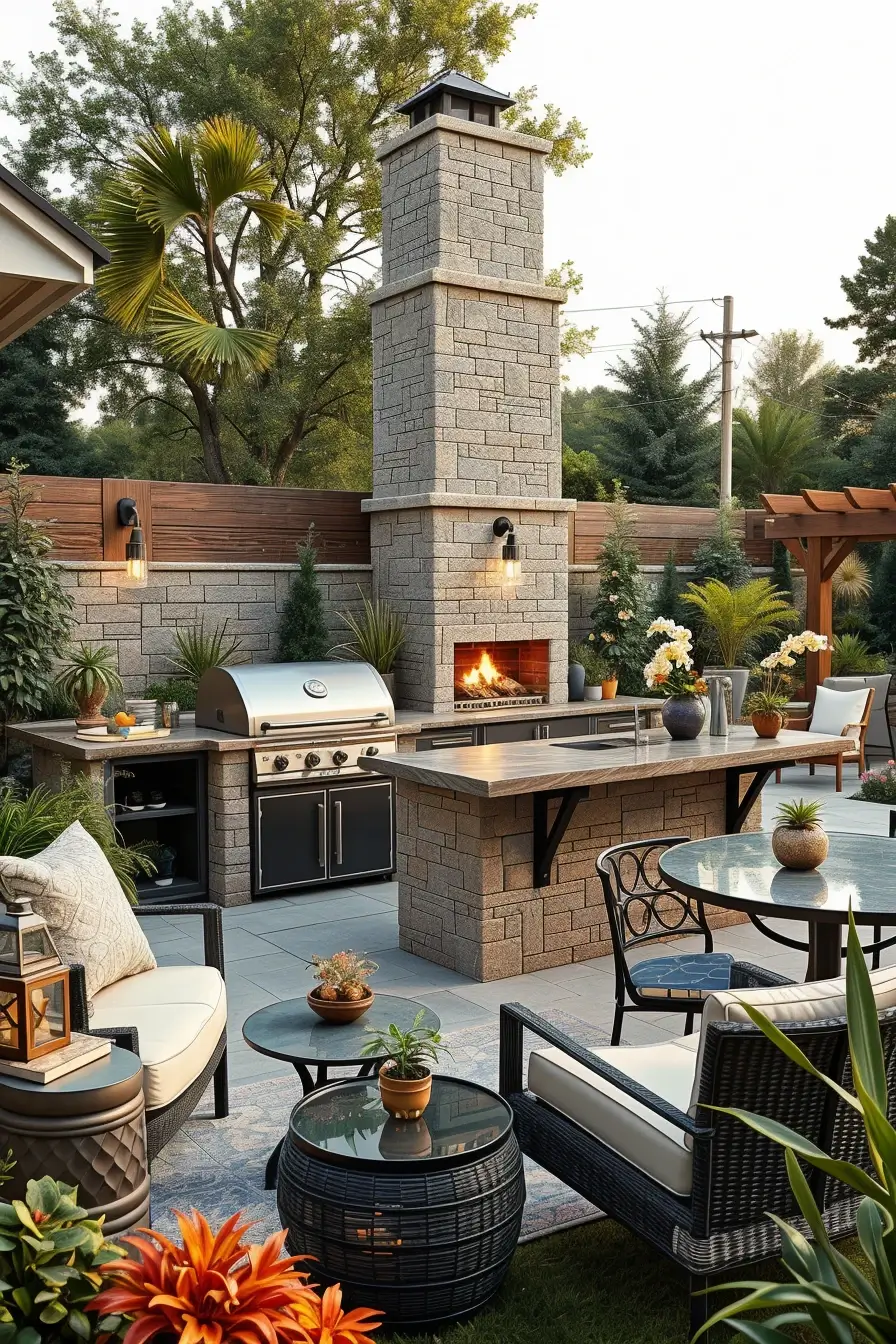
I often work with custom stone slabs, specialty metals, textured concrete, or composite surfaces tailored for outdoor use. Furniture is selected or designed to complement these materials, ensuring consistency in color and texture. Custom materials also allow better control over durability and maintenance.
In my professional view, customization is where design truly becomes personal. Interior and landscape designers quoted in Elle Decor often emphasize that material choice defines the emotional tone of a space, and I have found this to be especially true outdoors.
What I would enhance here is material contrast, such as pairing rough and smooth finishes. This adds depth and prevents the space from feeling flat or overly uniform.
10. Open-Air Kitchen And Barbecue Area Combinations
Open-air kitchen and barbecue combinations represent one of the most practical trends for 2026. I design these spaces as full outdoor kitchens that support everything from casual grilling to complete meals. The openness ensures ventilation, flexibility, and a strong connection to the surrounding garden.
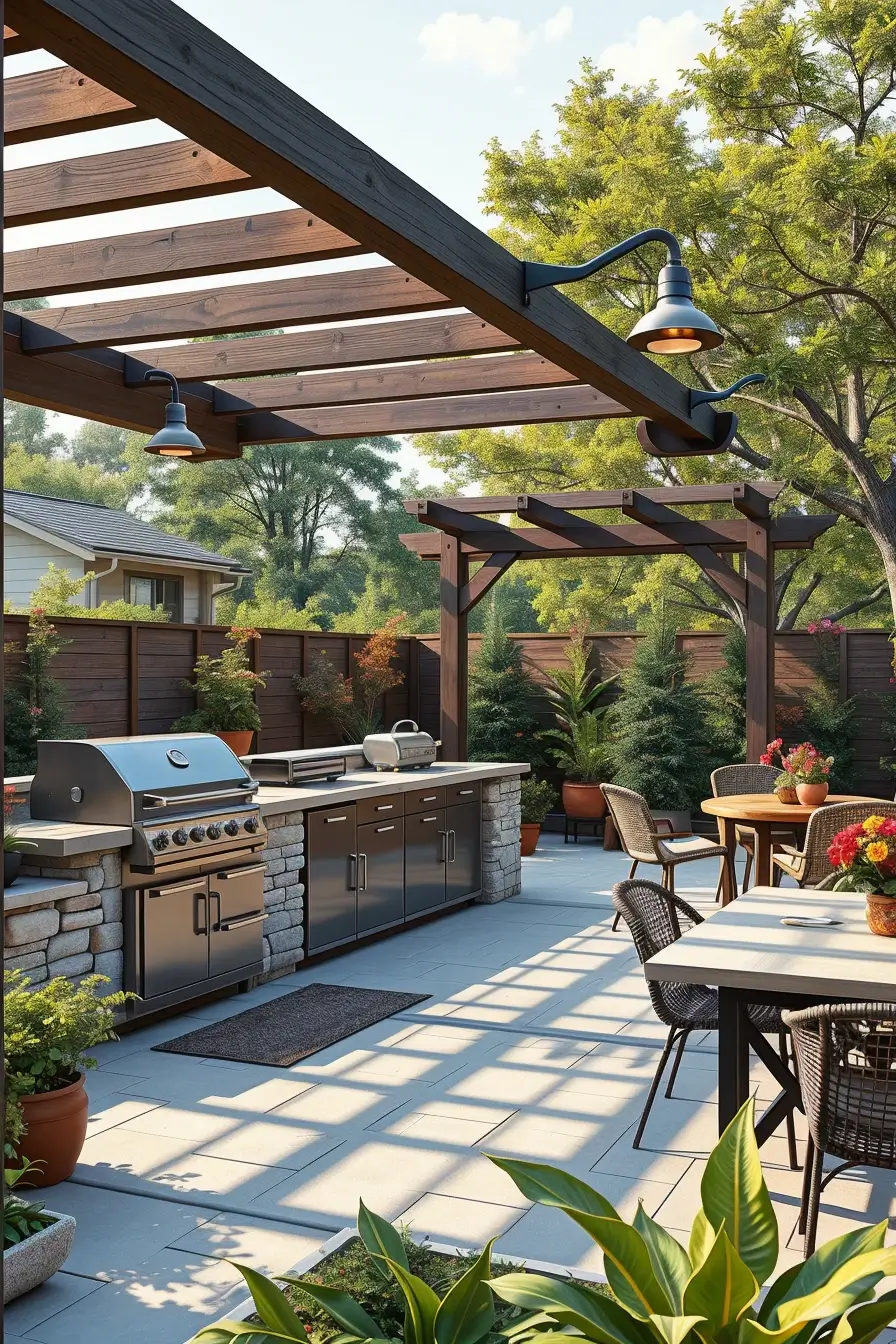
I typically include a grill, prep surfaces, storage, refrigeration, and a dining area within one continuous layout. Furniture choices lean toward dining tables and comfortable chairs that support longer meals. The absence of full walls keeps the space adaptable to different weather conditions.
From my experience, this setup suits households that entertain frequently. Media outlets like HGTV consistently highlight open-air kitchens as the most versatile outdoor solution, and I agree based on client feedback and long-term use.
What I would add to complete this area is a partial overhead cover or pergola. This provides shade and weather protection without sacrificing the open-air feeling.
11. Concrete And Stone Garden Barbecue Areas With Modern Appeal
I often recommend concrete and stone garden barbecue areas for 2026 because they offer durability, clean lines, and a strong architectural presence that feels timeless yet modern. These materials naturally withstand heat, weather, and heavy use, making them ideal for outdoor cooking zones. When designed properly, concrete and stone surfaces create a cohesive backdrop that allows the barbecue area to feel like a natural extension of the home rather than a temporary setup.
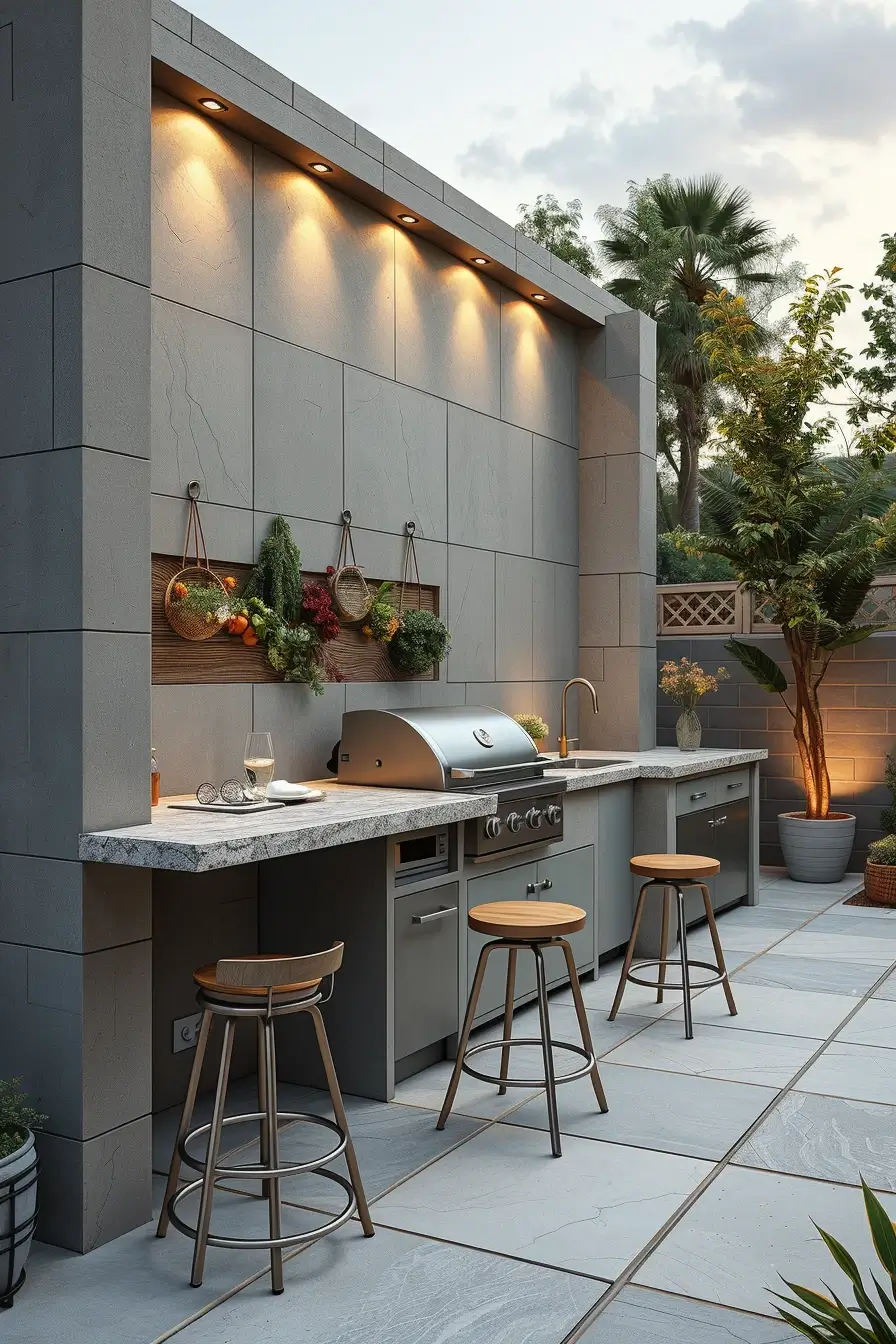
In my experience, the key elements include a built-in concrete grill station, stone countertops with a matte finish, integrated storage niches, and low-profile seating made from the same materials. I prefer pairing stone worktops with minimalist metal stools or solid wood benches to soften the look. Each element earns its place by balancing practicality with visual restraint, ensuring the space remains functional without feeling bulky.
From a professional standpoint, many U.S. landscape designers, including those featured in Architectural Digest, emphasize material consistency in outdoor spaces. I agree with this approach and have seen how limiting the palette to two or three materials creates a refined and intentional design. A concrete and stone barbecue area feels especially relevant for homeowners seeking longevity and low maintenance without sacrificing aesthetics.
What I would still add to this type of space is subtle outdoor lighting integrated directly into stone edges or concrete plinths. This improves safety during evening use and enhances the sculptural quality of the materials without introducing visual clutter.
12. Compact Garden Barbecue Areas For Stylish Small Yards
When working with smaller gardens, I focus on compact barbecue areas that maximize efficiency without compromising comfort or style. For 2026, compact layouts are less about limitation and more about precision, where every square meter is carefully planned. I design these spaces to feel open by using streamlined forms and smart zoning rather than bulky structures.
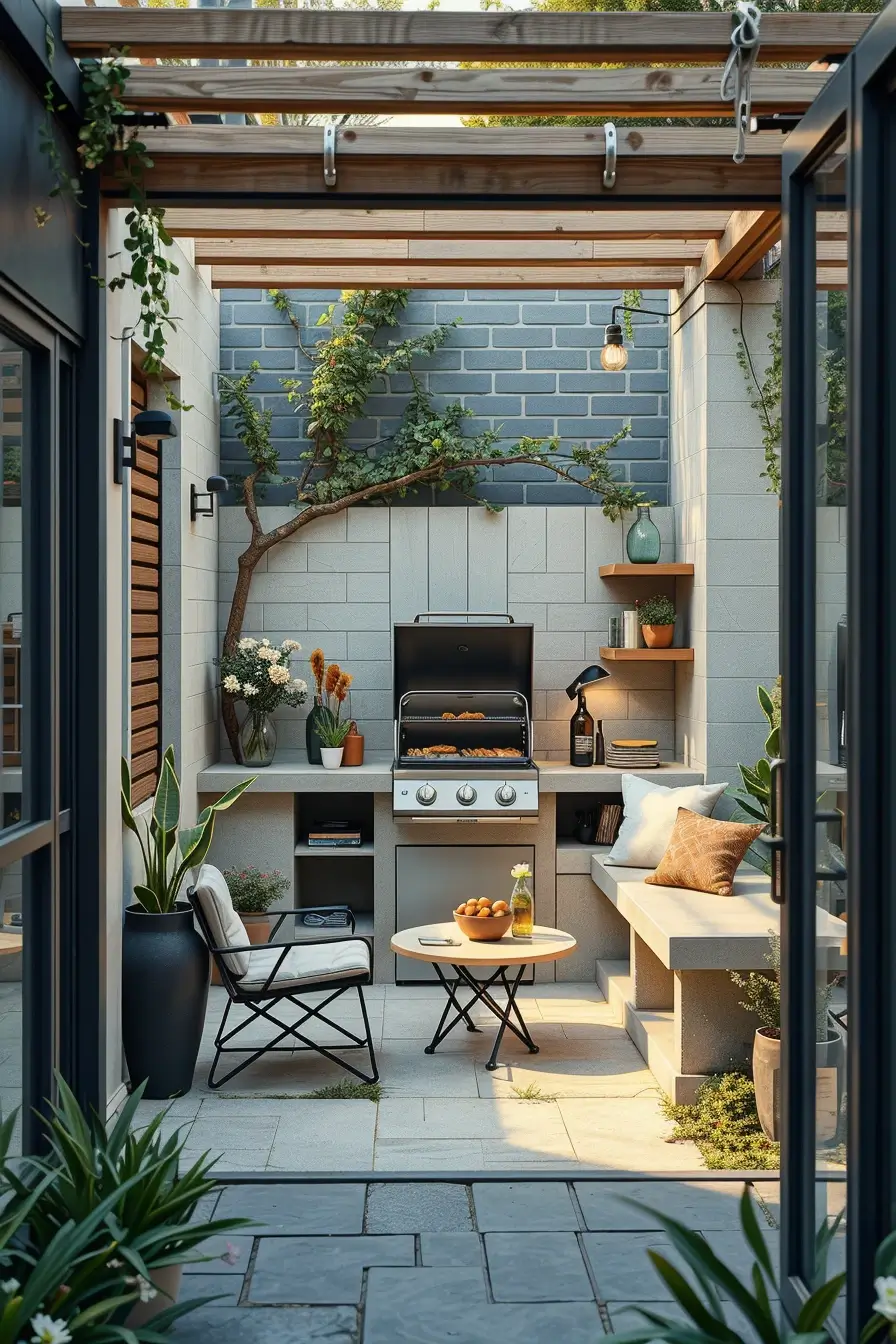
I typically include a slim built-in grill, foldable or wall-mounted prep surfaces, and lightweight outdoor furniture that can be moved or stored easily. Seating often takes the form of built-in benches with hidden storage underneath, which helps maintain visual order. I choose materials like porcelain stone slabs or smooth concrete to avoid visual heaviness in tight spaces.
Personally, I’ve found that small barbecue areas benefit from vertical design elements. Designers from Better Homes & Gardens frequently highlight the importance of vertical solutions, and I agree based on real projects. Vertical shelving, narrow planters, or wall-mounted lighting can visually expand the area while keeping the floor clear.
To complete this type of setup, I would add a compact shade solution such as a retractable awning or a minimalist cantilever umbrella. This ensures the space remains usable throughout the day without overwhelming the garden visually.
13. Garden Barbecue Areas With Statement Fire Features
Statement fire features are becoming a defining element of modern garden barbecue areas in 2026. I see these designs as multifunctional spaces where cooking, warmth, and visual drama coexist. A well-placed fire element anchors the entire layout and naturally draws people together, extending the usability of the space into cooler evenings.
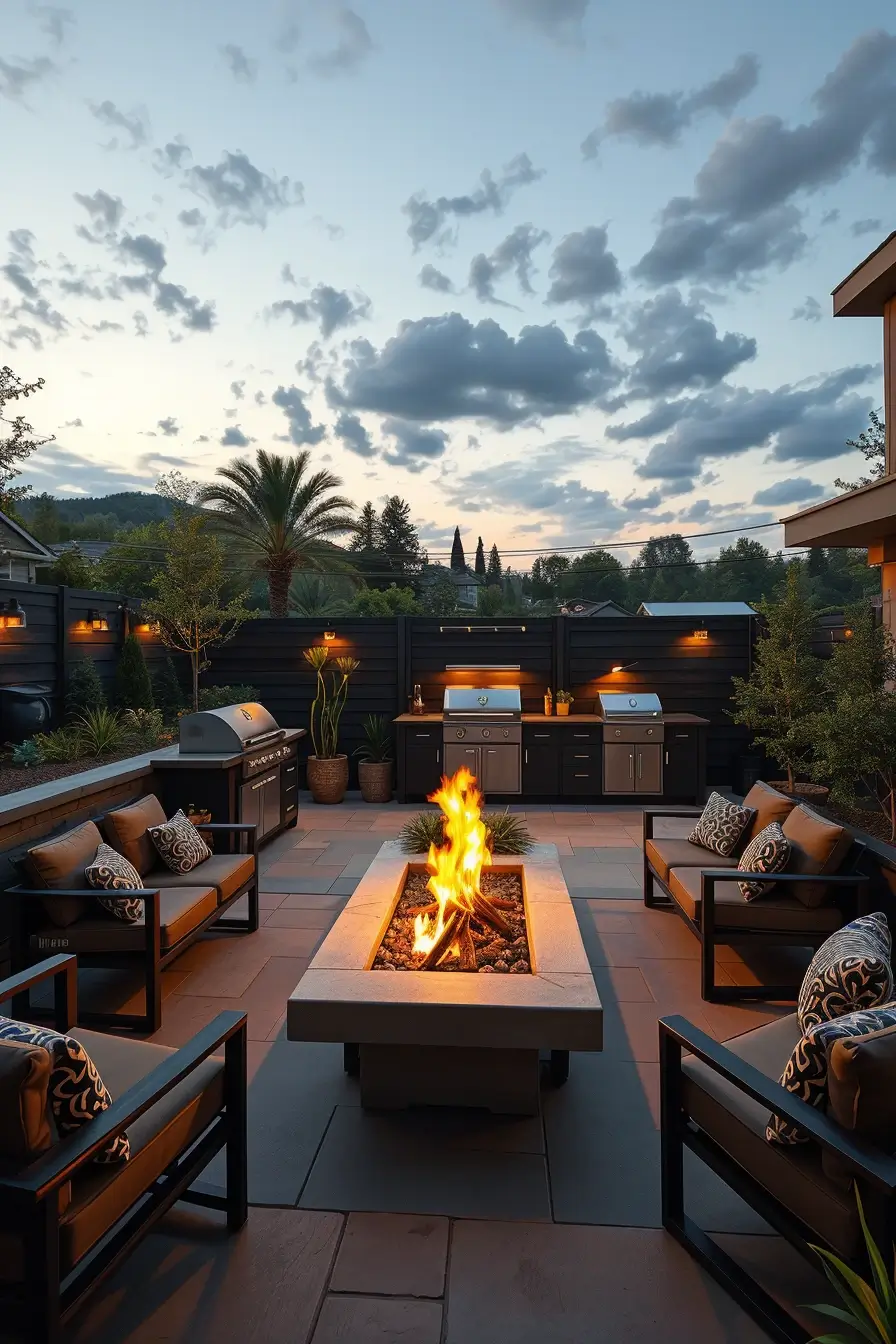
In these designs, I incorporate fire tables, linear gas fire pits, or integrated flame channels alongside the barbecue unit. Materials such as blackened steel, fire-rated concrete, and natural stone ensure safety while reinforcing a contemporary aesthetic. Seating is typically arranged in a semi-circle to encourage conversation and comfort around the fire.
From my perspective, designers featured in Dezeen often stress that fire features should feel intentional, not decorative. I fully support this view and always ensure the fire element has a clear purpose within the layout. When done correctly, it elevates the barbecue area from a cooking zone to a true outdoor living room.
What I would add here is a dedicated fire control and safety zone, including discreet storage for fire tools and a heat-resistant surface nearby. This enhances both usability and peace of mind without affecting the design flow.
14. Nature-Integrated Barbecue Areas With Organic Layouts
Nature-integrated barbecue areas focus on organic layouts that respond to the landscape rather than impose rigid geometry. For 2026, I see a strong move toward designs that blend seamlessly into gardens through curved forms and natural transitions. These spaces feel relaxed and intuitive, encouraging longer, more comfortable gatherings.
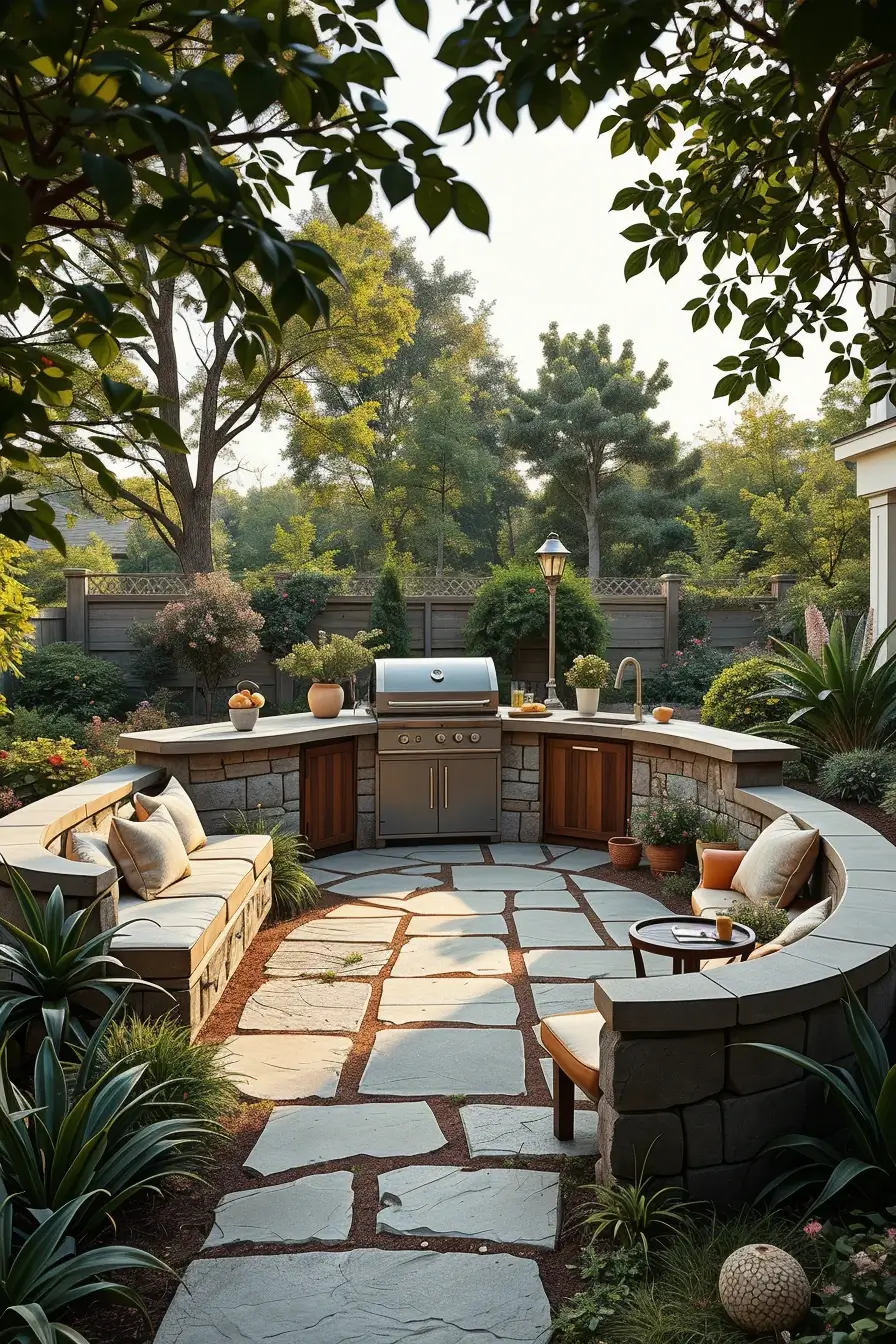
I usually incorporate stone paving with irregular edges, wood-clad barbecue units, and built-in seating that follows the natural contours of the garden. Furniture tends to be low-profile and tactile, with weather-resistant wood and neutral cushions. Every element is chosen to echo the surrounding environment rather than compete with it.
In my professional opinion, landscape architects writing for Garden Design Magazine consistently highlight the emotional impact of organic layouts. I’ve observed firsthand how these spaces feel more inviting and less formal, making them ideal for family use and casual entertaining.
To enhance this type of barbecue area, I would add layered planting zones around the perimeter. This softens hard surfaces, improves privacy, and reinforces the connection between cooking, dining, and nature.
15. Modular Garden Barbecue Areas For Flexible Outdoor Living
Modular barbecue areas represent flexibility and adaptability, which are key priorities for outdoor living in 2026. I design these spaces to evolve over time, allowing homeowners to reconfigure layouts based on changing needs. This approach is especially valuable for multifunctional gardens that host both small family dinners and larger gatherings.
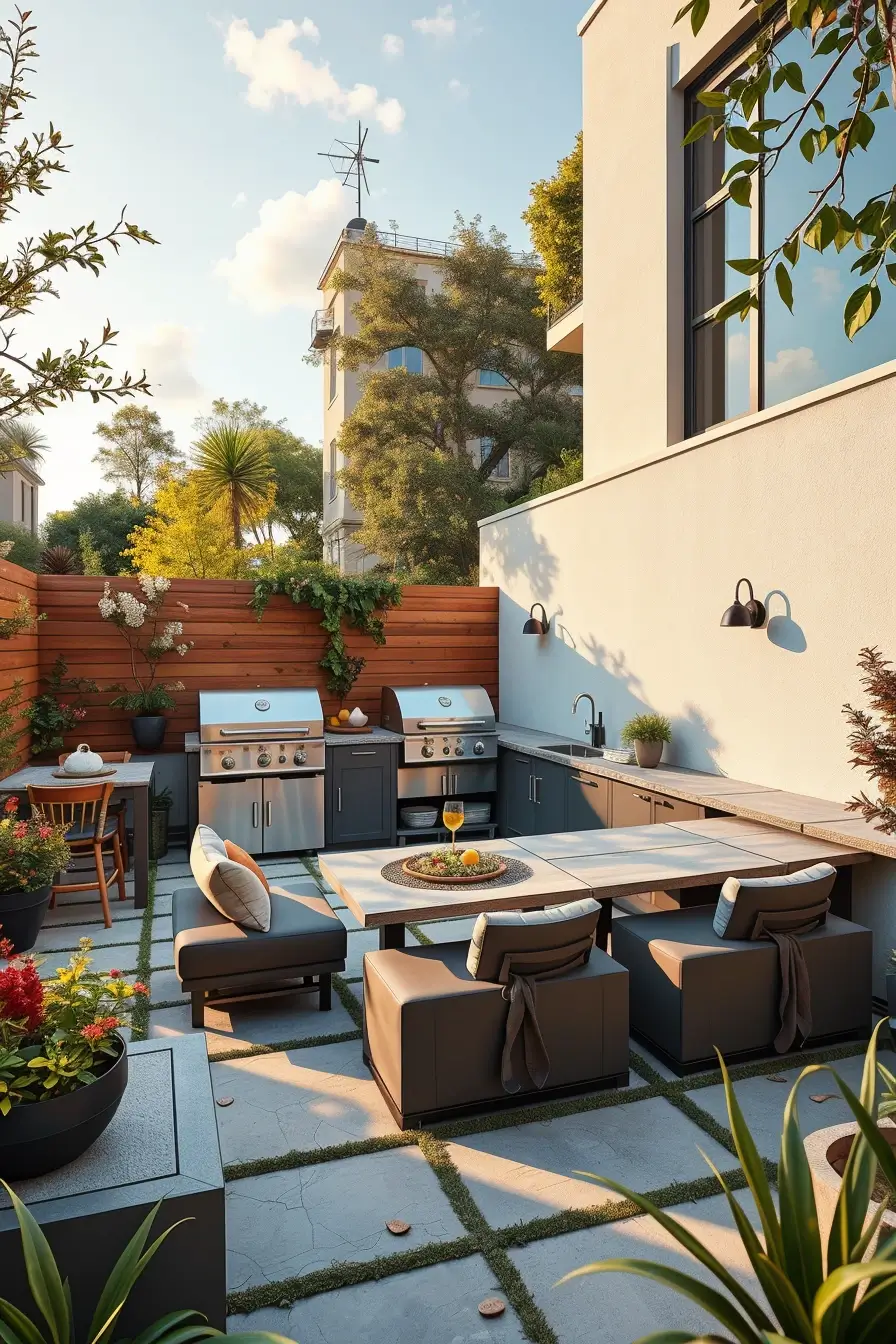
My preferred modular elements include movable grill units, interchangeable countertop modules, and seating blocks that can be rearranged. Materials like powder-coated metal, concrete composites, and compact stone slabs ensure durability while keeping the system visually cohesive. Each module serves a clear purpose, reducing waste and unnecessary features.
From my experience, outdoor design experts from HGTV emphasize adaptability as a long-term investment, and I’ve seen this proven in practice. Modular systems extend the lifespan of a barbecue area by allowing updates without full reconstruction, which is both cost-effective and sustainable.
What I would still add to modular layouts is a clearly defined storage solution for unused modules. This keeps the garden organized and ensures flexibility does not turn into visual chaos.
16. Ultra-Modern Garden Barbecue Areas With Metal Accents
When I design ultra-modern garden barbecue areas for 2026, I often rely on metal accents to create a crisp, forward-looking aesthetic. Metal introduces precision and structure, which works particularly well in contemporary outdoor spaces where clean geometry and contrast are essential. These barbecue areas feel intentional, architectural, and visually strong without becoming cold or uninviting.
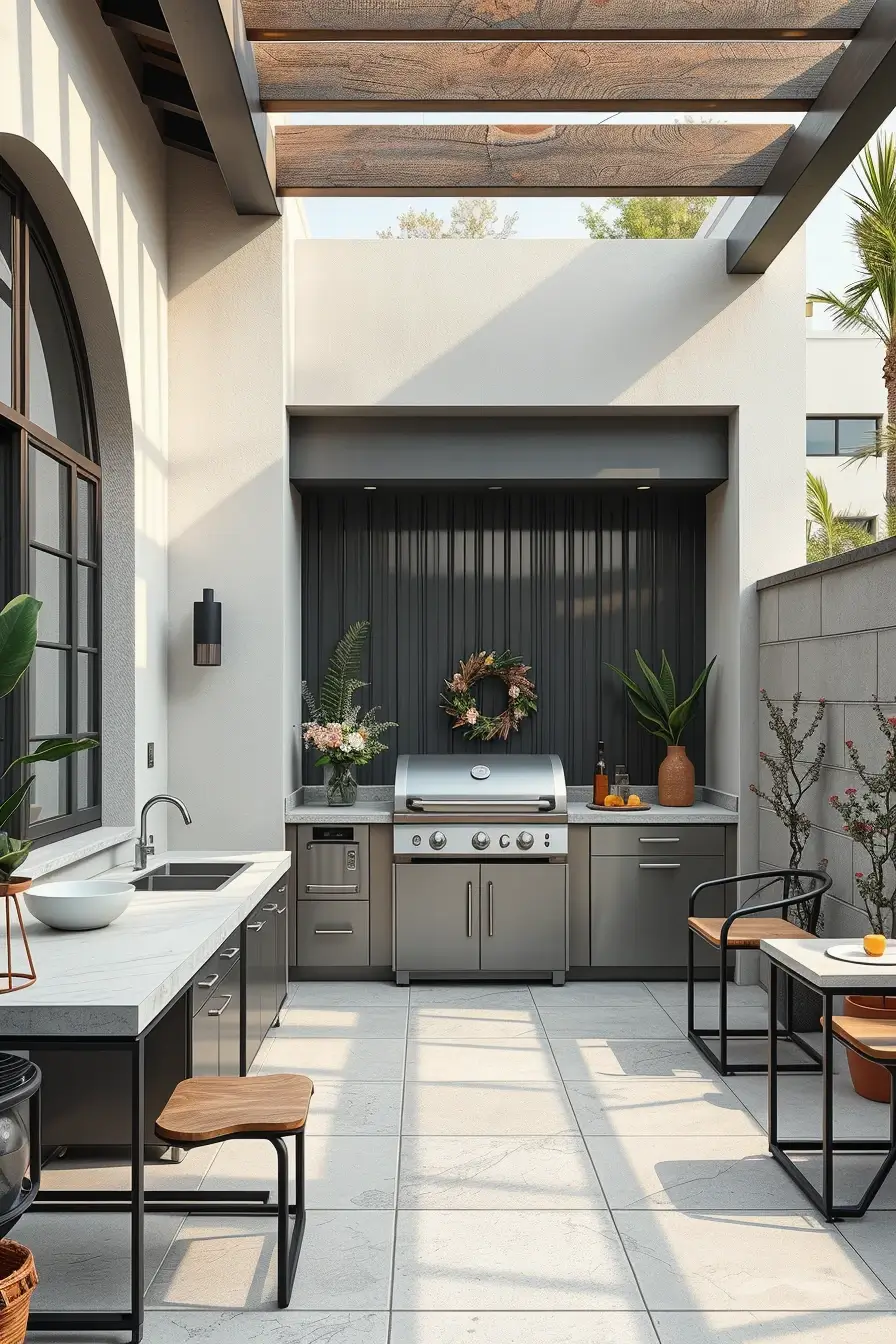
In practice, I use stainless steel or powder-coated metal for grill surrounds, cabinetry, and framing elements. Paired with concrete or stone worktops, metal adds durability and a refined industrial edge. I also include metal-framed seating, slim countertops, and integrated metal shelving because they resist weather and maintain their appearance over time.
From my experience, outdoor kitchen specialists featured in Dwell emphasize that metal finishes should be balanced with warmer textures. I fully agree and always soften metal-heavy designs with wood accents or neutral textiles. This approach ensures the space remains welcoming while still looking undeniably modern.
What I would add to these barbecue areas is concealed ventilation and integrated electrical access. This enhances performance and safety while preserving the sleek, uninterrupted surfaces that define ultra-modern design.
17. Designer Pergola-Covered Barbecue Areas
Pergola-covered barbecue areas have become a defining feature of designer garden barbecue areas for 2026. I view pergolas not only as shade solutions but as architectural elements that frame the entire outdoor experience. A well-designed pergola creates structure, defines zones, and elevates the barbecue area into a true outdoor room.
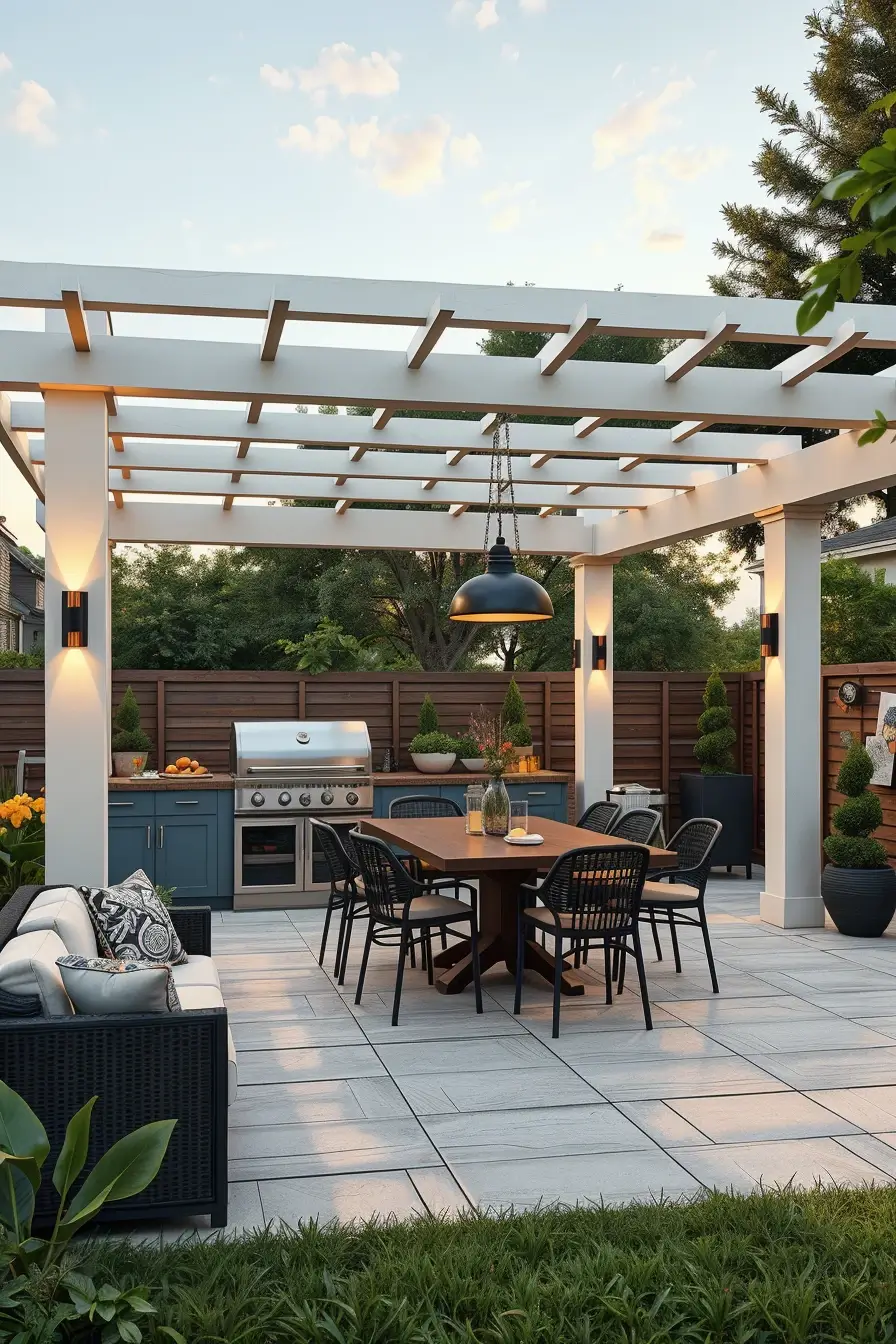
I usually select pergolas with clean-lined metal or wood structures, often paired with adjustable louvers or fabric panels. Underneath, I place a built-in grill, generous prep counters, and a dining table suited for outdoor use. Lighting, heaters, and speakers are often integrated into the pergola structure to enhance comfort and usability.
In my professional work, I align with recommendations from Sunset Magazine, which frequently highlights pergolas as essential for extending outdoor living seasons. I’ve found that clients appreciate the balance between openness and protection that pergolas provide, especially when entertaining larger groups.
To complete this space, I would add vertical side panels or sliding screens. These elements provide wind protection and privacy without fully enclosing the barbecue area, maintaining an open-air feeling.
18. Creative Lighting Concepts For Garden Barbecue Areas
Lighting plays a crucial role in shaping creative and unique garden barbecue areas in 2026. I approach lighting as both a functional necessity and a design tool that defines mood, safety, and spatial perception. Proper lighting transforms a daytime barbecue area into an inviting evening destination.
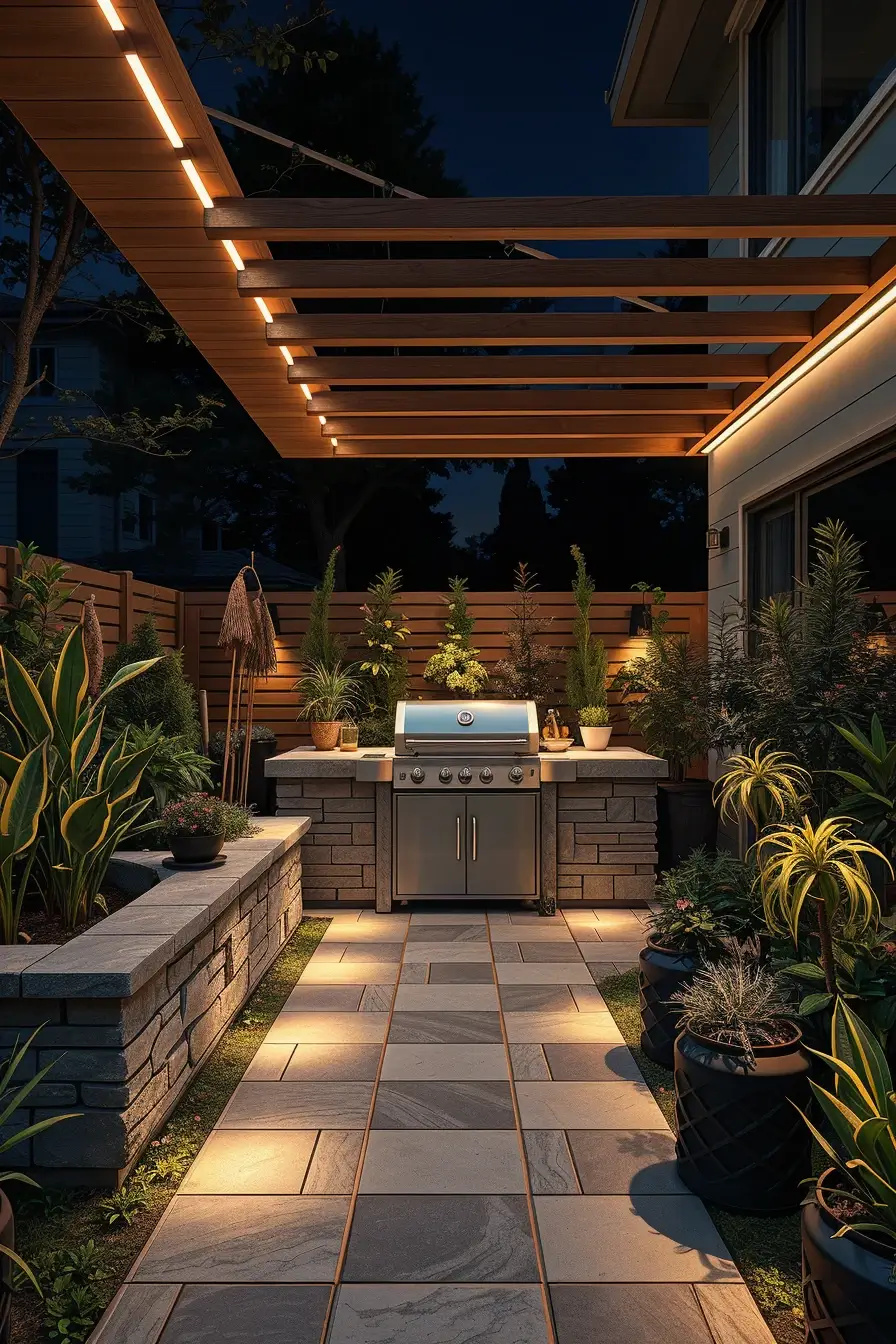
I incorporate layered lighting schemes that include task lighting above grills, ambient lighting along pathways, and accent lighting highlighting textures or architectural elements. Fixtures are typically minimalist, weather-resistant, and integrated discreetly into structures or surfaces to avoid visual clutter.
From my experience, lighting designers featured in Lighting Design + Application consistently emphasize the importance of layered illumination. I’ve applied these principles in real projects and seen how thoughtful lighting improves both usability and atmosphere, especially during social gatherings.
What I would still add here is smart lighting control. Adjustable brightness and programmable scenes allow homeowners to adapt the mood effortlessly, making the barbecue area suitable for everything from casual dinners to evening events.
19. Garden Barbecue Areas With Lounge-Style Atmosphere
Lounge-style barbecue areas focus on comfort and relaxation while maintaining full cooking functionality. For 2026, I design these spaces to feel more like outdoor living rooms than traditional grilling zones. The emphasis is on comfort, flow, and social interaction.
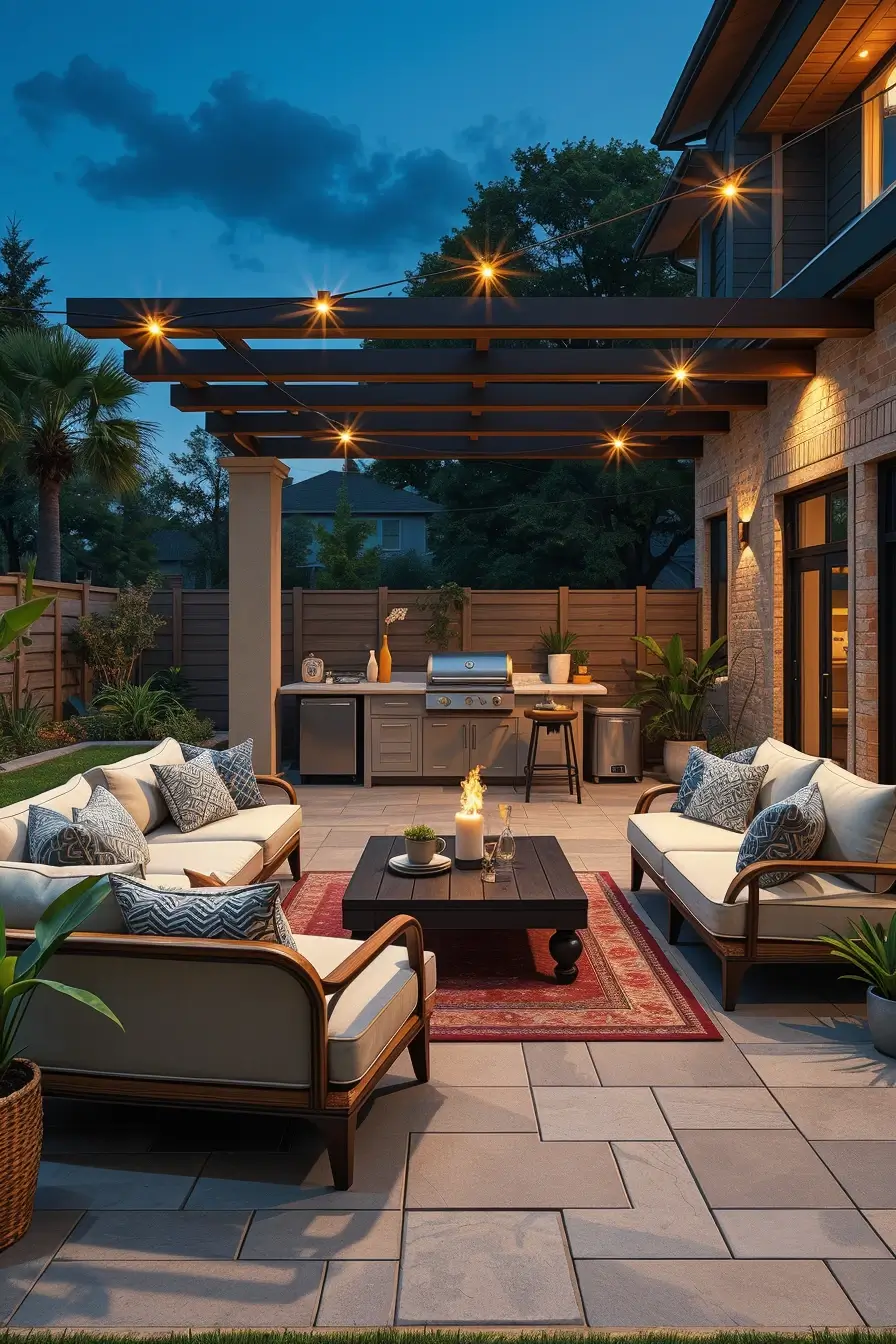
I typically include deep-seated outdoor sofas, low coffee tables, and integrated grills positioned slightly away from the main seating area. Upholstery is weather-resistant, and materials are selected to maintain softness without compromising durability. The layout encourages conversation and shared experiences rather than focusing solely on cooking.
In my opinion, many designers featured on Elle Decor stress the importance of comfort in outdoor spaces, and I strongly agree. Based on my experience, people linger longer and use these spaces more frequently when they feel relaxed and at ease.
To enhance this lounge-style setup, I would add subtle sound integration and soft textiles such as outdoor rugs or cushions. These elements further reinforce the sense of comfort and make the space feel complete.
20. Statement Barbecue Islands As Garden Focal Points
Statement barbecue islands serve as visual anchors in modern designer garden barbecue areas for 2026. I design these islands to command attention while remaining highly functional. They often define the layout of the entire garden space, acting as both a cooking hub and a social centerpiece.
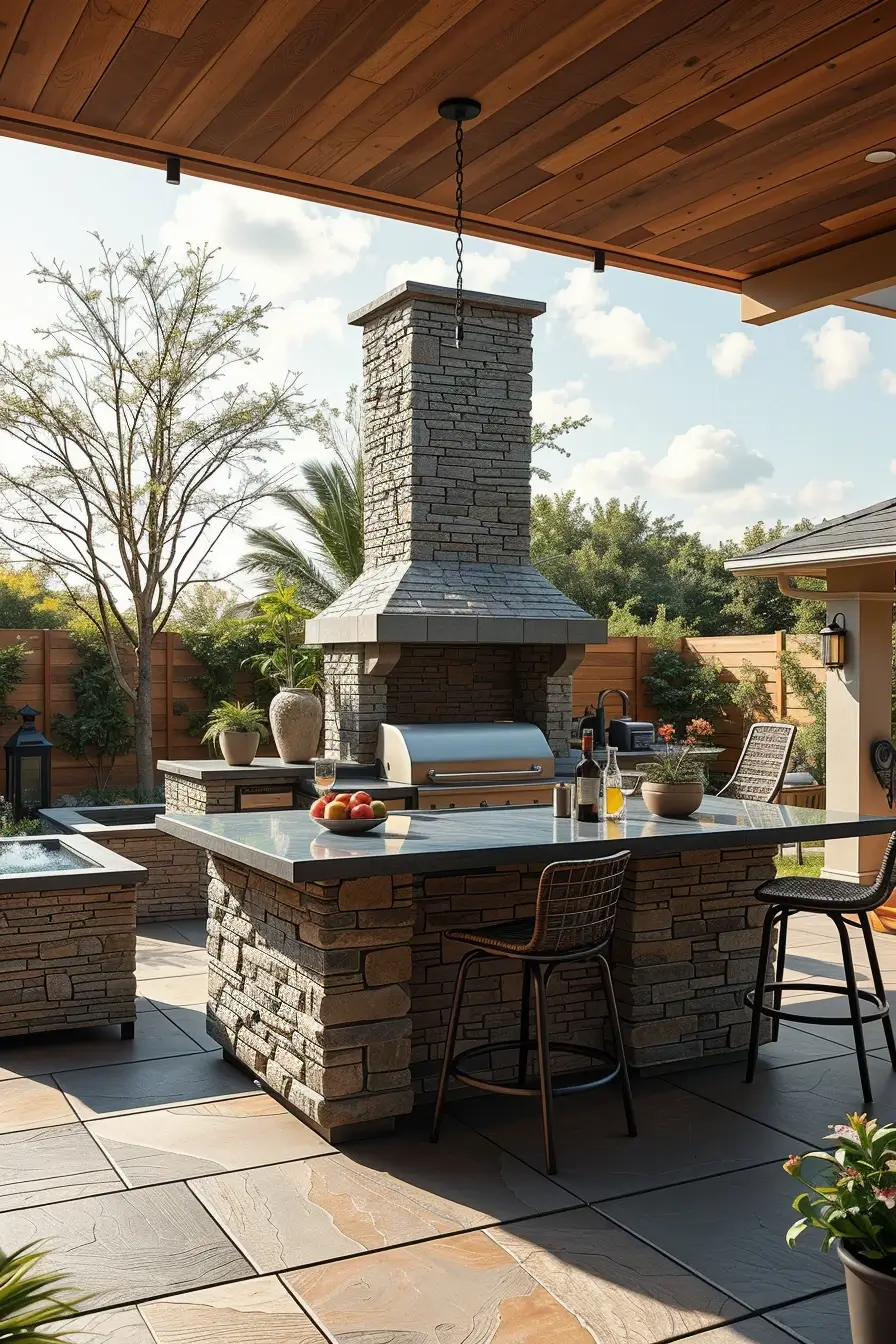
I usually construct these islands with bold materials such as stone slabs, concrete composites, or metal cladding. Integrated grills, prep sinks, and storage are arranged ergonomically, while bar seating invites guests to gather around. The island becomes a natural meeting point without obstructing movement.
From a professional perspective, experts from Architectural Digest often highlight focal-point design as a way to organize open spaces. I’ve applied this concept repeatedly and found that a strong central element brings clarity and cohesion to outdoor layouts.
What I would add to statement barbecue islands is subtle contrast through texture or color. This helps distinguish the island from surrounding elements while reinforcing its role as the centerpiece of the garden.
21. Eco-Conscious Garden Barbecue Areas With Sustainable Design
I see eco-conscious garden barbecue areas in 2026 as thoughtfully planned outdoor environments where sustainability directly enhances usability. These spaces rely on natural materials, energy-efficient layouts, and environmentally responsible construction methods that reduce long-term maintenance while improving comfort. From shaded zones created by living greenery to layouts that optimize airflow and natural cooling, this approach supports both practical cooking and relaxed outdoor gatherings.
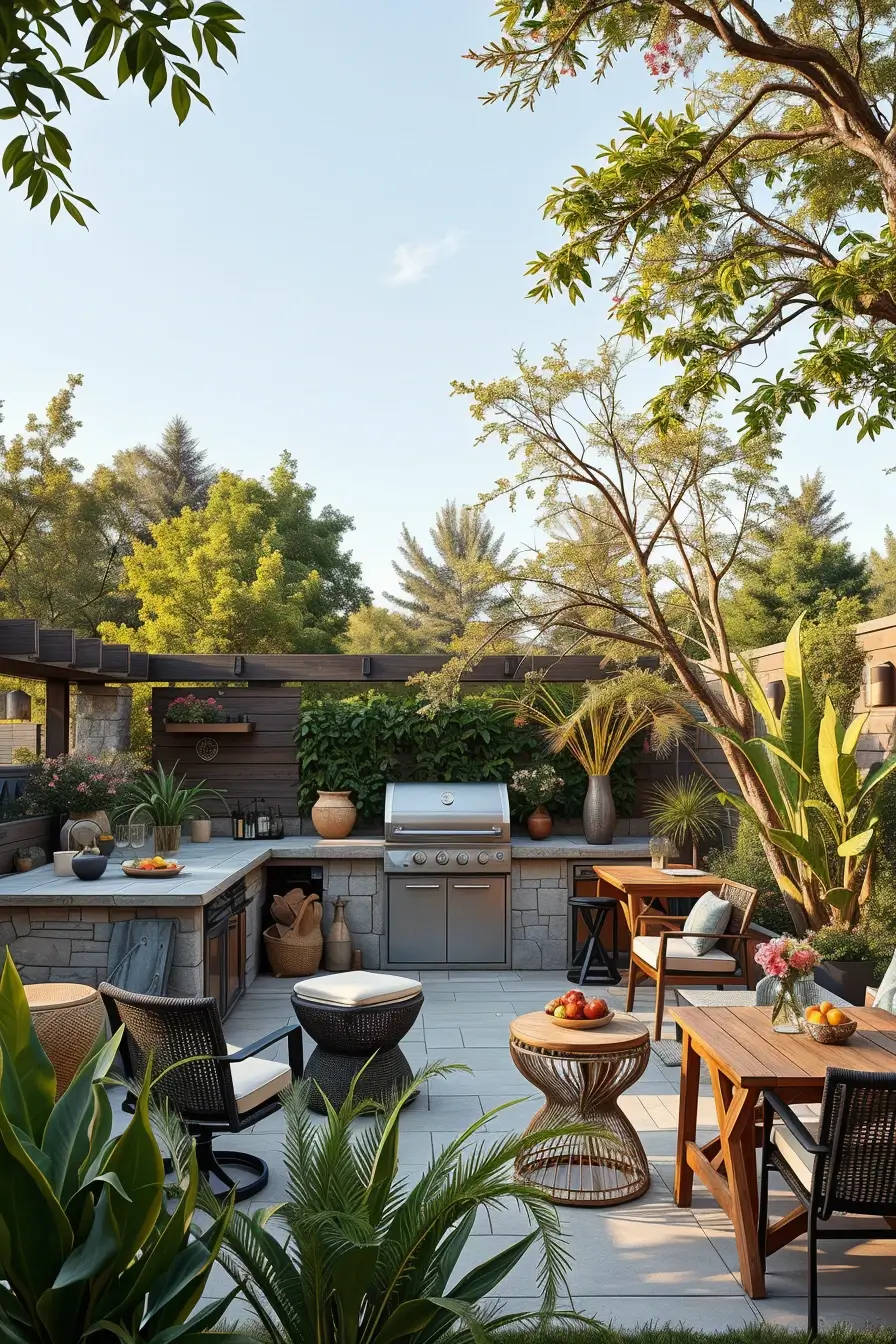
In my experience, every element plays a role in reinforcing sustainable design. I prioritize recycled stone or responsibly sourced wood for countertops and built-in grills, as these materials age beautifully and withstand outdoor conditions. Seating made from reclaimed timber, weather-resistant fabrics derived from recycled fibers, and LED lighting powered by solar panels all contribute to a cohesive and responsible setup without sacrificing aesthetics.
I personally find that clients respond positively to these choices once they understand the long-term benefits. Designers featured in Architectural Digest often highlight that sustainable outdoor spaces feel more grounded and timeless, which I fully agree with. When materials are honest and durable, the barbecue area becomes a lasting part of the garden rather than a seasonal feature.
What I would still add to this type of barbecue area is an integrated composting or waste-sorting station discreetly built into cabinetry. This small addition supports eco-friendly habits and keeps the space organized without disrupting the overall visual balance.
22. Sunken Garden Barbecue Areas With Architectural Depth
Sunken garden barbecue areas stand out to me as one of the most unusual yet functional outdoor concepts for 2026. By lowering the cooking and seating zone slightly below ground level, I create a natural sense of enclosure that improves wind protection, acoustics, and intimacy. This architectural depth transforms a simple barbecue setup into a destination within the garden.
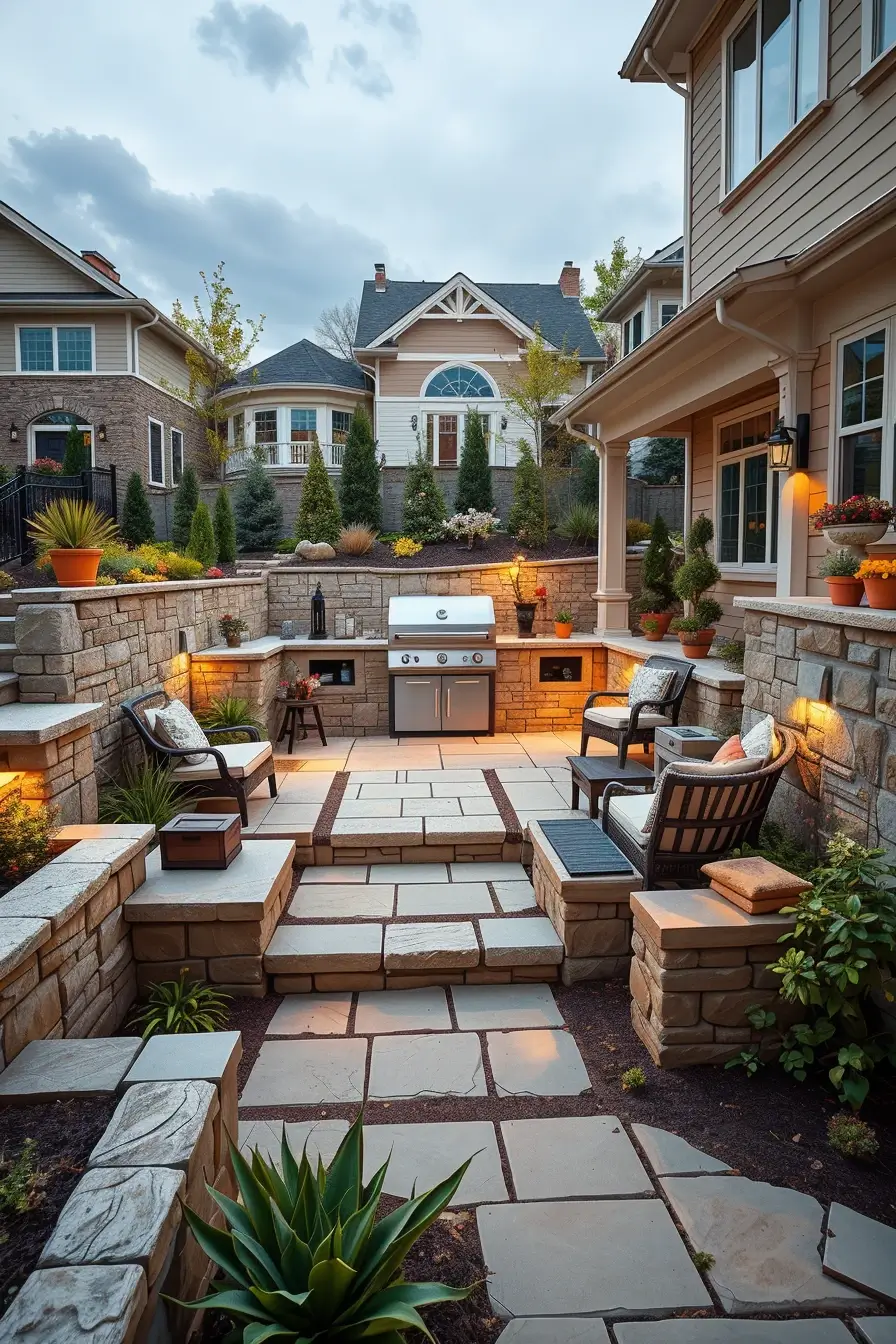
From a design standpoint, I carefully select materials that emphasize the sunken effect. Stone retaining walls, textured concrete steps, and built-in benches help visually anchor the space. I always include layered seating, such as cushioned banquettes and low lounge chairs, because they enhance comfort while reinforcing the architectural flow of the design.
I have noticed that sunken barbecue areas naturally encourage longer gatherings. Outdoor design experts from Dwell magazine often mention that spatial separation enhances social interaction, and my experience confirms this. Guests feel more relaxed and focused when the space subtly shields them from the rest of the garden.
To complete this concept, I would recommend adding integrated step lighting and discreet drainage systems. These elements improve safety, ensure year-round usability, and protect the structure from weather-related wear without altering its visual appeal.
23. Garden Barbecue Areas Designed For Entertaining Guests
When I design garden barbecue areas specifically for entertaining, my priority is flow and visibility. In 2026, these spaces are no longer just about grilling; they are social hubs where cooking, dining, and conversation happen simultaneously. I focus on open layouts that allow the host to interact with guests while preparing food, making the experience inclusive and dynamic.
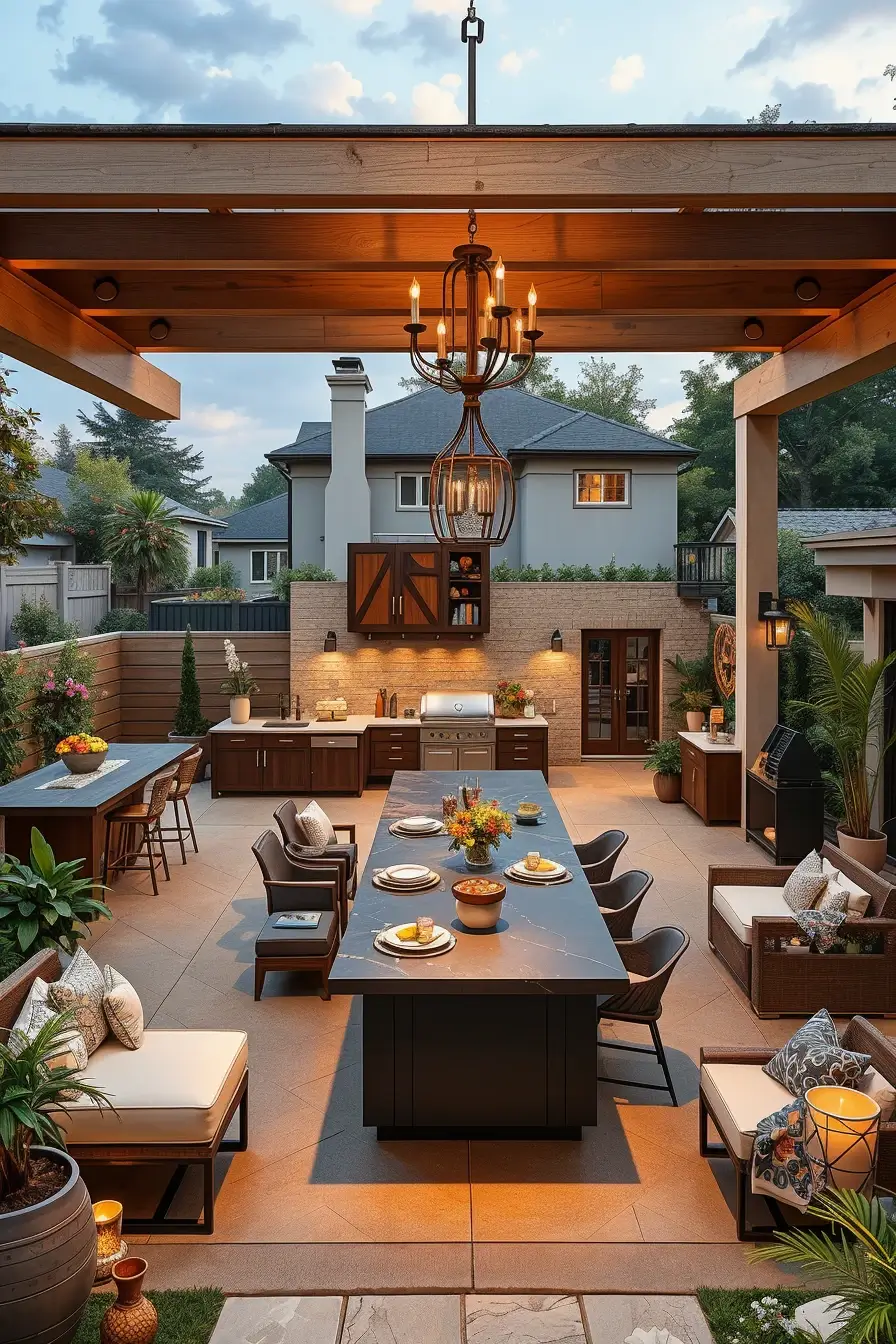
Furniture selection is critical here. I incorporate long dining tables, flexible seating options, and bar-height counters so guests can gather comfortably at different levels. Modular sofas, weather-resistant stools, and extendable tables allow the space to adapt to both small gatherings and larger events without feeling crowded.
Personally, I believe successful entertaining spaces are those where guests never feel unsure of where to stand or sit. Interior designers frequently featured in Better Homes & Gardens emphasize intuitive layouts, and I apply the same principle outdoors. Clear zoning and comfortable furniture naturally guide social interaction.
What I would add to elevate this setup further is a dedicated beverage station with refrigeration and storage. This reduces traffic around the grill and keeps the hosting experience smooth and stress-free.
24. High-End Outdoor Furniture For Barbecue Areas
High-end outdoor furniture defines the designer quality of garden barbecue areas in 2026. I approach furniture selection as I would for an interior space, prioritizing ergonomics, durability, and visual cohesion. These barbecue areas feel intentional because every piece serves both comfort and style.
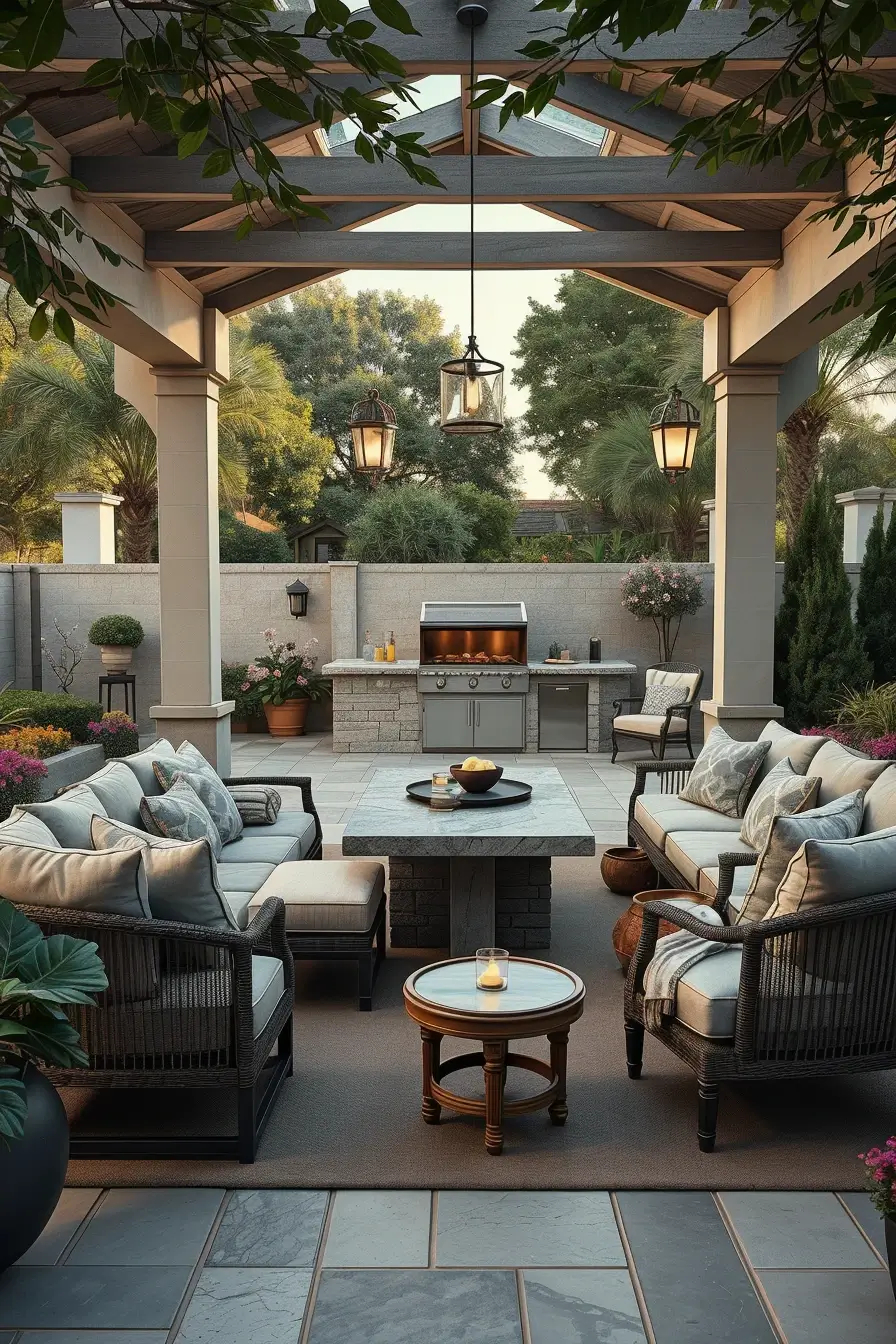
I often choose deep-seated sofas with quick-dry cushions, sculptural dining chairs, and solid outdoor tables made from stone or composite materials. These items resist weather damage while maintaining a refined appearance. Side tables, footrests, and built-in storage benches add practicality without cluttering the layout.
From my professional perspective, investing in fewer but higher-quality furniture pieces always pays off. Publications like Elle Decor regularly note that outdoor spaces now follow the same quality standards as interiors, and I fully support this shift. Well-made furniture reduces replacement costs and enhances the overall experience.
To complete this section, I would include adjustable shade solutions such as retractable canopies or structured pergolas. These additions protect furniture, improve comfort, and extend the usability of the space throughout the day.
25. Creative Color Palettes For Garden Barbecue Areas 2026
Color plays a defining role in shaping creative and stylish garden barbecue areas in 2026. I see a move away from overly bright tones toward layered, sophisticated palettes inspired by natural landscapes. These color schemes help the barbecue area blend seamlessly into the garden while still feeling distinct and modern.
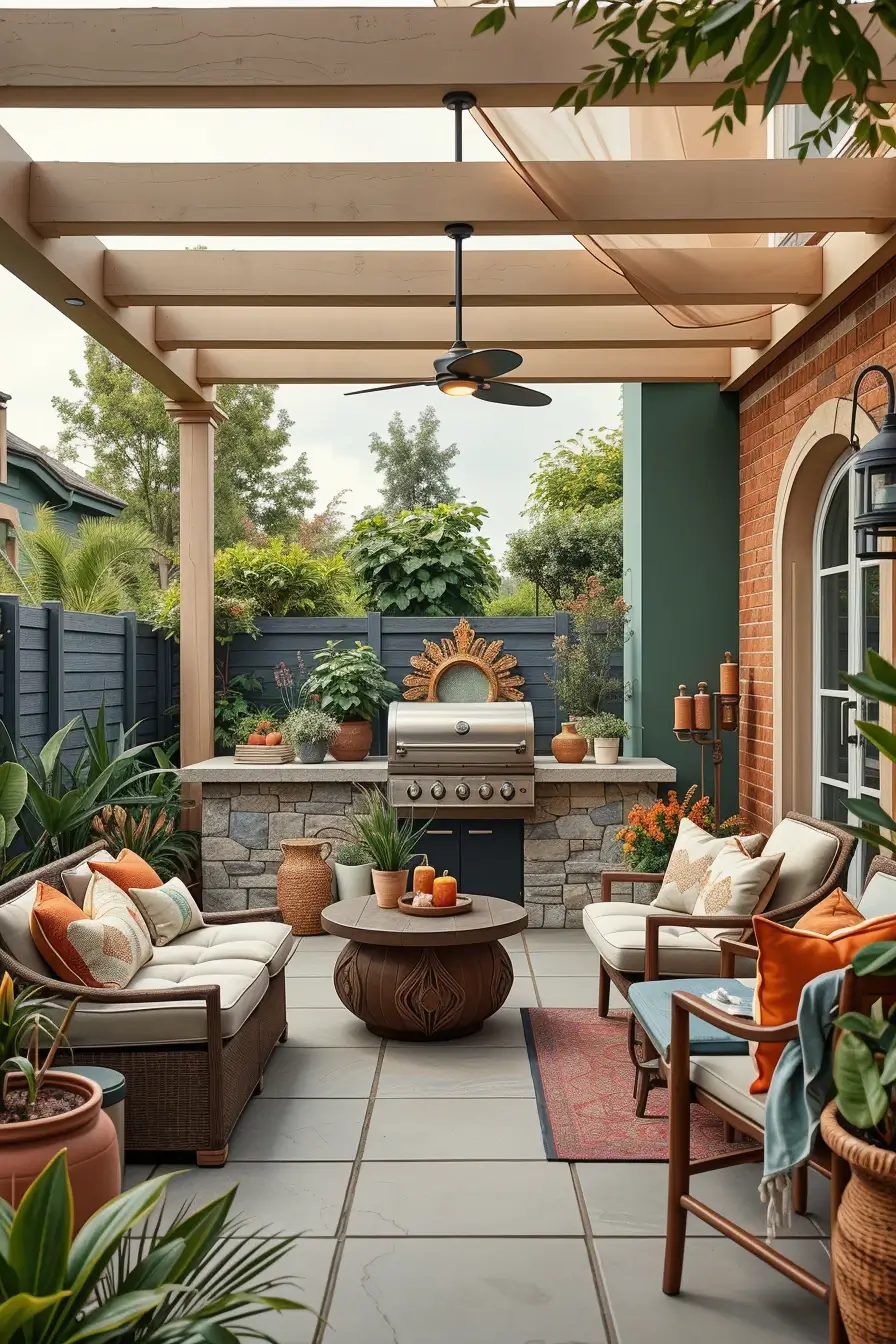
I carefully combine neutral base colors with accent tones through cushions, ceramics, and decorative elements. Earthy greens, muted terracotta, charcoal grays, and warm sand tones work well together and create visual depth. I also use subtle metallic accents in lighting fixtures or hardware to introduce a refined contrast.
In my experience, color consistency is what separates a cohesive outdoor design from a fragmented one. Designers from House Beautiful often emphasize restraint in outdoor palettes, and I agree that fewer, well-chosen colors create a calmer and more luxurious atmosphere.
What I would add here is seasonal adaptability through interchangeable textiles. Swapping cushion covers or table accessories allows the color palette to evolve throughout the year without redesigning the entire space.
26. Garden Barbecue Areas With Seamless Indoor-Outdoor Flow
I consider seamless indoor-outdoor flow one of the most modern and practical approaches to garden barbecue areas in 2026. These spaces are designed to visually and functionally connect the interior of the home with the garden, making outdoor cooking feel like a natural extension of everyday living. Large openings, aligned floor levels, and consistent materials help eliminate the boundary between inside and outside.
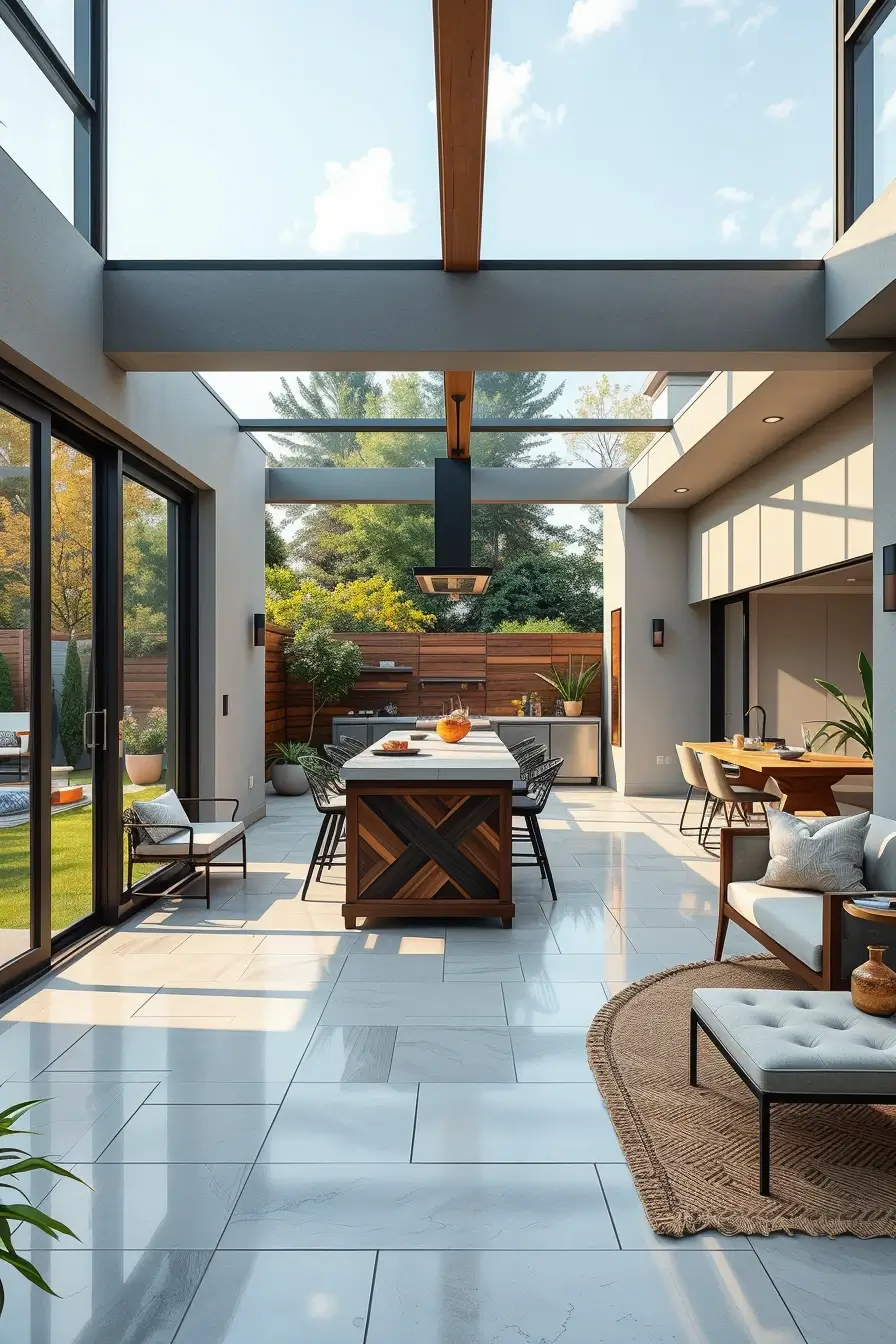
In my projects, I often repeat indoor finishes outdoors to strengthen this connection. Matching flooring materials, similar color palettes, and coordinated furniture styles create continuity. Sliding glass doors, folding wall systems, and outdoor kitchen islands positioned directly outside the indoor kitchen ensure effortless movement and usability.
From personal experience, homeowners use these spaces more frequently because they feel intuitive. Design experts featured in Architectural Digest frequently emphasize continuity as a key factor in luxury outdoor living, and I fully agree. When transitions are smooth, the barbecue area becomes part of daily routines rather than a special-occasion zone.
What I would add to improve this setup is integrated climate control solutions such as outdoor ceiling fans or discreet heaters near transition points. These additions maintain comfort and encourage year-round use without interrupting the visual flow.
27. Artistic Barbecue Areas With Custom Decorative Details
Artistic garden barbecue areas reflect a growing demand for unique and expressive outdoor spaces in 2026. I approach these designs as curated environments where cooking infrastructure and decorative elements coexist harmoniously. Custom details transform the barbecue area into a visual statement rather than a purely functional zone.
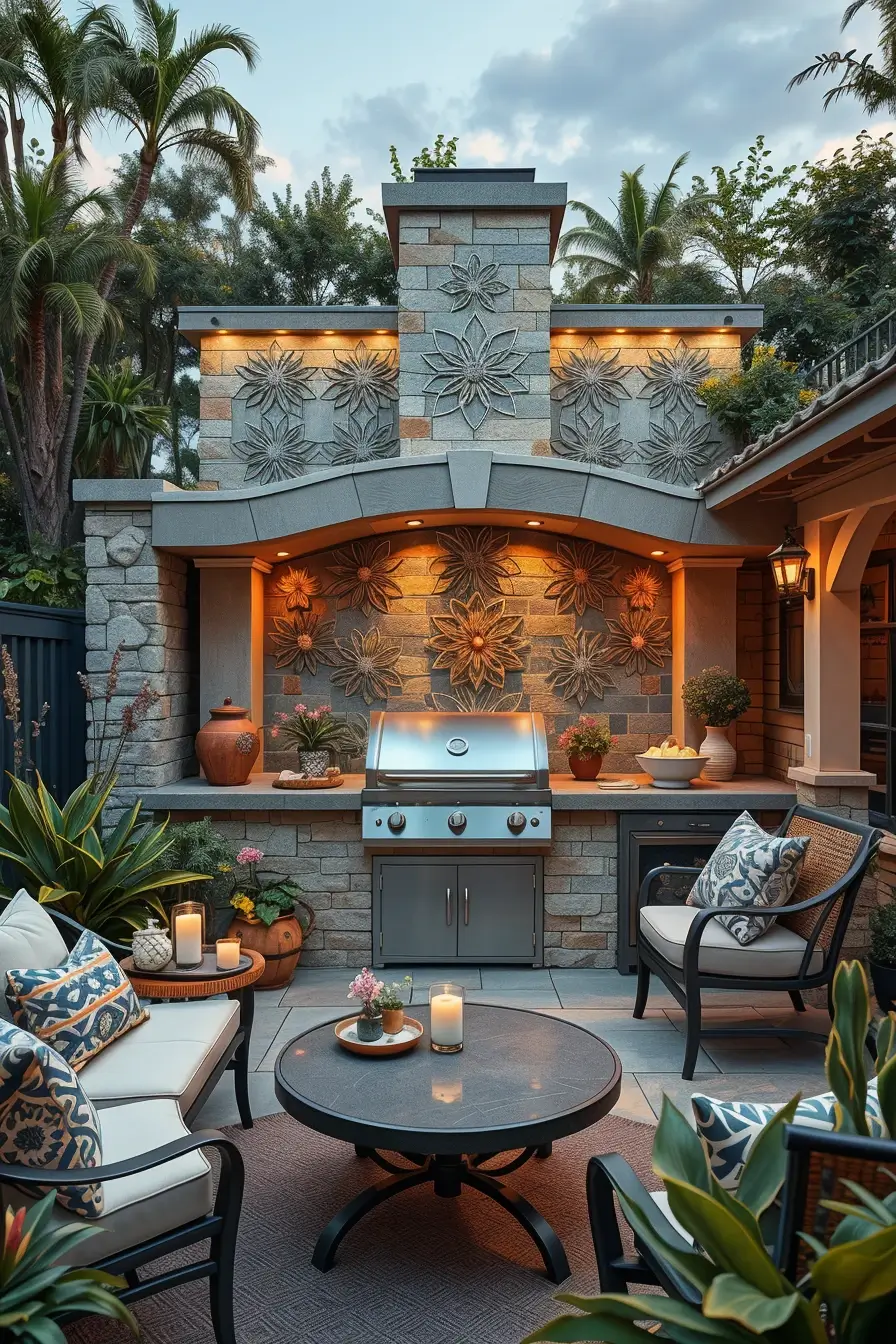
I intentionally incorporate handcrafted tiles, sculptural lighting fixtures, and custom-built grill surrounds to create individuality. Decorative wall panels, artistic metal screens, or statement backsplashes add depth while maintaining durability. Furniture choices are carefully selected to complement these artistic features without overwhelming the space.
In my opinion, artistic elements work best when they are restrained and purposeful. Interior designers writing for Dezeen often stress the importance of balance in expressive design, and I apply that same principle outdoors. One or two strong artistic features are usually more impactful than many competing details.
To enhance this concept further, I would include subtle accent lighting that highlights decorative elements at night. This ensures the artistic intent remains visible and effective after sunset.
28. Weather-Ready Garden Barbecue Areas For Year-Round Use
Designing weather-ready garden barbecue areas is essential for creating truly designer outdoor spaces in 2026. I focus on layouts and materials that withstand seasonal changes while remaining comfortable and visually appealing throughout the year. These barbecue areas are built to function beyond summer months.
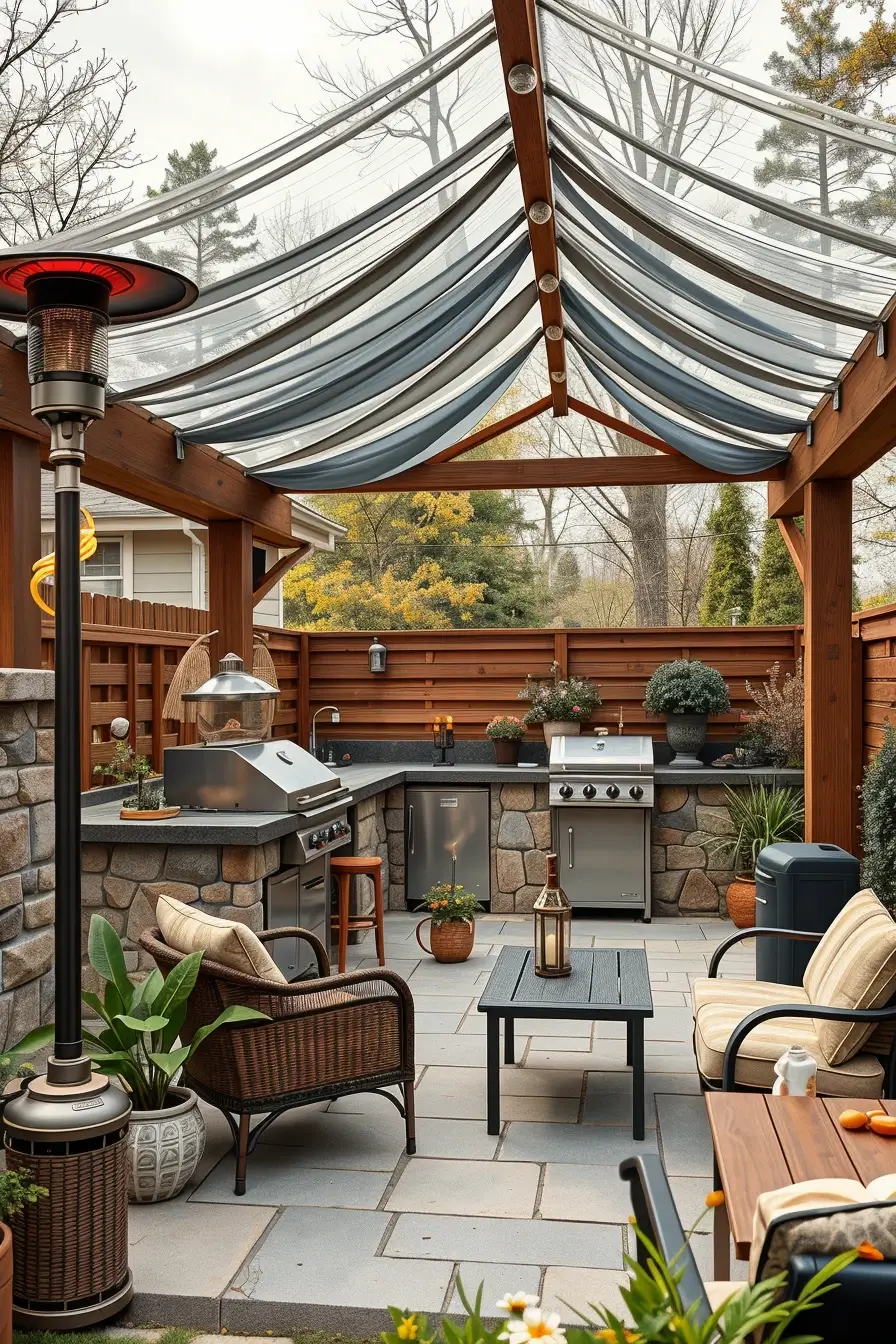
I rely on durable materials such as sealed stone, treated metals, and weather-resistant textiles to ensure longevity. Covered structures, retractable roofs, and wind-protection panels are carefully integrated to preserve openness while providing shelter. Heating elements and built-in storage protect equipment and improve usability.
From my professional perspective, clients appreciate barbecue areas that adapt to unpredictable weather. Outdoor living specialists featured in Better Homes & Gardens consistently highlight adaptability as a key trend, and I see clear demand for it. A weather-ready design maximizes return on investment by extending usage.
What I would add to complete this section is proper drainage planning and moisture-resistant finishes. These details are often overlooked but are critical for maintaining both safety and appearance over time.
29. Future Trends Shaping Garden Barbecue Areas In 2026
Looking ahead, I see garden barbecue areas in 2026 becoming more creative, intelligent, and experience-driven. These spaces reflect broader lifestyle shifts toward outdoor wellness, social connection, and integrated technology. Design choices increasingly prioritize flexibility and personalization.
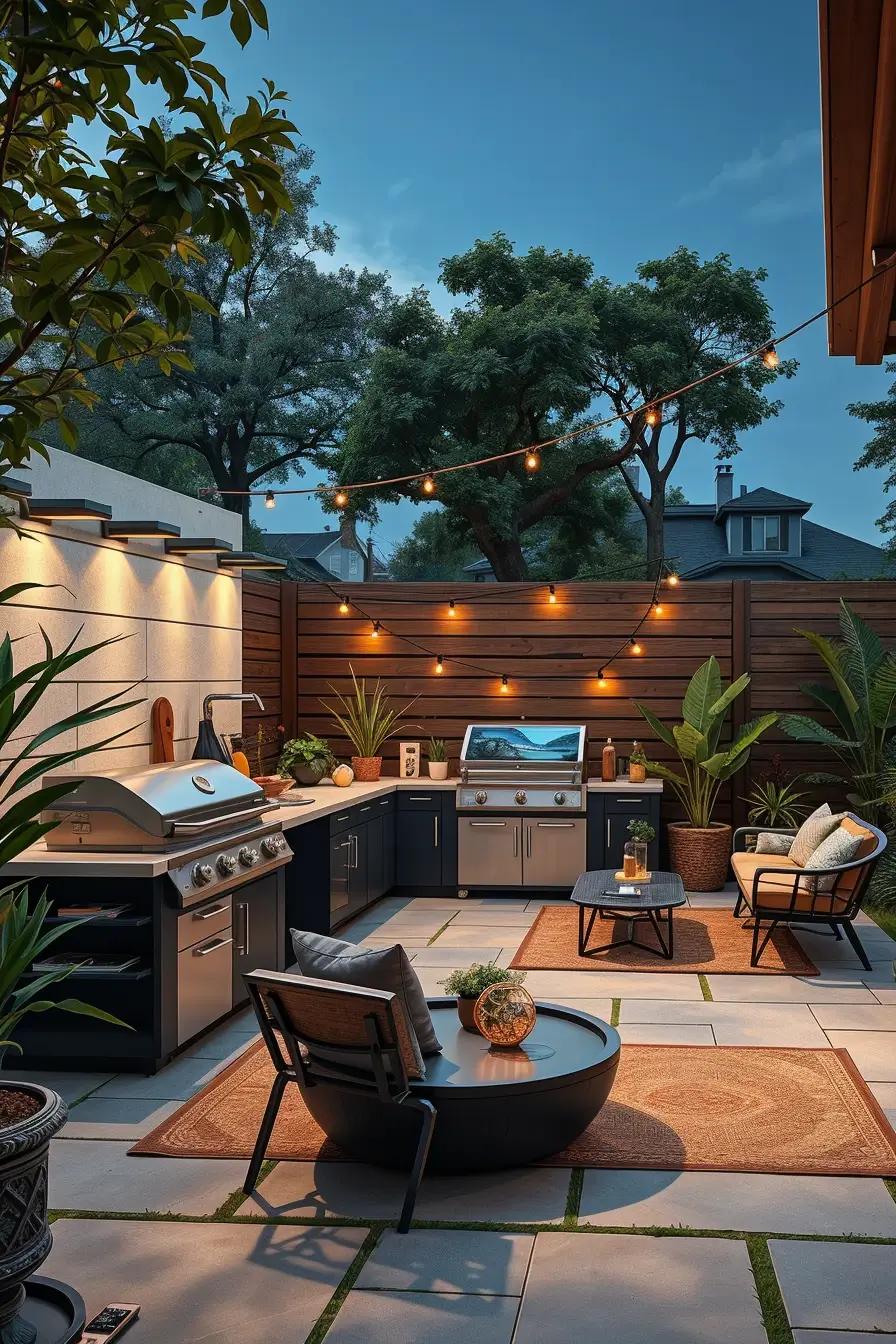
I observe growing use of smart grilling systems, app-controlled lighting, and integrated sound systems that enhance convenience without dominating the design. Modular layouts, movable furniture, and adaptable zones allow homeowners to reconfigure their barbecue areas based on changing needs or events.
In my experience, the most successful future-forward designs are those that remain timeless despite technological integration. Design leaders featured in Elle Decor often advise balancing innovation with simplicity, and I fully support this approach. Technology should enhance comfort, not define the aesthetic.
To future-proof these spaces further, I would recommend leaving room for upgrades. Extra power access points and flexible layouts allow homeowners to adapt their barbecue areas as new technologies and trends emerge.
The garden barbecue area 2026 represents a new era of outdoor living where design, innovation, and comfort come together effortlessly. These spaces are no longer secondary additions but thoughtfully crafted environments that reflect personal style and modern lifestyle trends. By embracing creative layouts, high-end materials, and unique design elements, a garden barbecue area becomes a true focal point—perfect for entertaining, relaxing, and enjoying the outdoors in a way that feels both contemporary and timeless.