62 Outdoor Fireplace Ideas 2026: Modern, Sculptural And Artistic Designs For Stylish Outdoor Spaces

Outdoor fireplace ideas for 2026 go far beyond traditional fire pits and classic stone hearths. Today’s designs transform fire into a form of outdoor art—bold, sculptural, and intentionally expressive. Modern outdoor fireplaces are no longer just sources of warmth; they are architectural focal points that shape the entire atmosphere of a patio, garden, or courtyard.
In 2026, outdoor fireplace design embraces creativity, innovation, and individuality. Expect to see artistic silhouettes, unexpected materials, and statement forms that feel more like modern sculptures than functional fixtures. From minimalist concrete structures to futuristic metal installations and organic, flowing shapes, outdoor fireplaces are becoming defining elements of contemporary exterior design.
This article explores the most creative, stylish, and modern outdoor fireplace ideas for 2026—highlighting unique, designer-driven concepts that blend function with visual impact and redefine how fire is experienced in outdoor living spaces.
1. The Rise Of Sculptural Outdoor Fireplaces In 2026
I see sculptural outdoor fireplaces in 2026 as a direct response to the growing demand for stylish, modern, and expressive exterior environments. These fireplaces are no longer background elements; they are designed as focal points that shape the entire layout of patios, courtyards, and garden lounges. From a practical perspective, they provide efficient heat distribution while anchoring seating areas and defining outdoor zones with clarity and intention.
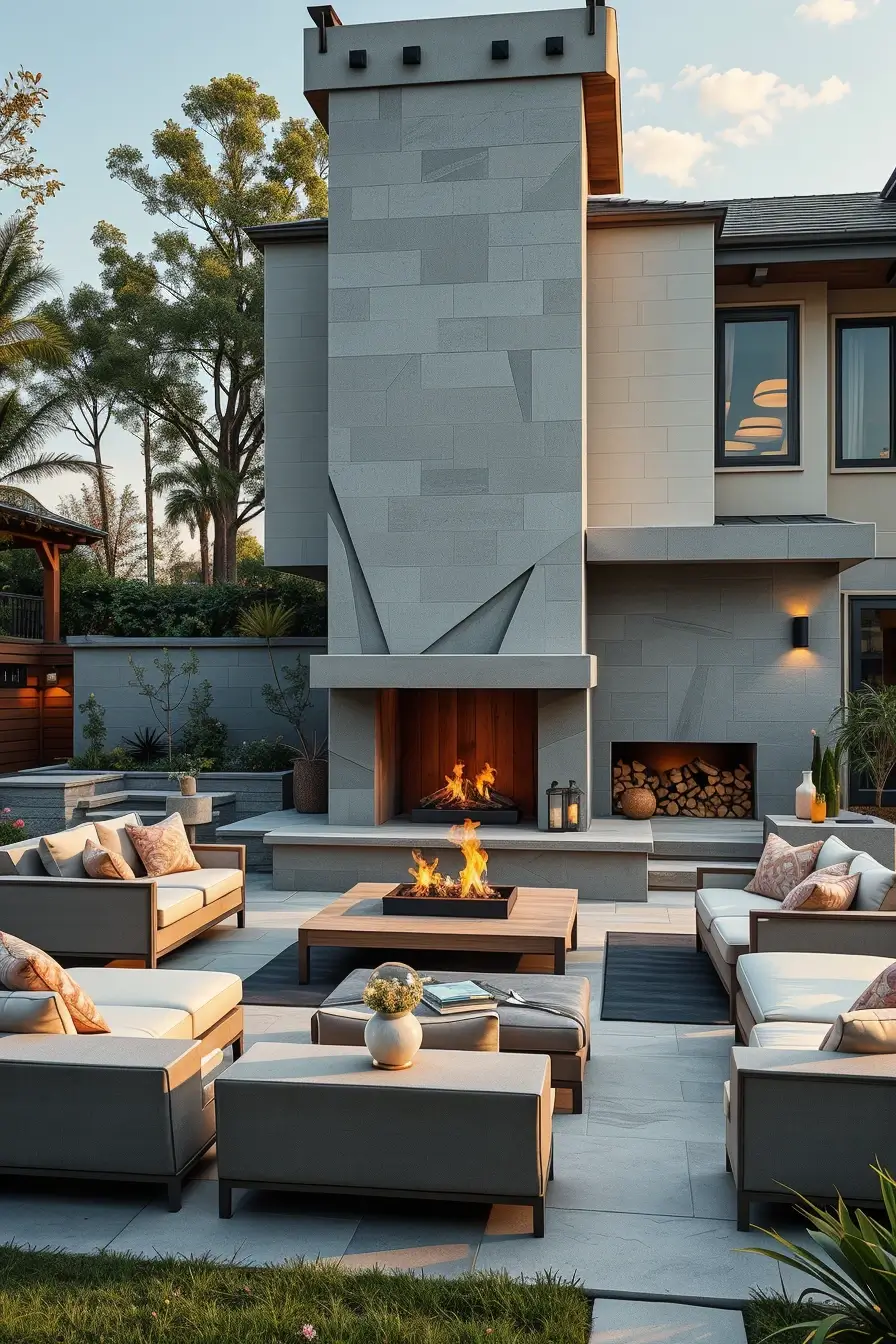
When I design around a sculptural fireplace, I pay close attention to scale, proportion, and material contrast. Large-format concrete, natural stone, or metal fireplaces are often paired with low-profile outdoor sofas, modular sectionals, and minimalist lounge chairs. Built-in benches, integrated wood storage, and concealed gas systems enhance functionality without disrupting the visual purity of the design.
In my experience, many leading designers featured in Architectural Digest and Dezeen emphasize that outdoor fireplaces should be treated like outdoor art installations. I agree with this approach completely. A well-designed sculptural fireplace elevates the entire property and creates a memorable outdoor experience that feels intentional rather than decorative.
What I would add to this section is thoughtful landscape lighting. Subtle uplighting around the fireplace base or integrated LED accents can dramatically enhance its sculptural presence after sunset while maintaining a refined, contemporary atmosphere.
2. Outdoor Fireplaces As Architectural Statements
I approach architectural outdoor fireplaces as extensions of the home’s structure rather than standalone features. In 2026, these fireplaces often align with exterior walls, pergolas, or outdoor pavilions, reinforcing architectural lines and visual continuity. This approach improves practicality by offering wind protection, structural stability, and seamless integration with adjacent outdoor rooms.
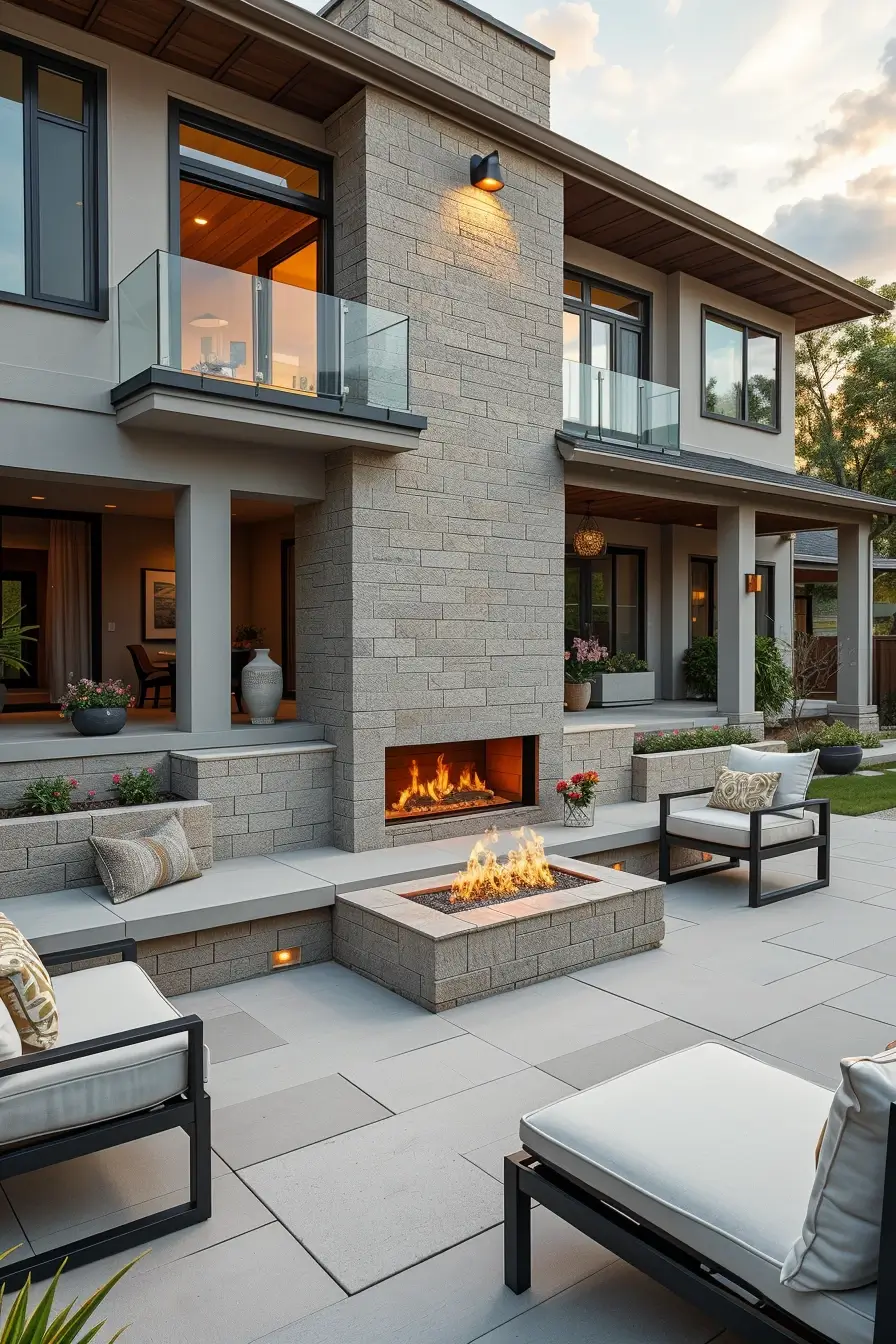
From a design standpoint, I frequently incorporate architectural fireplaces with built-in seating walls, linear fire openings, and symmetrical layouts. Materials such as cast concrete, porcelain slabs, and steel panels are selected to echo the home’s facade. Furniture is kept intentional: structured outdoor sofas, stone or teak coffee tables, and restrained accessories that support the architectural concept.
Personally, I find that this strategy reflects advice shared by top US landscape architects, who stress that strong outdoor architecture increases both usability and property value. When a fireplace feels architecturally grounded, clients tend to use the space more frequently and for longer seasons.
To strengthen this section, I would include guidance on coordinating the fireplace design with exterior flooring materials, such as large-format pavers or poured concrete, to reinforce architectural cohesion.
3. Modern Outdoor Fireplace Designs That Blur Art And Function
Modern outdoor fireplaces in 2026 excel at merging visual impact with everyday usability. I often design these fireplaces to function as both heat sources and visual centerpieces, balancing clean geometry with sculptural detail. Their practicality lies in advanced burner technology, efficient heat output, and low-maintenance finishes suited for outdoor exposure.
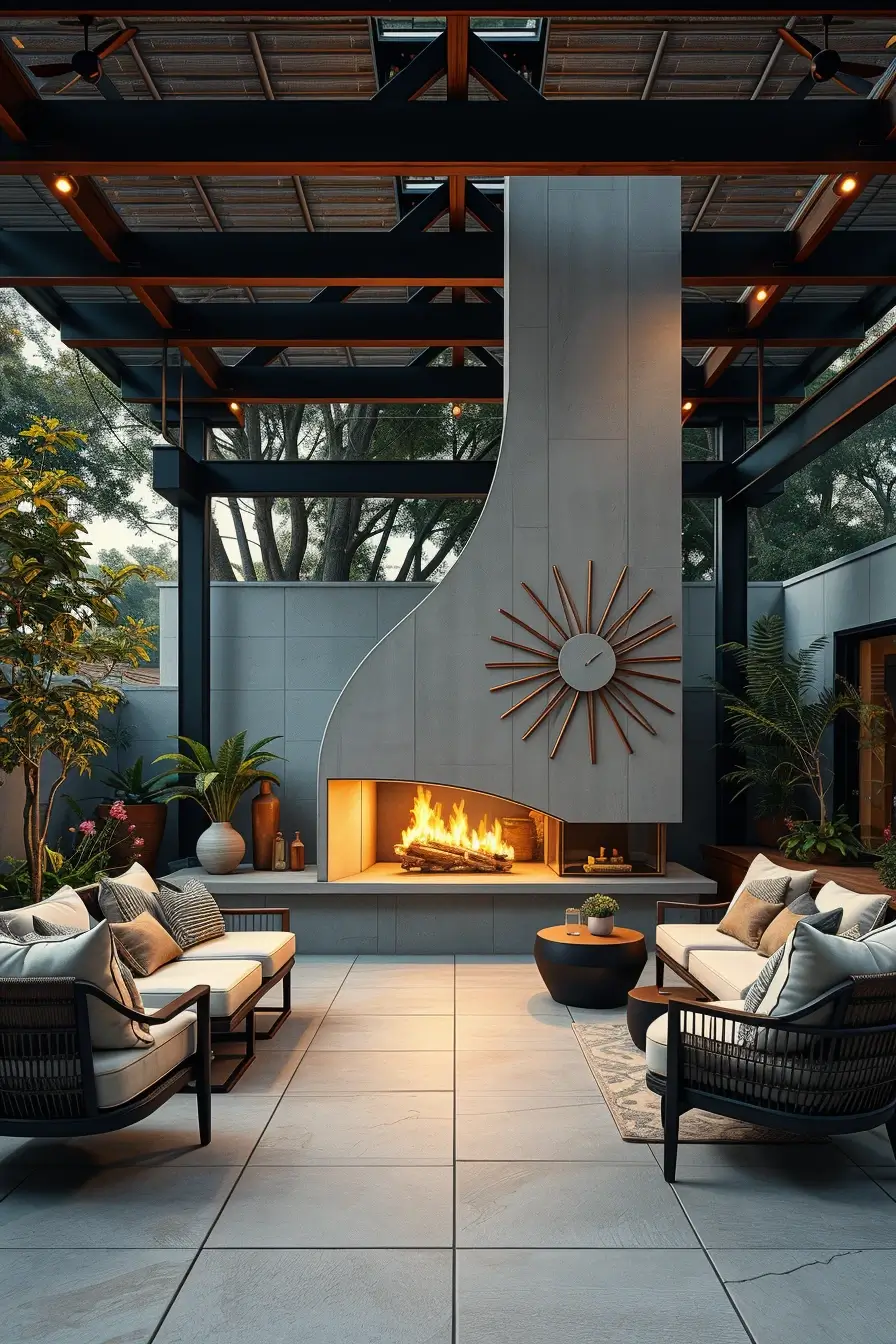
In these designs, I carefully select furnishings that complement the fireplace without competing with it. Curved lounge seating, neutral-toned cushions, and streamlined side tables support the artistic quality of the fireplace. Decorative elements are minimal, allowing the fireplace’s form, texture, and flame pattern to remain the primary focus.
From my perspective, this balance reflects a broader design movement highlighted by publications like Interior Design Magazine, where function-driven art is becoming central to contemporary living spaces. I have seen firsthand how clients respond positively to fireplaces that feel expressive yet usable.
What could enhance this section further is the integration of smart controls. App-based flame регулировка and automated ignition systems would reinforce the fusion of innovation, comfort, and modern design.
4. Minimalist Outdoor Fireplaces With Strong Visual Impact
Minimalist outdoor fireplaces in 2026 prove that restraint can be powerful. I design these fireplaces with simple forms, sharp edges, and uncluttered compositions that allow materials and proportions to speak for themselves. Their usefulness lies in clarity: they define the space without overwhelming it and are easy to maintain.
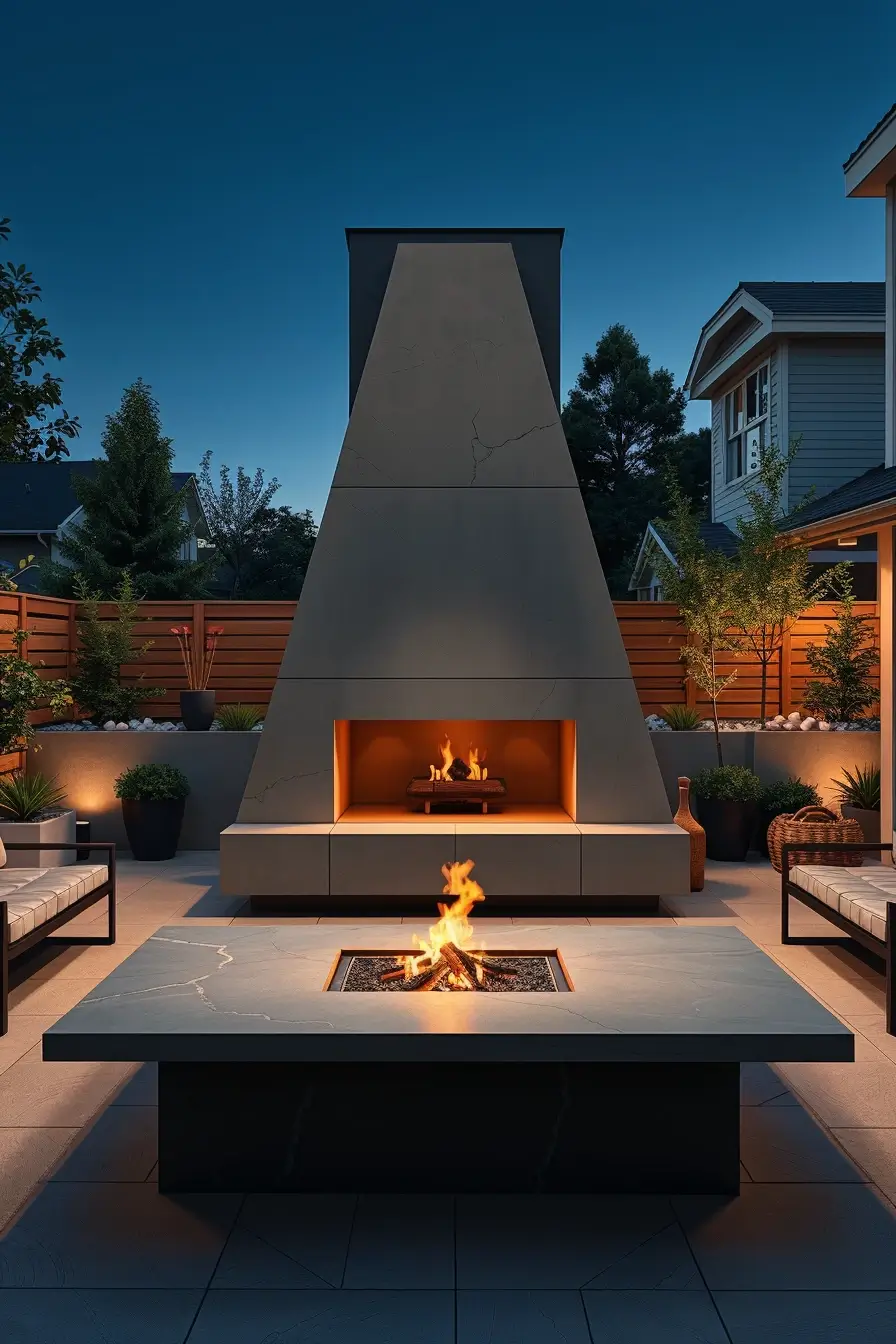
Furniture choices are intentional and sparse. I often pair minimalist fireplaces with linear benches, slim-profile lounge chairs, and monochrome textiles. The absence of excessive decor creates a calm outdoor environment where the fireplace naturally commands attention through its form rather than ornamentation.
In my professional opinion, this approach aligns with the guidance of modernist designers who emphasize visual calm and functional clarity. Minimalist fireplaces work especially well in urban patios and contemporary backyards where space and visual order are critical.
To complete this section, I would recommend adding wind-resistant flame designs or recessed fire chambers, improving comfort without compromising the minimalist aesthetic.
5. Monolithic Concrete Outdoor Fireplace Concepts
Monolithic concrete outdoor fireplaces represent strength, permanence, and bold design thinking in 2026. I often use these fireplaces to anchor large outdoor spaces, as their mass and texture create a strong visual foundation. Practically, concrete offers excellent heat retention and durability in varying climates.
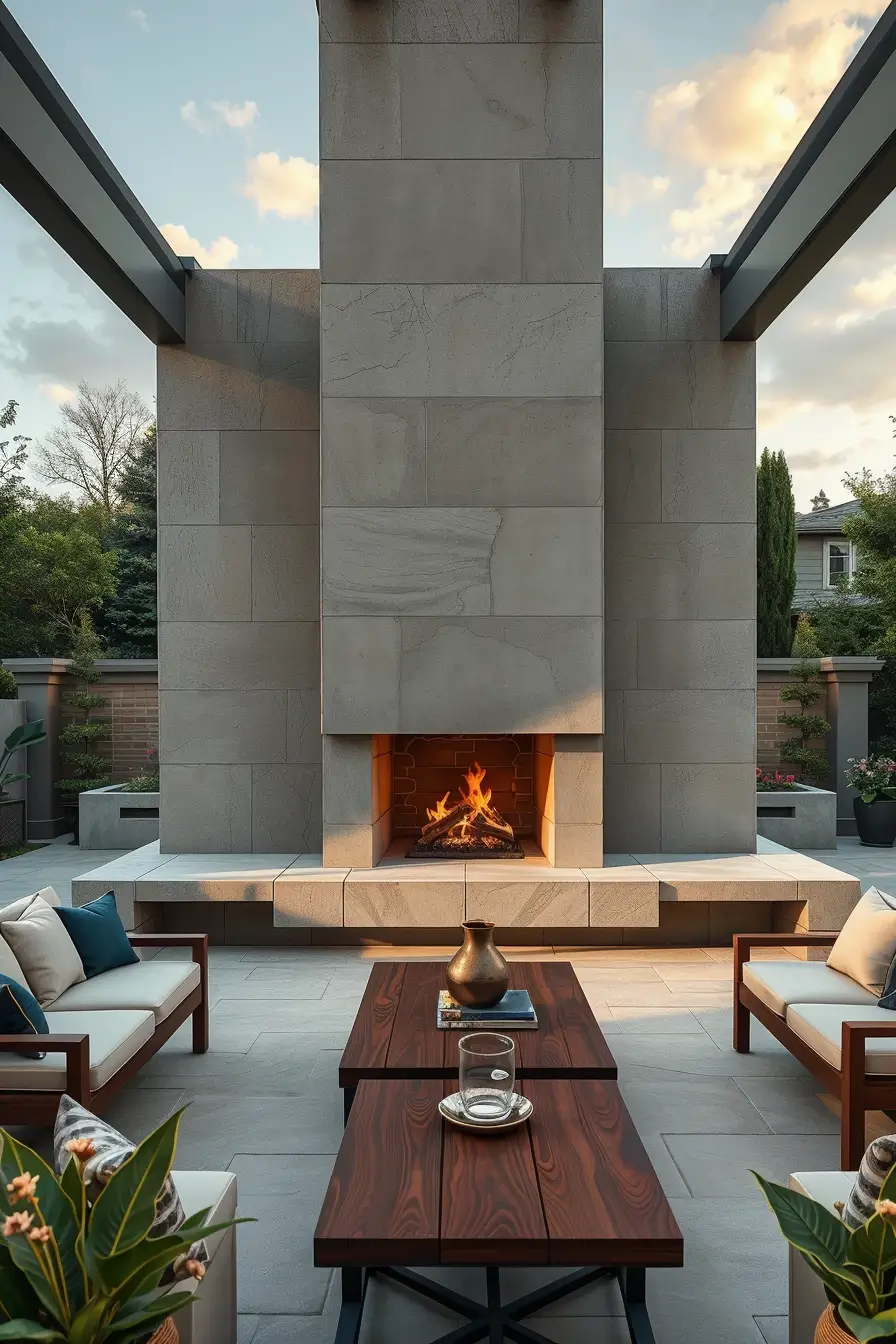
In terms of layout, I surround monolithic fireplaces with generous seating zones, often using built-in concrete benches softened with outdoor cushions. Complementary elements include solid wood tables, textured rugs, and subtle greenery that contrasts with the fireplace’s raw surface.
From my experience, many architects featured in Dwell magazine advocate for monolithic forms as timeless investments. I agree, as these fireplaces age gracefully and continue to feel relevant long after trends shift.
What I would add here is surface variation. Incorporating board-formed concrete or subtle pigmentation can introduce depth and character while preserving the monolithic concept.
6. Floating And Suspended Outdoor Fireplace Designs
I consider floating and suspended outdoor fireplaces one of the most visually striking trends for 2026. These designs introduce a sense of lightness and architectural tension into outdoor spaces, making them especially effective in modern courtyards and open patios. From a practical standpoint, suspended fireplaces improve airflow and heat distribution while freeing up floor space, which enhances circulation and usability.
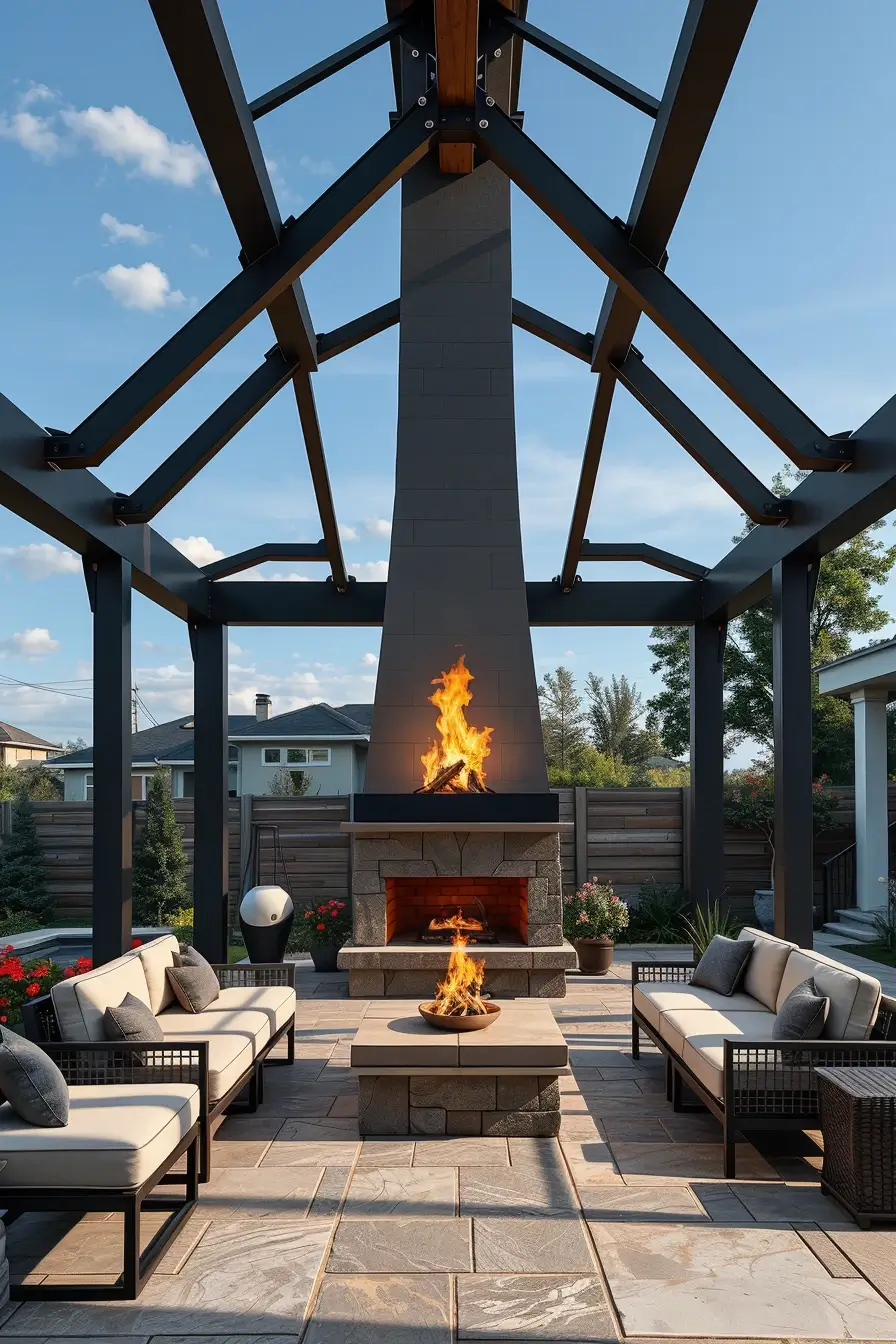
In projects featuring floating fireplaces, I carefully balance the visual weight by pairing them with grounded furniture. Low-profile sectional sofas, circular lounge chairs, and slim stone coffee tables help anchor the space. Structural steel frames or reinforced overhead beams are essential, and I always integrate them seamlessly into pergolas or pavilion ceilings to maintain a clean, intentional look.
From my professional experience, many designers highlighted in Dezeen note that suspended fireplaces create an emotional response because they defy expectations. I agree, as clients often describe these designs as memorable and immersive, especially during evening gatherings.
What I would add to this section is guidance on ceiling height and structural engineering. Ensuring proper clearance and support is critical to both safety and long-term performance.
7. Curved And Organic Outdoor Fireplace Forms
Curved and organic outdoor fireplaces reflect a growing desire for softer, more natural forms in exterior design. In 2026, I see these fireplaces shaping outdoor spaces in a way that feels fluid and welcoming. Their practicality lies in how curved forms naturally encourage conversation and create intimate seating arrangements around the fire.
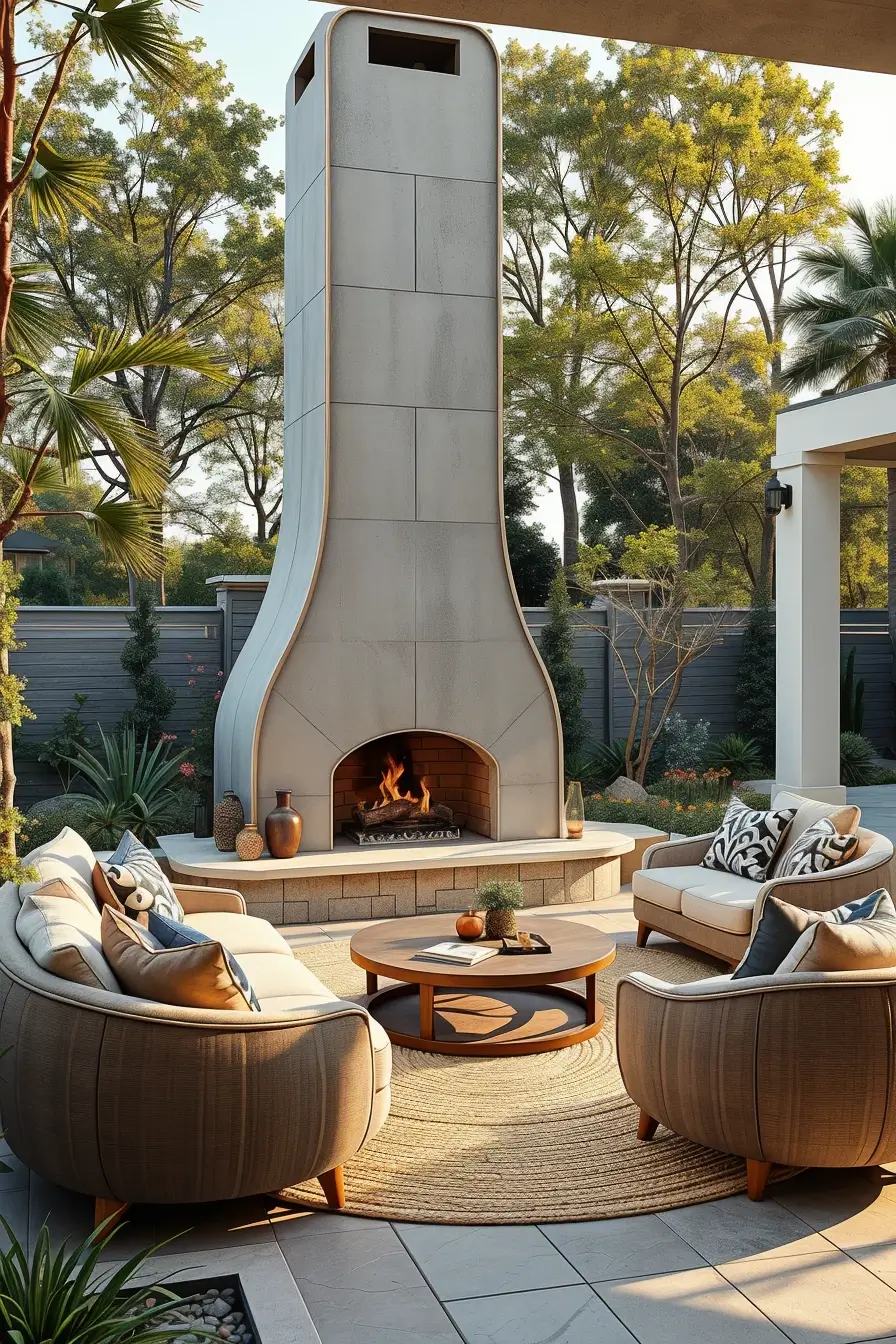
When designing with organic fireplaces, I select furniture that mirrors their gentle lines. Curved outdoor sofas, rounded ottomans, and circular rugs reinforce visual harmony. Materials such as smooth concrete, sculpted stone, or plaster finishes enhance the tactile quality and create a sense of calm sophistication.
Personally, I find that this approach aligns with insights from landscape architects featured in Garden Design Magazine, who emphasize that curved elements foster relaxation. In my projects, these fireplaces consistently encourage longer, more comfortable use of outdoor spaces.
To enhance this section further, I would recommend incorporating complementary landscaping, such as curved planters or gravel paths, to echo the fireplace’s form and strengthen design continuity.
8. Outdoor Fireplaces Inspired By Modern Sculpture
Outdoor fireplaces inspired by modern sculpture blur the line between functional heating and artistic expression. I approach these designs as statement pieces that shape the identity of an outdoor space. Practically, they still deliver warmth and structure, but their primary role is visual storytelling.
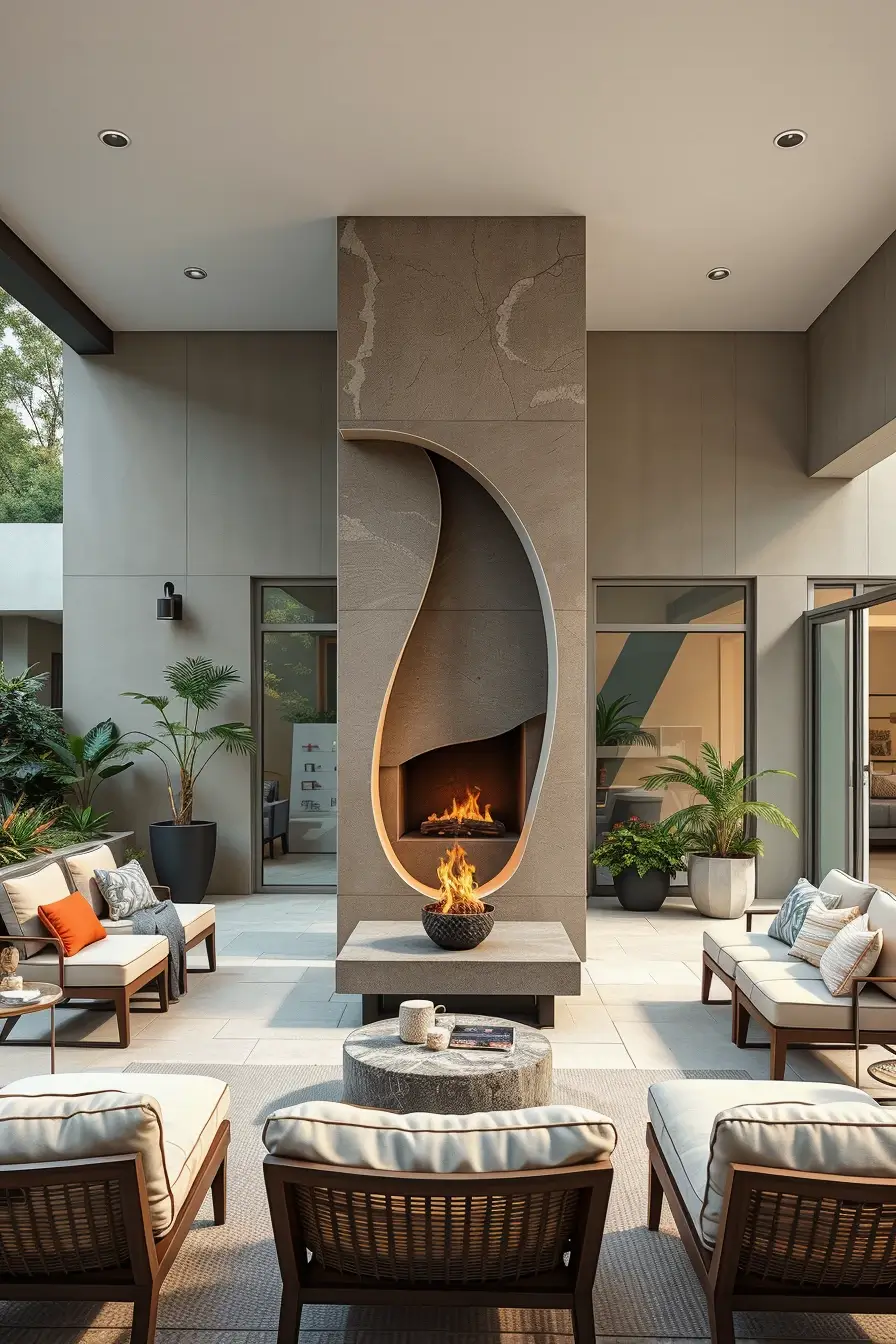
In these settings, I keep furniture understated to allow the fireplace to dominate visually. Neutral-toned lounge seating, discreet side tables, and minimal accessories ensure the sculptural form remains the focal point. Finishes often include custom metalwork, textured concrete, or carved stone that resembles gallery-quality art.
In my view, this trend echoes advice from Interior Design Magazine, which often highlights the importance of emotional impact in contemporary spaces. I have found that sculptural fireplaces elevate outdoor areas into curated environments rather than simple leisure zones.
What I would add here is consideration for sightlines. Positioning the fireplace to be visible from multiple angles, including interior views, enhances its role as an outdoor artwork.
9. Statement Outdoor Fireplaces For Luxury Backyards
Statement outdoor fireplaces are central to luxury backyard design in 2026. I design these fireplaces to command attention through scale, material richness, and placement. From a functional perspective, they serve as anchors for expansive outdoor layouts, organizing seating, dining, and relaxation zones around a central feature.
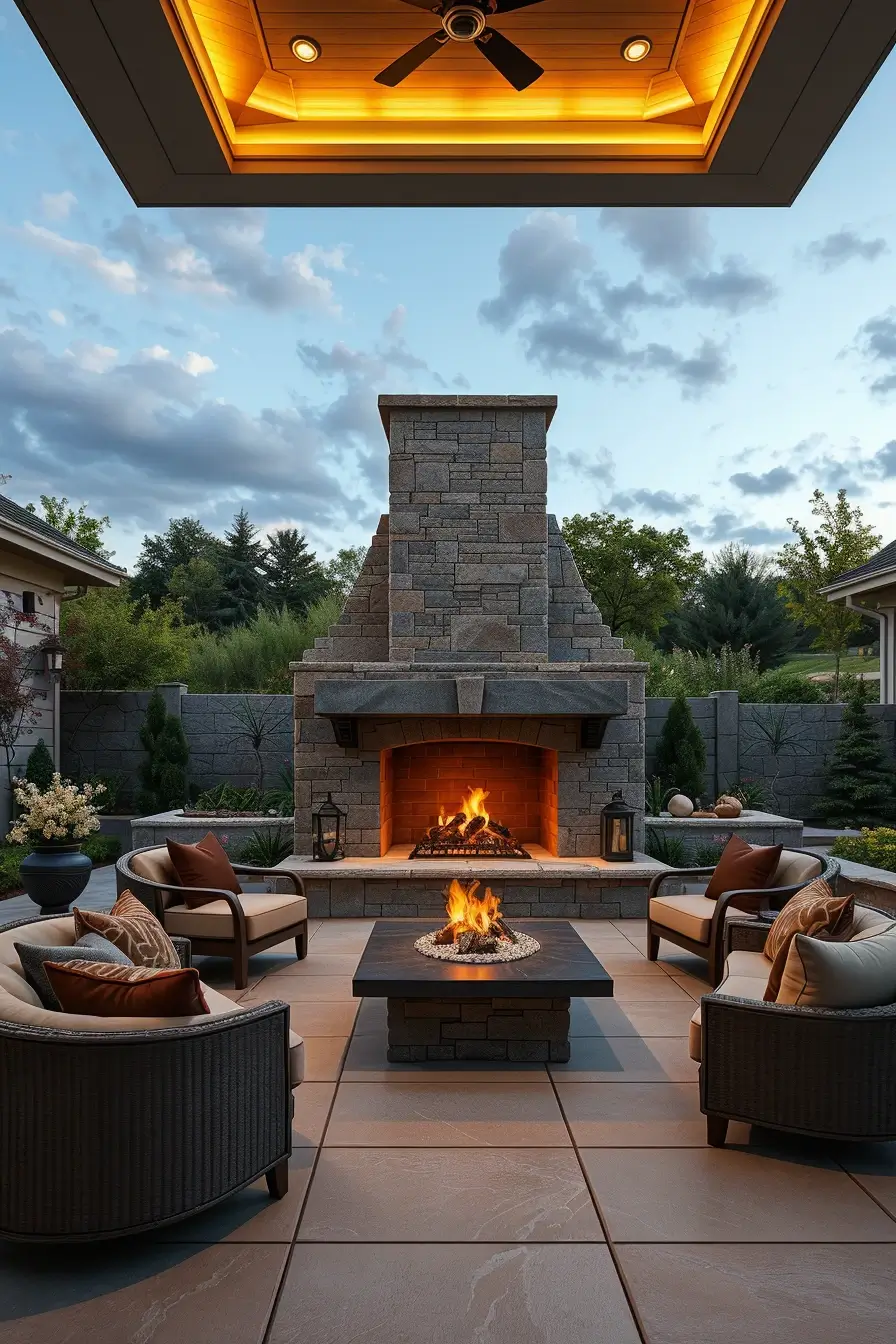
In luxury settings, I pair statement fireplaces with premium outdoor furniture such as deep-cushioned sofas, stone or marble tables, and integrated lighting. Finishes often include large-format stone, polished concrete, or custom cladding that reflects exclusivity and craftsmanship.
From my professional standpoint, luxury landscape designers frequently emphasize that bold focal points define high-end outdoor spaces. I’ve seen how a well-designed statement fireplace becomes the heart of social gatherings and enhances perceived property value.
To complete this section, I would include advice on layering textures through textiles and lighting to balance the fireplace’s bold presence with comfort and warmth.
10. Artistic Metal Outdoor Fireplaces With Custom Finishes
Artistic metal outdoor fireplaces stand out in 2026 for their versatility and expressive potential. I often recommend metal fireplaces for clients seeking unique, designer, and visually dynamic outdoor features. Metals such as corten steel, blackened steel, or brushed bronze offer durability while allowing for creative surface treatments.
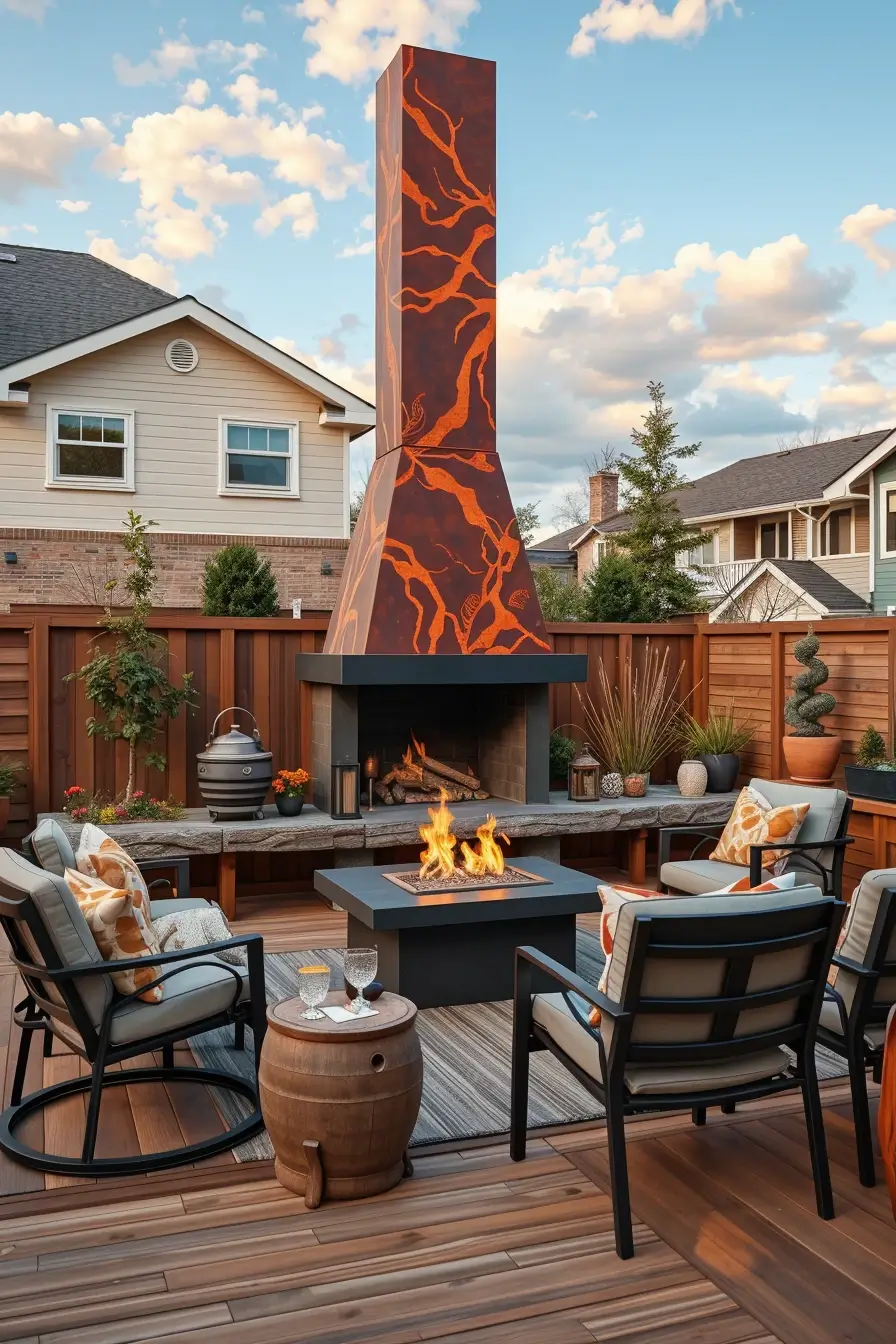
In these designs, I combine metal fireplaces with contrasting materials like wood decking, concrete flooring, and upholstered seating. Furniture choices remain modern and restrained, ensuring the fireplace’s finish and form take center stage. Integrated firewood niches and custom detailing enhance both aesthetics and function.
From my experience, many professionals featured in Architectural Digest highlight custom metalwork as a way to personalize outdoor spaces. I fully support this approach, as bespoke finishes make each fireplace feel exclusive and tailored.
What I would add here is maintenance guidance. Advising on protective coatings and seasonal care ensures the fireplace retains its appearance and performance over time.
11. Outdoor Fireplaces With Bold Geometric Shapes
I see bold geometric outdoor fireplaces as one of the clearest indicators of where exterior design is heading in 2026. These fireplaces rely on clean lines, sharp angles, and strong proportions to create visual order in outdoor spaces. From a practical standpoint, their defined forms help structure patios and courtyards, making seating layouts more intuitive and movement around the fireplace comfortable and safe.
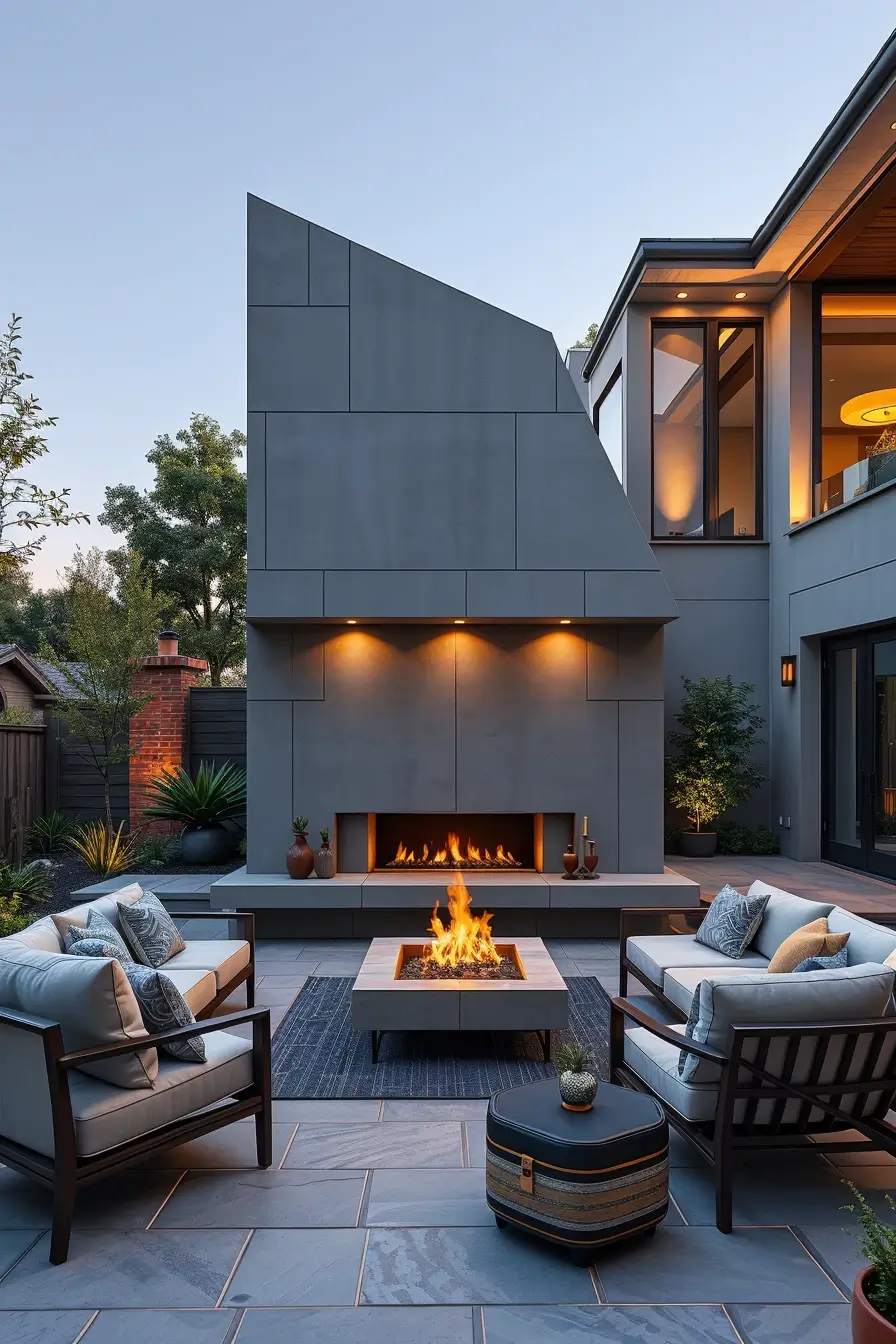
In my projects, I often pair geometric fireplaces with low-profile sectional sofas, structured outdoor armchairs, and minimal concrete or porcelain pavers. Each element supports the fireplace’s geometry rather than competing with it. Integrated fireboxes, flush storage niches, and linear burners are essential because they maintain visual clarity while offering reliable performance and easy maintenance.
From my experience, designers featured in Architectural Digest and Dezeen consistently emphasize geometry as a timeless tool for outdoor design. I agree with this approach because geometric fireplaces age well visually and adapt easily to future furniture or landscape changes without feeling outdated.
What I would add to this type of setup is integrated lighting that echoes the fireplace’s shape. Subtle LED lines embedded in steps, seating edges, or retaining walls help reinforce the geometry at night and elevate the overall atmosphere without overwhelming the fire itself.
12. Fireplaces Designed As Centerpieces For Outdoor Living
When I design an outdoor fireplace as a centerpiece, I treat it as the emotional and functional heart of the space. In 2026, this means placing the fireplace where it naturally draws people together, often aligned with main sightlines from the house or positioned centrally within an open patio layout. This approach improves usability and encourages longer, more comfortable gatherings outdoors.
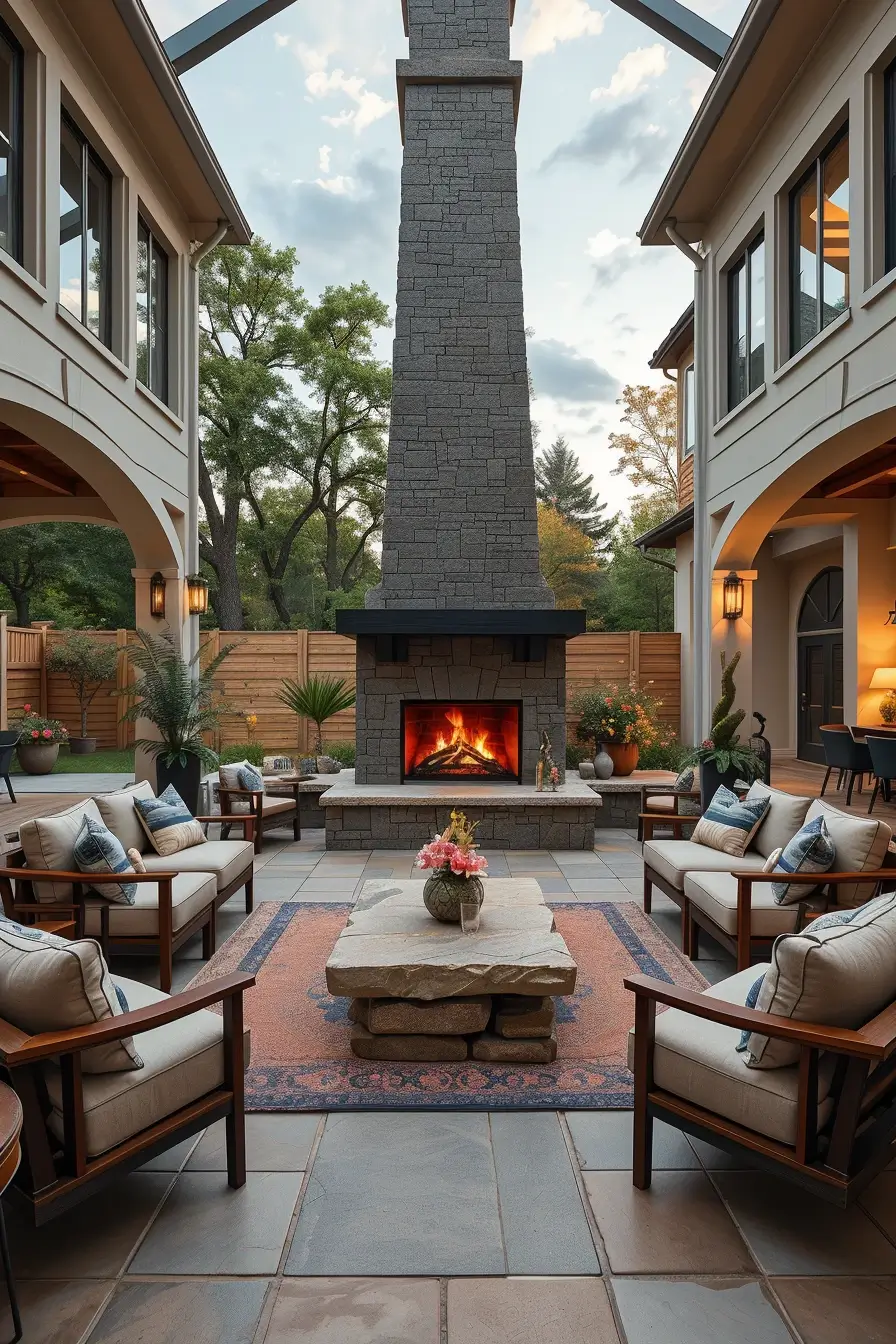
I usually surround centerpiece fireplaces with symmetrical seating arrangements, such as matching sofas or lounge chairs, to reinforce balance. Coffee tables in stone or metal, outdoor rugs, and built-in benches help define the zone while keeping the fireplace visually dominant. Every piece serves the goal of supporting social interaction and comfort.
Personally, I’ve noticed that well-known landscape designers like Fernando Wong emphasize focal points as a way to create memorable outdoor environments. I apply the same philosophy here, ensuring the fireplace commands attention without overpowering the rest of the design.
If anything is missing in many centerpiece fireplace designs, it’s flexible seating. I recommend adding lightweight accent chairs or movable ottomans so the space can adapt to different group sizes and uses throughout the year.
13. Outdoor Fireplaces Integrated Into Landscape Design
Integrating an outdoor fireplace into the landscape allows it to feel intentional rather than added later. I focus on how the fireplace interacts with terrain, planting zones, and natural circulation paths. In 2026, this approach enhances both practicality and visual harmony, especially in larger gardens or sloped yards.
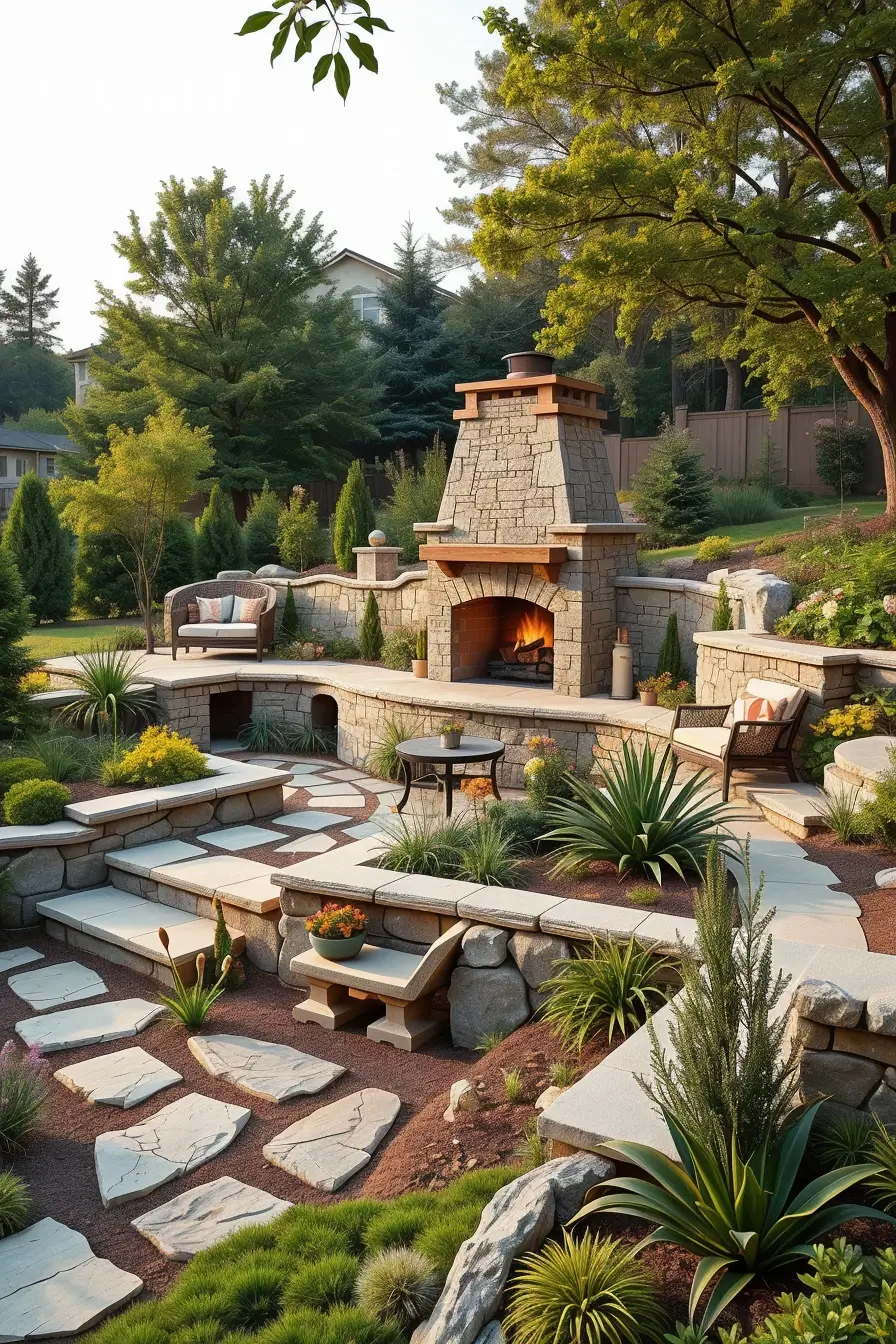
I often use materials that echo the surroundings, such as stone that matches retaining walls or concrete that complements pathways. Built-in seating walls, native plantings, and layered greenery soften the fireplace’s presence while still allowing it to function efficiently. This integration improves wind protection and creates a more immersive outdoor experience.
From my professional standpoint, publications like Landscape Architecture Magazine frequently highlight fireplaces that feel rooted in their environment. I fully support this because landscape-integrated fireplaces tend to feel calmer and more sustainable over time.
To complete these designs, I suggest adding discreet storage for firewood or accessories nearby. When storage is visually integrated into walls or terraces, it preserves the natural look while improving daily usability.
14. Contemporary Outdoor Fireplaces With Mixed Materials
Mixed-material outdoor fireplaces reflect the modern design mindset of layering textures for depth and interest. I see this trend accelerating in 2026 as homeowners look for fireplaces that feel curated rather than uniform. Mixing materials also allows better adaptation to different climates and usage patterns.
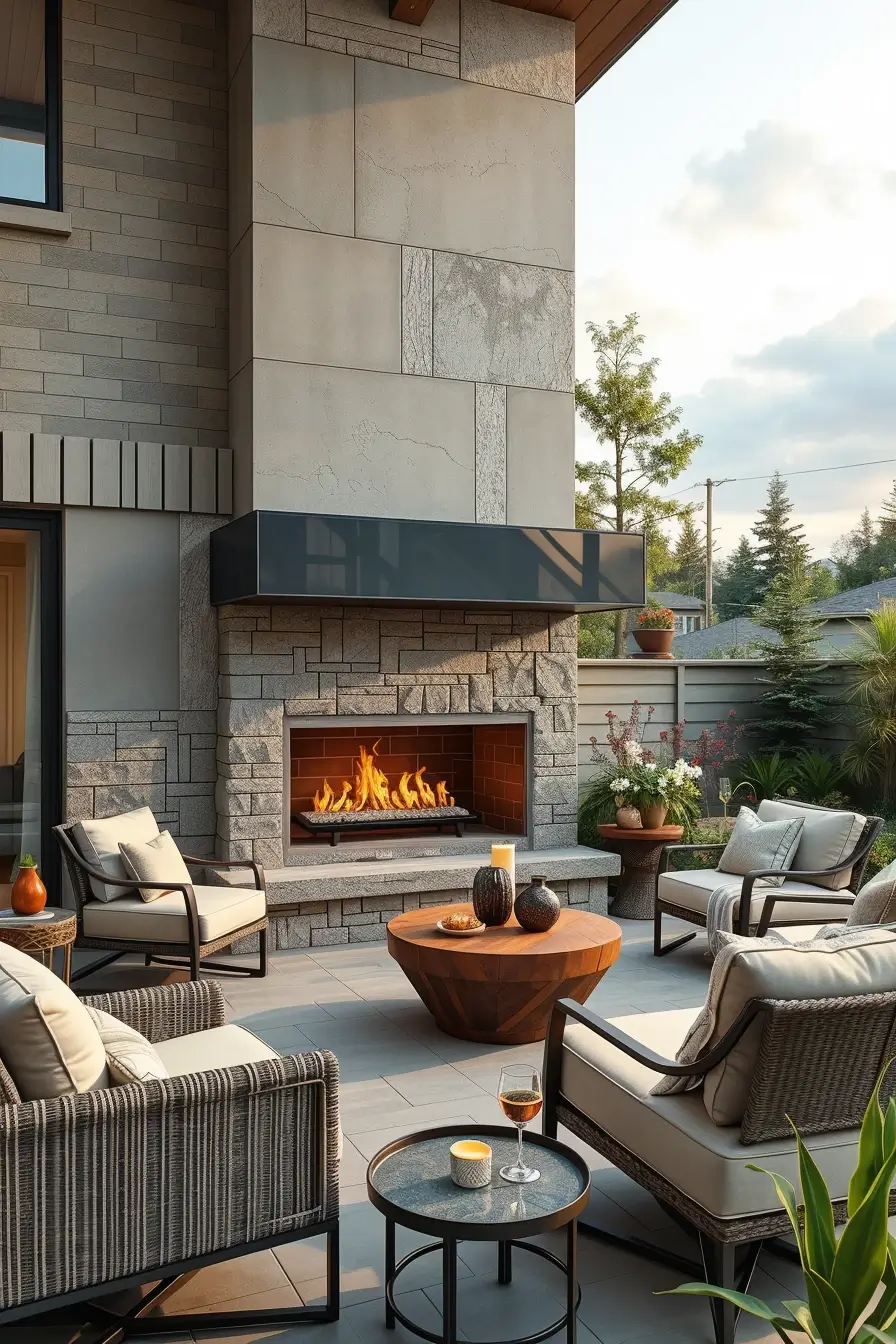
In practice, I combine concrete, steel, glass, and stone to balance durability and aesthetics. For example, a concrete fire surround paired with a metal firebox and glass wind guards creates contrast while improving performance. Surrounding furniture in complementary finishes helps tie everything together cohesively.
I’ve learned from designers featured in Dwell Magazine that material contrast is most effective when one material leads and the others support it. I apply this rule consistently to avoid visual overload while still achieving a distinctive look.
What’s often missing in mixed-material designs is thoughtful transition detailing. I recommend paying close attention to joints, edges, and material intersections so the fireplace feels refined rather than experimental.
15. Sculptural Stone Outdoor Fireplace Ideas
Sculptural stone fireplaces transform outdoor spaces into visual experiences. I approach these designs as functional art, where the fireplace’s form is just as important as its heating capability. In 2026, sculptural stone fireplaces often act as standalone features that define the entire outdoor setting.
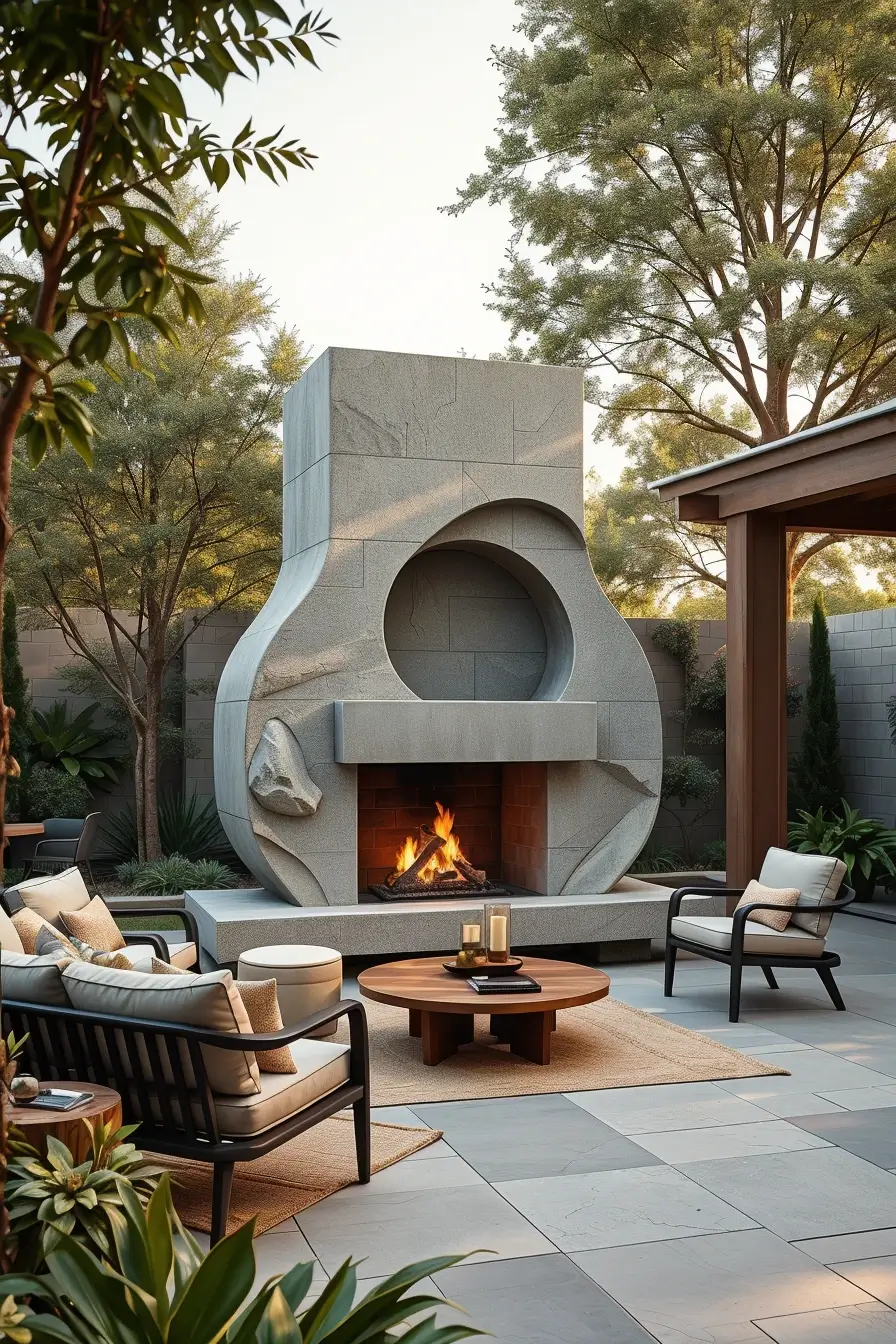
I typically select stone with strong texture or veining and shape it into flowing or monolithic forms. Surrounding furniture remains understated, allowing the fireplace to remain the focal point. Natural stone seating, simple loungers, and minimal accessories prevent distraction from the sculptural quality.
From my experience, many high-end designers referenced in Elle Decor emphasize restraint when working with sculptural elements. I agree that less is more here, as the fireplace itself carries the emotional weight of the design.
To elevate these fireplaces further, I recommend incorporating subtle water or gravel elements nearby. These additions enhance the sensory experience and reinforce the fireplace’s connection to nature.
16. Designer Outdoor Fireplaces With Architectural Lines
When I work with designer outdoor fireplaces defined by architectural lines, I focus on precision and proportion. These fireplaces are typically integrated into structured patios or terraces, where straight lines and clear edges reinforce the overall layout. In 2026, this approach supports outdoor living that feels intentional, organized, and visually calm while remaining highly functional.
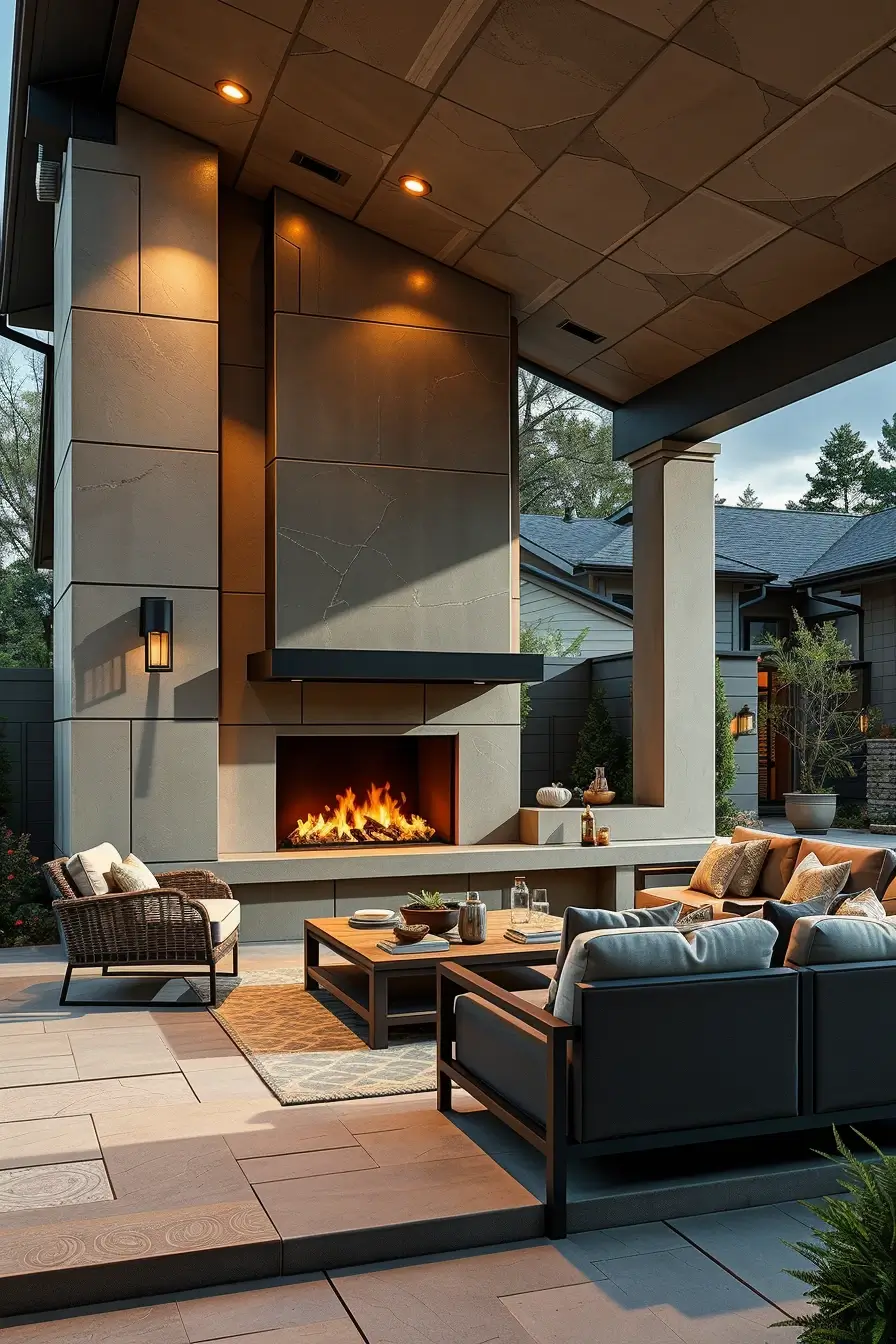
I usually complement these fireplaces with streamlined outdoor sofas, rectangular dining tables, and built-in benches that echo the same linear language. Materials such as concrete, metal panels, and smooth stone are chosen to maintain continuity. Every design decision supports clarity, durability, and ease of use in outdoor conditions.
From my perspective, many architects featured in Dezeen emphasize that architectural fireplaces should align with the home’s exterior geometry. I follow this advice because consistency between architecture and outdoor features creates a seamless transition between indoor and outdoor living.
What I often add to these designs is integrated storage or concealed seating extensions. These details preserve the fireplace’s clean appearance while increasing everyday practicality.
17. Freestanding Outdoor Fireplaces As Art Objects
Freestanding outdoor fireplaces function differently from built-in models because they are viewed from all sides. I approach them as sculptural installations that bring flexibility and visual interest to open outdoor spaces. In 2026, these fireplaces allow homeowners to redefine how patios and gardens are organized without permanent construction.
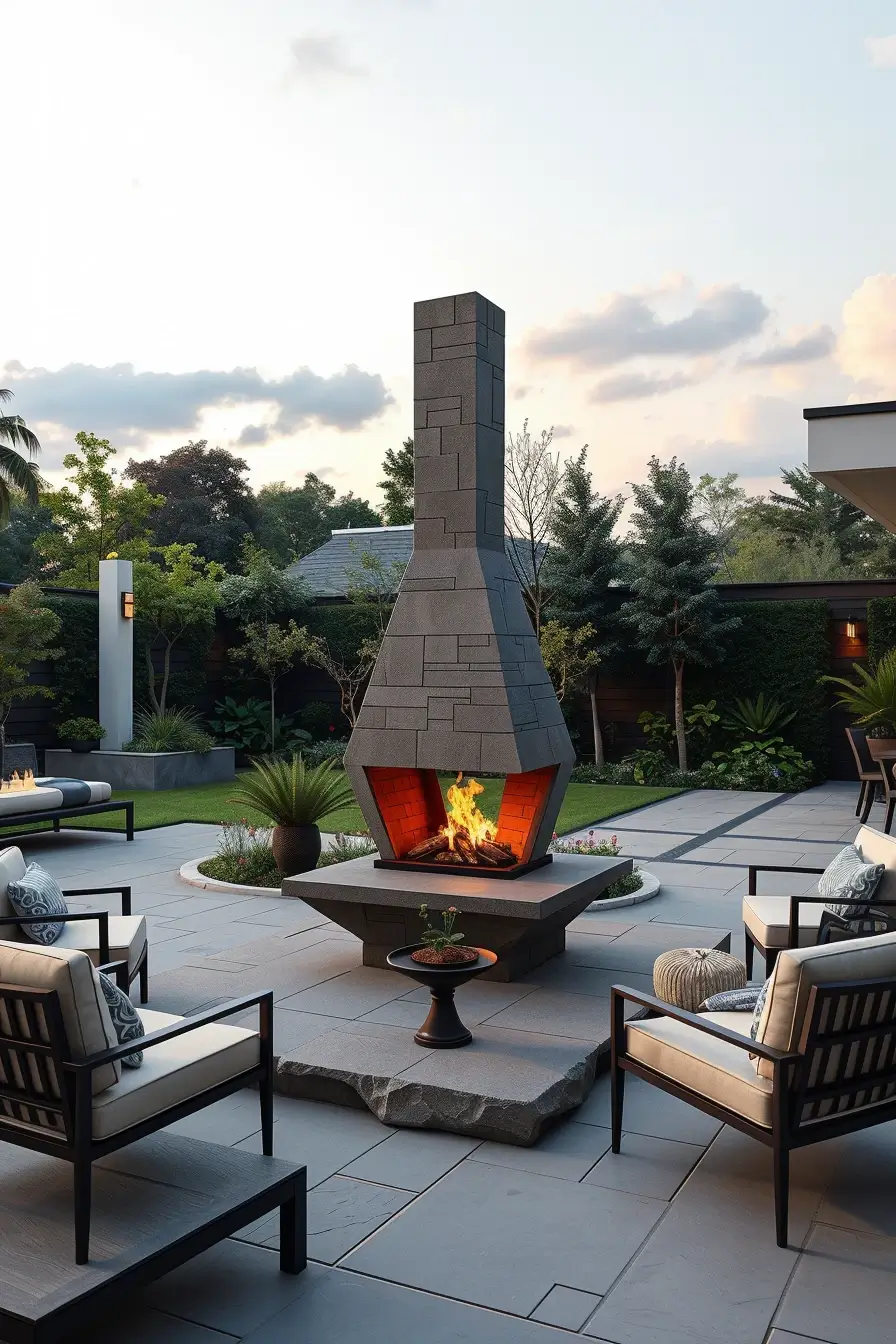
I typically place freestanding fireplaces near modular seating arrangements, allowing furniture to be repositioned as needed. Low-profile lounge chairs, movable side tables, and subtle outdoor lighting ensure the fireplace remains the focal point. The absence of surrounding walls enhances airflow and improves heat distribution.
In my experience, design publications like Dwell highlight freestanding fireplaces for their adaptability and artistic impact. I agree that their versatility makes them especially suitable for evolving outdoor lifestyles and changing needs.
To complete these setups, I recommend adding a defined base such as a stone platform or textured pavers. This anchors the fireplace visually and improves safety without compromising flexibility.
18. Outdoor Fireplaces With Asymmetrical Designs
Asymmetrical outdoor fireplaces introduce movement and individuality into exterior spaces. I use these designs when a setting calls for visual tension rather than balance. In 2026, asymmetry reflects a shift toward more expressive and personalized outdoor environments.
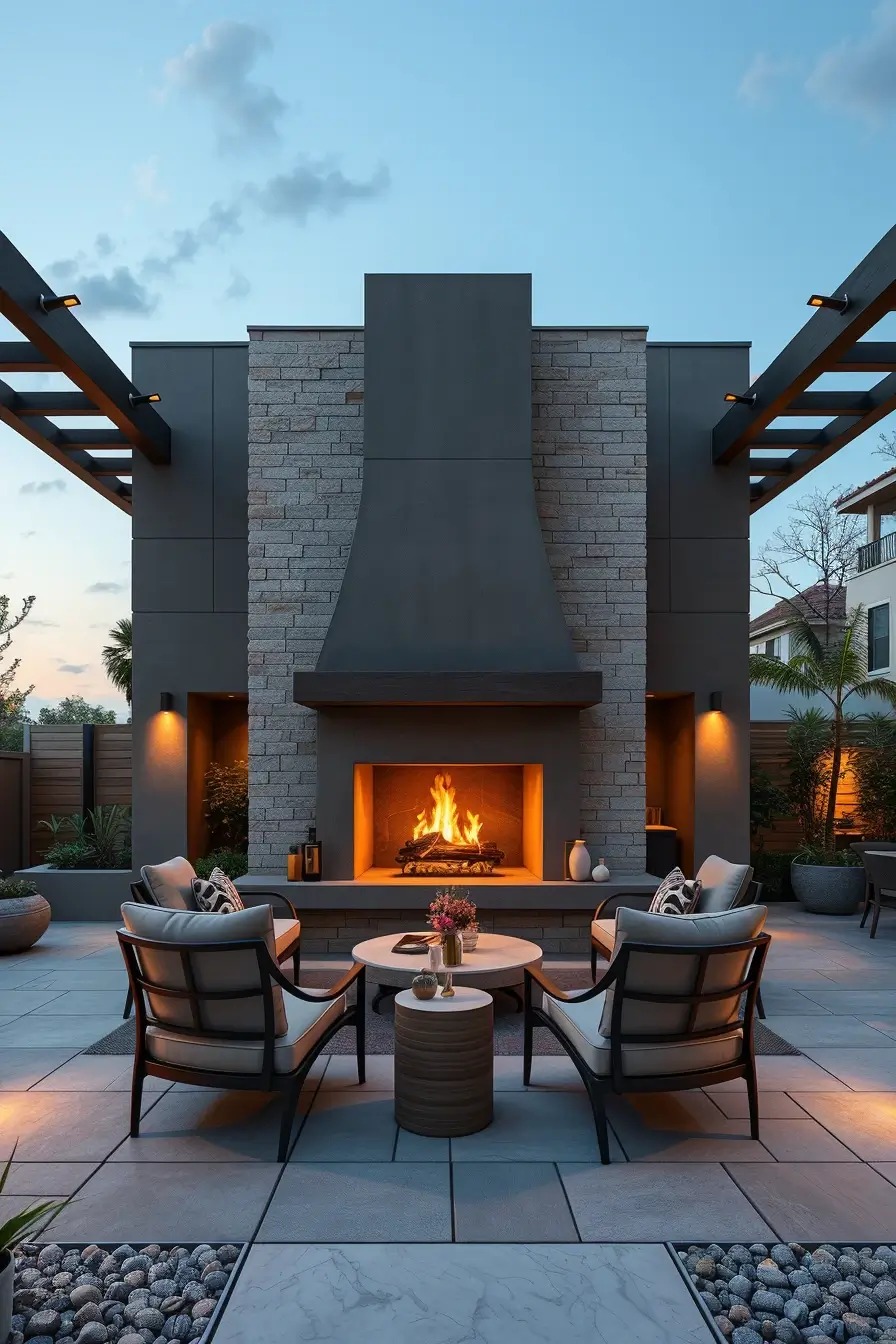
I often pair asymmetrical fireplaces with mixed seating heights, curved lounge chairs, and offset tables. These elements support the fireplace’s dynamic form while maintaining comfort and usability. Material contrasts, such as smooth plaster against rough stone, further enhance the design’s depth.
From my professional experience, designers featured in Interior Design Magazine frequently note that asymmetry creates memorable spaces when applied thoughtfully. I apply this principle carefully to ensure the fireplace remains functional while visually engaging.
What I usually add to asymmetrical designs is directional lighting that highlights the fireplace’s unique form. This enhances its sculptural quality during evening use and reinforces its role as a design statement.
19. Futuristic Outdoor Fireplace Concepts For 2026
Futuristic outdoor fireplaces reflect advancements in technology and design thinking. I see these concepts gaining momentum in 2026 as homeowners seek fireplaces that feel innovative and forward-looking. These designs often emphasize sleek surfaces, unconventional forms, and integrated smart features.
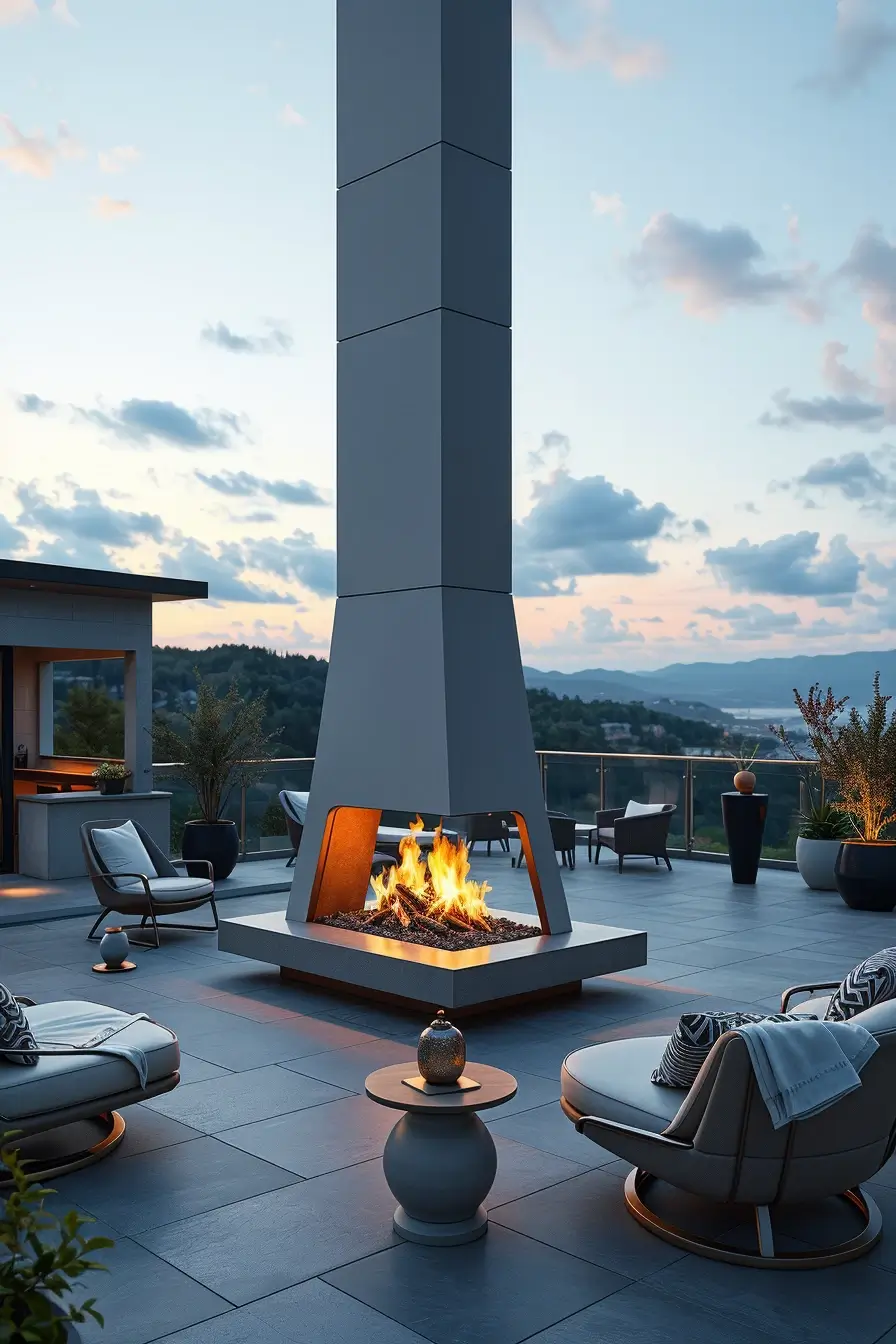
I incorporate materials like polished concrete, tempered glass, and brushed metal, paired with minimalist outdoor furniture. Built-in controls, hidden burners, and seamless fire displays enhance usability while preserving a clean appearance. Every element supports efficiency and visual clarity.
Personally, I’ve followed insights from technology-focused design platforms that stress the importance of intuitive interfaces in outdoor features. I agree that futuristic fireplaces should feel easy to use, not intimidating, despite their advanced appearance.
To improve these concepts further, I recommend integrating discreet power and fuel access points. Proper planning ensures the design remains visually pure while functioning reliably over time.
20. Custom-Built Outdoor Fireplaces For Unique Spaces
Custom-built outdoor fireplaces allow me to respond directly to site-specific challenges and opportunities. In 2026, customization is essential for irregular layouts, compact patios, or unconventional landscapes. These fireplaces maximize usability while respecting the space’s constraints.
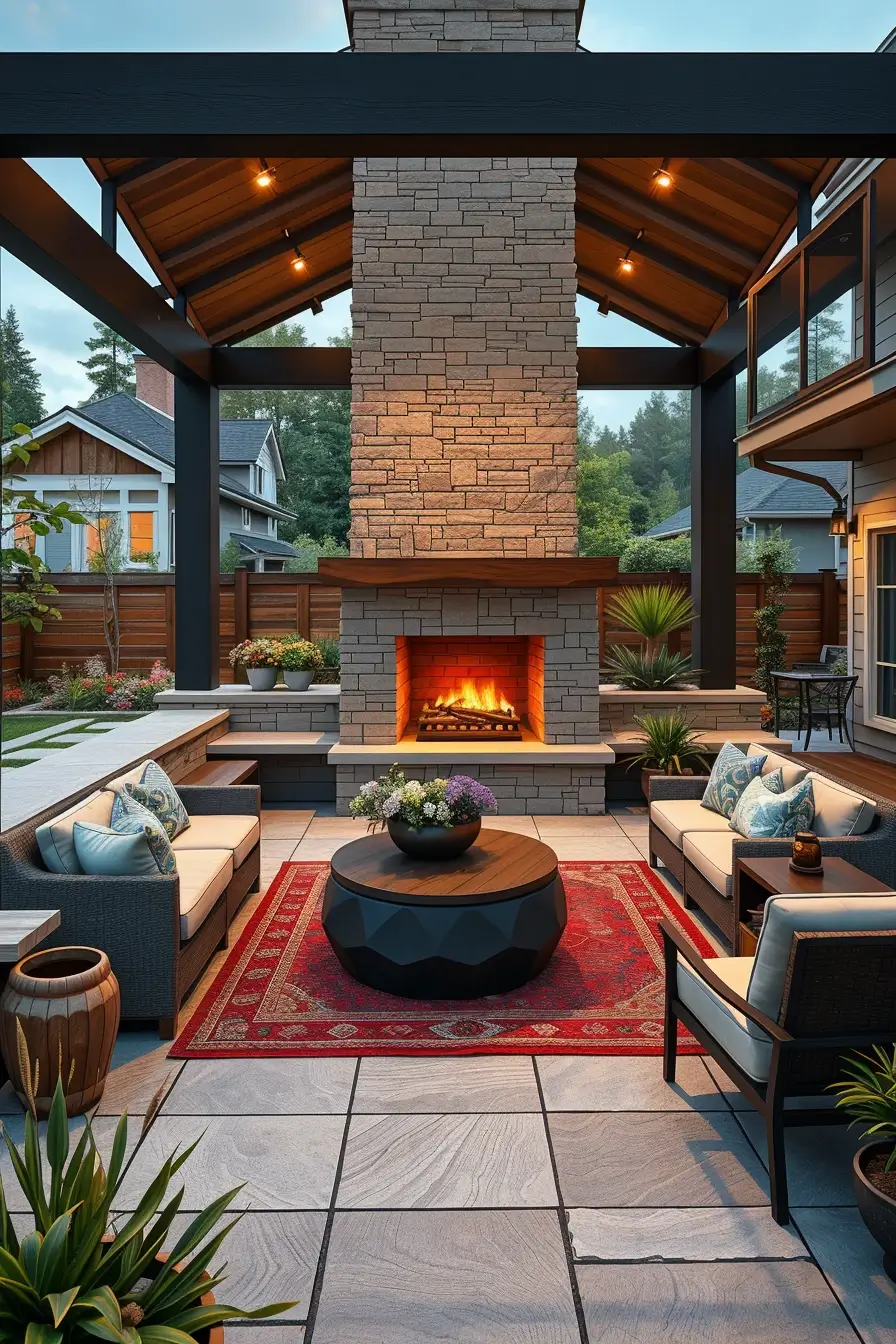
I design custom fireplaces alongside tailored seating, built-in planters, and integrated lighting. Each component is sized and positioned precisely to ensure comfort and circulation. Materials are selected based on climate, exposure, and maintenance needs.
From my experience, many professionals featured in Architectural Digest emphasize that customization leads to better long-term satisfaction. I agree because bespoke designs adapt naturally to how people actually use their outdoor spaces.
What I always include in custom projects is future flexibility. I plan for potential upgrades, such as additional seating or lighting, so the fireplace remains relevant as needs evolve.
21. Outdoor Fireplaces That Redefine Modern Patio Design
I see modern patio fireplaces in 2026 as architectural anchors rather than accessories. These designs often integrate seamlessly into the patio layout, using clean lines, monolithic forms, and balanced proportions that feel intentional and permanent. From a practical standpoint, these fireplaces extend seasonal use of outdoor spaces while creating a natural gathering zone that organizes seating and circulation.
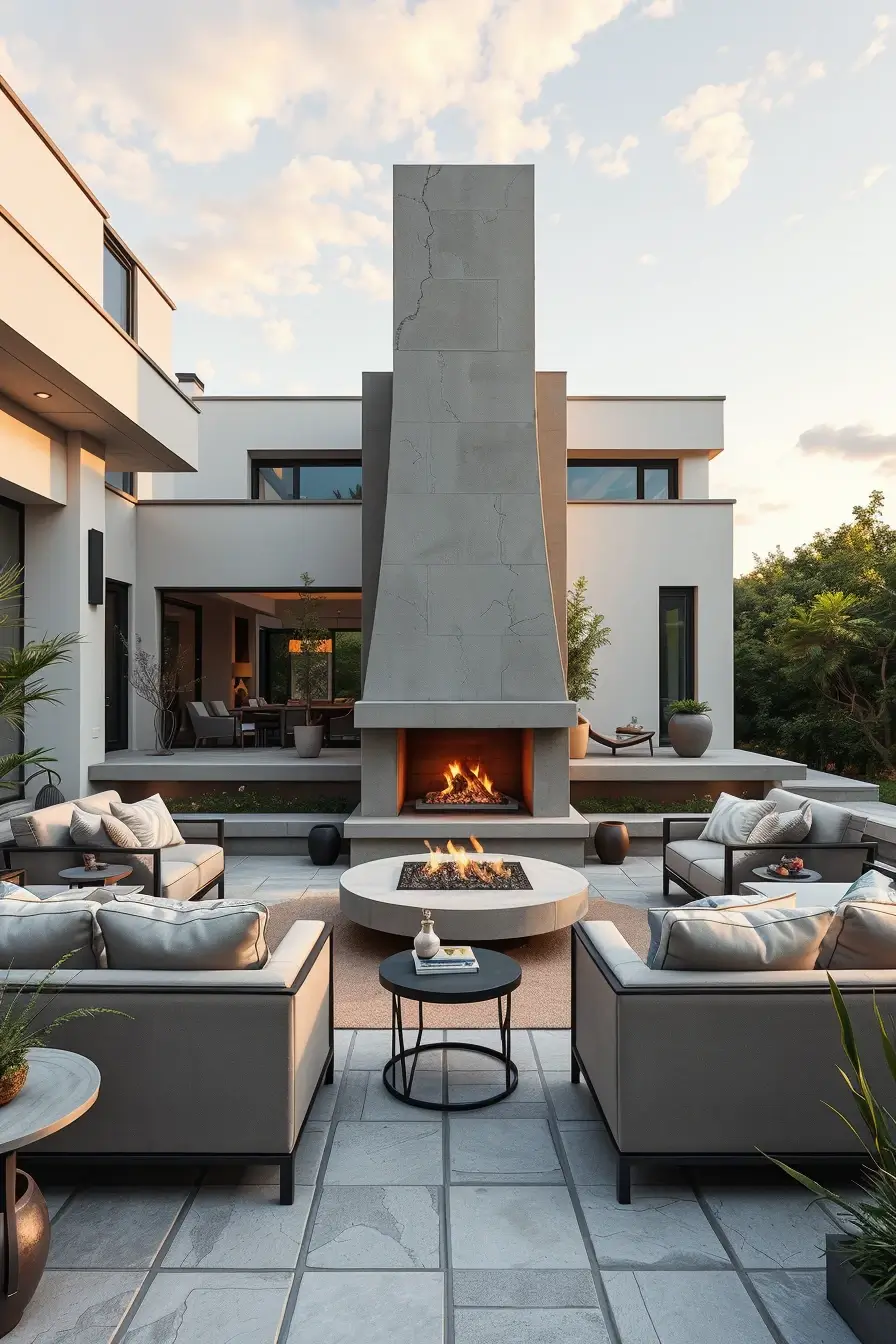
In these designs, I prioritize built-in seating, low-profile modular sofas, and fire-resistant surfaces such as concrete, porcelain slabs, and natural stone. Each element supports both comfort and durability, ensuring the fireplace does not overpower the patio but instead harmonizes with outdoor dining tables, lounge chairs, and surrounding landscape elements.
From my professional experience, leading designers featured in publications like Architectural Digest emphasize restraint and clarity in modern outdoor spaces. I agree that a fireplace should feel sculptural yet calm, offering visual interest without visual noise. This balance is what truly redefines a modern patio rather than simply decorating it.
What I would add to this concept is integrated storage for firewood or concealed gas controls. These details are often overlooked, yet they dramatically improve daily usability and preserve the clean aesthetic that defines modern patio design.
22. Artistic Firebox Designs For Outdoor Fireplaces
Artistic firebox designs shift the focus inward, turning the fire chamber itself into a visual statement. In 2026, I see fireboxes framed with asymmetrical openings, layered depths, and mixed materials that create a sense of movement even when the fire is unlit. These designs are as much about visual rhythm as they are about warmth.
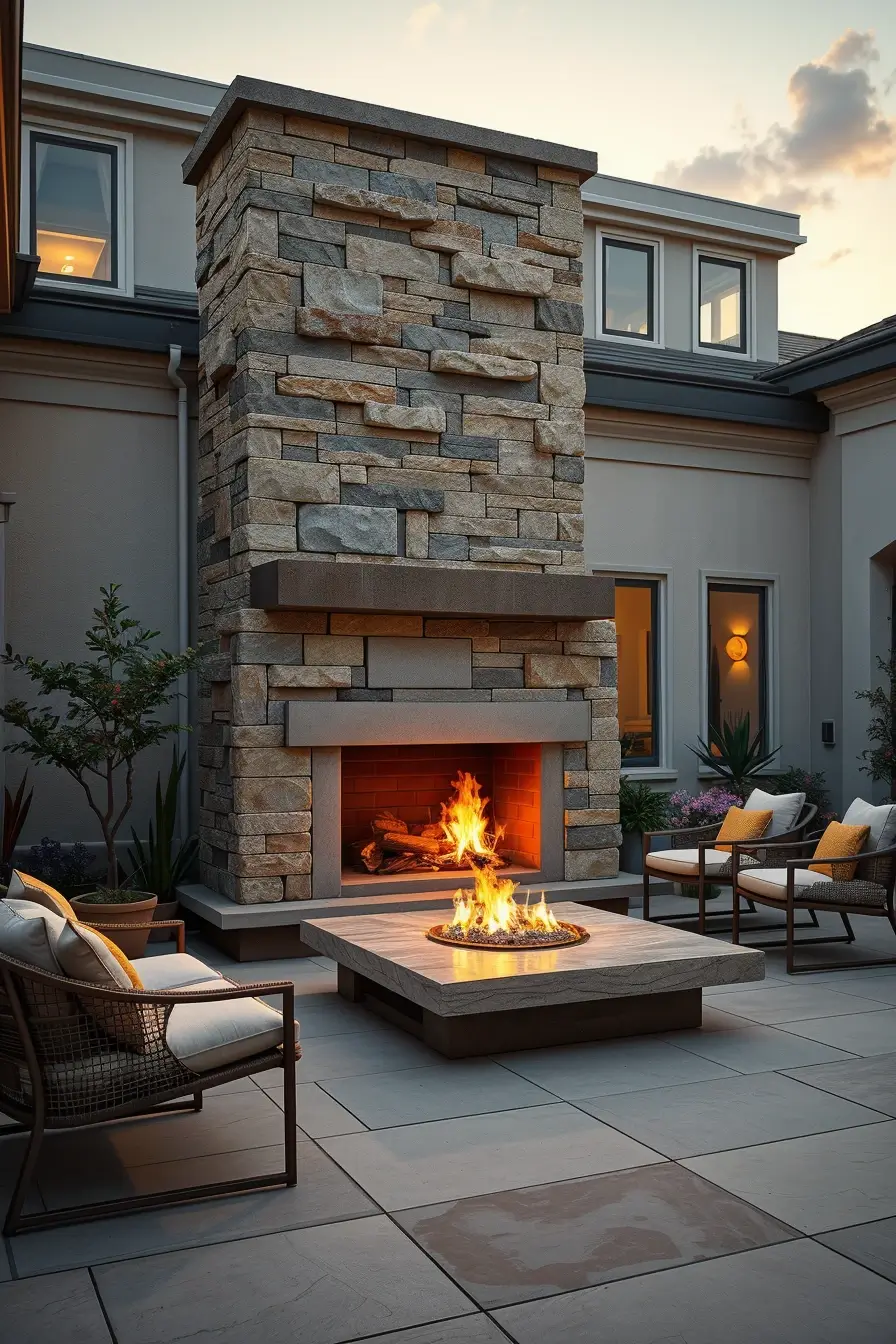
I carefully select materials like brushed steel, blackened metal, ceramic panels, and textured stone to frame the firebox. Surrounding furniture is intentionally understated such as neutral-toned lounge chairs or sculptural benches to allow the firebox to remain the focal point without competition.
In my opinion, this approach aligns with advice from designers regularly cited in Dezeen and Dwell, who emphasize the emotional impact of fire as a living element. A thoughtfully designed firebox elevates the entire outdoor environment and creates a stronger sensory experience.
What is often missing in artistic firebox designs is proper lighting integration. I recommend adding subtle recessed lighting or ground-level illumination to enhance textures and ensure the firebox remains visually compelling after the flames die down.
23. Statement Outdoor Fireplaces For Modern Courtyards
In modern courtyards, statement fireplaces act as vertical or central sculptural elements that define spatial hierarchy. I approach these designs as outdoor monuments, carefully scaled to courtyard proportions so they feel bold without overwhelming the enclosed environment.
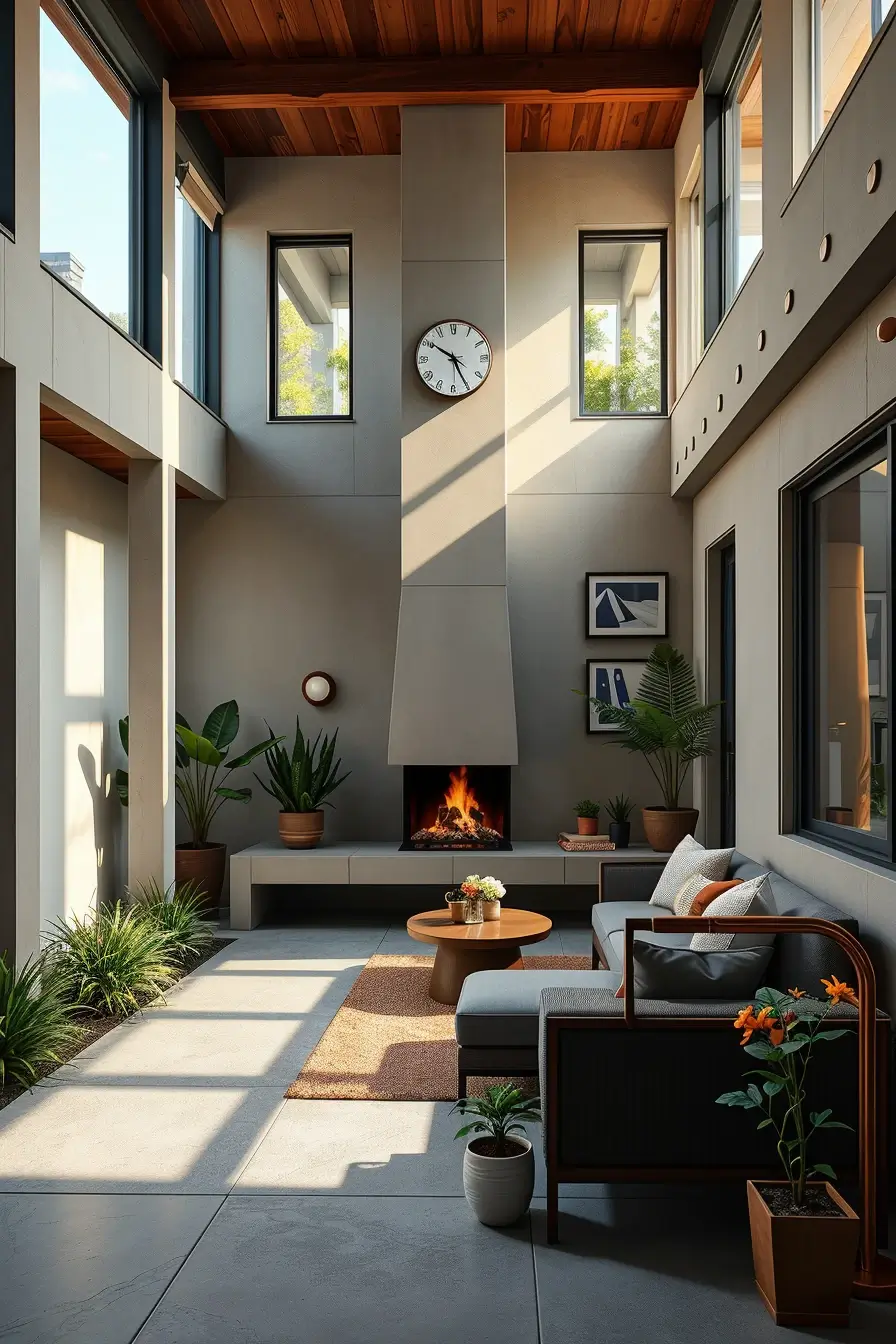
Materials such as cast concrete, smooth stone blocks, or matte-finished metal panels work best here. I pair them with minimalist courtyard furniture like low-profile sectionals, stone benches, and integrated planters to maintain a cohesive visual language throughout the space.
From my professional perspective, courtyard fireplaces benefit greatly from intentional symmetry or controlled asymmetry. Many respected landscape architects in the US stress the importance of visual balance in enclosed outdoor spaces, and I have seen firsthand how this enhances both comfort and perceived luxury.
What I would add to this section is acoustic consideration. Courtyards can amplify sound, so incorporating textured surfaces or soft furnishings helps absorb noise and makes the space more comfortable for conversation around the fireplace.
24. Outdoor Fireplaces Designed For Visual Drama
Visual drama in outdoor fireplaces for 2026 comes from scale, contrast, and placement rather than excessive ornamentation. I often design these fireplaces as elongated horizontal features or towering vertical elements that command attention from multiple viewpoints.
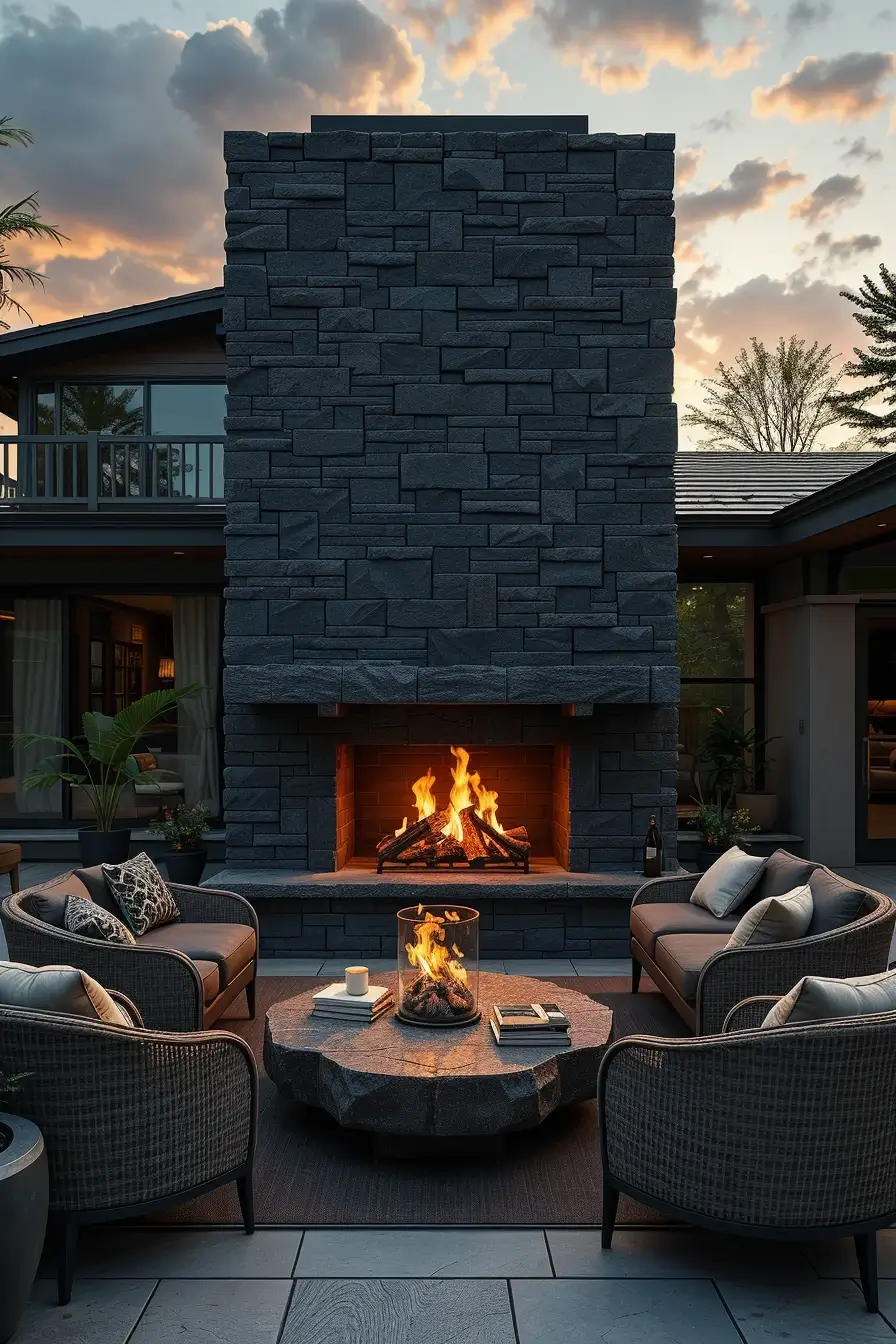
I support these fireplaces with dramatic seating arrangements such as curved sofas, oversized lounge chairs, and layered outdoor rugs. Finishes like dark stone, fluted concrete, or metallic accents enhance contrast against natural surroundings and amplify the visual impact.
Personally, I believe visual drama should always serve a purpose. Designers highlighted in publications like Interior Design Magazine often note that drama works best when paired with simplicity elsewhere. I apply this philosophy to ensure bold fireplaces remain timeless rather than trend-driven.
What could be added here is controlled sightline planning. Ensuring the fireplace aligns with key views from indoor spaces strengthens its role as a visual centerpiece even when seen through large glass doors.
25. Seamless Indoor-Outdoor Fireplace Transitions
Seamless indoor-outdoor fireplace transitions are among the most modern and designer approaches shaping outdoor fireplace ideas 2026. I design these fireplaces to visually connect interior living rooms with exterior patios, creating continuity through materials, proportions, and alignment.
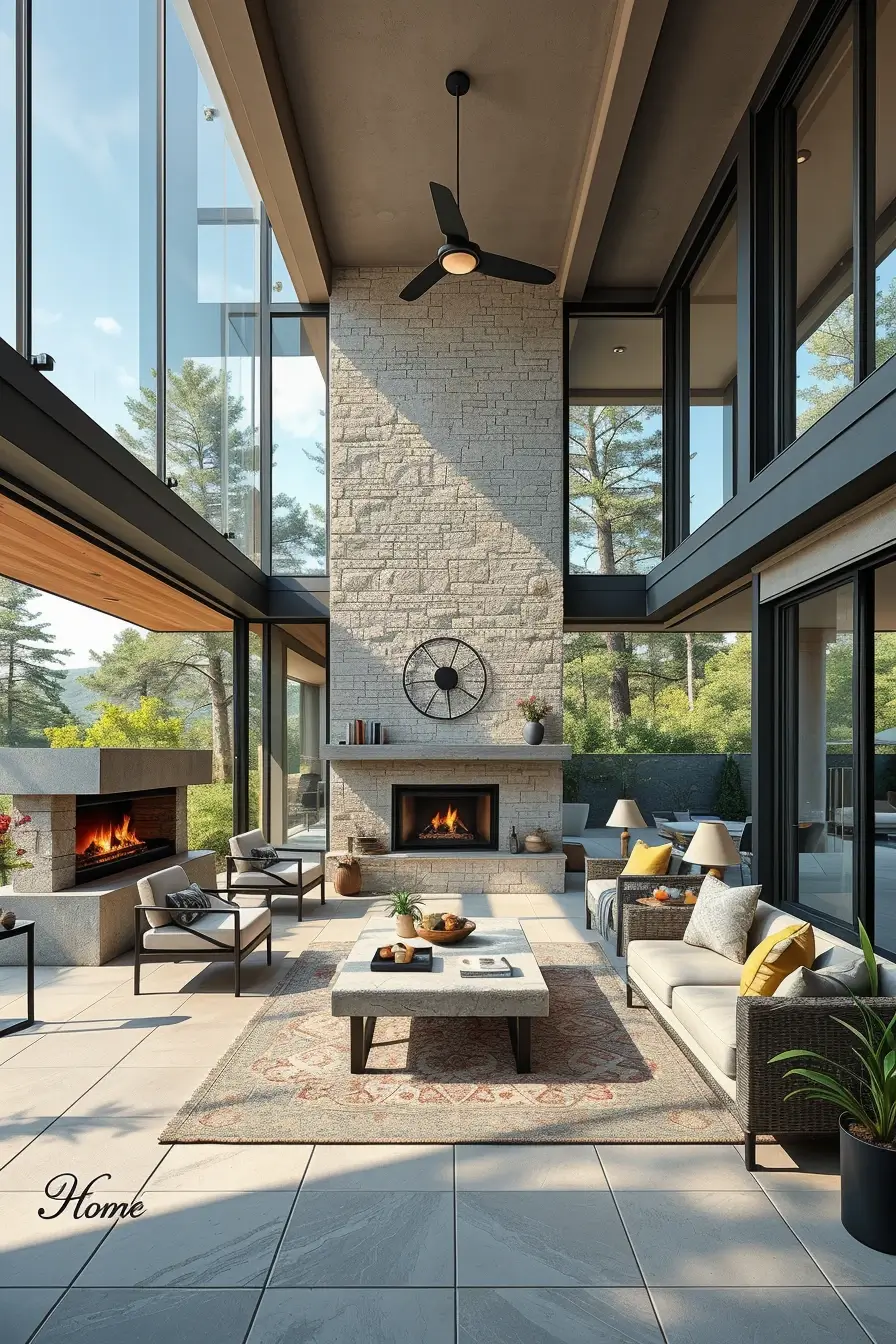
I typically repeat finishes like stone cladding, concrete textures, or linear fire openings on both sides of the transition. Furniture choices echo this continuity, with outdoor sofas mirroring indoor silhouettes while remaining weather-appropriate.
From my experience, this strategy is strongly supported by contemporary architects featured in Elle Decor, who emphasize blurred boundaries between inside and outside living. When done correctly, the fireplace becomes a shared experience rather than a divided one.
What I often see missing is proper climate planning. I recommend incorporating retractable glass walls or wind screens to ensure comfort and functionality across changing weather conditions without compromising the design intent.
26. Outdoor Fireplaces With Experimental Shapes And Textures
When I design outdoor fireplaces with experimental shapes, I focus on breaking away from predictable geometry while maintaining structural logic. In 2026, these fireplaces often feature curved silhouettes, layered volumes, or unexpected angles that transform the fireplace into a functional sculpture. Despite their artistic appearance, I ensure these designs remain practical, offering efficient heat distribution and safe circulation around the fire zone.
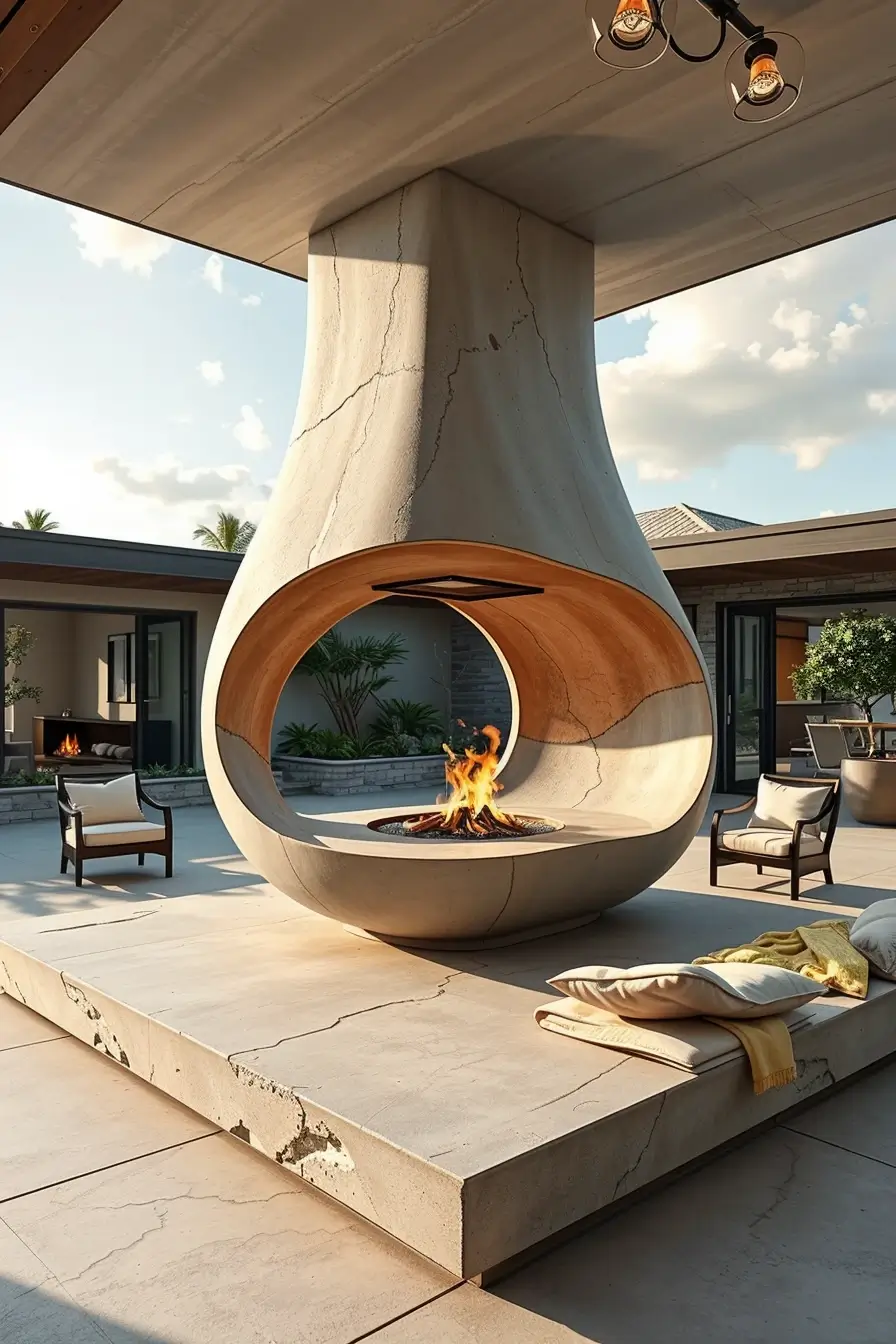
Textures play a critical role here. I incorporate ribbed concrete, carved stone, hand-troweled plaster, or matte ceramic surfaces to create tactile interest. Furniture is intentionally restrained, using simple lounge chairs or low benches that allow the fireplace form and surface detailing to take visual precedence.
From my professional standpoint, experimental fireplaces reflect a broader design movement discussed in platforms like Dezeen, where material exploration is central to contemporary architecture. I’ve seen these fireplaces spark conversation and emotional engagement, especially in homes where outdoor spaces are treated as curated environments rather than utility zones.
What I would add to this concept is a careful balance between experimentation and longevity. I always recommend selecting textures that age gracefully outdoors, ensuring the design remains compelling years after installation.
27. High-End Outdoor Fireplace Trends Defining 2026
High-end outdoor fireplace trends in 2026 emphasize craftsmanship, precision, and intentional design. I approach these fireplaces as bespoke installations, often custom-designed to suit the architecture of the home and surrounding landscape. Their usefulness lies not only in warmth but also in reinforcing the identity of the outdoor space.
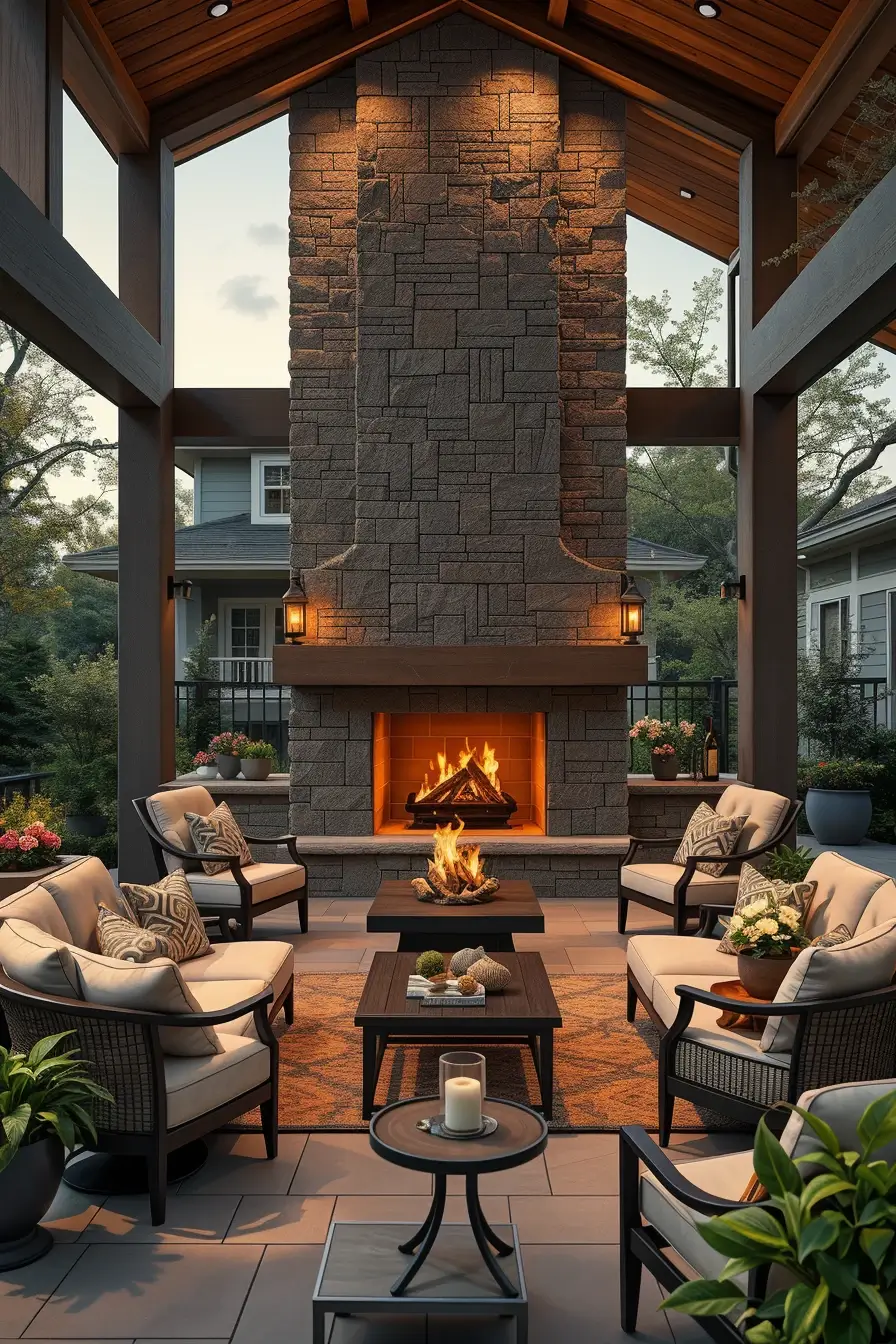
I typically specify premium materials such as honed stone, architectural concrete, brushed stainless steel, or porcelain slabs. These fireplaces are paired with luxury outdoor furniture, integrated lighting, and thoughtfully planned layouts that support both relaxation and entertaining.
In my experience, leading designers featured in Architectural Digest highlight the importance of cohesion in luxury outdoor environments. I fully agree that a high-end fireplace must feel integrated rather than isolated, contributing to a seamless and elevated overall experience.
What is often missing in high-end designs is smart technology integration. I recommend adding remote ignition systems, temperature control, or automated lighting to enhance convenience without compromising aesthetics.
28. Artistic Outdoor Fireplaces For Contemporary Homes
Artistic outdoor fireplaces designed for contemporary homes blur the line between architecture and art. I design these fireplaces to complement modern home facades, often aligning them with window grids, rooflines, or exterior walls to create visual continuity. Their practicality lies in offering warmth while reinforcing the home’s architectural narrative.
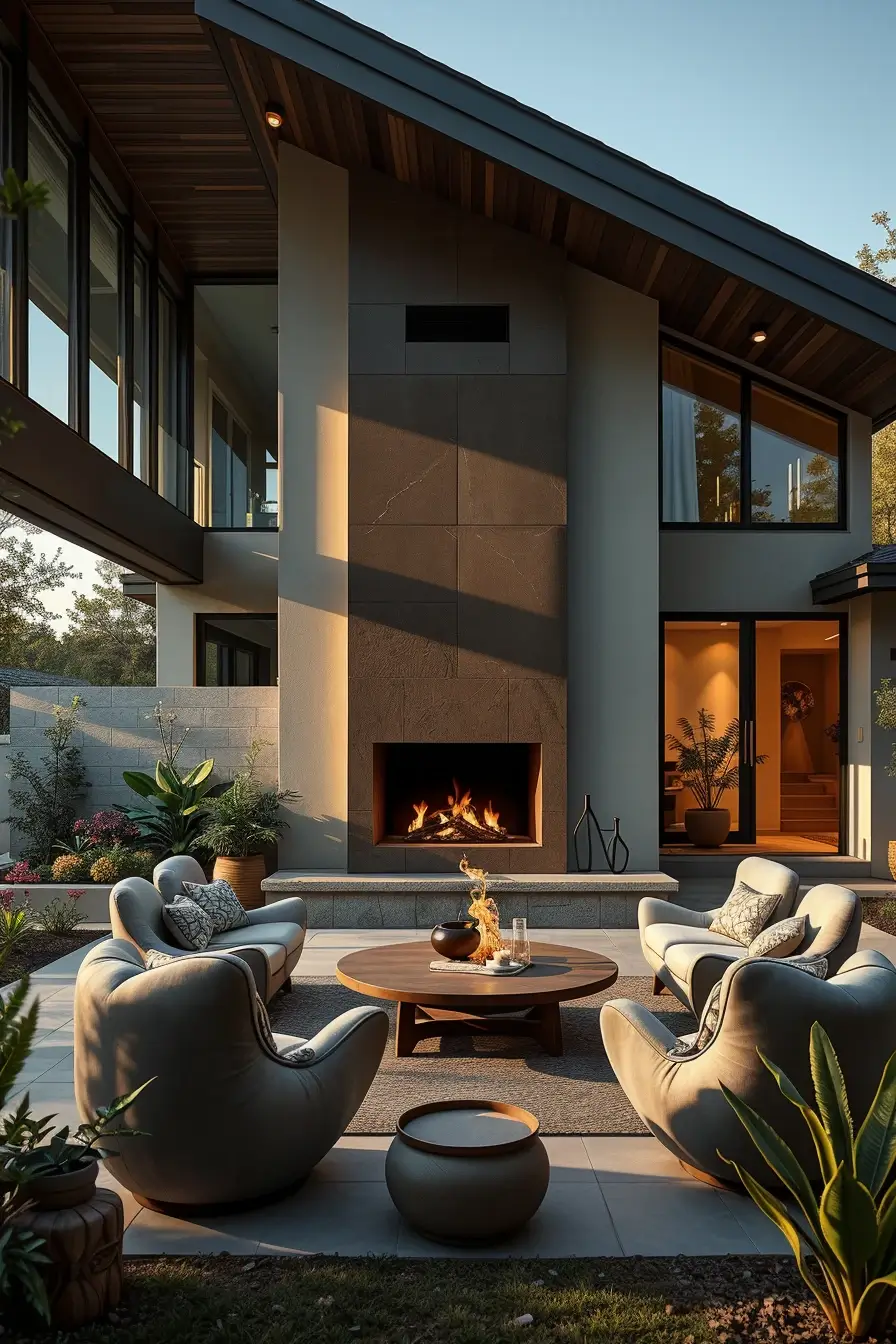
Furniture selection is deliberate and minimal. I favor sculptural outdoor chairs, integrated seating platforms, and neutral color palettes that support the fireplace as the main visual element. Surrounding decor is sparse, allowing form, proportion, and material quality to speak for themselves.
From my perspective, contemporary design publications like Dwell consistently emphasize authenticity in material use. I apply this principle by avoiding decorative excess and instead focusing on honest materials that feel intentional and grounded.
What I would add here is collaboration with artists or fabricators during the design phase. Custom elements elevate the fireplace from a design feature to a true artistic statement tailored to the home.
29. Outdoor Fireplaces As Nighttime Landscape Features
At night, outdoor fireplaces take on a completely different role, acting as luminous anchors within the landscape. I design these fireplaces to enhance visibility, mood, and spatial orientation after dark, ensuring they remain both beautiful and functional in low-light conditions.
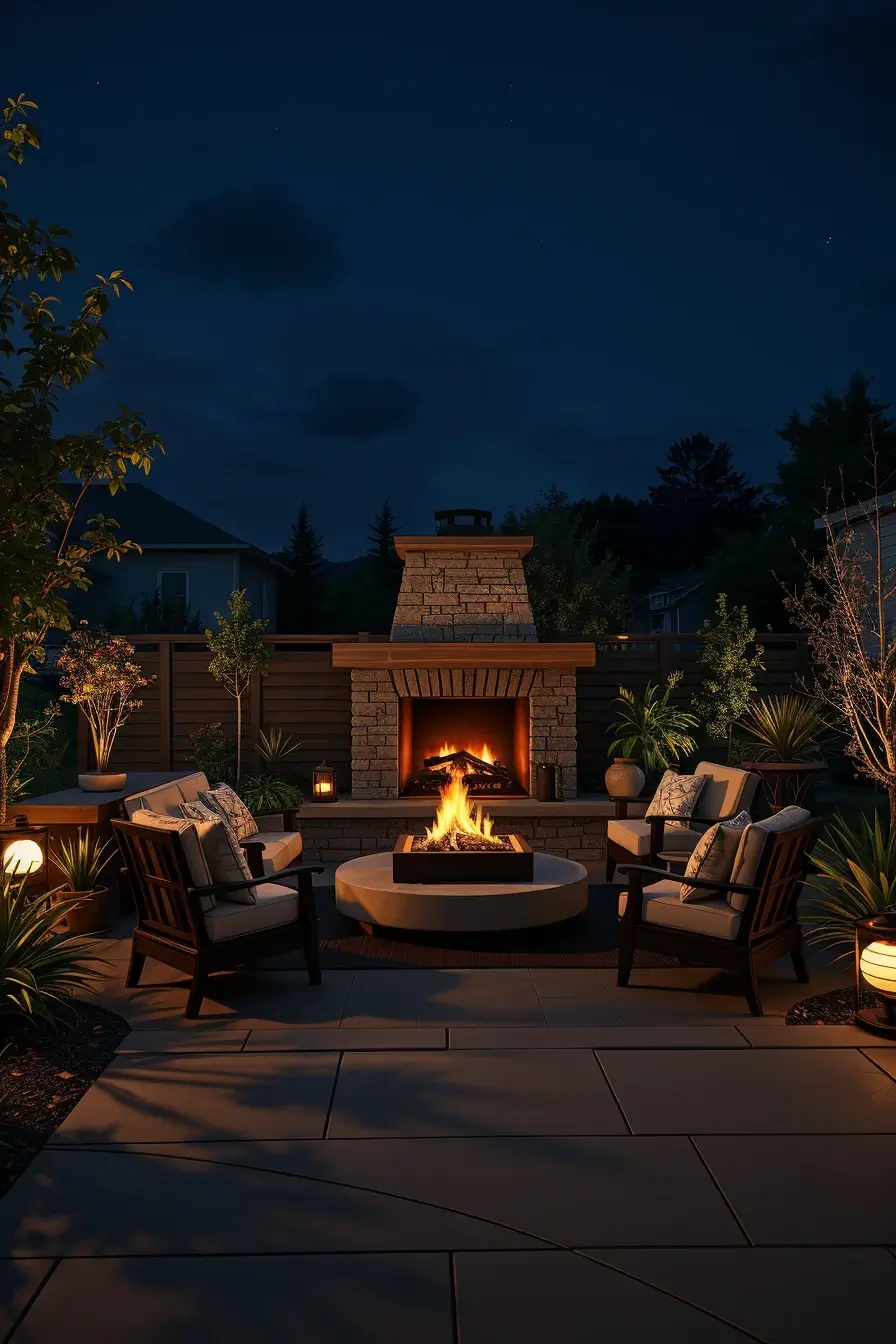
I combine the fireplace with layered lighting strategies, including ground lights, subtle uplighting, and integrated LED accents. Furniture is positioned to maximize warmth and visibility, often arranged in circular or semi-enclosed layouts that encourage conversation.
Based on my experience, landscape designers featured in Interior Design Magazine often stress the importance of nighttime usability. I agree that a fireplace should be just as impactful after sunset as it is during the day, especially in modern outdoor environments.
What is frequently missing is coordination with the broader landscape lighting plan. I recommend aligning fireplace illumination with pathways, trees, and architectural lighting for a cohesive nighttime experience.
30. The Future Of Outdoor Fireplace Design In 2026
Looking ahead, I see the future of outdoor fireplace design in 2026 as deeply connected to sustainability, personalization, and expressive form. These fireplaces are no longer secondary features but central design elements that shape how outdoor spaces are experienced year-round.
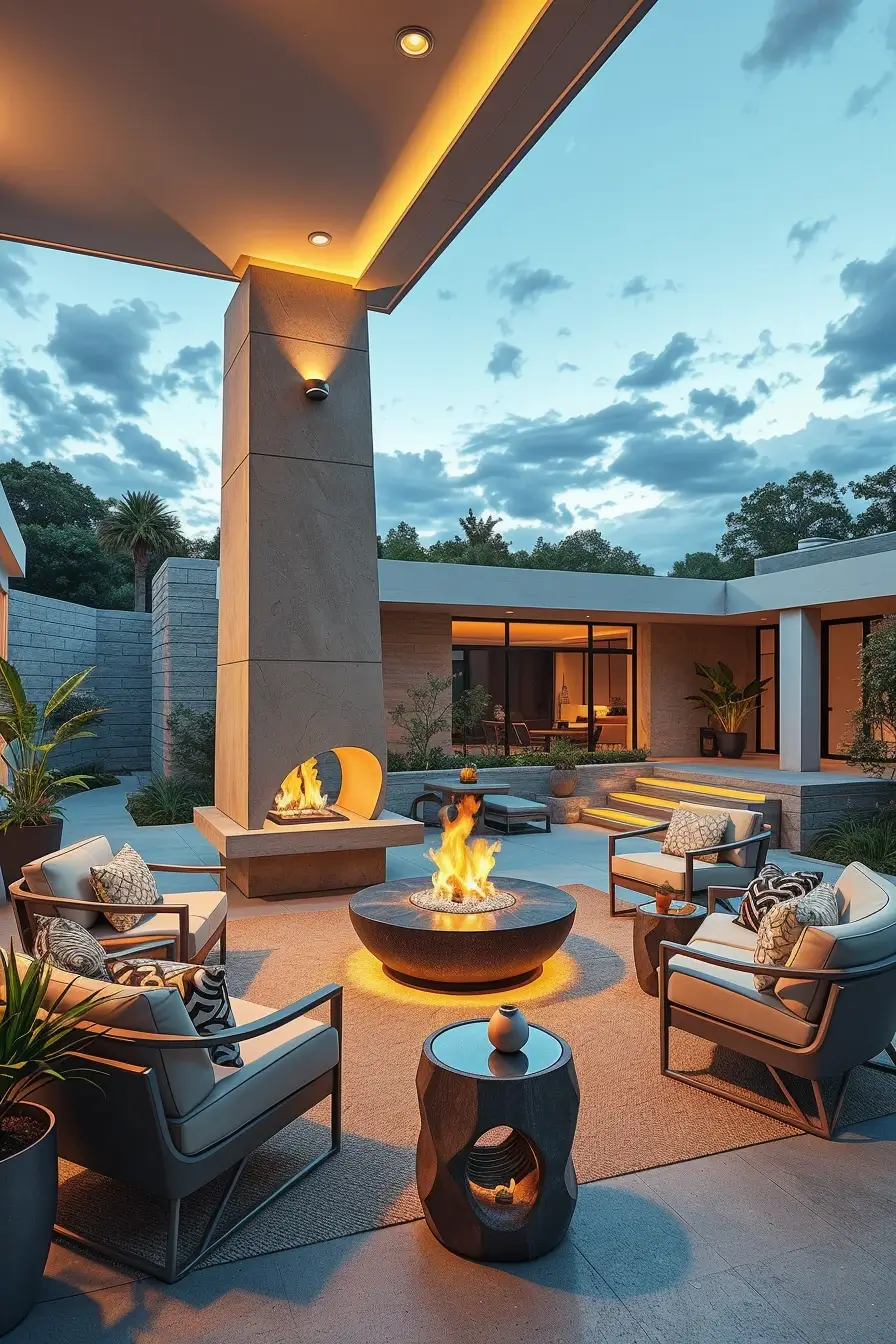
Design-wise, I anticipate increased use of modular systems, eco-conscious fuel options, and adaptable forms that respond to changing lifestyles. Furniture and layout choices will continue to support flexibility, allowing spaces to transition from intimate gatherings to larger social events.
From my professional viewpoint, respected voices in contemporary architecture suggest that outdoor spaces will increasingly mirror interior quality. I fully support this direction, as it elevates outdoor living to the same standard of comfort and design excellence.
What I would add to future-focused fireplace design is adaptability. Designing fireplaces that can evolve with technology, climate needs, and user preferences will define truly successful outdoor environments.
Outdoor fireplace ideas for 2026 show how fire can become a powerful design element, not just a functional feature. Sculptural forms, modern materials, and artistic concepts are transforming outdoor fireplaces into statement pieces that elevate the entire space. Whether minimalist, futuristic, or boldly expressive, these designs reflect a shift toward creativity and individuality in outdoor living. As outdoor spaces continue to evolve, the outdoor fireplace stands at the center—combining warmth, atmosphere, and modern design into one unforgettable focal point.