Garden landscaping in 2026 is moving far beyond traditional flower beds and predictable layouts, evolving into a form of outdoor art that blends creativity, design, and emotion. Gardens are no longer just green spaces—they are becoming sculptural landscapes shaped by curved lines, artistic compositions, and bold, original ideas. The focus is on creating environments that feel expressive and intentional, where every path, plant, and structure contributes to a unified visual story.
In 2026, garden landscaping embraces fluid forms, unusual materials, and designer-inspired concepts that turn outdoor spaces into living galleries. From sculptural greenery and architectural hardscaping to artistic lighting and immersive layouts, modern gardens are designed to inspire, surprise, and connect people with nature in a more creative way. This new approach celebrates individuality, transforming gardens into unique, stylish spaces that reflect both artistic vision and contemporary outdoor living.
1. The Vision Of Garden Landscaping 2026
In my work, I see garden landscaping 2026 as a thoughtful blend of nature, architecture, and personal lifestyle. The focus shifts from decorative planting to holistic outdoor environments where form, movement, and experience matter as much as greenery. These gardens are designed as living compositions, where circulation, views, and tactile materials create emotional comfort and visual balance.
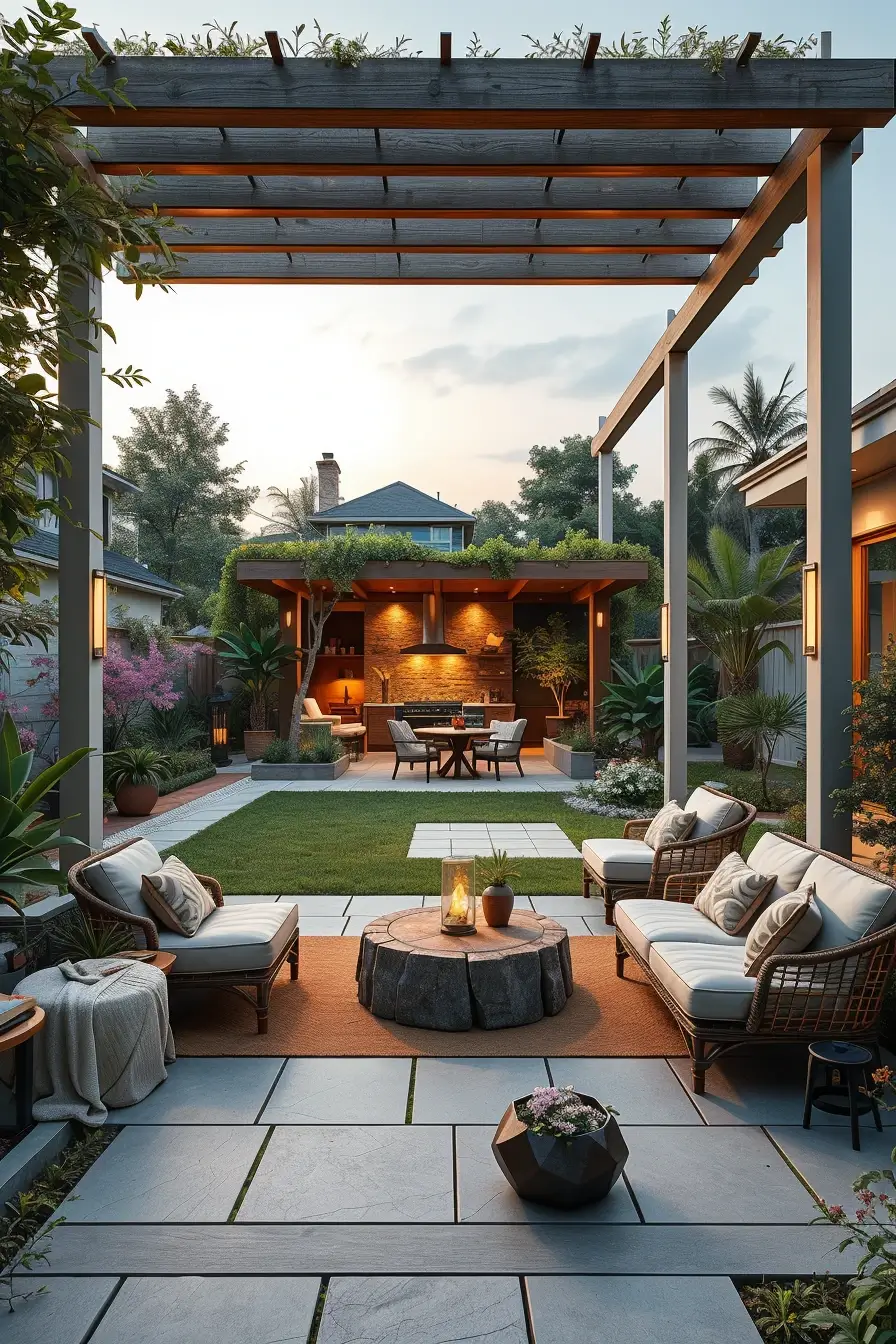
I prioritize elements such as integrated seating, layered planting, architectural pergolas, and carefully planned lighting. Outdoor furniture is selected for both comfort and sculptural quality, often featuring smooth silhouettes and natural finishes. Materials like stone, wood, and concrete are used deliberately to anchor the design and make the space feel cohesive and durable.
From my perspective, this vision aligns with what landscape architects featured in Architectural Digest US have emphasized recently: outdoor spaces should function as extensions of the home. I fully agree, as clients increasingly want gardens that support relaxation, entertaining, and everyday living rather than seasonal use only.
What is often missing at this stage is a clear long-term maintenance strategy. I always recommend planning irrigation, lighting controls, and plant maturity in advance so the garden remains visually strong for years without constant redesign.
2. Sculptural Garden Landscaping As Outdoor Art
I approach sculptural garden landscaping as a form of outdoor art that interacts with light, shadow, and movement. Instead of filling space with traditional planting beds, I focus on creating focal points that guide the eye and define zones. These gardens feel curated, intentional, and emotionally engaging without overwhelming the senses.
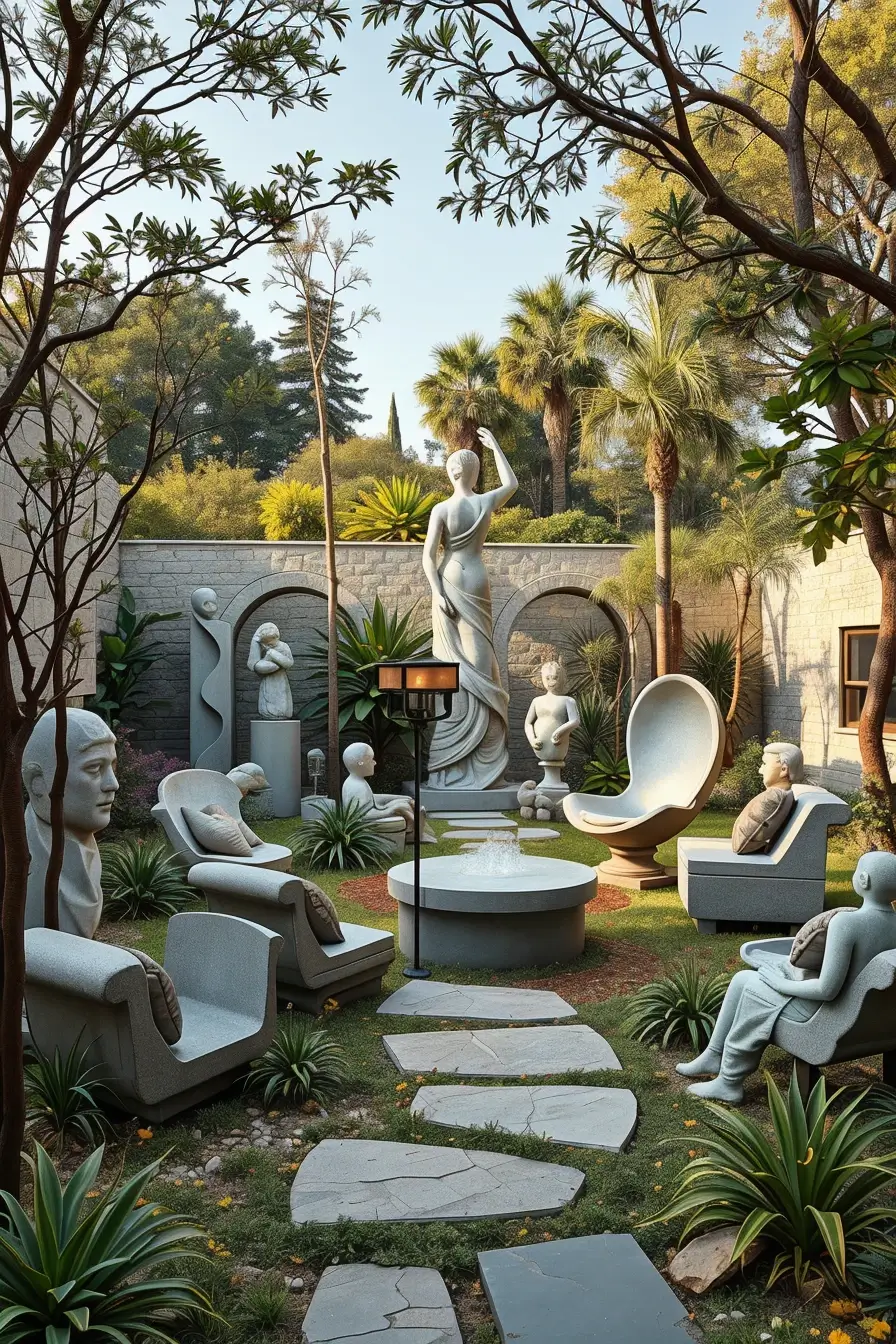
Key elements include statement sculptures, custom-built seating, and bold planters that double as art objects. I often incorporate stone or concrete forms with organic contours, placing them strategically among greenery. Furniture is minimal but impactful, chosen for its shape as much as its function, allowing each piece to stand on its own visually.
In my experience, designers like Thomas Heatherwick, often referenced in Dezeen, influence this approach by proving that sculptural forms can be both practical and expressive. I apply similar thinking outdoors, ensuring every artistic element still serves a purpose, whether as seating, shade, or spatial definition.
Many sculptural gardens lack subtle transitions between art and planting. I recommend adding low ornamental grasses or ground covers to soften hard forms and create a more harmonious connection with nature.
3. Curved Lines And Fluid Forms In Modern Garden Design
When I design with curved lines and fluid forms, the garden immediately feels more natural and inviting. Straight paths and rigid layouts are replaced by gentle movement that encourages exploration and relaxation. This approach improves circulation and creates a calming rhythm throughout the space.
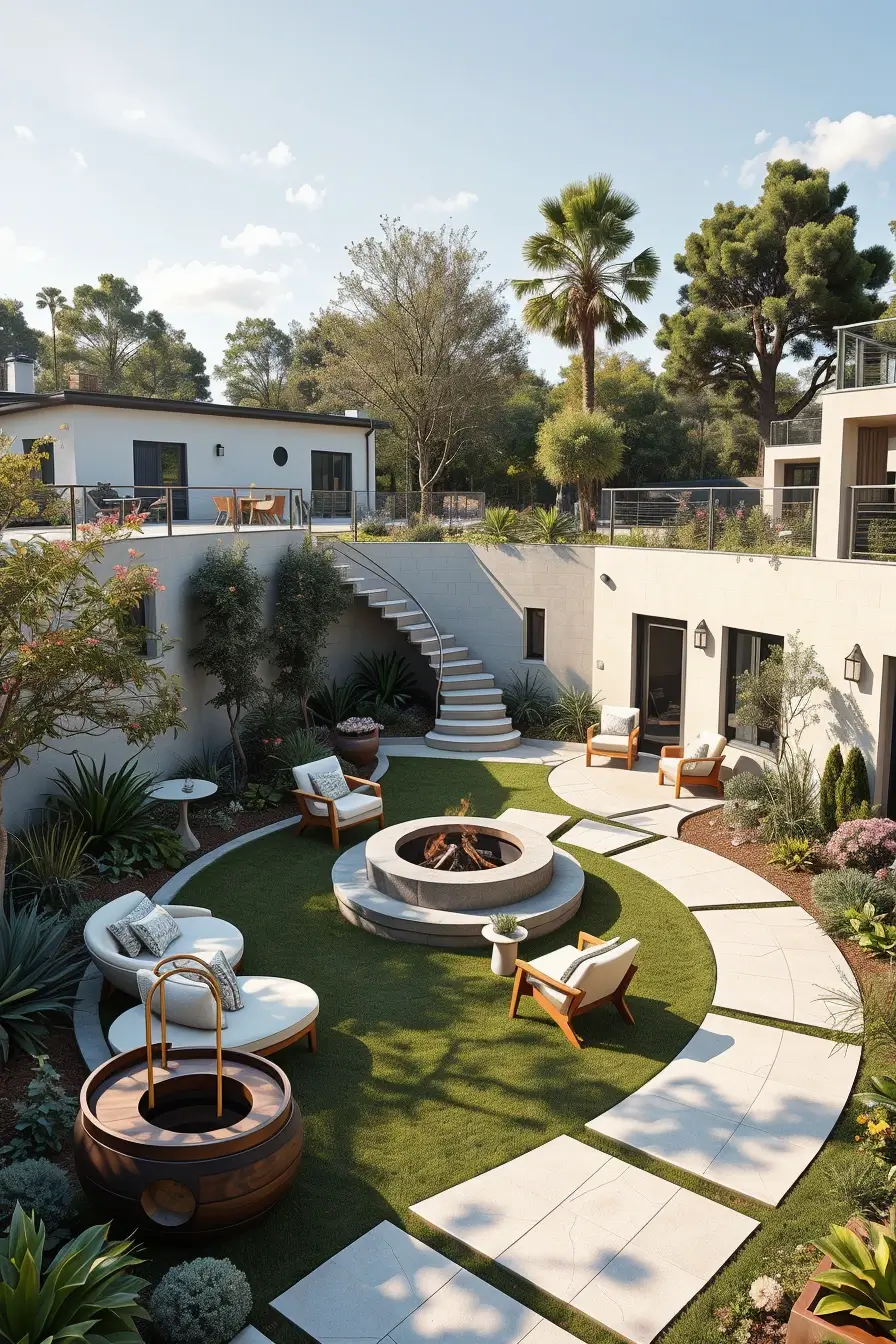
I use curved pathways, rounded seating areas, and softly contoured planting beds to achieve this effect. Outdoor sofas with rounded edges, circular fire pits, and oval tables reinforce the flow while remaining highly functional. These elements help eliminate visual tension and make the garden feel larger and more cohesive.
From my professional standpoint, this reflects guidance from Landscape Architecture Magazine, which highlights how organic layouts improve user comfort. I have seen firsthand how clients respond more positively to gardens that feel intuitive rather than overly structured.
What is often overlooked is drainage planning within curved designs. I always ensure subtle grading and permeable materials are integrated so beauty and performance work together seamlessly.
4. Artistic Garden Landscaping Inspired By Contemporary Architecture
I frequently draw inspiration from contemporary architecture when shaping artistic garden landscapes. Clean volumes, bold contrasts, and intentional negative space help the garden feel modern and connected to the home. This approach is especially effective for new builds or renovated properties with strong architectural lines.
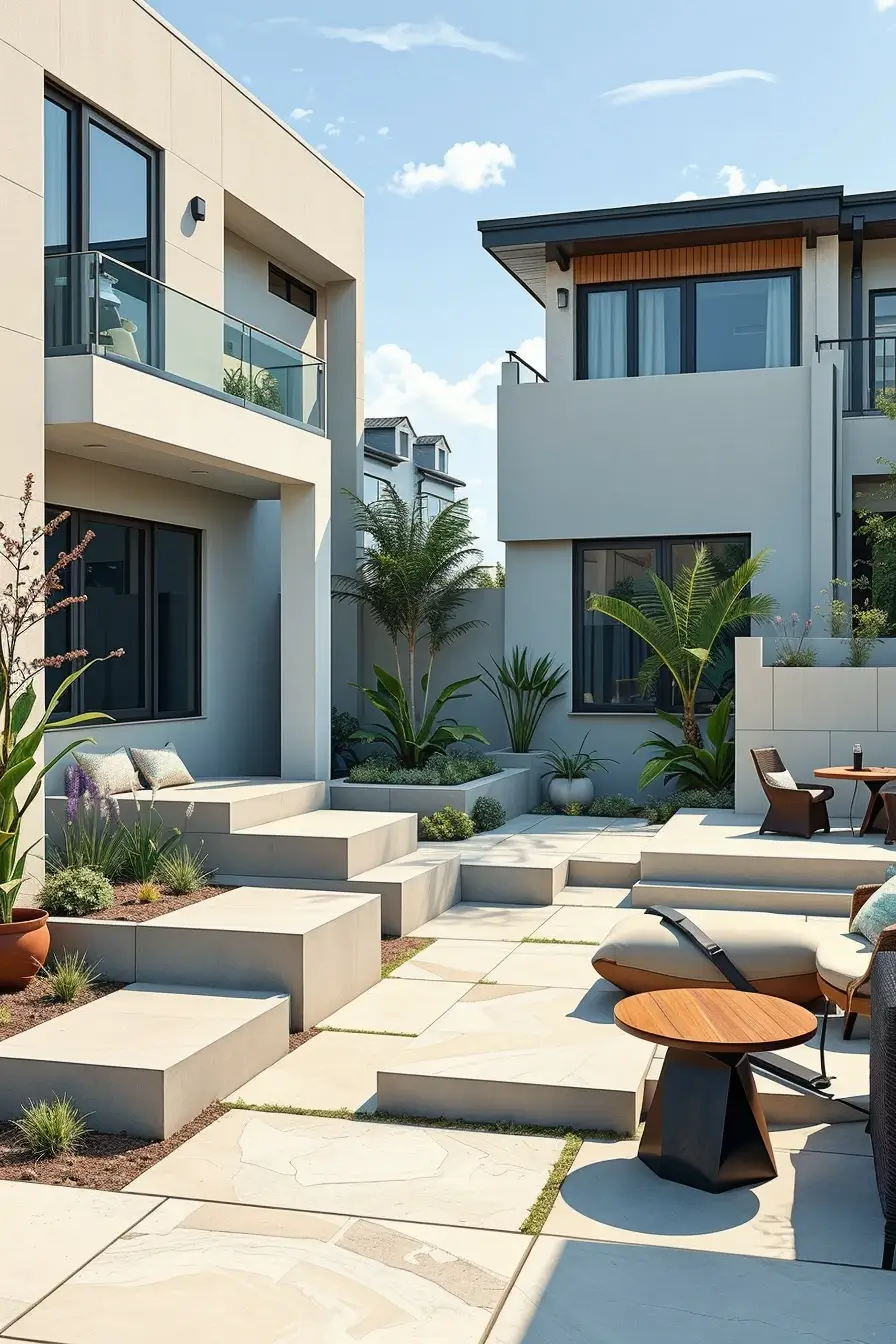
In these gardens, I incorporate architectural walls, stepped platforms, and integrated benches that echo the home’s structure. Furniture is low-profile and refined, often modular, allowing flexibility without visual clutter. Materials are chosen to mirror the house façade, creating a unified indoor-outdoor experience.
In my opinion, publications like Dwell consistently show how architecture-driven landscapes increase property value and daily usability. I apply these principles carefully, ensuring the garden complements rather than competes with the building.
What may be missing is softer seasonal planting. I recommend adding adaptive plant palettes that evolve through the year, bringing warmth and variation to otherwise structured spaces.
5. Designer Gardens With Bold And Unusual Shapes
Designer gardens in 2026 are defined by confidence and originality. I use bold and unusual shapes to transform outdoor areas into statement spaces that reflect the owner’s personality. These gardens challenge traditional layouts while remaining practical and comfortable.
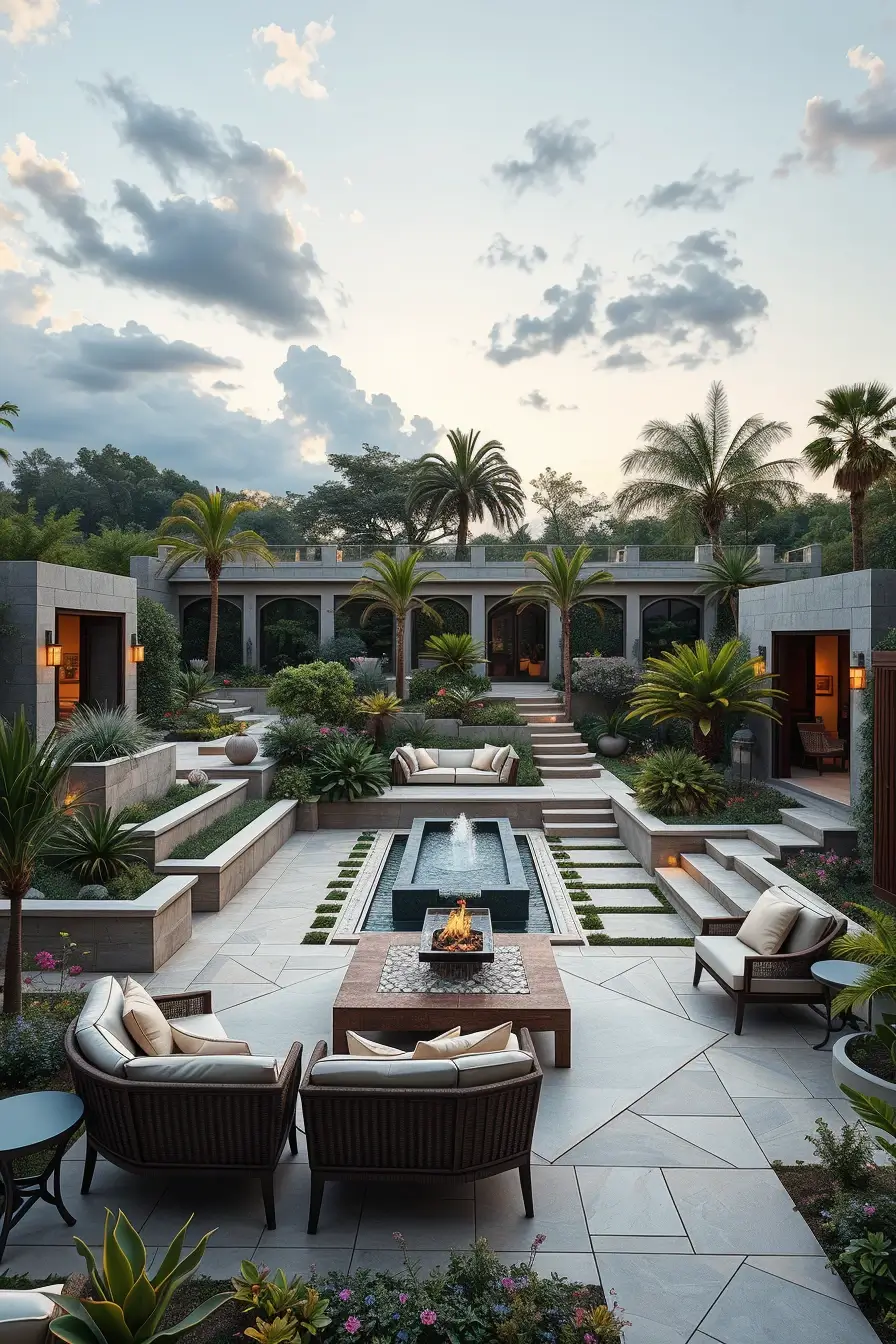
Elements such as asymmetrical lawns, geometric terraces, and custom-shaped water features play a central role. Furniture is often bespoke, designed to fit the space precisely, while lighting highlights forms after dark. Every object is positioned intentionally to support both movement and visual drama.
From my experience, this direction aligns with trends highlighted by Garden Design Magazine in the US, where individuality and customization are increasingly valued. I believe these gardens succeed when creativity is balanced with clear functionality.
To strengthen such designs, I often suggest adding flexible zones that can adapt over time. This ensures bold layouts remain usable as needs and lifestyles evolve.
6. Creative Garden Layouts That Break Traditional Symmetry
In my practice, I increasingly move away from symmetrical garden layouts because they often feel predictable and static. For garden landscaping 2026, breaking symmetry allows the space to feel more dynamic and emotionally engaging. These layouts prioritize experience over formality, guiding people through the garden in a more intuitive and natural way.
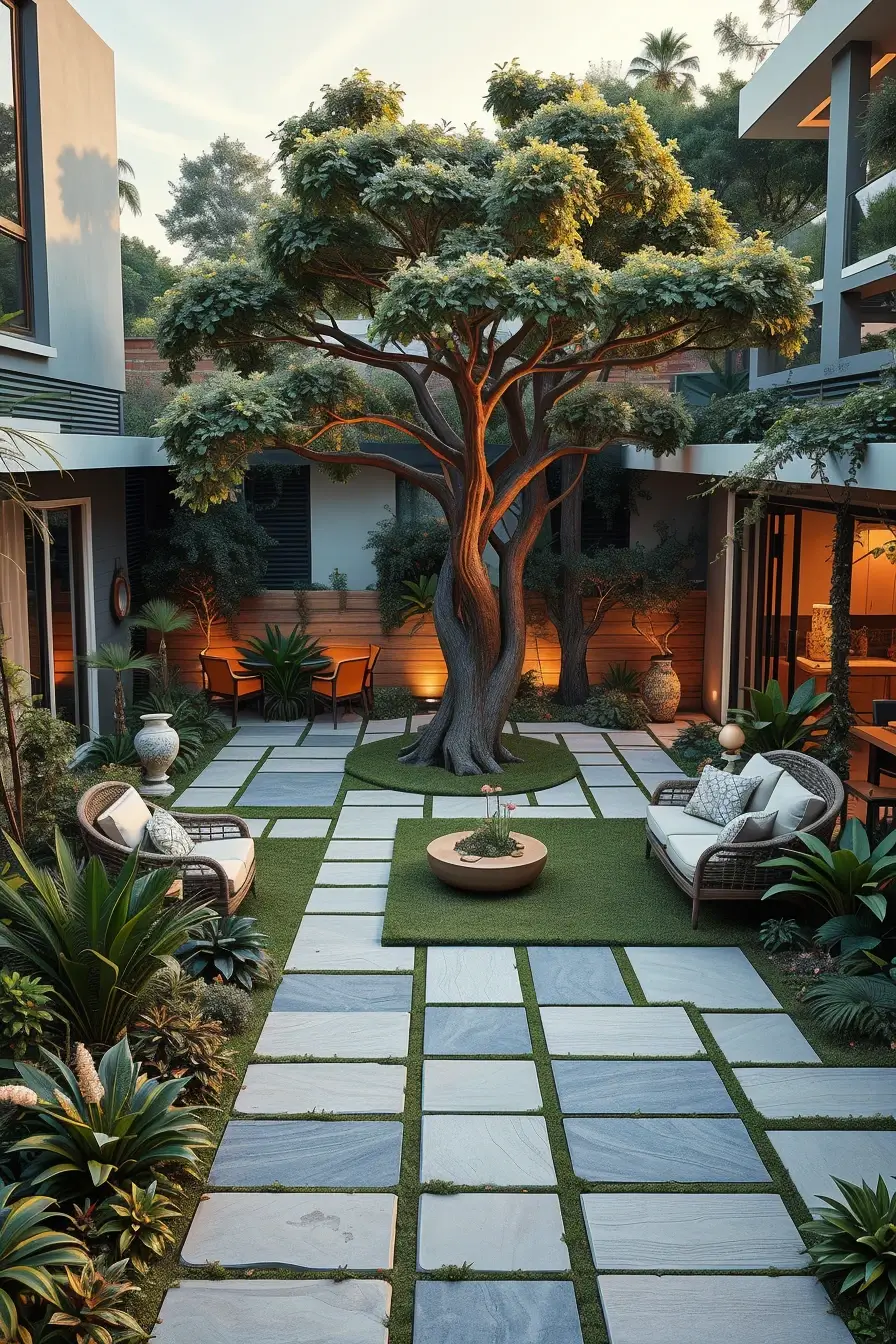
I design these gardens using offset pathways, irregular lawn shapes, and asymmetrical planting zones. Outdoor furniture is arranged in clusters rather than mirrored pairs, creating relaxed gathering areas. Features like water elements or fire pits are deliberately placed off-center to generate visual interest and a sense of movement.
From my professional experience, this approach reflects what many contemporary designers featured in Dezeen US emphasize: asymmetry creates authenticity. I have found that clients respond positively because these gardens feel more personal and less staged.
What is often missing in asymmetrical layouts is a clear visual anchor. I recommend including one strong focal element, such as a sculptural tree or statement seating area, to maintain balance without reverting to symmetry.
7. Unique Garden Landscaping Concepts For Statement Spaces
When I design unique garden landscaping concepts, I treat the outdoor area as a statement space that reflects identity and taste. These gardens are meant to be remembered, combining bold ideas with refined execution. In 2026, uniqueness comes from thoughtful composition rather than excess decoration.
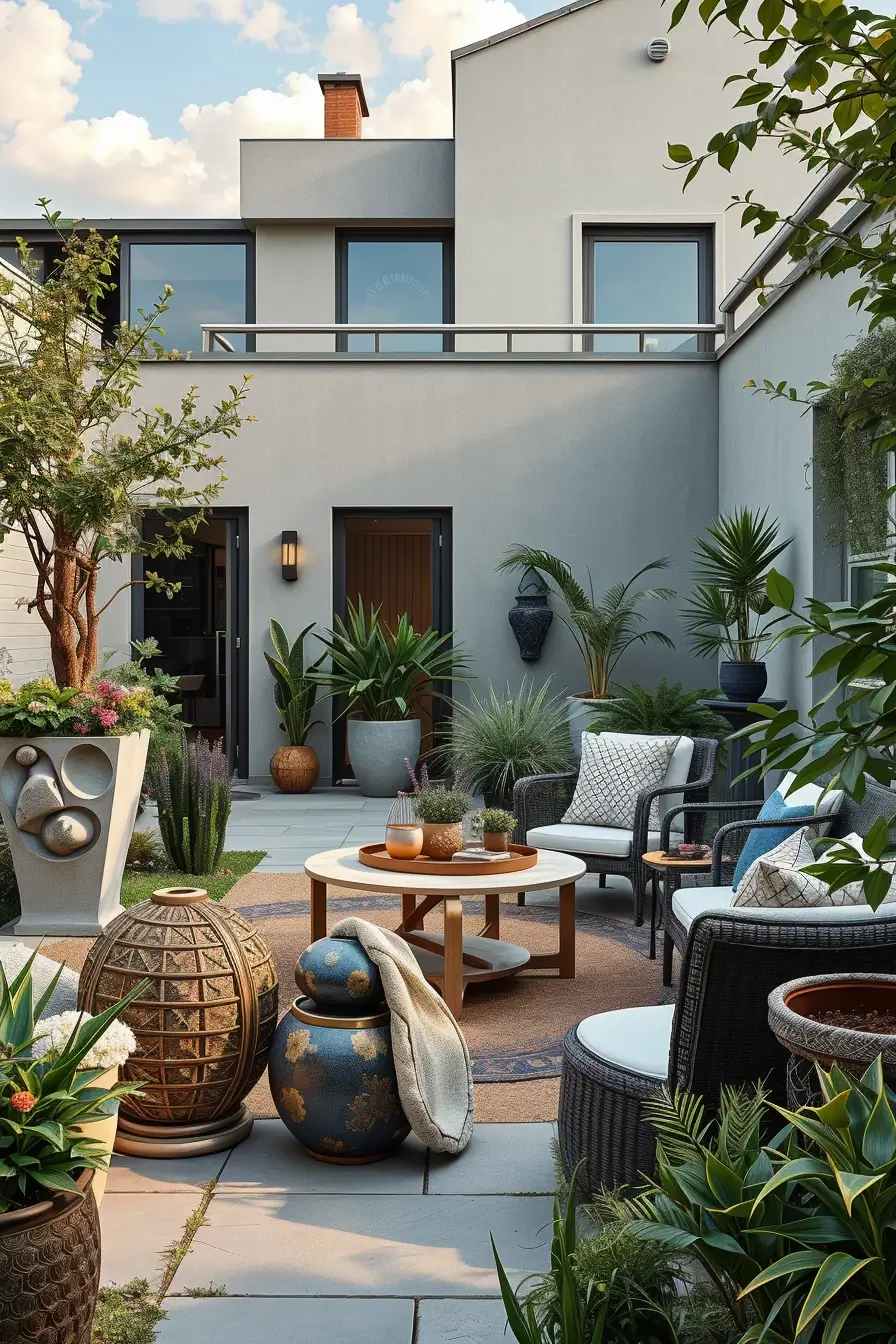
I focus on custom elements such as tailored planters, bespoke benches, and unexpected material combinations. Furniture often features sculptural silhouettes, while planting is curated to highlight contrast in texture and scale. Every element is selected to reinforce the overall concept without visual noise.
In my view, Garden Design Magazine frequently highlights that memorable landscapes are those with a clear narrative. I apply this principle by ensuring the garden tells a coherent story, whether inspired by art, travel, or architecture.
To strengthen these statement spaces, I often suggest integrating subtle lighting layers. This allows the garden to transform at night while maintaining its distinctive character.
8. Organic And Free-Flowing Garden Paths
Organic and free-flowing garden paths are central to how I design movement within a landscape. Rather than directing people in straight lines, these paths encourage exploration and slow interaction with the environment. They are especially relevant in artistic garden landscaping, where experience matters as much as aesthetics.
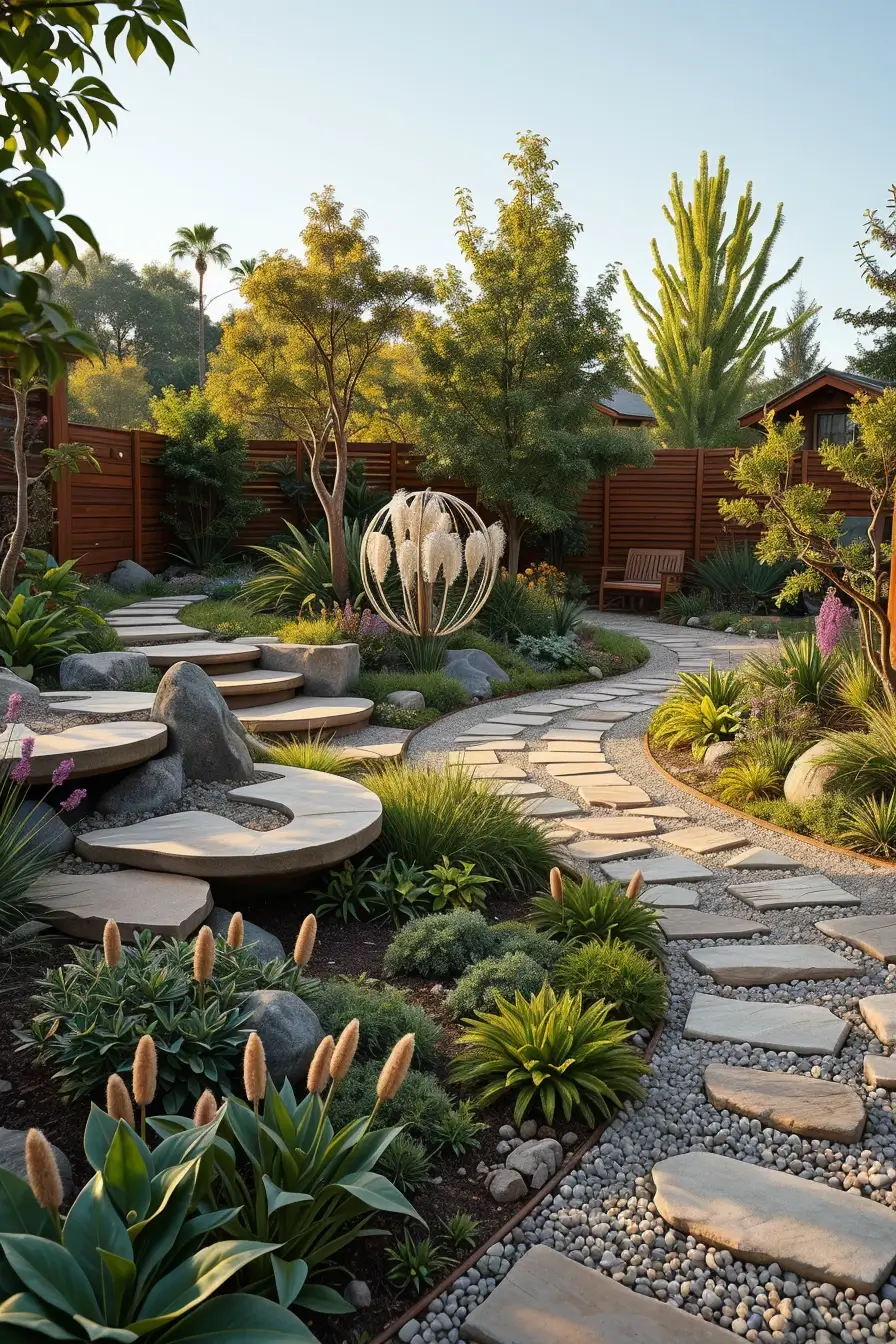
I typically use natural materials such as stone slabs, gravel, or poured concrete with soft edges. Paths gently curve around planting beds and seating areas, creating a seamless flow. Low-profile lighting and integrated edging ensure safety without disrupting the organic feel.
From my experience, landscape architects cited in Landscape Architecture Magazine note that curved paths improve spatial perception. I agree, as these paths make even compact gardens feel larger and more immersive.
What is sometimes overlooked is accessibility. I always ensure path widths, surfaces, and slopes are comfortable for daily use while preserving their free-flowing appearance.
9. Sculptural Hardscaping As A Design Centerpiece
I often use sculptural hardscaping as the backbone of a modern garden design. In garden landscaping 2026, hardscape elements are no longer purely functional; they become visual centerpieces that define the entire space. These features provide structure and longevity to artistic garden concepts.
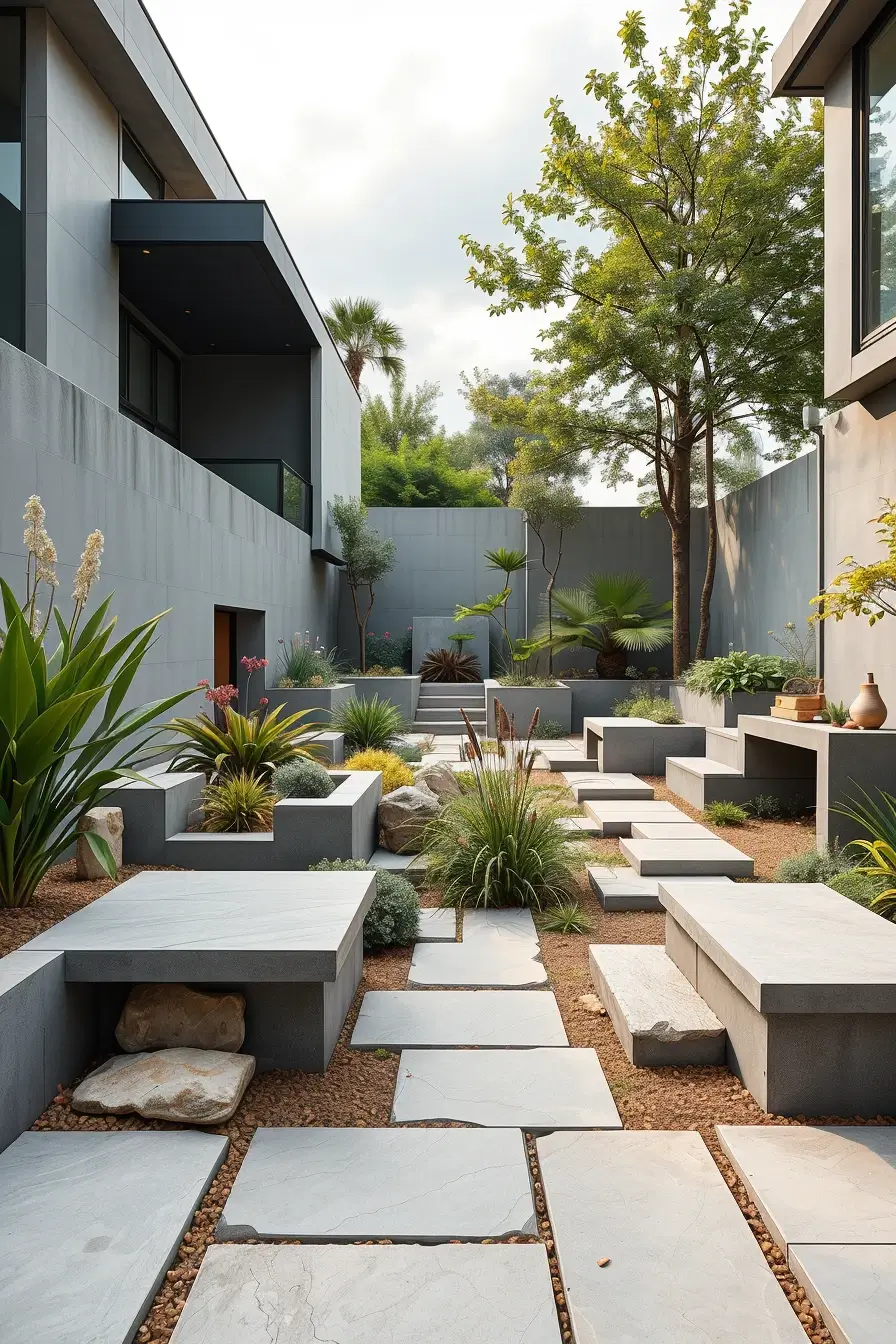
Key elements include sculpted retaining walls, raised platforms, integrated steps, and monolithic seating forms. Materials such as concrete, stone, and terrazzo are shaped with intention, creating strong visual lines. Furniture is usually minimal so the hardscaping remains the primary focus.
In my opinion, this approach mirrors trends discussed in Architectural Digest, where outdoor architecture is treated with the same importance as interiors. I have seen how sculptural hardscaping elevates both usability and perceived value.
To complete these designs, I often recommend adding carefully selected planting that contrasts with hard surfaces, ensuring the garden feels balanced rather than austere.
10. Artistic Garden Zoning With Curved Borders
Artistic garden zoning with curved borders allows me to define spaces without rigid divisions. Instead of fences or straight edges, I use flowing lines to subtly separate functions such as dining, lounging, and planting. This creates a layered and harmonious outdoor environment.
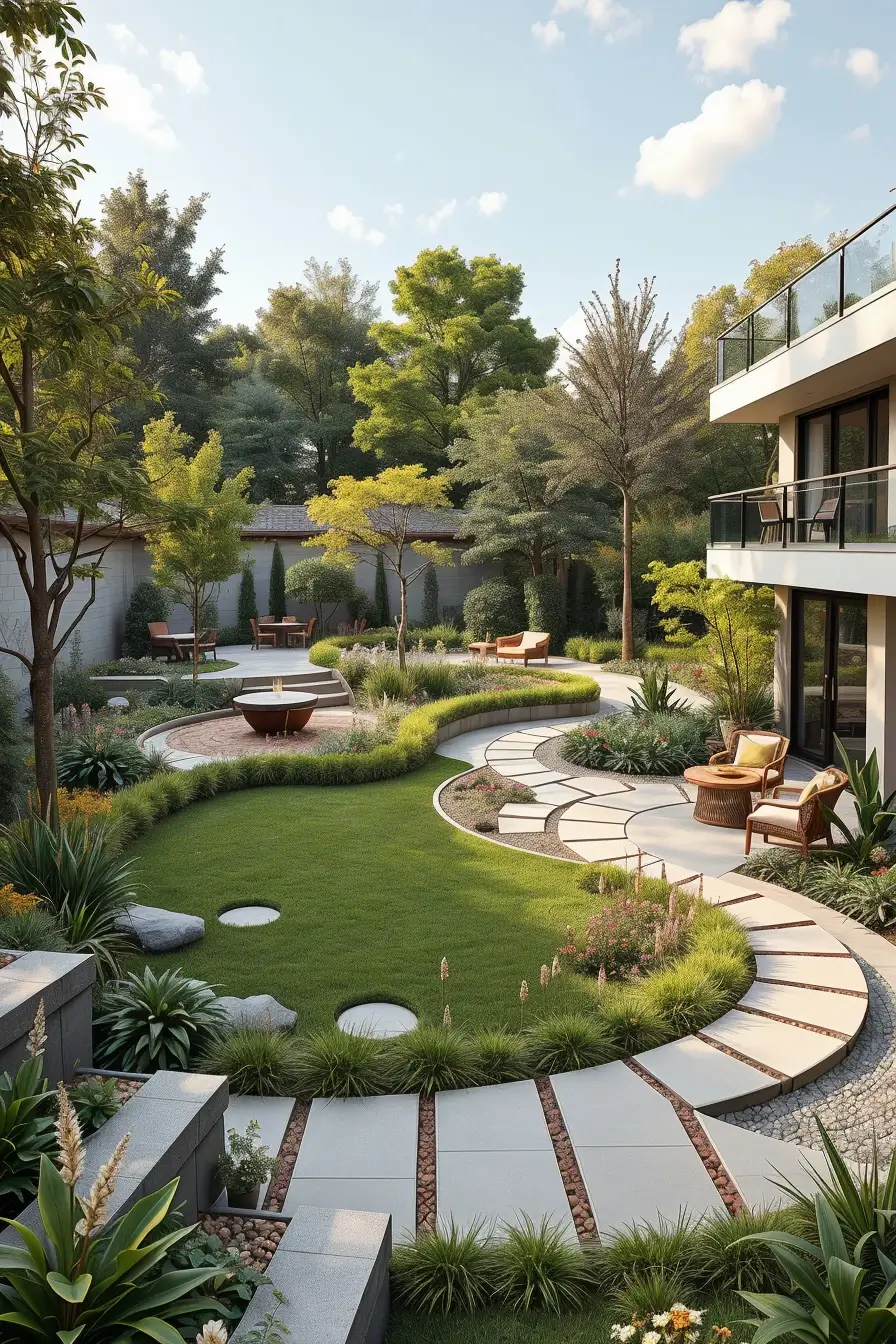
I design curved borders using planting beds, low walls, or changes in surface material. Furniture placement follows these curves, reinforcing the natural flow. This approach helps each zone feel intentional while remaining visually connected to the whole garden.
From my professional perspective, designers featured in Dwell often emphasize zoning as essential for usability. I have found that curved zoning improves circulation and makes outdoor spaces feel more welcoming and adaptable.
What can enhance these zones further is vertical interest. I recommend adding sculptural planters, screens, or trees to strengthen spatial definition without interrupting openness.
11. Creative Use Of Levels And Terraced Garden Forms
I approach terraced garden forms as a practical response to both flat and sloped landscapes, especially in creative garden landscaping projects for 2026. By introducing multiple levels, I can visually organize the garden into functional zones while maintaining a stylish and artistic flow. Terracing improves drainage, increases usable outdoor space, and creates natural transitions between relaxation, planting, and circulation areas, making the garden feel thoughtfully designed rather than accidental.
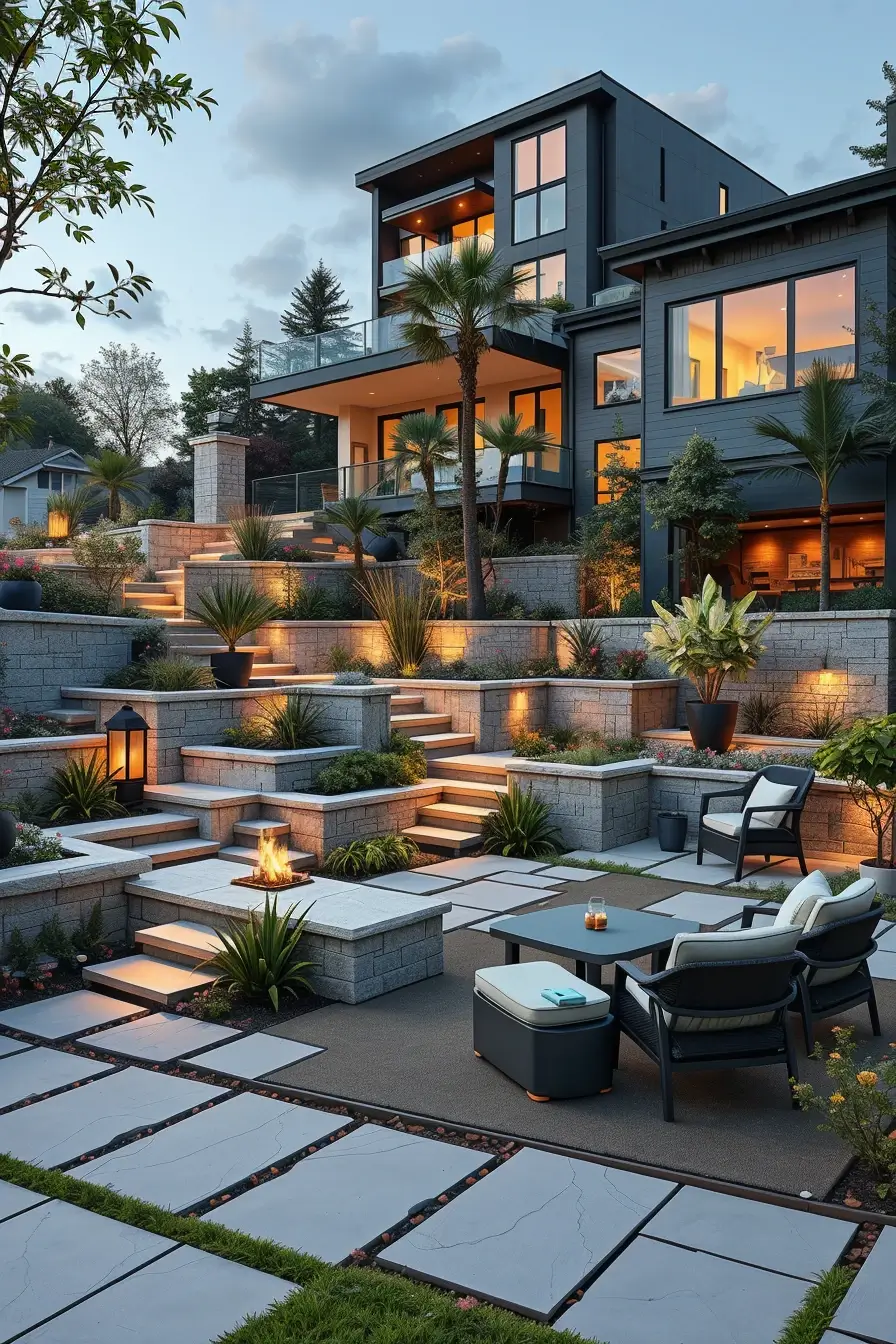
In my projects, I rely on low retaining walls, wide steps, integrated seating ledges, and planted risers to define each level. Natural stone, architectural concrete, and smooth plastered finishes help reinforce a designer and modern look. I often include built-in benches, fire features, or water elements within terraces because they turn structural components into functional garden furniture, reinforcing the idea of sculptural landscaping rather than purely technical construction.
From my experience, terraced gardens are especially effective when the lines are softened with planting and subtle curves. Landscape architects frequently emphasize that layered outdoor spaces encourage movement and exploration, a principle highlighted by publications such as Architectural Digest when discussing contemporary outdoor design trends. I find that terraces invite people to use the garden more actively, rather than viewing it from a single vantage point.
What I would add to this concept is integrated lighting within steps and retaining walls, which is often overlooked. Soft, recessed lighting enhances safety while reinforcing the artistic geometry of the terraces at night, turning the garden into a visually engaging space after sunset.
12. Original Garden Landscaping With Abstract Geometry
When working with original garden landscaping, abstract geometry allows me to break away from rigid symmetry without losing structure. In 2026, geometric layouts are becoming more expressive, using angled paths, asymmetrical planting beds, and unexpected spatial relationships. This approach supports creative and unique gardens that feel intentional yet dynamic, especially in urban outdoor spaces where individuality matters.
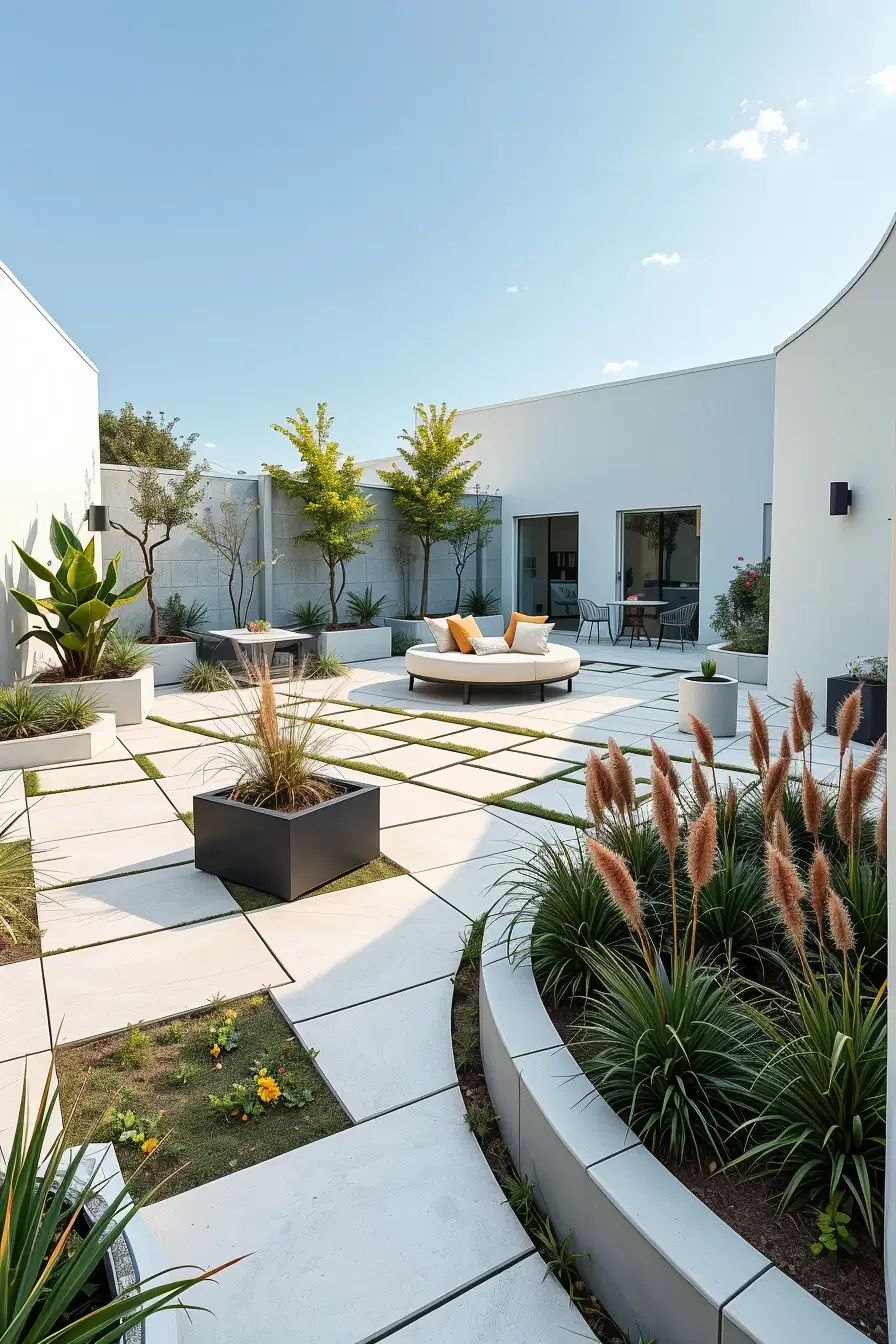
I use geometric paving patterns, modular planters, and angular lawn insets to guide movement through the garden. Materials such as porcelain pavers, cast concrete, and steel edging help define sharp lines while maintaining a clean, modern aesthetic. These elements act as visual anchors and give the garden a designer identity, especially when paired with restrained plant palettes.
Personally, I’ve noticed that abstract geometry works best when balanced with organic elements. Many landscape designers referenced in Dezeen highlight the importance of contrast between hard geometry and soft planting to prevent spaces from feeling cold. I apply this by layering ornamental grasses or low shrubs along geometric edges to introduce softness without compromising structure.
What’s often missing in geometric gardens is flexible seating. I recommend adding movable outdoor furniture with simple forms, allowing users to interact with the geometry rather than being constrained by it. This small addition significantly improves usability while preserving the artistic intent.
13. Artistic Water Features As Living Sculptures
I treat water features in artistic garden landscaping as focal points rather than decorative extras. In 2026, water elements are increasingly designed as sculptural objects that bring movement, sound, and reflection into the garden. A well-placed water feature enhances microclimate comfort while adding a calming sensory layer to outdoor spaces.
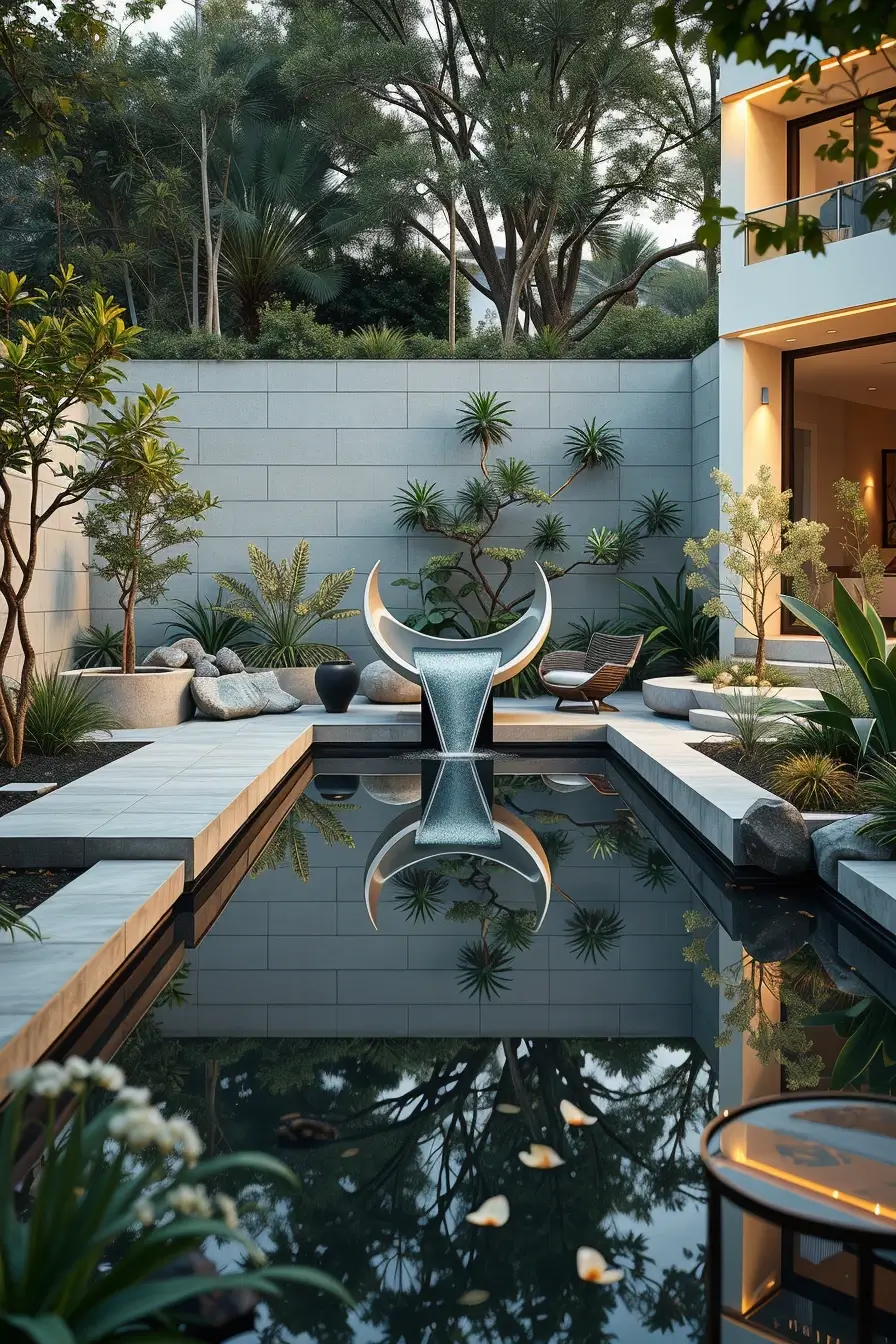
In my designs, I favor minimalist reflecting pools, vertical water walls, and shallow rills with clean edges. Materials like stone, concrete, and dark metal emphasize reflection and contrast, making water appear more intentional and architectural. These features pair well with curved garden forms or bold geometry, reinforcing a stylish and contemporary aesthetic.
From experience, clients respond strongly to water features that feel integrated rather than ornamental. Landscape professionals frequently note in industry media that subtle sound and motion can significantly improve outdoor wellbeing. I’ve seen firsthand how even small sculptural fountains can transform how people use and perceive their gardens.
What I would add here is smart water management. Incorporating recirculating systems and hidden filtration ensures sustainability without compromising design, which is essential for responsible designer landscaping in 2026.
14. Curved Garden Walls And Architectural Green Structures
I use curved garden walls to soften spatial transitions and create a sense of enclosure without rigidity. Curves guide movement intuitively and support artistic garden layouts that feel natural yet controlled. In modern landscaping, curved walls often act as both structural and aesthetic elements, shaping the garden’s identity.
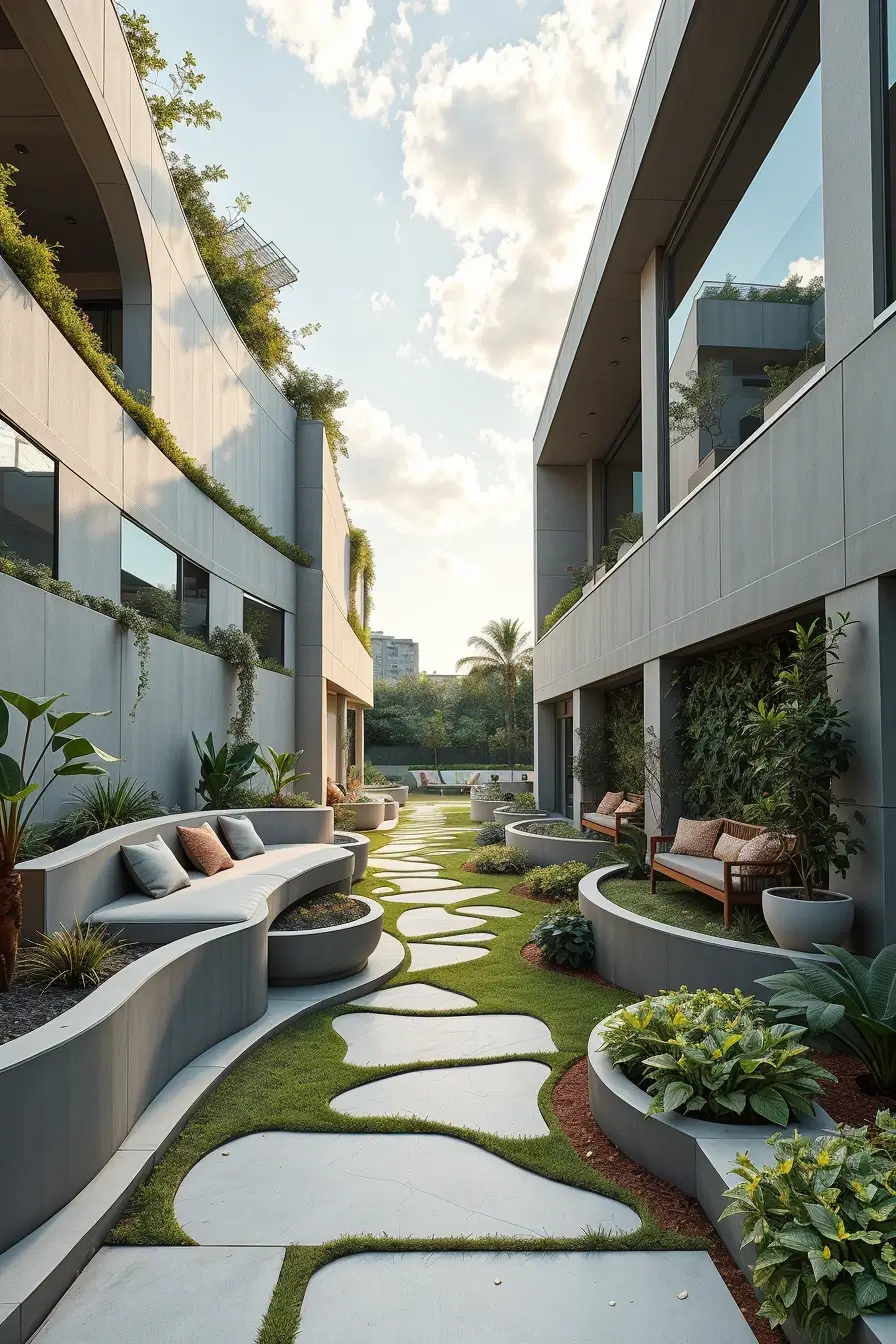
Materials such as smooth concrete, plaster, brick, and living green walls allow these curves to feel architectural rather than decorative. I often integrate built-in seating, planters, or lighting directly into the walls, turning them into multifunctional design features. This approach supports unique and original garden compositions that feel cohesive.
In my opinion, curved walls excel when paired with planting that echoes their form. Designers featured in leading architecture magazines often stress the importance of repetition in curves to create visual harmony. I apply this principle by aligning planting beds, paths, and water features with the same flowing lines.
What’s frequently missing is vertical greenery. I recommend adding climbing plants or modular green panels to curved walls to enhance texture and seasonal variation, reinforcing the creative and living nature of the design.
15. Designer Planting Schemes With Artistic Rhythm
Planting design in 2026 goes beyond color coordination and focuses on artistic rhythm and movement. I design planting schemes that lead the eye through repetition, contrast, and variation, ensuring the garden feels intentional from every angle. This approach supports stylish and designer outdoor spaces that evolve throughout the seasons.
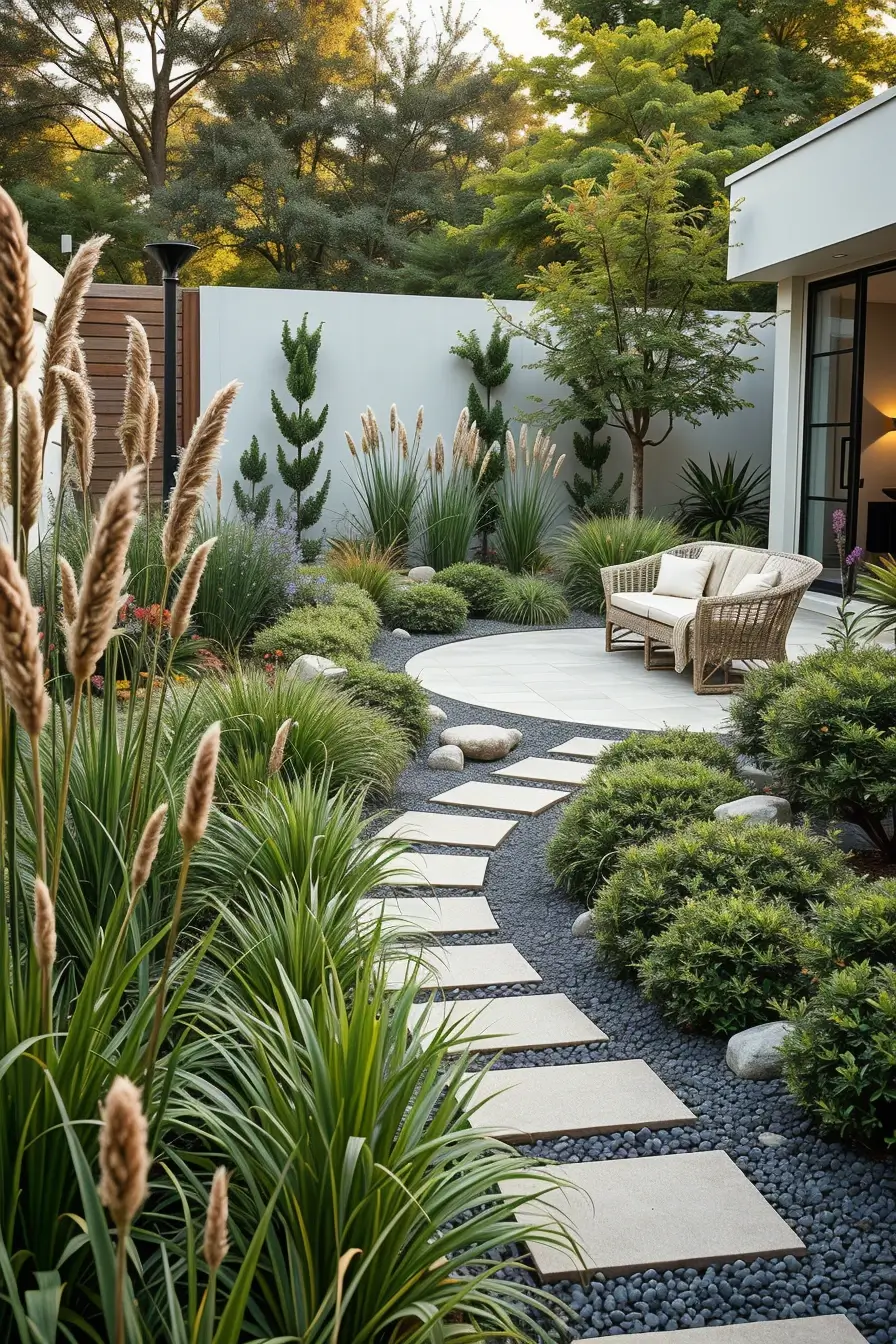
I select plants based on form, texture, and growth habit rather than flowers alone. Repeating grasses, sculptural shrubs, and structured perennials creates a visual beat that holds the design together. These plantings complement hardscape elements and reinforce the overall sculptural composition of the garden.
From my experience, restraint is key. Many respected landscape designers emphasize limiting plant palettes to maintain clarity. I’ve found that fewer species, used creatively, result in more original and timeless gardens that age well.
What I would add is seasonal lighting within planting beds. Subtle uplighting highlights plant forms at night and extends the garden’s visual rhythm beyond daylight hours, enhancing its creative impact.
16. Unusual Garden Furniture As Functional Art
I see garden furniture in 2026 as an essential design statement rather than a secondary addition. In creative and artistic garden landscaping, furniture becomes part of the spatial composition, shaping how people move, sit, and interact with the landscape. Unusual forms allow outdoor spaces to feel curated and intentional while remaining practical for everyday use.
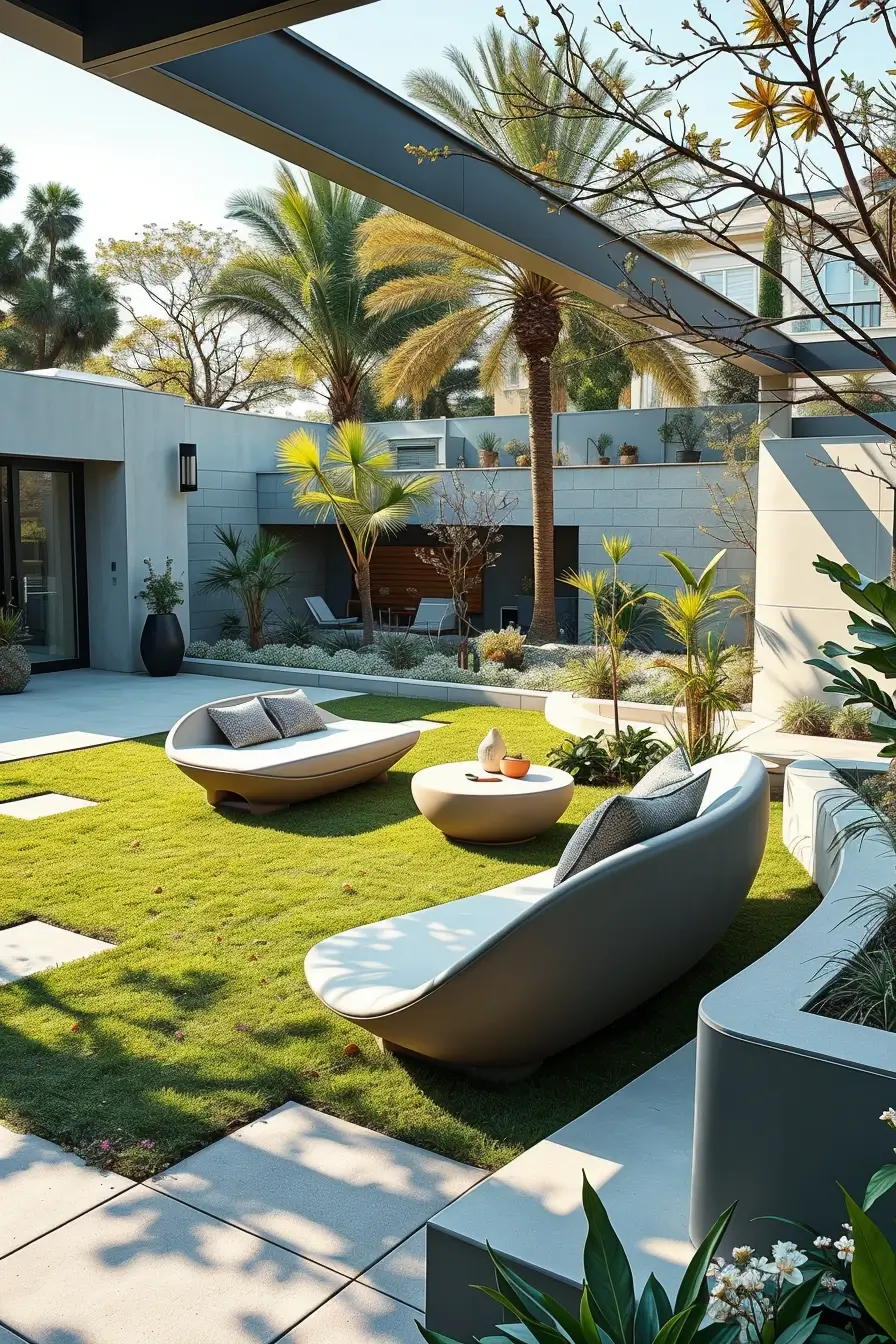
In my designs, I incorporate sculptural benches, curved loungers, and custom seating elements made from concrete, wood, or composite materials. These pieces often echo the geometry or curves of the garden itself, reinforcing a stylish and designer identity. Furniture that blends seamlessly with planting and hardscape helps the garden feel cohesive rather than cluttered.
From experience, clients respond well to furniture that feels unique but intuitive. Many contemporary designers featured in US-based design publications emphasize that outdoor furniture should enhance usability without dominating the space. I agree and aim for pieces that feel natural within the environment while still expressing original design thinking.
What I would add to this section is the integration of shade elements, such as sculptural pergolas or movable canopies. These features improve comfort and extend the usability of artistic furniture throughout the day.
17. Sculptural Lighting Ideas For Artistic Night Gardens
Lighting plays a critical role in artistic garden landscaping, especially after sunset. I design lighting schemes that highlight form, texture, and movement, transforming the garden into a sculptural environment at night. In 2026, lighting is less about visibility alone and more about creating atmosphere and depth.
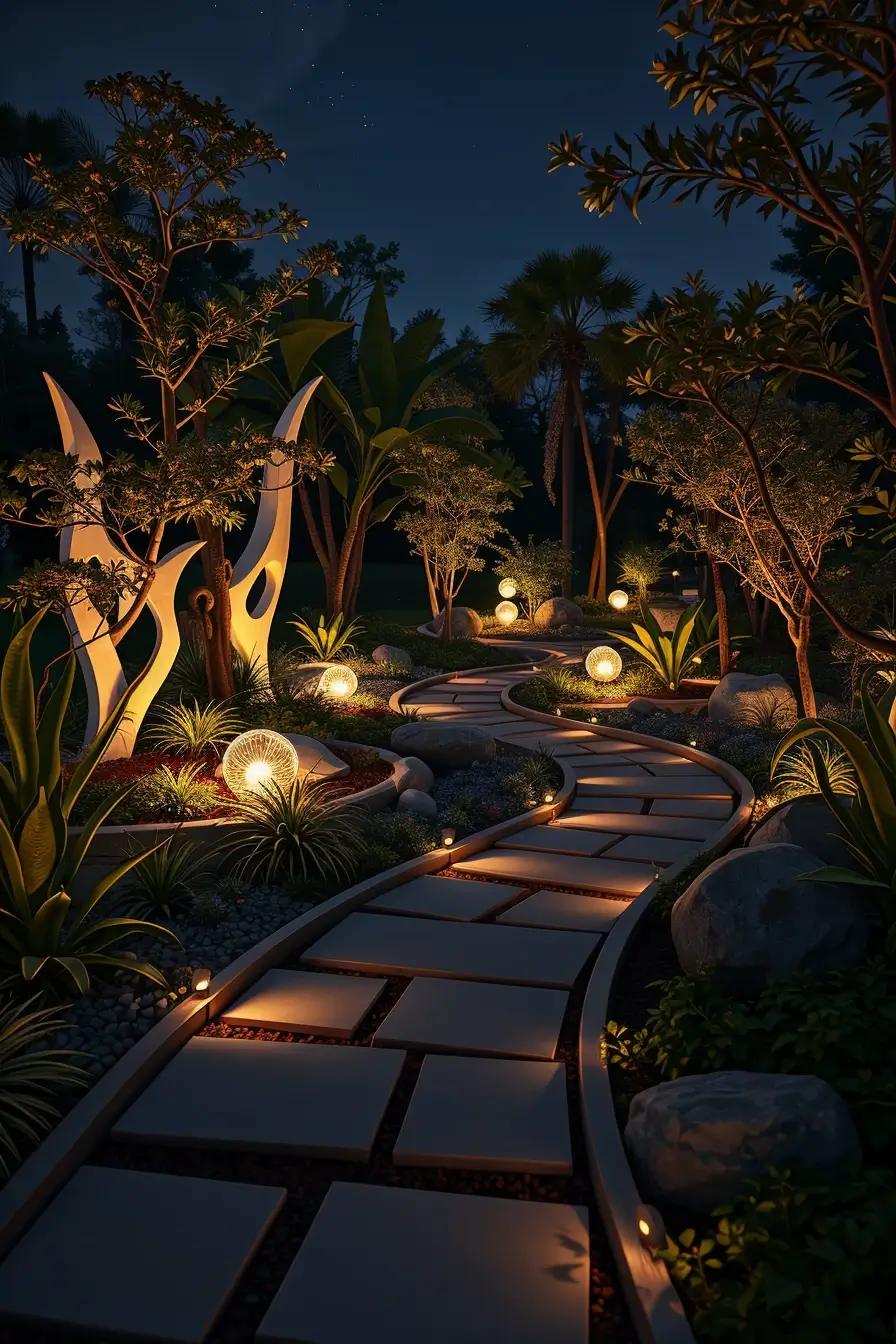
I rely on low-profile fixtures, integrated wall lights, and concealed uplighting to accent plants, walls, and pathways. Sculptural light elements, such as glowing orbs or linear LED features, act as visual anchors while maintaining a modern and designer aesthetic. Each light source is placed with intention to avoid glare and visual clutter.
Personally, I believe layered lighting is essential for successful night gardens. Many lighting designers recommend combining functional, accent, and ambient lighting for balance, a principle I consistently apply. Well-designed lighting extends outdoor living hours and reveals details that are often missed during the day.
What’s often missing is adaptive lighting control. I recommend smart systems that allow brightness and color temperature adjustments, ensuring the garden remains comfortable and visually engaging in different seasons and conditions.
18. Creative Material Combinations In Garden Landscaping 2026
In 2026, creative material combinations define the most compelling garden designs. I approach material selection as a dialogue between texture, color, and durability, ensuring each choice supports both aesthetics and long-term performance. Mixing materials thoughtfully results in unique and stylish outdoor spaces.
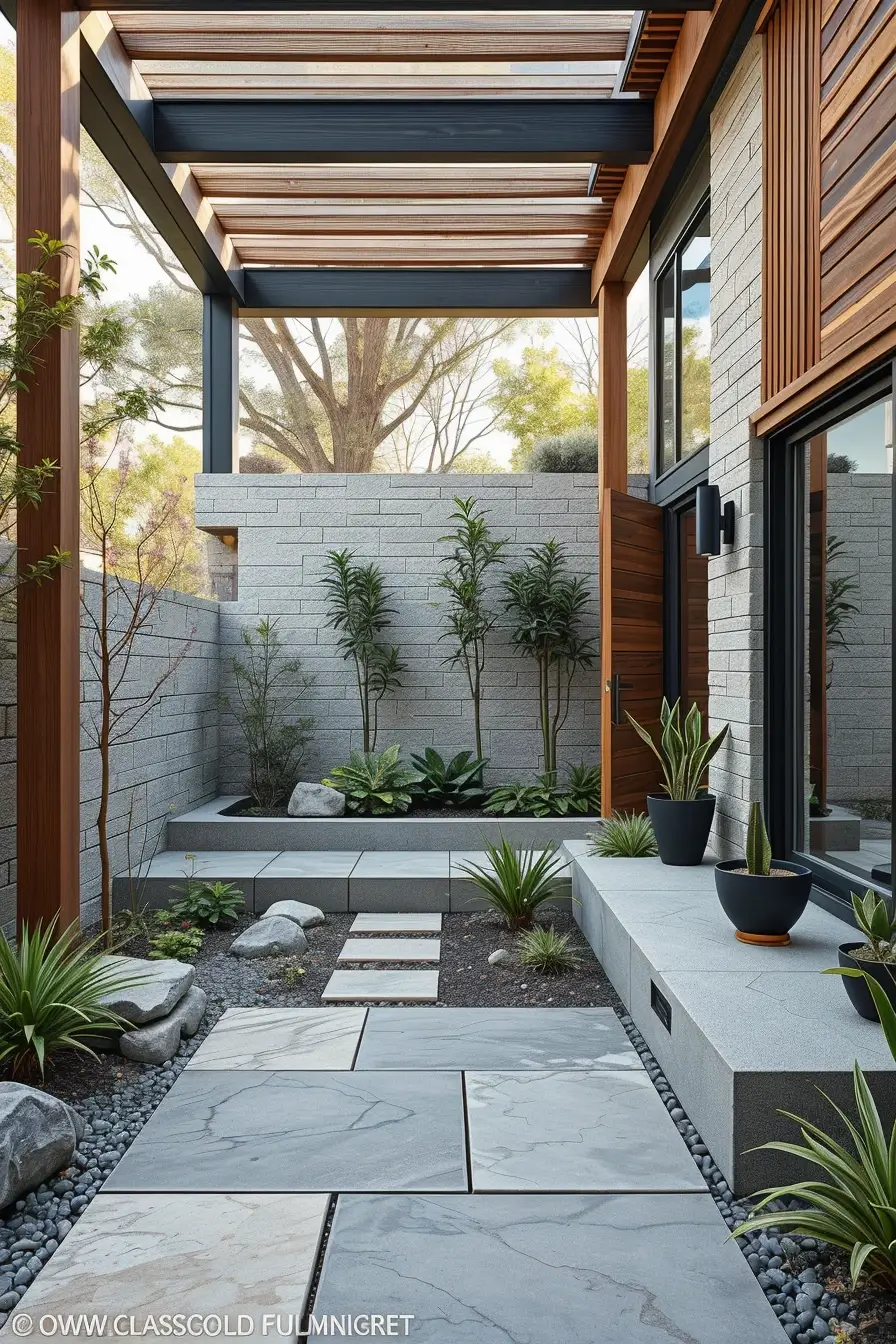
I frequently combine natural stone with smooth concrete, warm wood with metal accents, and textured surfaces with polished finishes. These contrasts enhance visual interest while reinforcing the designer quality of the landscape. Materials are chosen not only for appearance but also for how they age and interact with natural elements.
From my professional experience, restraint is crucial. Leading landscape designers often stress that too many materials dilute design clarity. I focus on a limited palette, allowing each material to stand out while contributing to a cohesive artistic composition.
What I would add is tactile consideration. Surfaces that feel pleasant underfoot or to the touch significantly improve user experience and should be evaluated alongside visual impact.
19. Artistic Minimalism In Modern Garden Spaces
I define artistic minimalism in garden landscaping as a balance between simplicity and expression. In 2026, minimalist gardens are no longer sparse or cold but carefully curated to highlight form, proportion, and material quality. This approach allows gardens to feel calm, intentional, and visually powerful.
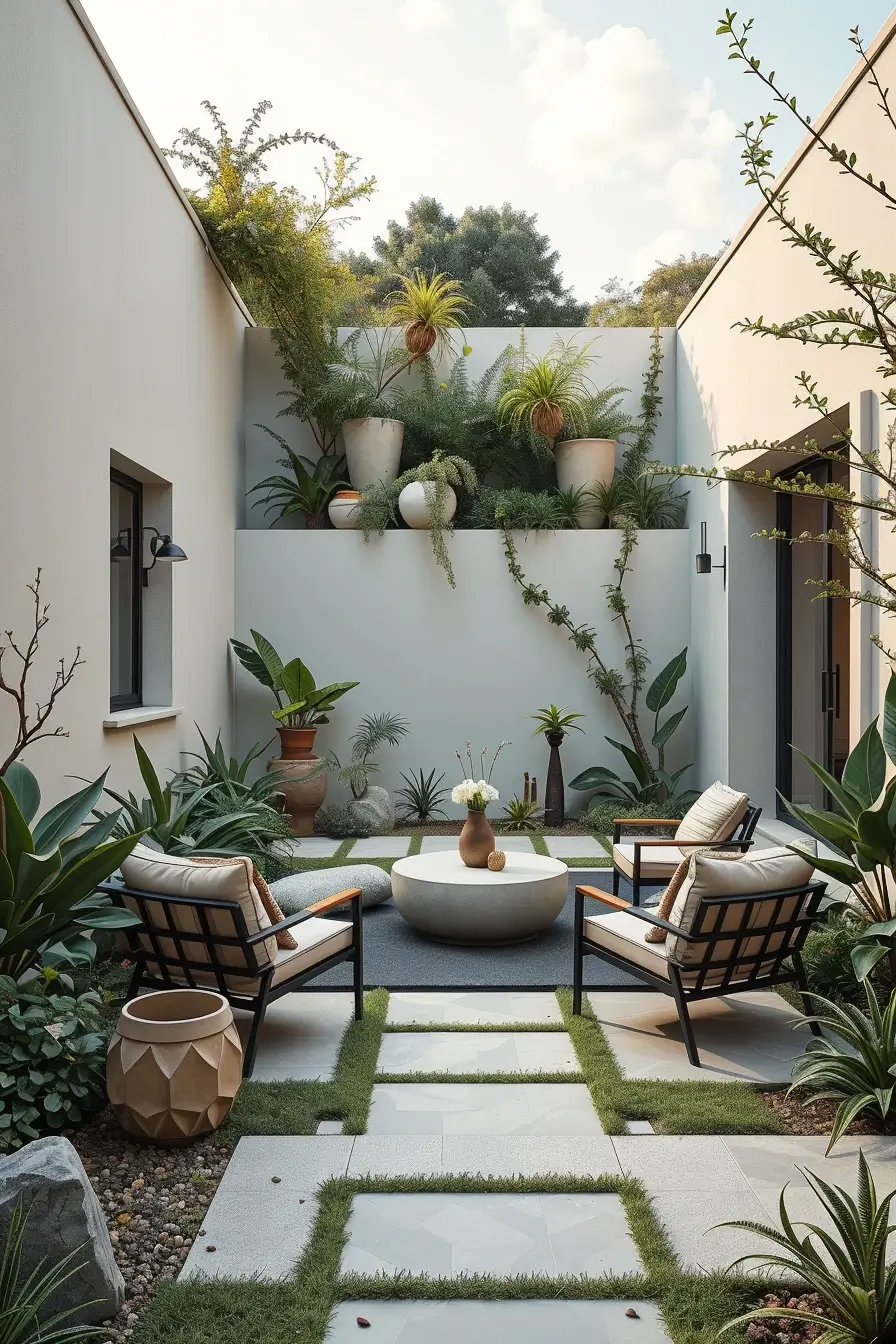
In my work, I use clean lines, limited plant palettes, and restrained color schemes to create clarity. Furniture and structures are selected for their sculptural qualities, ensuring each element earns its place. Negative space becomes a design tool, emphasizing the curved or geometric features present in the layout.
I’ve found that minimalist gardens are often the most demanding to design. As many respected designers note, minimalism requires precision and confidence. I apply this by refining details repeatedly until the space feels effortless rather than empty.
What I would add is seasonal adaptability. Minimalist gardens benefit from subtle seasonal changes in planting or lighting to prevent visual stagnation while preserving simplicity.
20. Flowing Garden Forms Inspired By Nature And Movement
Flowing forms are central to artistic garden landscaping in 2026. I design gardens that mirror natural movement, using curves and transitions to create a sense of continuity and calm. These forms encourage exploration and make outdoor spaces feel immersive rather than static.
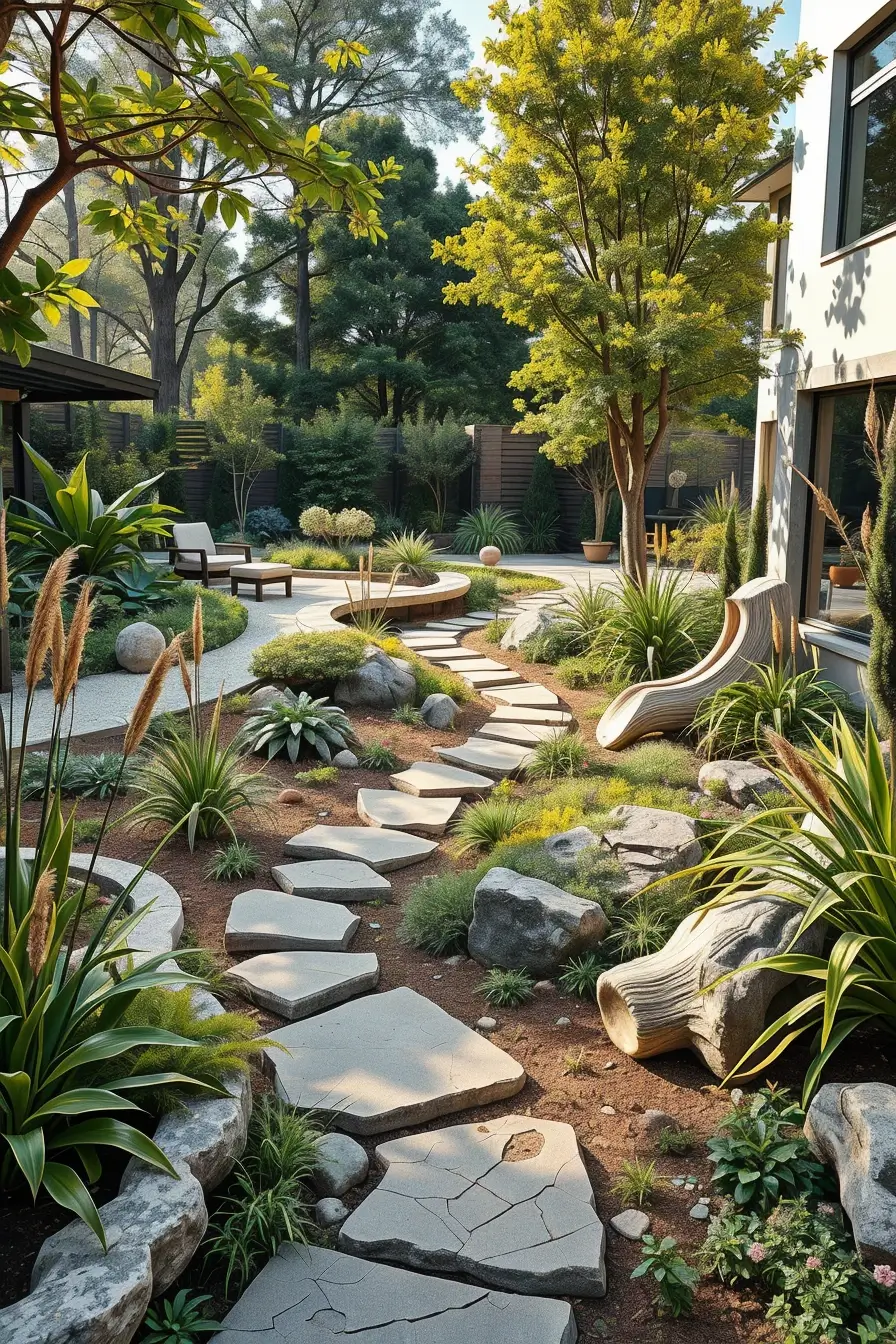
I incorporate winding paths, curved planting beds, and fluid water features to guide movement organically. Materials and furniture follow these lines, reinforcing the sculptural quality of the design. This approach results in original gardens that feel intuitive and emotionally engaging.
From my experience, flowing forms resonate strongly with users because they feel natural and welcoming. Many landscape professionals highlight biomorphic design as a key trend, emphasizing its psychological benefits. I’ve seen how these forms make gardens more inviting and comfortable to use.
What I would add here is transitional planting. Gradual shifts in plant height and density enhance movement and reinforce the natural rhythm of flowing garden layouts.
21. Unique Garden Landscaping For Small Yet Expressive Spaces
I see small gardens in 2026 becoming some of the most creative and unique outdoor spaces, precisely because limited square footage forces thoughtful design. When I plan compact landscapes, I focus on layered zones, vertical elements, and curved circulation paths that visually expand the space. These gardens are not about quantity of plants but about intentional composition, where every element serves both function and expression.
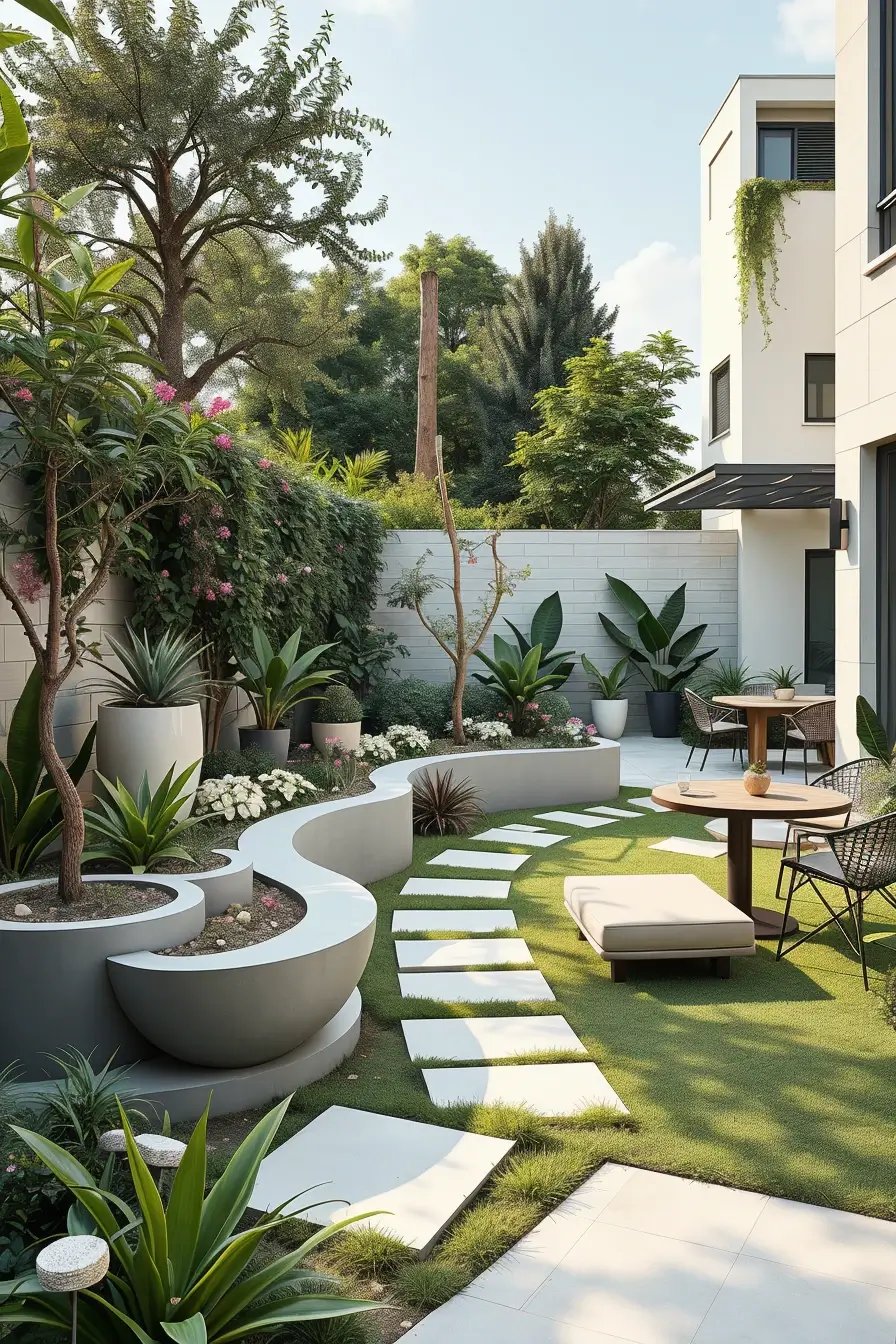
In my work, I rely on sculptural planters, built-in seating, slim-profile outdoor furniture, and integrated lighting to maintain openness while adding depth. I often include curved benches, modular seating, and custom water features because they soften hard boundaries and create flow. These design choices help small spaces feel artistic and intentional rather than crowded.
From my experience, well-known landscape designers featured in Architectural Digest often emphasize that scale and proportion matter more than size. I fully agree with this approach, as a small garden designed with clarity and restraint can feel far more luxurious and emotionally engaging than a large but unfocused space.
What I would still add to this type of garden is smart storage disguised as design, such as sculptural storage benches or vertical garden walls that hide utilities while contributing to the overall designer aesthetic.
22. Curved Lawn Designs And Soft Landscape Geometry
Curved lawn designs are one of the strongest signals of artistic garden landscaping in 2026. I intentionally move away from rigid straight lines and instead design lawns that flow organically through the space. This approach creates movement and a sense of calm, while also guiding how people naturally walk and interact with the garden.
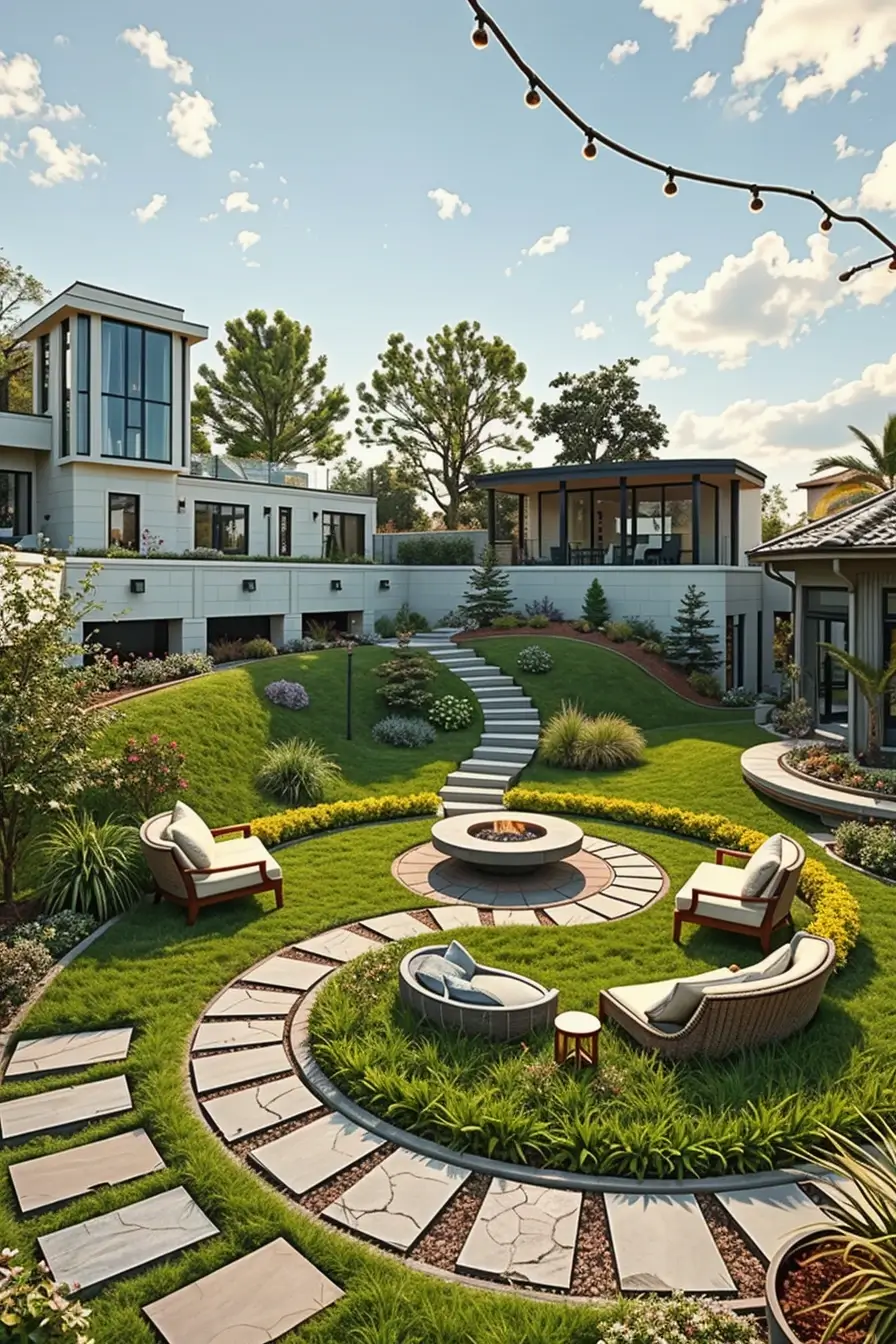
In practice, I pair curved lawns with soft-edged planting beds, low ornamental grasses, and smooth stone borders. Outdoor lounge furniture follows these curves, with rounded sofas, circular fire pits, and arc-shaped pathways reinforcing the geometry. Every element supports visual harmony and spatial continuity.
Personally, I find that this soft geometry encourages longer stays outdoors. Publications like Garden Design Magazine highlight how curved landscapes reduce visual stress and create a more immersive experience, something I consistently observe when clients use these spaces daily.
To enhance this section further, I would add subtle ground lighting along the curves to emphasize form at night and extend the emotional impact beyond daylight hours.
23. Artistic Garden Accents And Statement Installations
In 2026, gardens are no longer complete without artistic, sculptural, and original statement pieces. I treat outdoor accents as focal points that anchor the entire design, whether through large-scale sculptures, custom water installations, or abstract architectural elements placed intentionally within greenery.
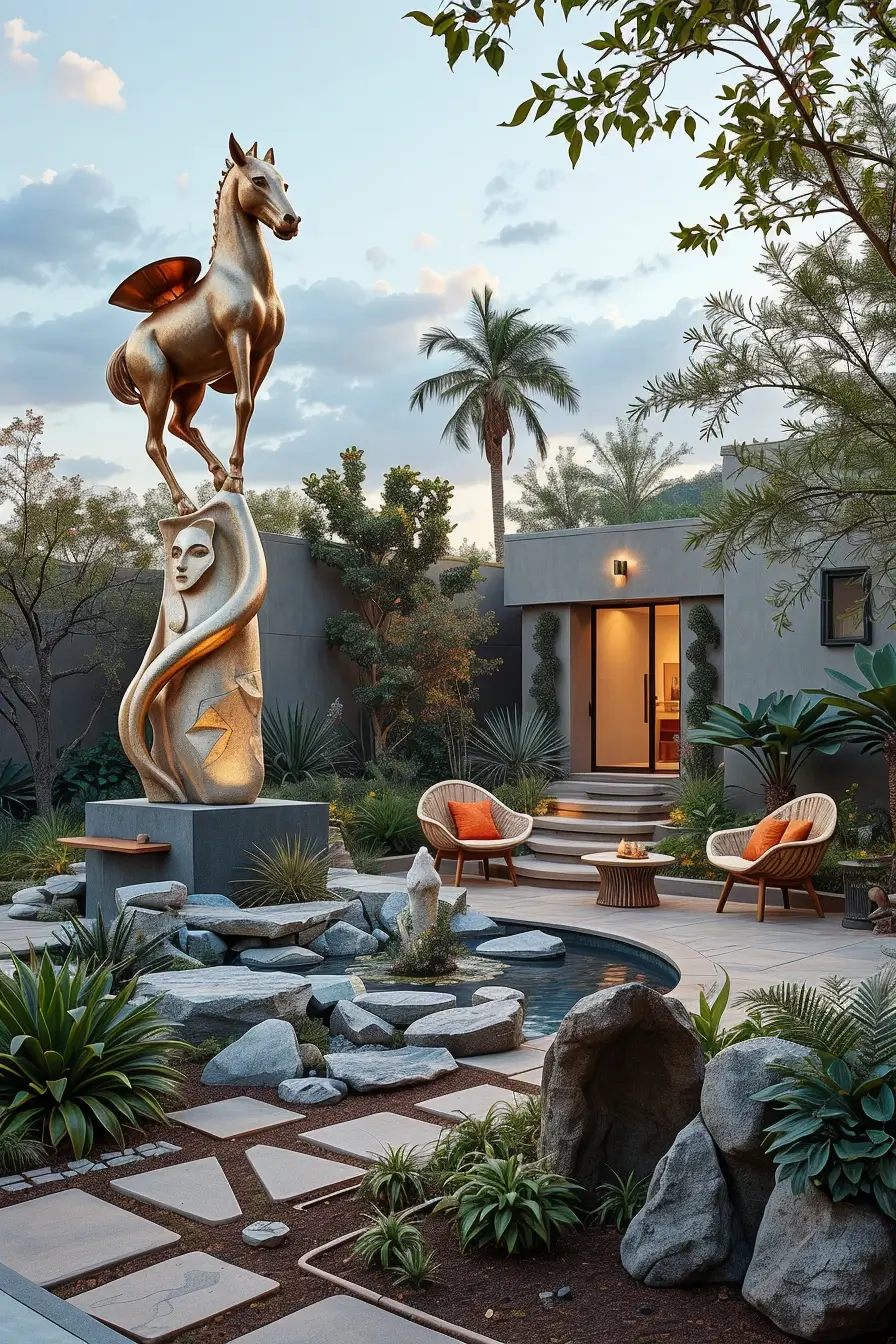
I typically select materials like corten steel, stone, and weather-resistant resin for these installations. Sculptural seating, freestanding art walls, and bold planters are included not just for decoration, but to guide sightlines and create moments of pause. These accents turn gardens into outdoor galleries with emotional depth.
From my professional perspective, designers often cited in Dezeen stress that outdoor art should feel integrated, not decorative. I follow this principle closely, ensuring that every accent relates to the surrounding plants, textures, and spatial rhythm.
What could further strengthen this concept is the integration of interactive elements, such as sound features or kinetic sculptures that respond to wind, adding another sensory layer to the garden.
24. Creative Use Of Color In Sculptural Garden Design
Color in sculptural garden design for 2026 is bold, intentional, and deeply emotional. I approach color as a structural tool rather than a finishing touch, using it to define zones, highlight forms, and influence mood. These gardens balance neutral planting palettes with strategic bursts of color in furniture and architectural features.
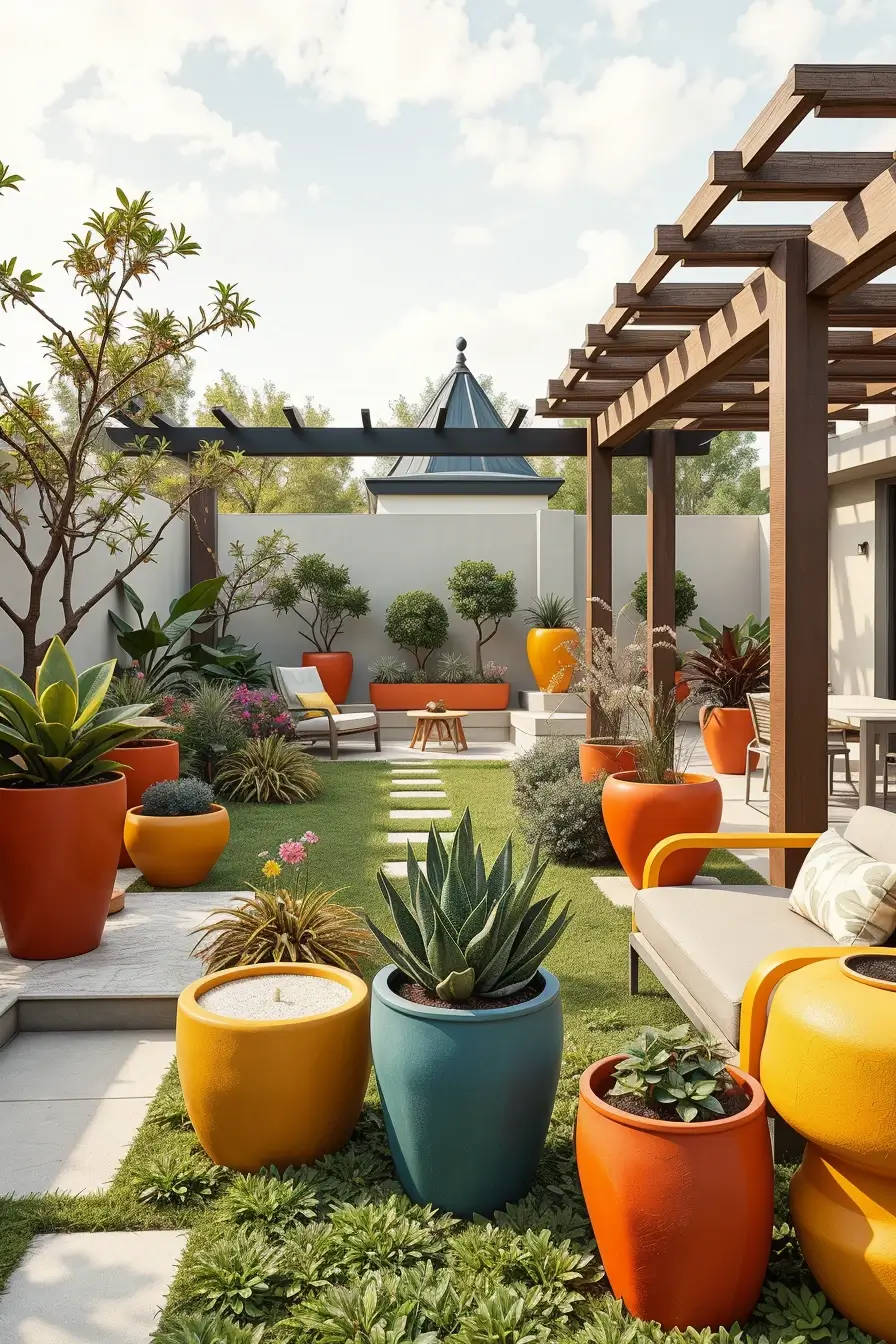
I incorporate colored concrete seating, tinted planters, outdoor rugs, and painted metal pergolas to introduce contrast. These elements work best when paired with restrained greenery, allowing color to feel deliberate rather than overwhelming. The result is a creative, modern garden that feels curated.
In my experience, designers featured in House Beautiful often emphasize emotional color theory, and I apply this by matching colors to how clients want to feel in the space, calm, energized, or inspired.
To complete this section, I would add seasonal color flexibility, such as interchangeable cushions or movable planters, allowing the garden to evolve visually throughout the year.
25. Designer Gardens Focused On Emotional Experience
The defining feature of designer gardens in 2026 is their focus on emotional experience rather than visual trends alone. I design landscapes that respond to how people move, rest, and reflect, using curved paths, layered lighting, and varied textures to shape emotional journeys.
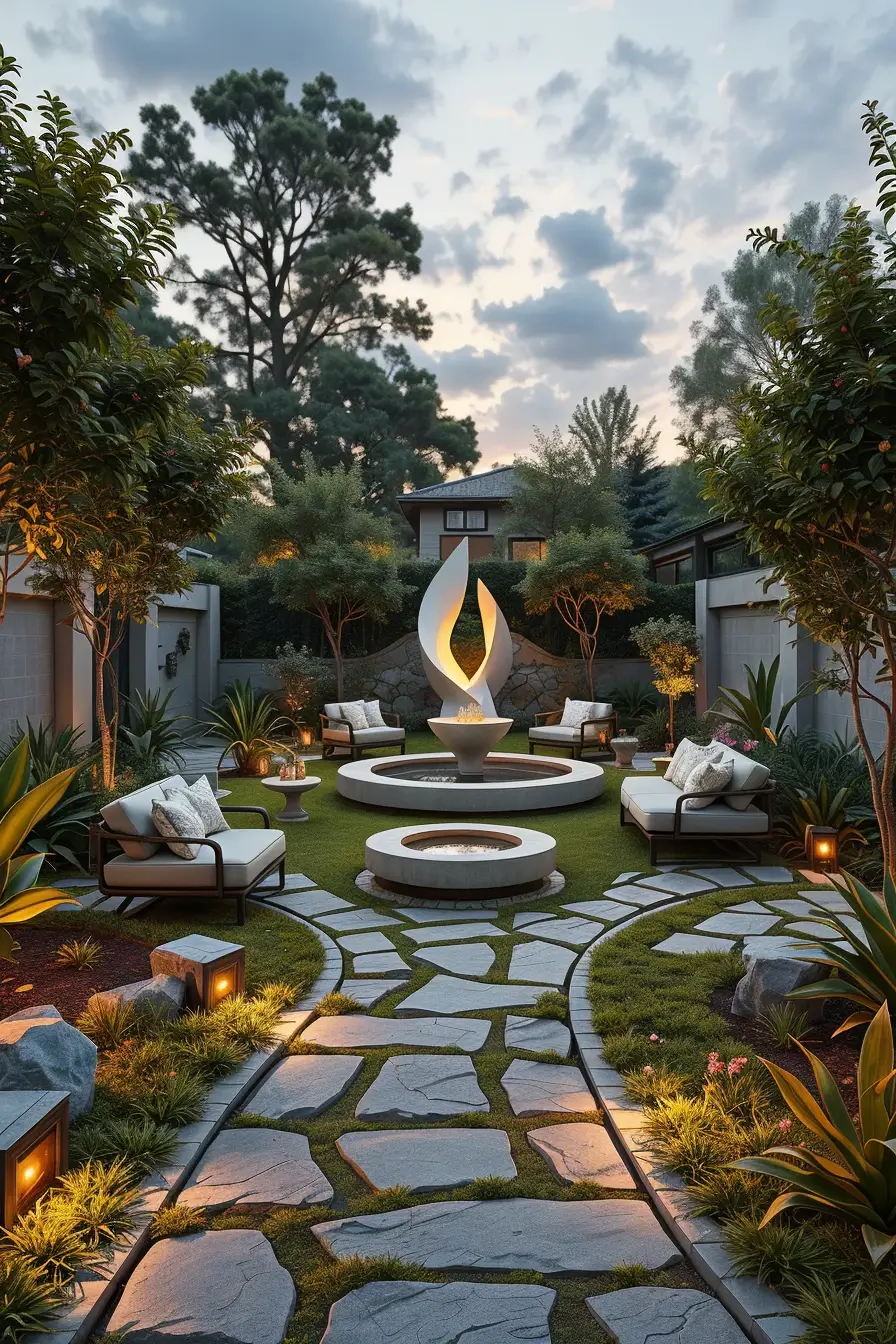
Furniture selection plays a critical role here. I use low-profile lounge seating, cocoon-style chairs, and shaded relaxation zones to create moments of comfort. Water features, soft planting, and acoustic buffers enhance tranquility, while sculptural elements add intrigue.
From my professional practice, I strongly align with insights shared by the American Society of Landscape Architects, who emphasize wellness-driven design. Emotional connection to outdoor space significantly increases how often people use and value their gardens.
What I would still add is a stronger multisensory approach, incorporating fragrant plants and tactile materials to deepen emotional engagement.
26. Original Garden Landscaping With Unexpected Focal Points
When I design gardens for 2026, I increasingly rely on unexpected focal points to create original and memorable landscapes. These gardens move beyond traditional centerpieces and instead surprise visitors through asymmetry, hidden reveals, and unconventional placement of key elements. I focus on guiding attention naturally through space, allowing focal points to emerge gradually rather than dominate immediately.
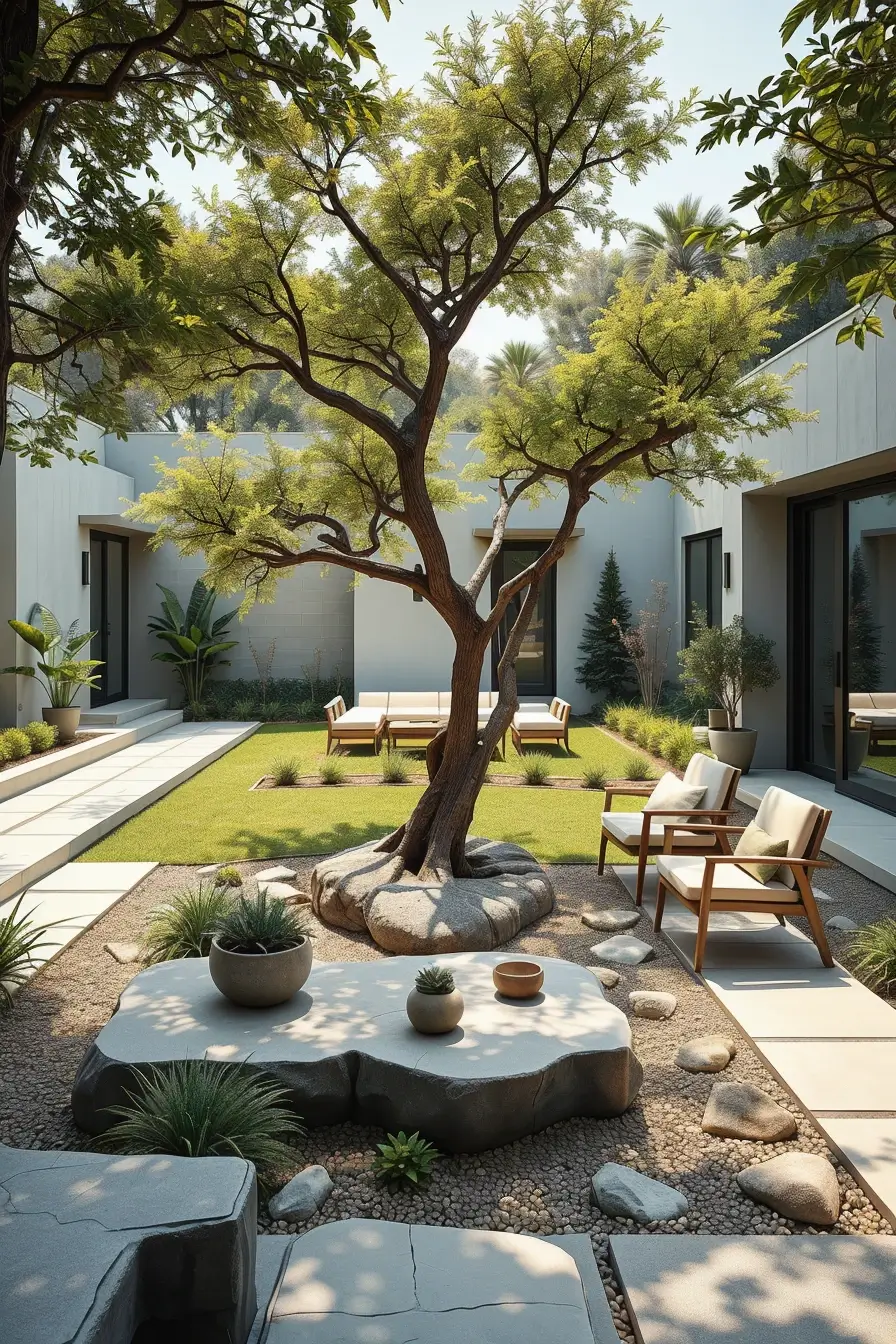
In practice, I introduce features such as sunken seating areas, off-axis water features, or sculptural trees positioned away from obvious sightlines. Outdoor furniture is often arranged diagonally or along curved axes, reinforcing movement and curiosity. Materials like polished stone, textured concrete, and metal accents help these focal points feel intentional and designer-driven.
From my professional experience, landscape architects featured in Landscape Architecture Magazine often highlight the emotional power of discovery in outdoor spaces. I see firsthand how gardens with layered focal points encourage exploration and longer engagement.
What I would add here is subtle directional lighting that reveals these focal points gradually at dusk, strengthening their impact without overwhelming the composition.
27. Artistic Outdoor Living Areas With Curved Design
Outdoor living areas in 2026 embrace curved forms as a defining element of artistic garden landscaping. I design these spaces as extensions of the home, prioritizing comfort, flow, and visual softness. Curved layouts eliminate harsh transitions and create environments that feel welcoming and intuitive.
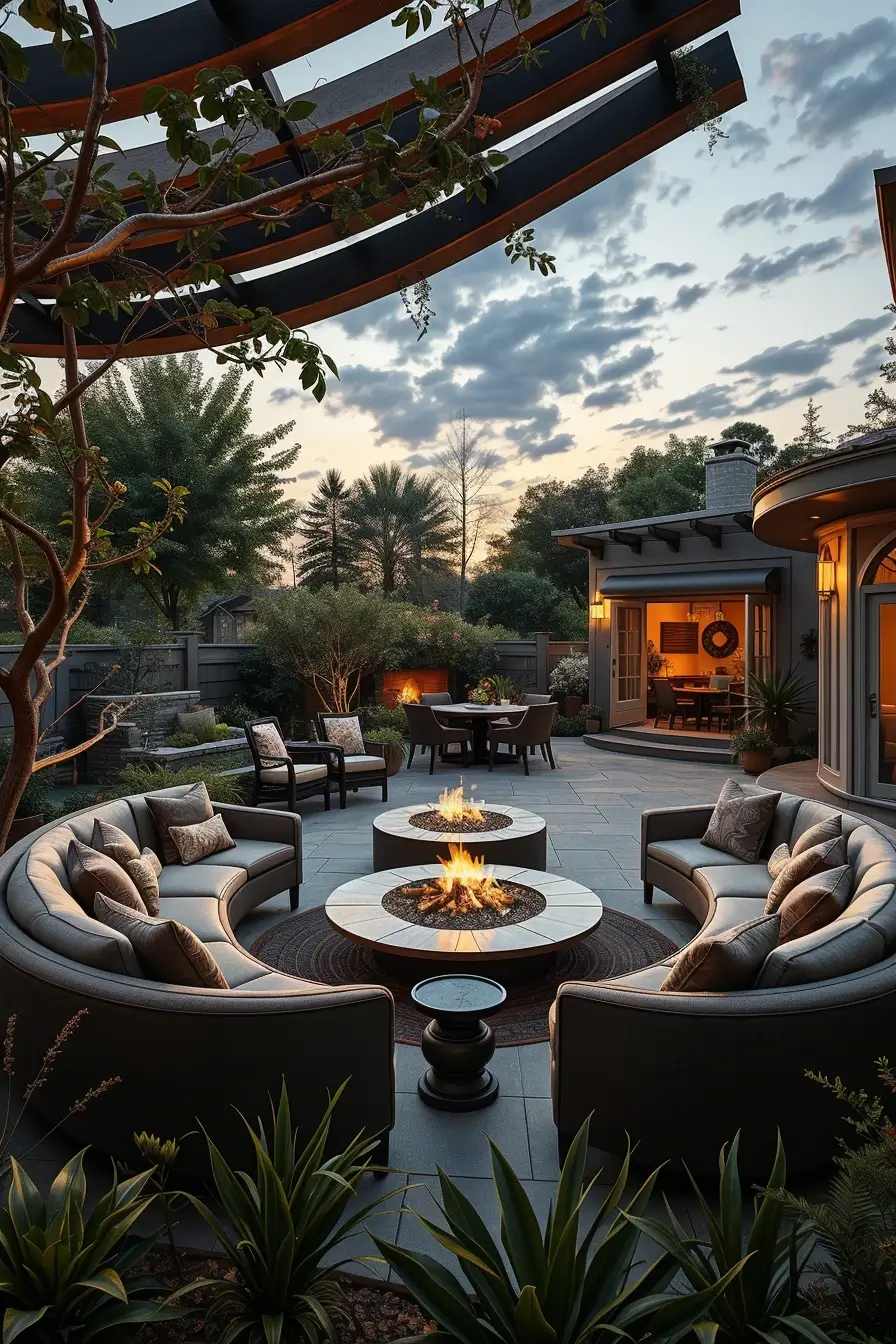
I carefully select curved sofas, rounded dining tables, and semi-circular pergolas to reinforce this geometry. Fire pits, rugs, and built-in planters follow similar lines, ensuring cohesion. These elements not only look sculptural but also improve circulation and social interaction.
In my opinion, this approach aligns with guidance from well-known US outdoor living experts frequently cited by Better Homes and Gardens, who emphasize organic layouts for relaxation. I consistently notice that clients use these spaces more often when the design feels fluid and natural.
To enhance this area further, I would include flexible shade solutions like curved fabric canopies that adapt to changing sunlight while maintaining the design language.
28. Sculptural Greenery And Living Plant Forms
Living plants in 2026 gardens are treated as sculptural design elements rather than background fillers. I approach greenery as a form of living architecture, shaping plants to define space, guide movement, and create visual rhythm. This method allows gardens to feel both natural and highly artistic.
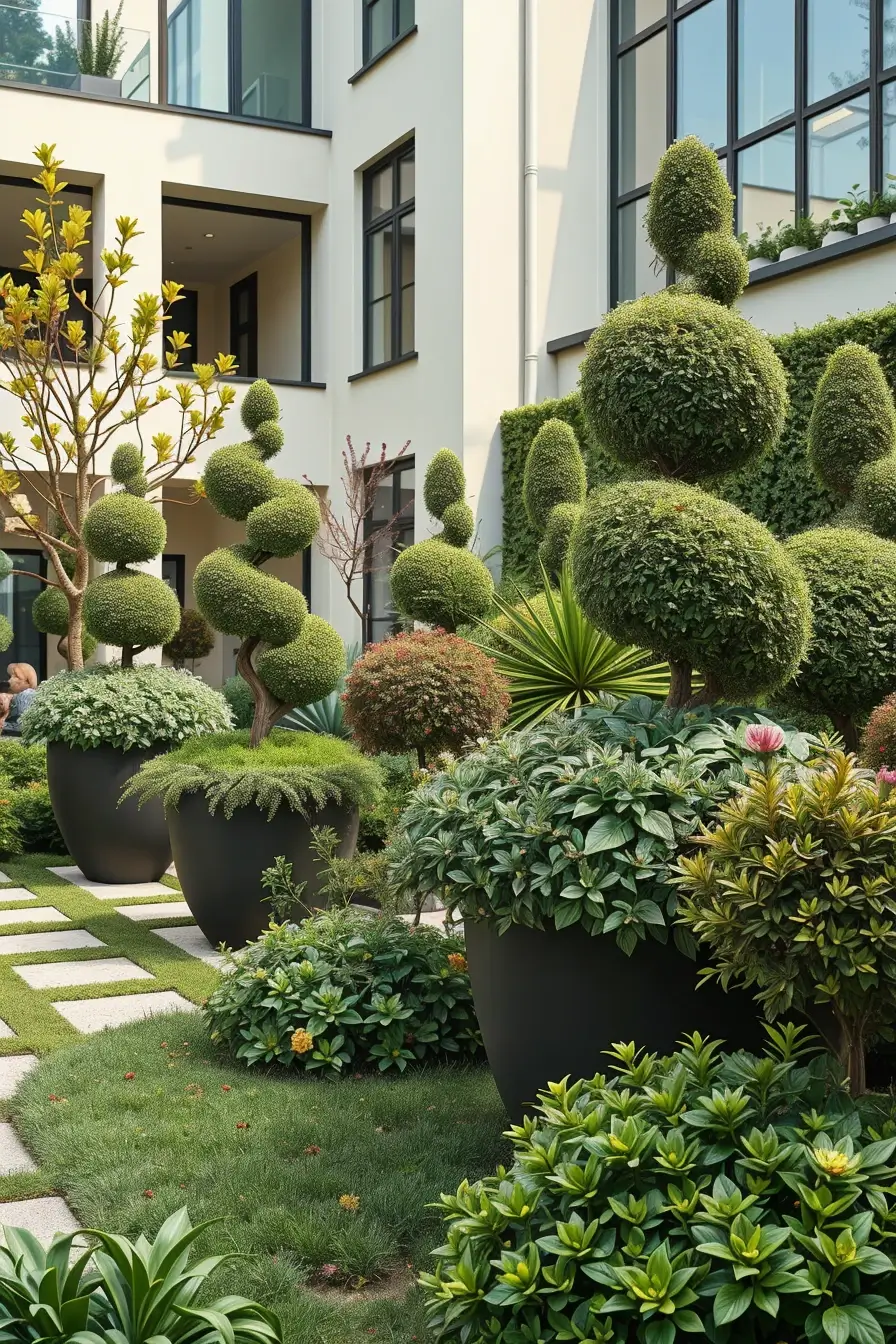
I often incorporate topiary forms, cloud-pruned shrubs, and layered planting with clear silhouettes. Large planters with architectural plants, such as ornamental trees or oversized grasses, act as focal features. These choices create structure while maintaining softness.
From my experience, designers frequently referenced by The New York Times Style section emphasize the importance of form over abundance in modern landscapes. I agree that restraint leads to stronger visual impact and easier long-term maintenance.
What I would still add is a seasonal planting strategy to ensure these sculptural forms remain visually compelling throughout the year.
29. Creative Garden Landscaping That Feels Like A Gallery
Many of the most forward-thinking gardens in 2026 are designed to feel like open-air galleries. I plan these landscapes with clear visual axes, intentional spacing, and curated moments where nature and art coexist. This approach transforms the garden into a place of contemplation and inspiration.
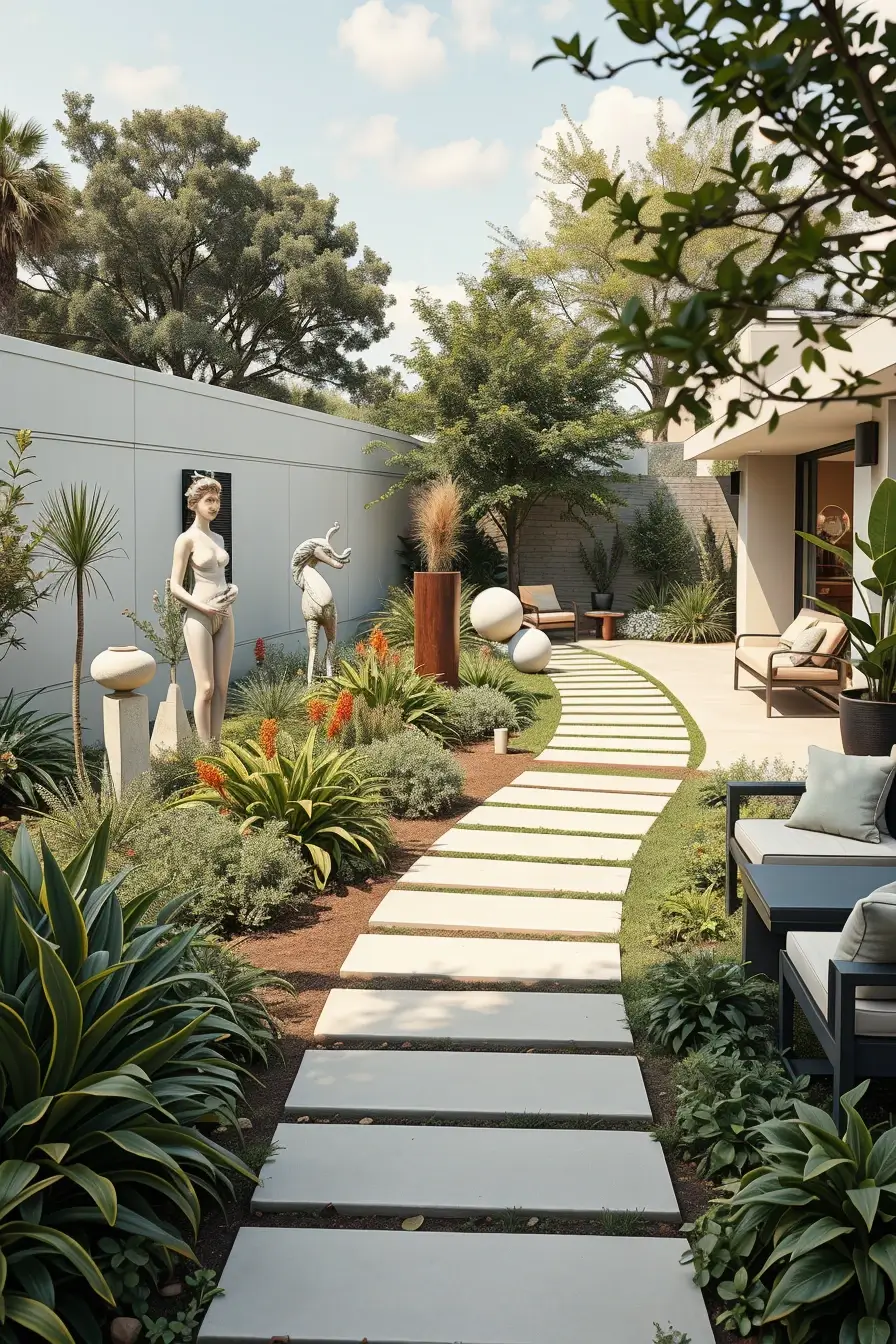
I include minimalist pathways, discreet seating, and neutral materials to allow artistic features to stand out. Sculptures, water installations, and statement plants are positioned as exhibits, each given space to breathe. Furniture remains understated to support the gallery-like atmosphere.
Personally, I find this concept aligns with insights shared by Dezeen, where designers emphasize negative space as a design tool. When done correctly, these gardens feel calm, unique, and deeply refined.
To complete this vision, I would recommend interpretive lighting that highlights individual elements without disrupting the overall serenity.
30. The Future Of Artistic And Designer Garden Landscaping
Looking ahead, the future of designer, creative, and artistic garden landscaping is defined by emotion, sustainability, and personal expression. I see gardens evolving into immersive environments that reflect identity rather than follow trends. Curves, sculptural forms, and original layouts will continue to dominate design thinking.
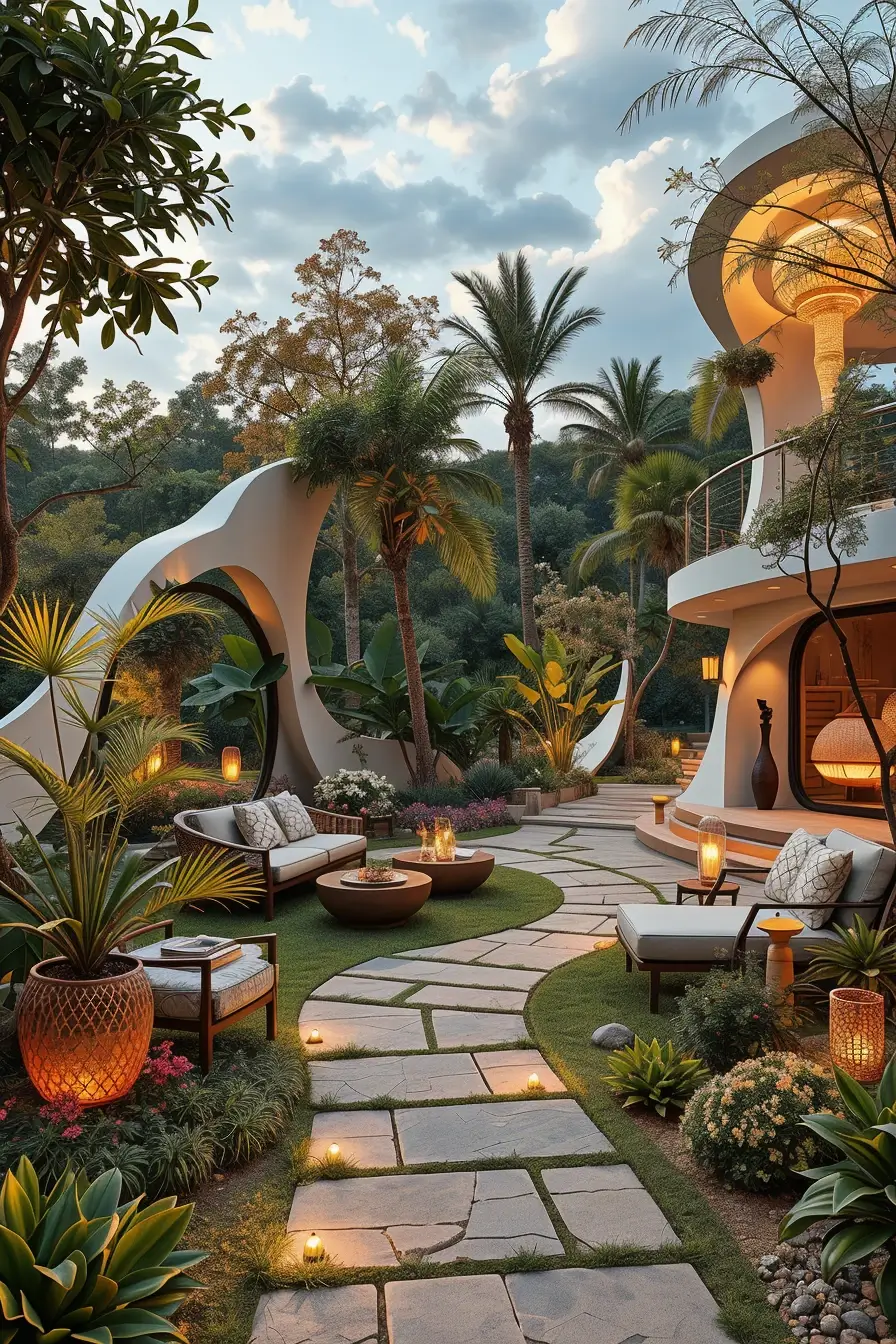
I anticipate greater integration of adaptive furniture, modular outdoor elements, and smart lighting systems that respond to user behavior. Materials will remain tactile and expressive, reinforcing the connection between people and space.
From my professional standpoint, organizations like the American Society of Landscape Architects consistently emphasize adaptability and human-centered design. I strongly believe these principles will shape the most successful gardens of 2026 and beyond.
What I would add moving forward is deeper collaboration between artists, architects, and landscape designers to push boundaries even further.
Garden landscaping in 2026 redefines outdoor spaces as creative, artistic environments where design and nature work together. Sculptural forms, curved lines, and original ideas turn gardens into expressive landscapes that feel both modern and personal. As this design direction continues to evolve, the garden becomes more than a place to relax—it becomes a living work of art that reflects creativity, emotion, and a new vision of outdoor living.