Pergola design in 2026 goes far beyond simple outdoor shade and enters the realm of architecture, art, and personal expression. Modern pergolas are no longer just functional structures — they are statement pieces that define the character of outdoor spaces and elevate the entire landscape. From sculptural forms and innovative materials to smart technology and custom-designed solutions, pergolas are becoming a key element of contemporary outdoor living.
In this article, we explore the most stylish, creative, and unique pergola ideas 2026, showcasing how designers are reimagining these structures with bold aesthetics, clean lines, and forward-thinking concepts. Whether you are drawn to minimalist elegance, futuristic design, or one-of-a-kind architectural features, these pergola ideas reveal how outdoor spaces can feel both modern and unforgettable.
1. Sculptural Pergola Designs That Look Like Outdoor Art
I see sculptural pergolas in 2026 as outdoor installations that blur the line between architecture and art. These designs focus on bold silhouettes, curved beams, asymmetrical supports, and expressive materials that create visual movement even when the space is empty. From a practical standpoint, these pergolas still provide shade and zoning, but their real value lies in how they elevate the entire outdoor environment and turn a patio or garden into a curated experience.
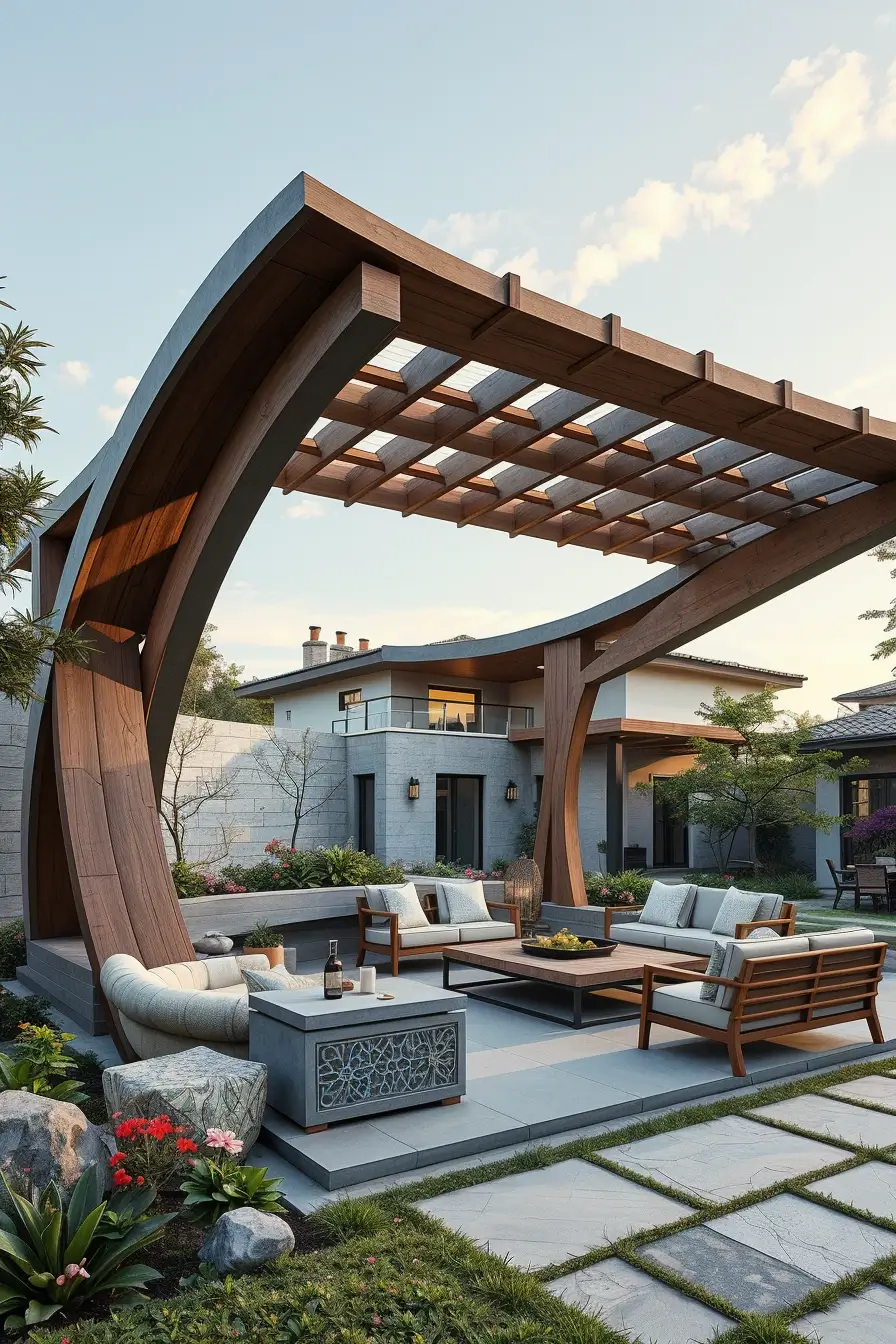
In terms of furnishings, I recommend keeping the layout intentional and minimal so the pergola remains the focal point. Low-profile lounge seating, integrated stone or concrete benches, and sculptural outdoor tables work best here. Materials like textured wood, smooth concrete, powder-coated steel, and natural stone help reinforce the artistic feel while remaining weather-resistant and functional.
From my experience, sculptural pergolas work best when treated as the anchor of the landscape design. Publications like Architectural Digest often emphasize restraint in outdoor styling, and I agree with that approach here. Let the structure speak first, then layer in lighting and furniture thoughtfully so the space feels composed rather than crowded.
What I would add to this concept is subtle architectural lighting integrated directly into the pergola beams. Linear LED strips or concealed uplighting enhances the sculptural form at night and ensures the pergola remains visually impactful after sunset.
2. Ultra-Modern Minimalist Pergolas With Architectural Lines
Ultra-modern minimalist pergolas in 2026 rely on precision, clean geometry, and architectural discipline. I focus on straight lines, flat profiles, and seamless connections that visually extend the home’s structure into the outdoor space. These pergolas are highly practical because their simplicity allows them to adapt easily to terraces, rooftops, and compact backyards without overwhelming the surroundings.
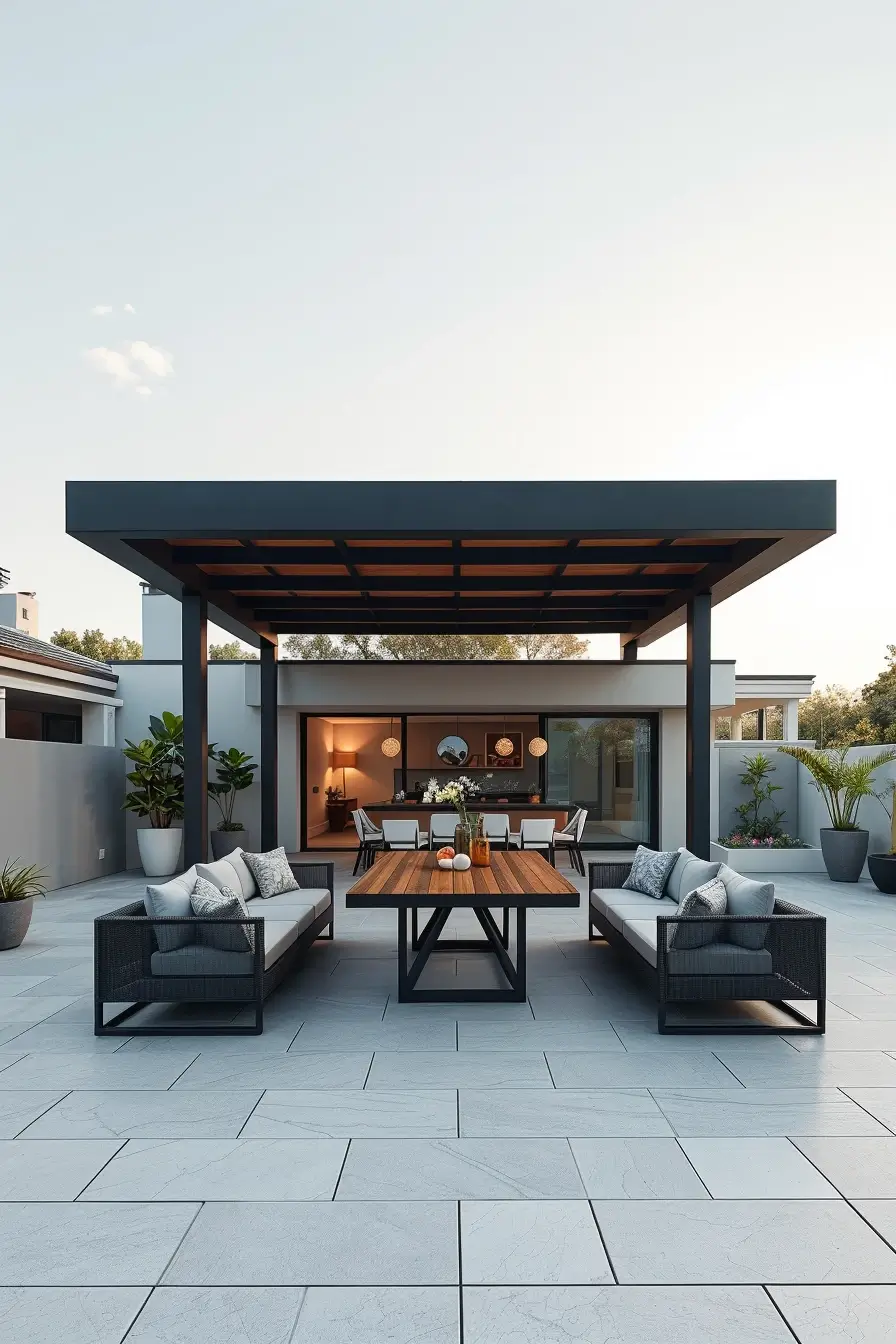
Furniture selection here is deliberate and restrained. I typically choose modular outdoor sofas with low backs, streamlined dining tables, and built-in seating that mirrors the pergola’s geometry. Finishes like matte black metal, light-toned composite wood, and neutral upholstery reinforce the minimalist aesthetic while ensuring durability.
Personally, I find that minimalist pergolas age exceptionally well. Designers featured in Dezeen frequently point out that strong architectural lines create timeless outdoor spaces, and I see that proven again and again in real projects. These pergolas feel modern without chasing trends, which makes them a safe long-term investment.
To complete this setup, I would add integrated drainage and concealed hardware. These technical details keep the design visually clean and improve performance during heavy rain, which is often overlooked in minimalist outdoor structures.
3. Futuristic Pergolas With Smart Technology Integration
Futuristic pergolas represent one of the most exciting pergola ideas 2026, combining architecture with smart living. I approach these designs as outdoor control hubs, where automated louvers, climate sensors, and adaptive shading systems respond to weather and user preferences. The result is an outdoor space that feels intuitive, efficient, and highly comfortable throughout the day.
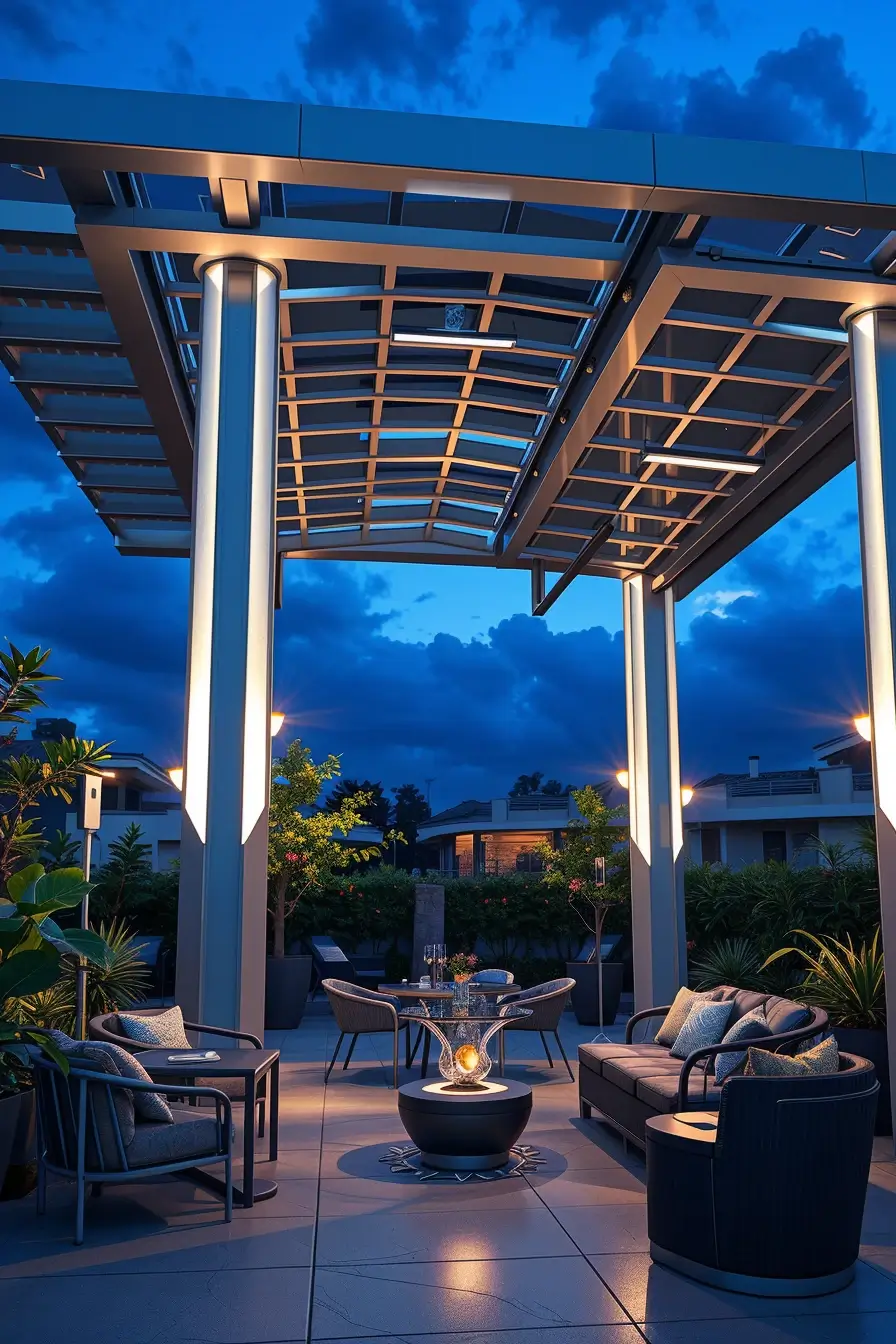
For furniture, I prioritize flexibility and technology compatibility. Adjustable loungers, motorized outdoor seating, and tables with built-in charging ports or lighting features fit naturally into this environment. Materials like aluminum frames, tech-treated fabrics, and composite surfaces support both durability and innovation.
In my opinion, smart pergolas reflect a broader trend noted by media outlets like Dwell, which highlight how technology is reshaping residential outdoor living. I’ve seen firsthand how automation increases usage, as homeowners are more likely to enjoy their outdoor spaces when comfort adjustments happen effortlessly.
What’s often missing here is thoughtful sound design. I recommend adding integrated outdoor speakers with directional audio to maintain privacy and create a fully immersive, tech-forward outdoor experience without visual clutter.
4. Luxury Designer Pergolas For High-End Outdoor Living
Luxury designer pergolas in 2026 are defined by scale, materials, and attention to detail. I treat these structures as outdoor rooms rather than accessories, often coordinating them with pools, outdoor kitchens, or expansive terraces. These pergolas prioritize comfort, privacy, and visual prestige while still being highly functional.
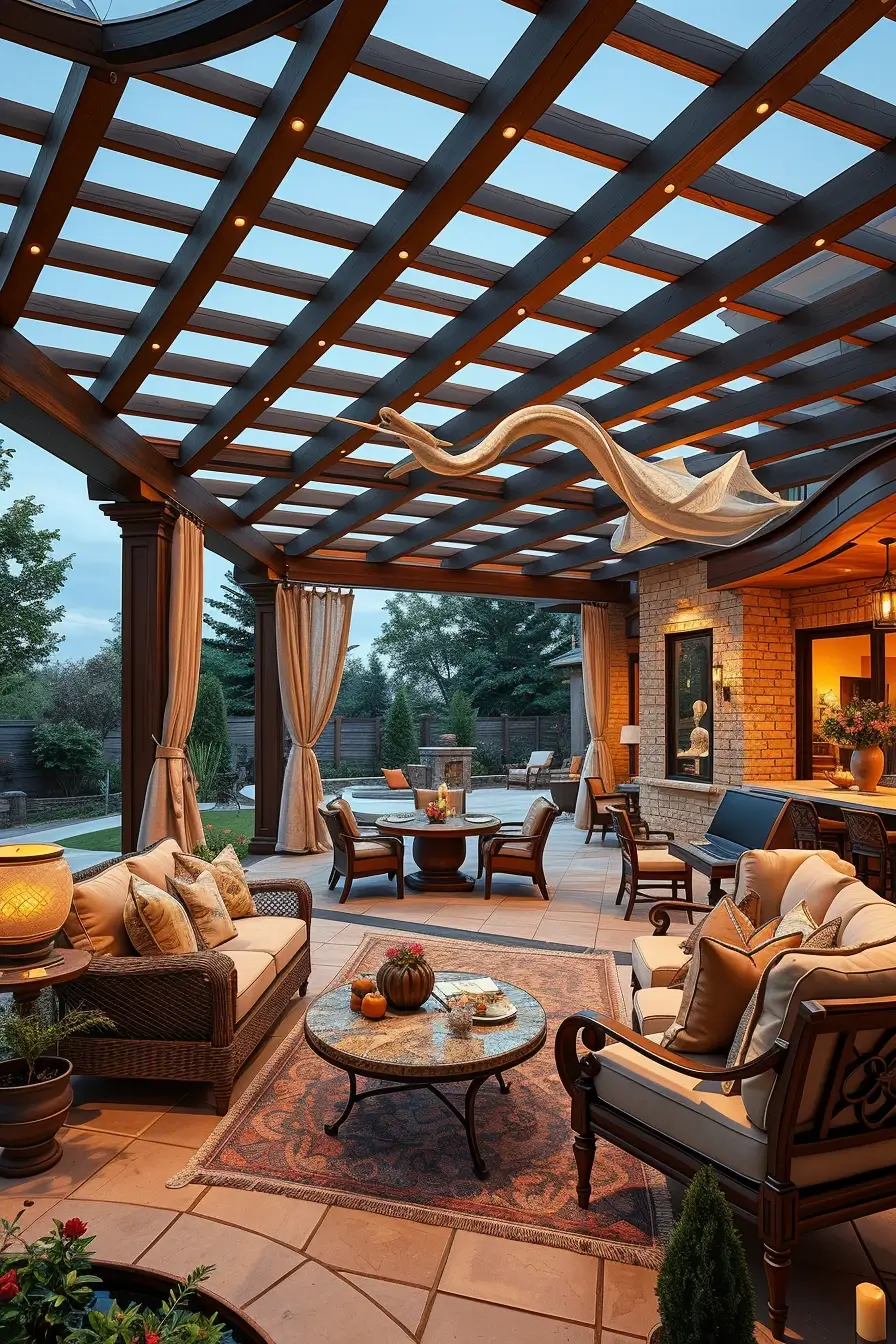
Furniture in this setting is layered and generous. I typically include plush sectional seating, upholstered outdoor armchairs, statement dining tables, and custom cabinetry. High-end materials such as teak, natural stone, bronze-toned metals, and premium outdoor textiles create a sense of refinement and permanence.
From my professional perspective, luxury pergolas succeed when they feel cohesive rather than decorative. Designers featured in Elle Decor often stress continuity between indoor and outdoor spaces, and I apply that principle by echoing interior finishes and layouts outside under the pergola.
To elevate this section further, I would add motorized privacy screens or drapery systems. These elements increase comfort, control sunlight, and allow the pergola to adapt to different occasions without compromising its elegant appearance.
5. Creative Pergola Shapes That Break Traditional Geometry
Creative pergola designs in 2026 move beyond rectangular frames and predictable layouts. I focus on irregular forms, angled supports, circular footprints, and layered roof planes that introduce energy and originality into outdoor spaces. These pergolas are especially effective in gardens or large yards where visual exploration is encouraged.
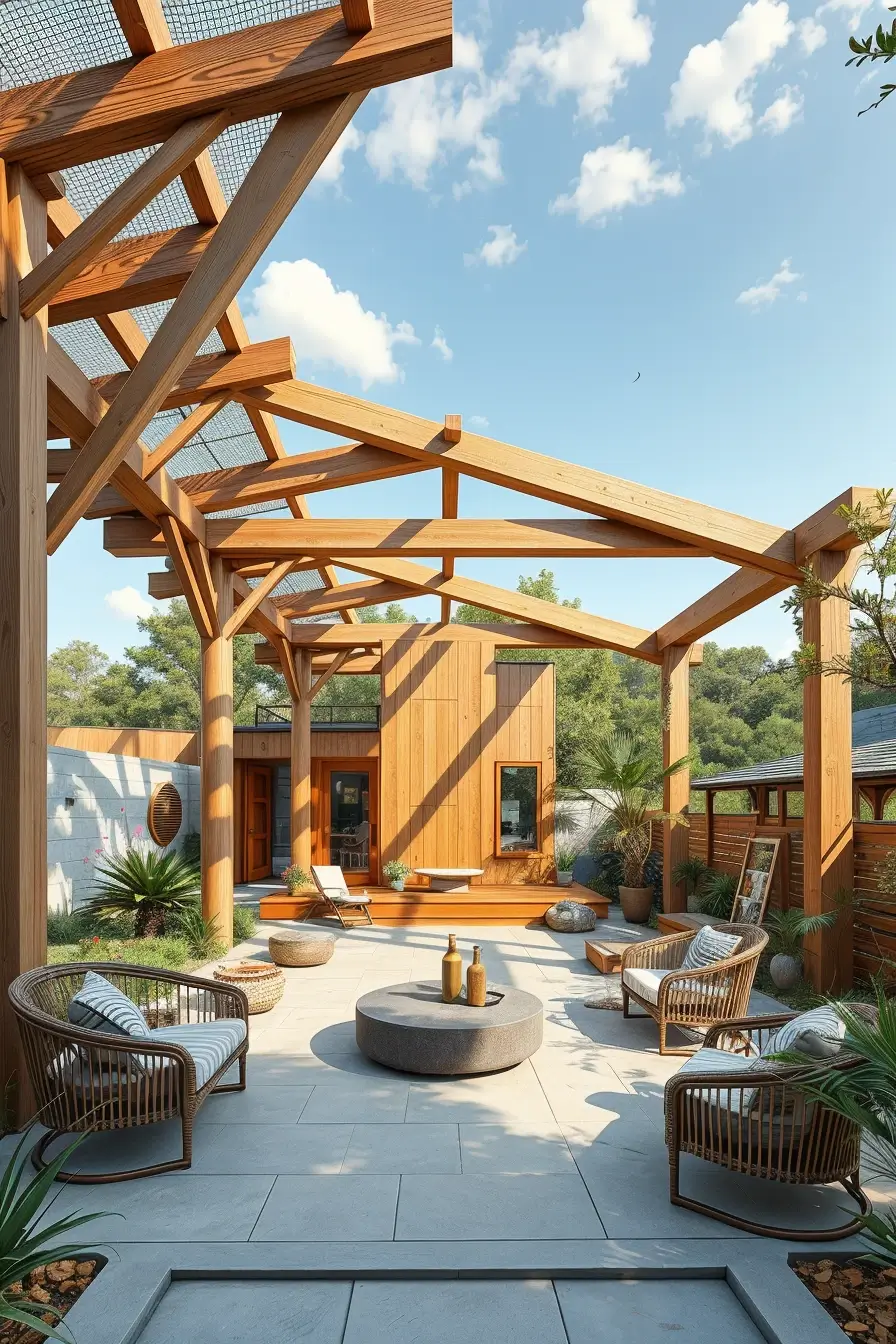
Furniture choices here should complement the unconventional structure without competing with it. I often use curved sofas, round tables, and freestanding lounge chairs that echo the pergola’s shape. Mixed materials like wood and metal or fabric and stone help reinforce the sense of creative freedom.
Personally, I enjoy working with non-traditional pergola shapes because they invite experimentation. Design platforms like Dezeen frequently showcase projects that challenge symmetry, and I’ve found that homeowners respond positively when outdoor spaces feel expressive yet intentional.
What I would add to enhance these pergolas is custom flooring beneath the structure, such as patterned stone or poured concrete. This grounds the design and visually connects the pergola’s unconventional geometry to the landscape.
6. Statement Pergolas That Redefine Backyard Aesthetics
Statement pergolas in pergola ideas 2026 are designed to command attention and reshape how a backyard is perceived. I treat these pergolas as the visual centerpiece of the entire outdoor space, using bold proportions, striking materials, and confident placement to anchor the design. Functionally, they still provide shade and structure, but their primary role is to establish identity and character.
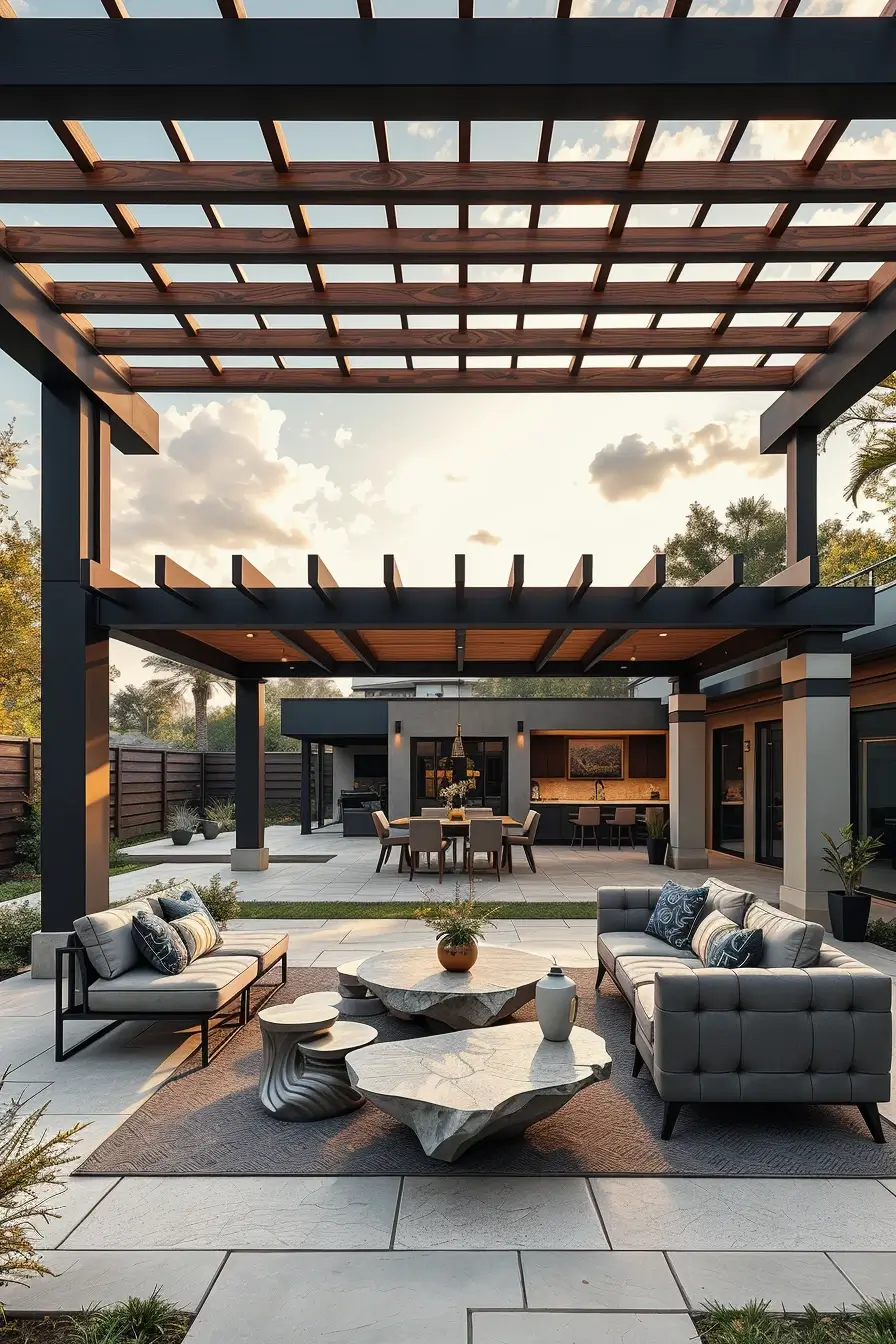
Furniture under a statement pergola must feel intentional and substantial. I typically include oversized outdoor sofas, sculptural coffee tables, and accent chairs that reinforce the pergola’s presence. Materials such as dark-stained wood, stone slabs, or brushed metal finishes help ground the structure and ensure it feels permanent rather than decorative.
From my experience, statement pergolas work best when the surrounding landscape is simplified. Landscape architects often advise allowing one strong architectural element to lead the design, and I follow this by reducing visual noise around the pergola so it can fully express its impact.
To strengthen this section, I would add vertical design elements such as integrated planters or textured side panels. These additions enhance privacy and create depth without distracting from the pergola’s dominant form.
7. Floating Pergola Designs With Lightweight Visual Appeal
Floating pergolas are a defining modern trend for 2026, characterized by hidden supports and cantilevered roofs that appear to hover above the space. I approach these designs with careful attention to engineering and balance, ensuring they feel visually light while remaining structurally sound and practical for everyday use.
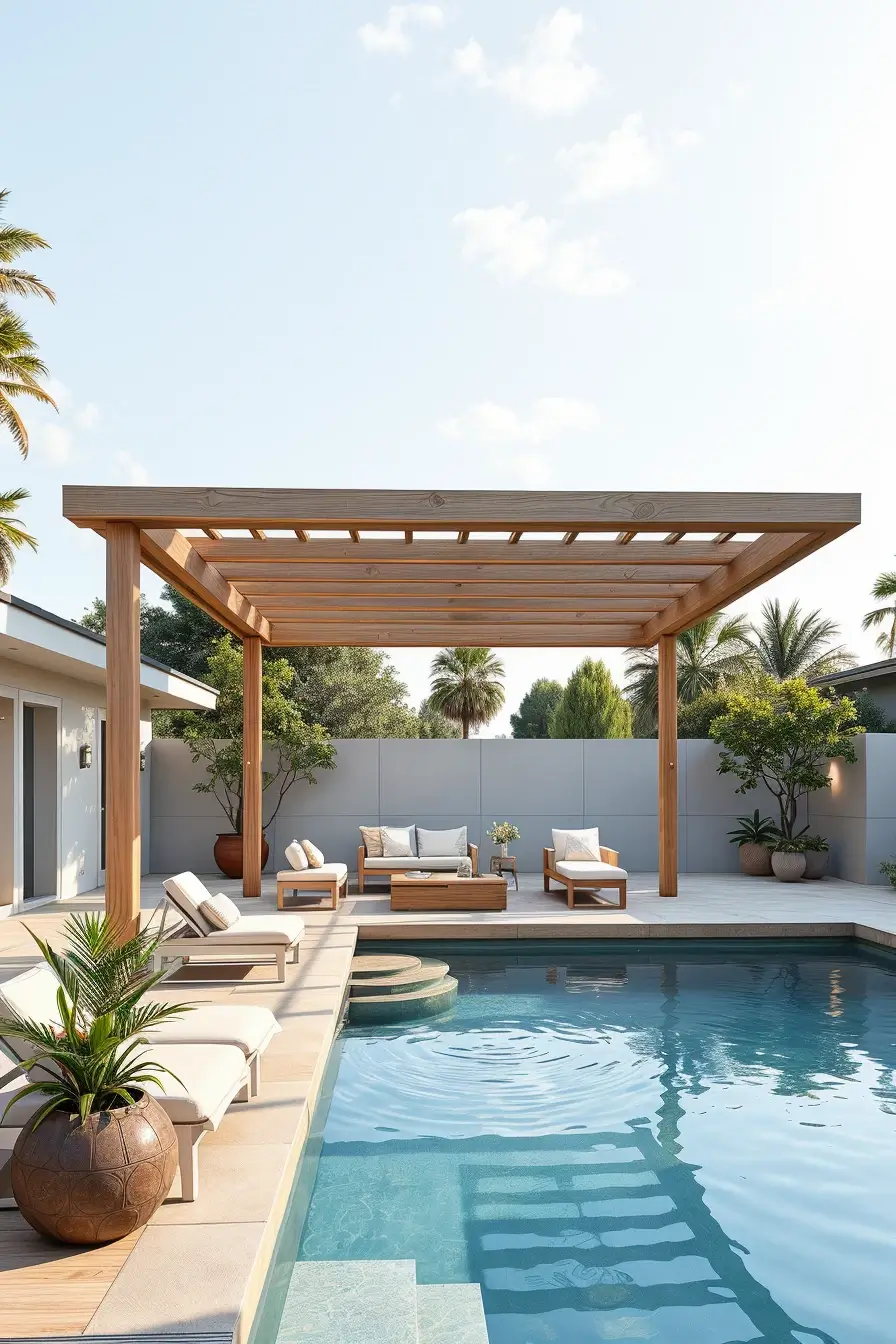
Furniture selections should emphasize openness and airflow. I prefer slim-profile lounge chairs, low modular sofas, and lightweight tables that do not visually weigh down the space. Neutral fabrics and pale wood tones complement the floating effect and keep the design feeling effortless.
Personally, I find floating pergolas especially effective for smaller yards or poolside areas. Designers featured in contemporary outdoor design journals often highlight how visual lightness can make compact spaces feel larger, and I consistently see positive results when applying this principle.
What I would add here is subtle shadow play through perforated roofing or slatted edges. This enhances the floating illusion and introduces dynamic light patterns throughout the day.
8. Glass And Metal Pergolas For A Sleek Contemporary Look
Glass and metal pergolas reflect a designer approach to outdoor living in 2026, prioritizing transparency, precision, and clean finishes. I see these pergolas as ideal for homes with contemporary architecture, where continuity between indoor and outdoor spaces is essential. Glass roofing allows natural light while metal frames ensure durability and sharp definition.
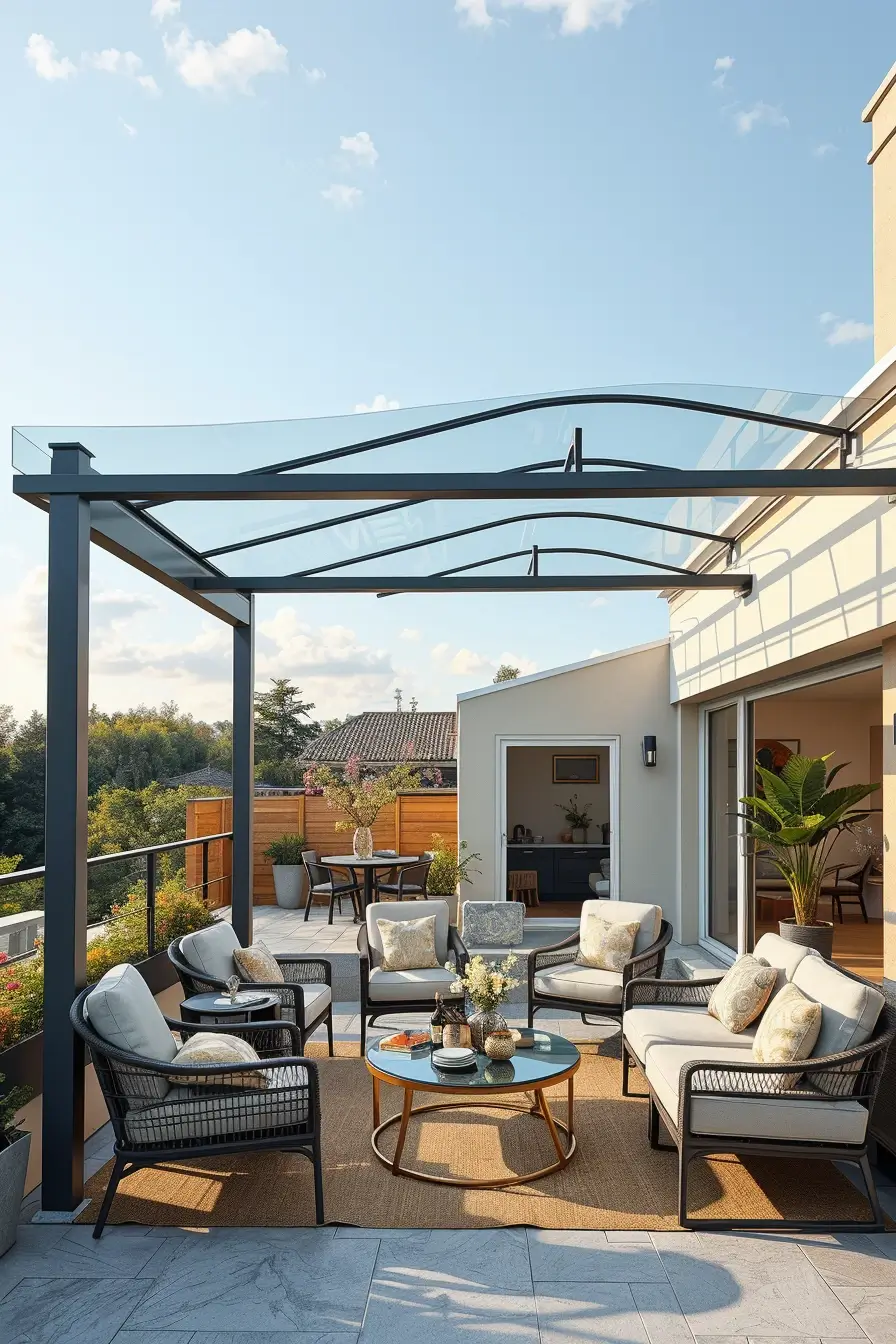
Furniture in this environment should complement the refined materials. I often specify upholstered outdoor seating with tailored lines, metal-framed dining sets, and stone or ceramic accent tables. These pieces reinforce the sleek aesthetic while maintaining comfort and usability.
In my professional opinion, glass pergolas require careful planning but deliver exceptional results. Publications like Dwell frequently emphasize the importance of light in modern design, and glass pergolas maximize daylight without sacrificing shelter or elegance.
To complete this setup, I recommend adding adjustable shading elements such as retractable screens or smart glass technology to control heat and glare while preserving the clean aesthetic.
9. Unique Pergola Roof Concepts Beyond Classic Slats
Moving beyond traditional slatted roofs is one of the most creative directions in pergola ideas 2026. I focus on layered panels, geometric cutouts, retractable fabrics, and mixed-material roofing systems that offer both visual interest and functional flexibility. These roofs redefine how pergolas interact with light, weather, and movement.
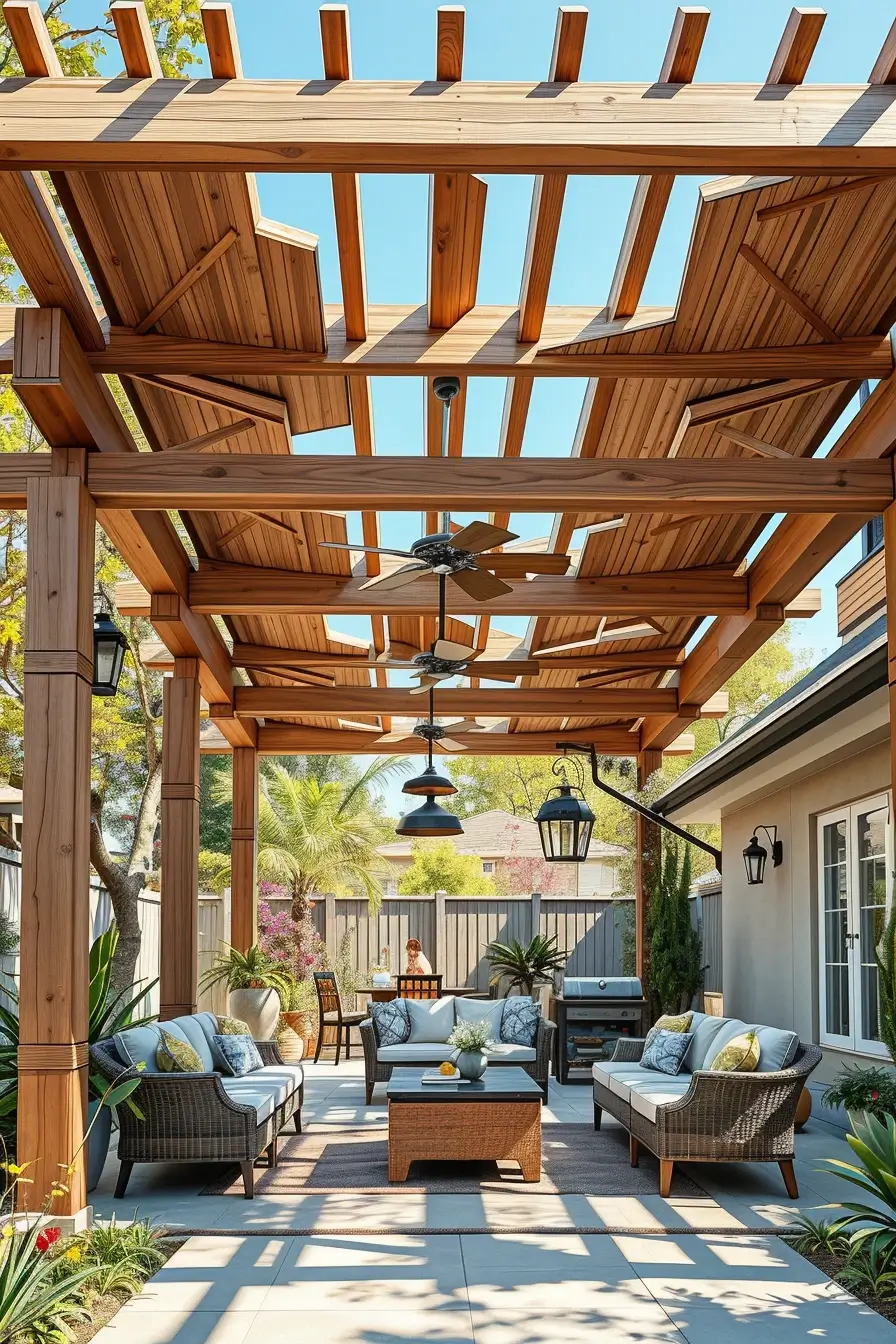
Furniture placement should respond to the roof design. I often arrange seating to take advantage of filtered sunlight, pairing loungers, dining tables, and accent chairs with adjustable layouts. Weather-resistant fabrics and modular furniture help adapt the space as conditions change.
From my experience, unique roof designs significantly increase how often outdoor spaces are used. Designers interviewed by Architectural Digest often highlight adaptability as a key factor in outdoor comfort, and innovative roofing delivers exactly that benefit.
What I would add is integrated rainwater management within the roof structure. This improves usability during variable weather and maintains a polished, intentional appearance.
10. Modular Pergola Systems For Flexible Outdoor Spaces
Modular pergolas represent some of the most unusual and forward-thinking solutions for 2026. I view these systems as adaptable frameworks that can grow, shift, or reconfigure based on changing needs. This makes them ideal for evolving households or multifunctional outdoor areas.
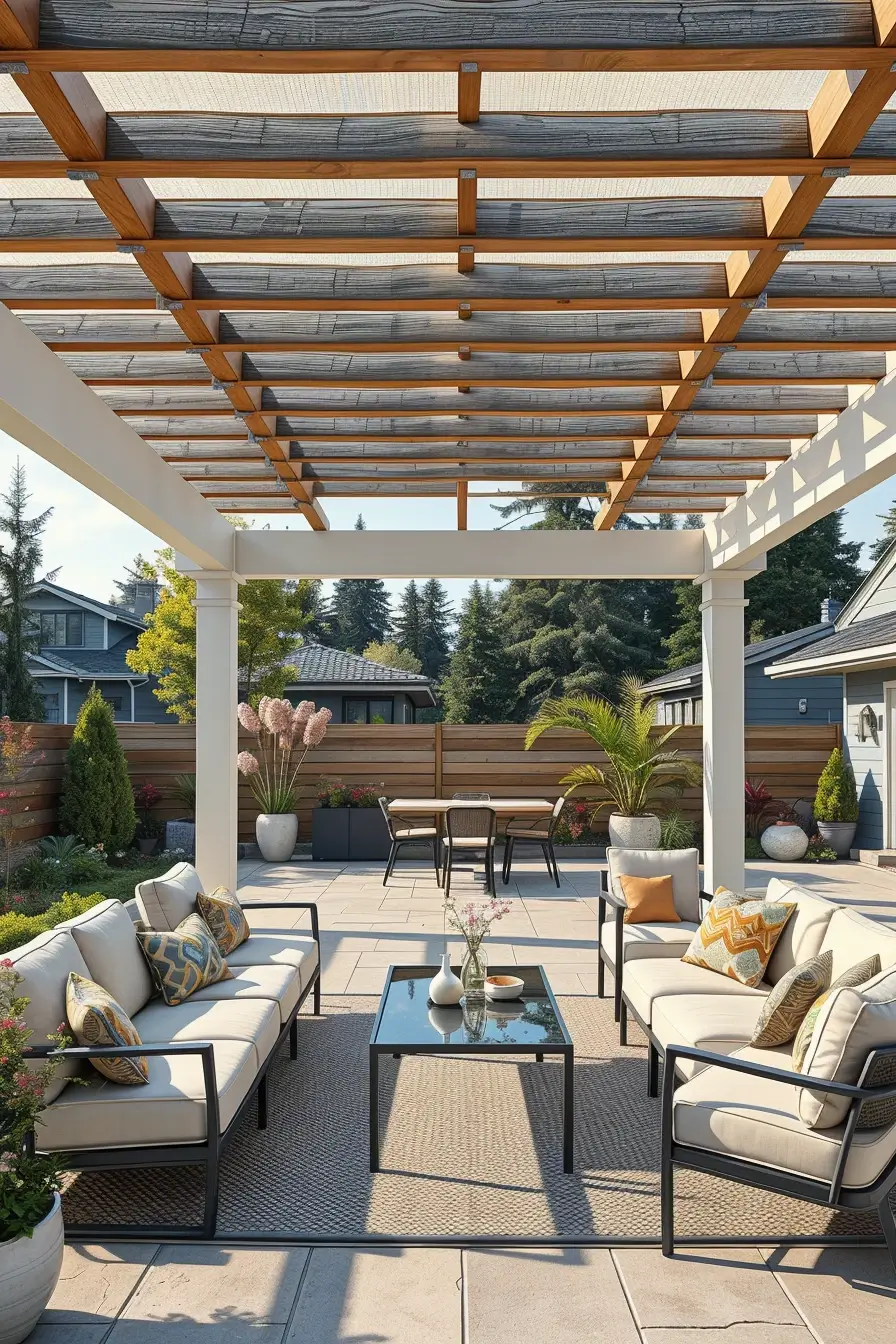
Furniture works best when it mirrors this flexibility. I recommend modular seating, movable dining tables, and stackable or foldable elements that can be rearranged easily. Durable finishes and consistent color palettes keep the space cohesive even as layouts change.
Personally, I appreciate modular pergolas for their long-term value. Outdoor design experts often emphasize adaptability as a core principle of sustainable design, and modular systems allow homeowners to refresh their space without starting over.
To enhance this concept further, I would add interchangeable side panels or accessory modules such as lighting units or privacy screens, allowing customization without structural changes.
11. Designer Pergolas Inspired By Modern Architecture
I see architecturally inspired pergolas becoming a defining element of high-end outdoor spaces in 2026. These pergolas are rooted in clean geometry, strong horizontal lines, and structural clarity, often echoing the form of the main house. From flat roof profiles to cantilevered beams, this approach makes the pergola feel like a natural architectural extension rather than a decorative add-on. I value this design because it enhances both shade and spatial definition while maintaining a refined, intentional look.
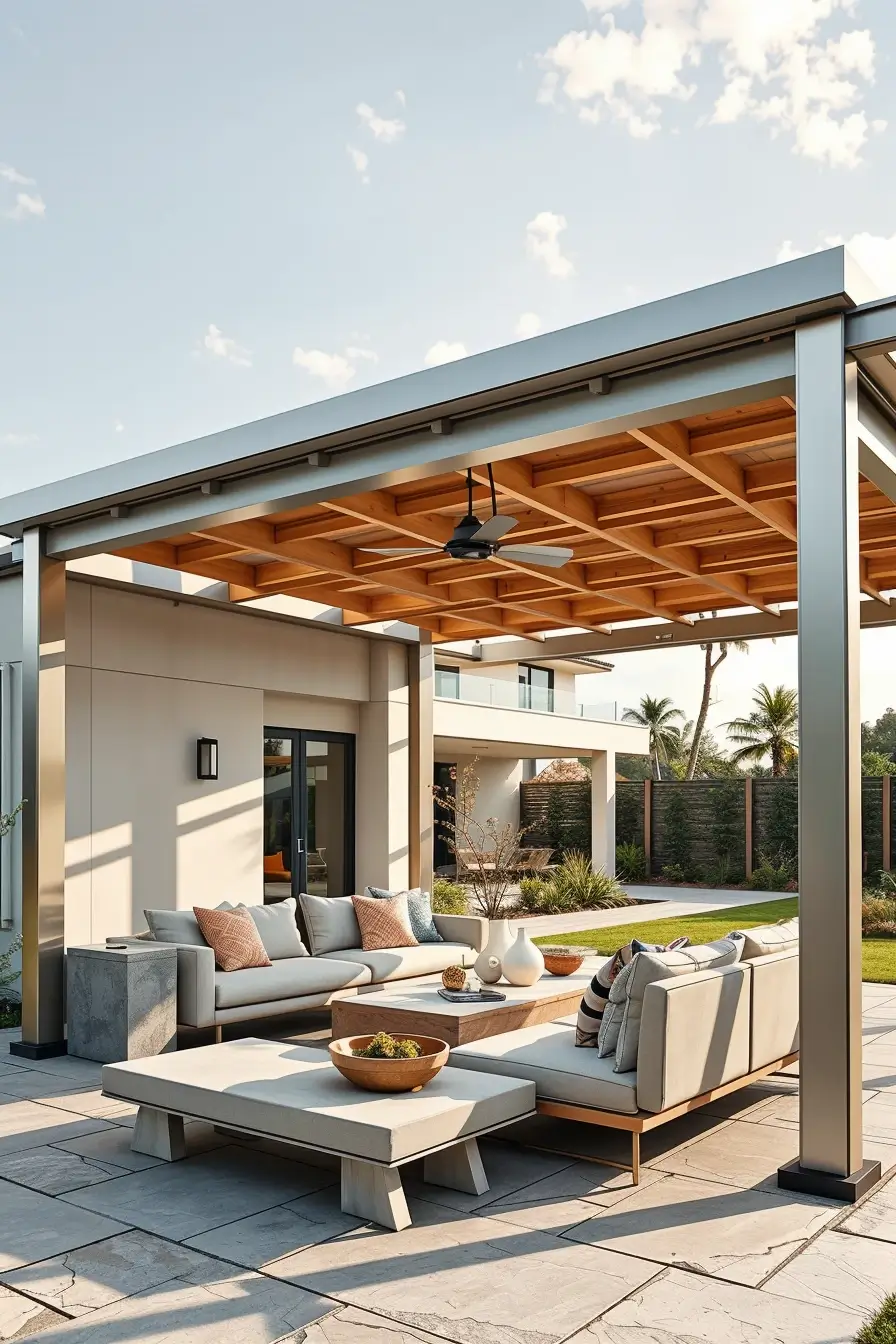
In these pergolas, I typically include low-profile sectional seating, integrated concrete or stone flooring, and built-in benches that align with the pergola’s linear structure. Materials such as powder-coated aluminum, architectural wood slats, and smooth stone surfaces work together to create a cohesive environment. Each furniture piece is selected for proportion and scale, ensuring the space feels balanced and usable without visual clutter.
From my experience, many US-based architects featured in Architectural Digest emphasize that outdoor structures should visually connect to the home’s geometry rather than compete with it. I agree with this philosophy, as it results in pergolas that feel timeless instead of trend-driven. A well-designed architectural pergola can elevate the entire property’s perceived value.
What I would add to this concept is a stronger focus on integrated drainage and concealed hardware. These details are often overlooked, but they significantly improve long-term durability and preserve the clean architectural aesthetic I aim for in high-end pergola design.
12. Bold Pergola Color Ideas For 2026 Outdoor Trends
I notice that pergola ideas 2026 are moving beyond neutral palettes into bold, confident color applications. Deep charcoal, muted terracotta, warm clay tones, and even matte olive green are becoming popular choices. These colors allow pergolas to function as statement pieces while still feeling grounded in nature. I find that bold color works best when the pergola design itself is simple and structured.
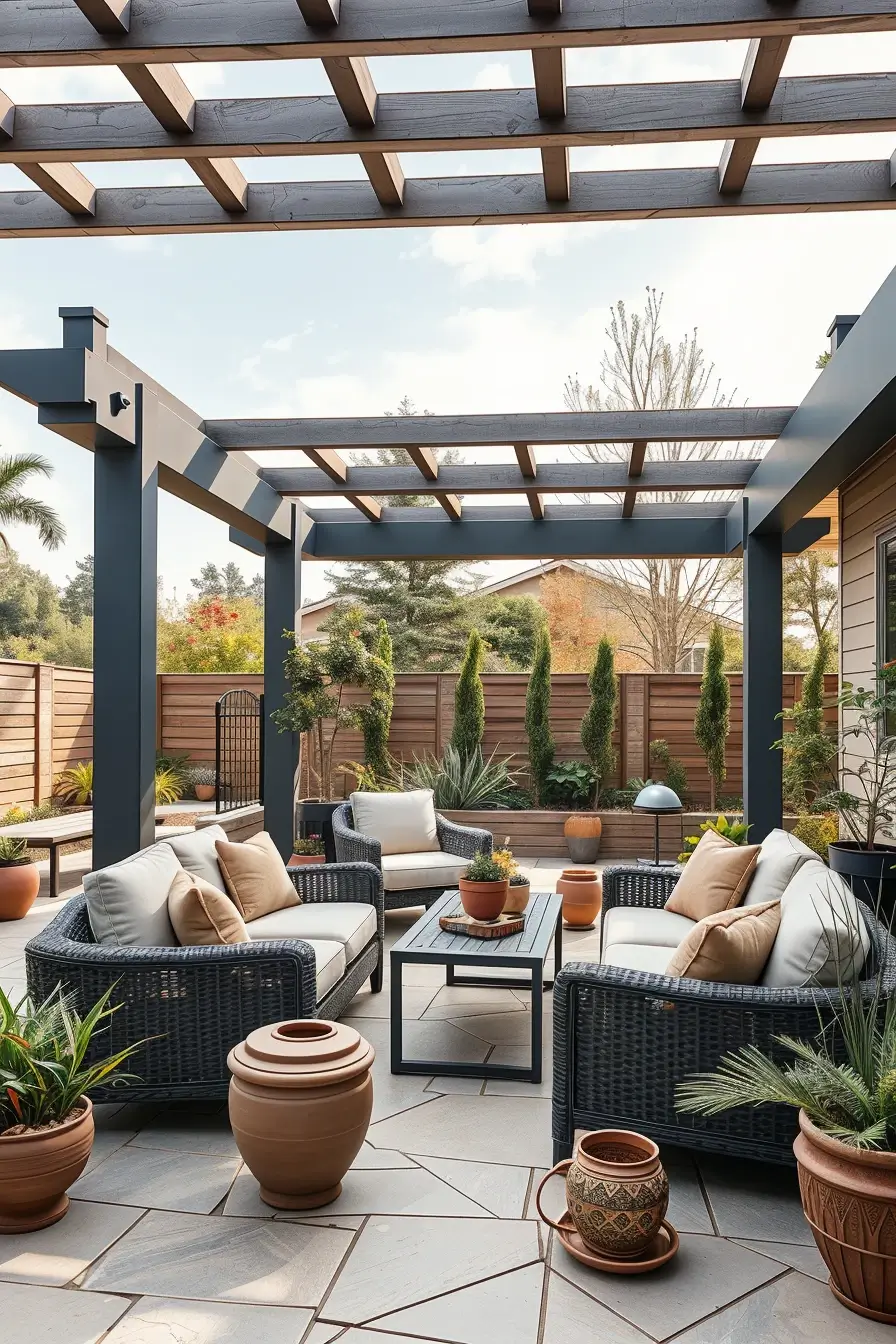
In these designs, I often pair colored pergola frames with neutral outdoor furniture such as beige upholstered sofas, natural wood tables, and textured stone flooring. Accent cushions, ceramic planters, and outdoor rugs help soften the visual impact while reinforcing the chosen color theme. Each element is selected to prevent the pergola from overpowering the surrounding landscape.
Based on my observations and insights from Elle Decor, color is increasingly used outdoors to create emotional warmth and visual identity. I personally recommend testing bold pergola colors with sample panels under natural light before final installation, as sunlight dramatically affects tone perception.
What I would enhance in this approach is the inclusion of color-matched accessories such as planters or privacy screens. This creates a more cohesive outdoor composition and prevents the pergola color from feeling isolated or disconnected from the rest of the space.
13. Pergolas With Integrated Lighting As A Design Feature
For 2026, I see integrated lighting becoming a core design element rather than an afterthought. Pergolas with built-in LED strips, recessed beam lighting, and soft perimeter illumination allow the structure to function day and night. I value this idea because it increases usability while adding a subtle architectural glow that enhances ambiance.
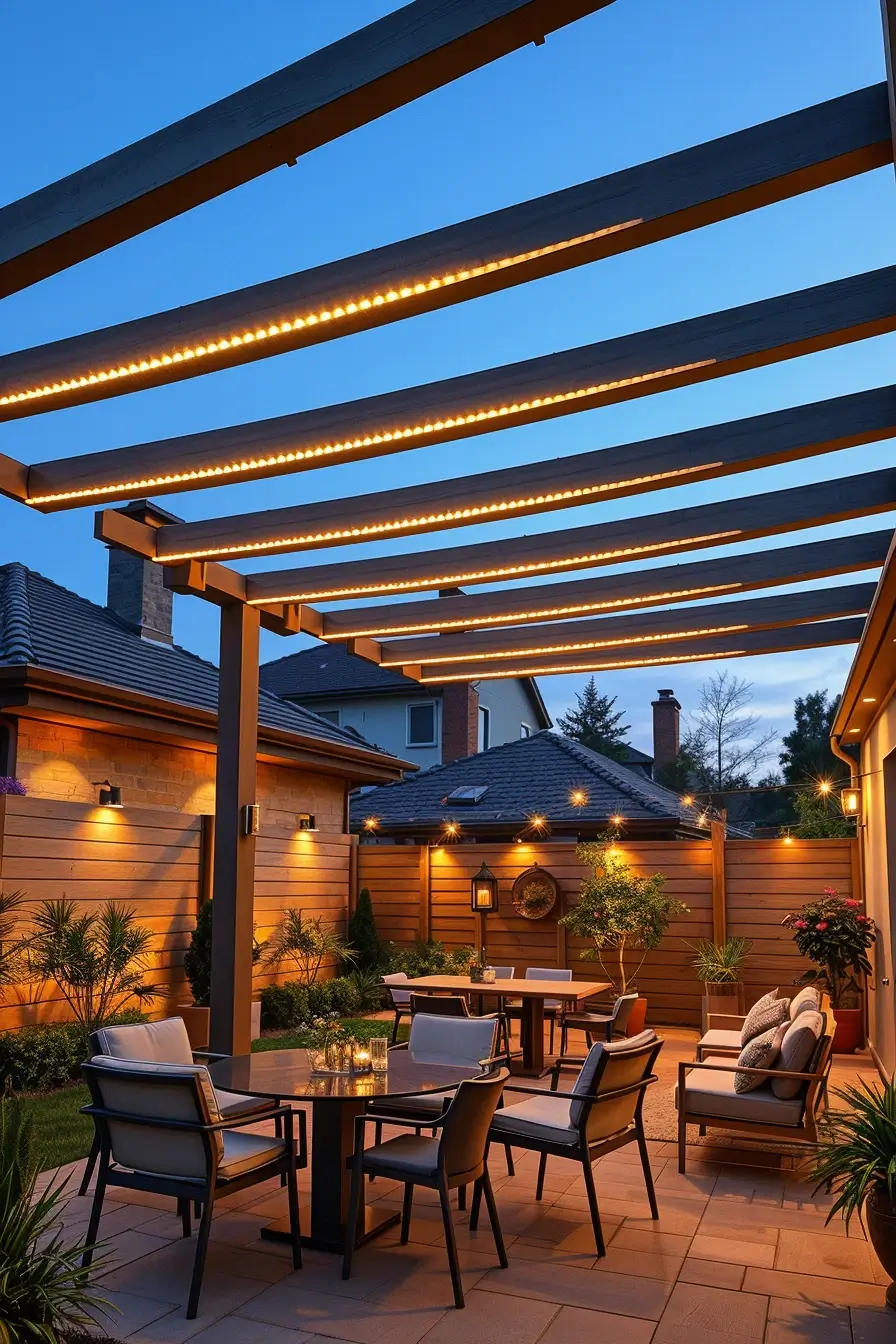
In my designs, I integrate warm LED strips into pergola beams, pendant lights above dining zones, and floor-level lighting near seating areas. I choose lighting fixtures with minimal visual bulk to maintain a clean look during daylight hours. Smart lighting controls are essential, allowing users to adjust brightness and mood effortlessly.
From my professional perspective, designers featured in Dwell often stress layered lighting for outdoor spaces, and I fully support this approach. Layered lighting adds depth, improves safety, and transforms pergolas into evening destinations rather than daytime-only structures.
What I would add here is solar-assisted lighting integration. While not always visually emphasized, it supports sustainability goals and reduces long-term energy consumption without compromising design quality.
14. Nature-Inspired Pergola Designs With A Modern Twist
I find that blending organic elements with modern structure is one of the most compelling pergola ideas 2026 has to offer. These pergolas use natural wood tones, climbing greenery, and soft textures while maintaining a refined, contemporary form. The result feels calm, grounded, and intentionally designed rather than rustic or decorative.
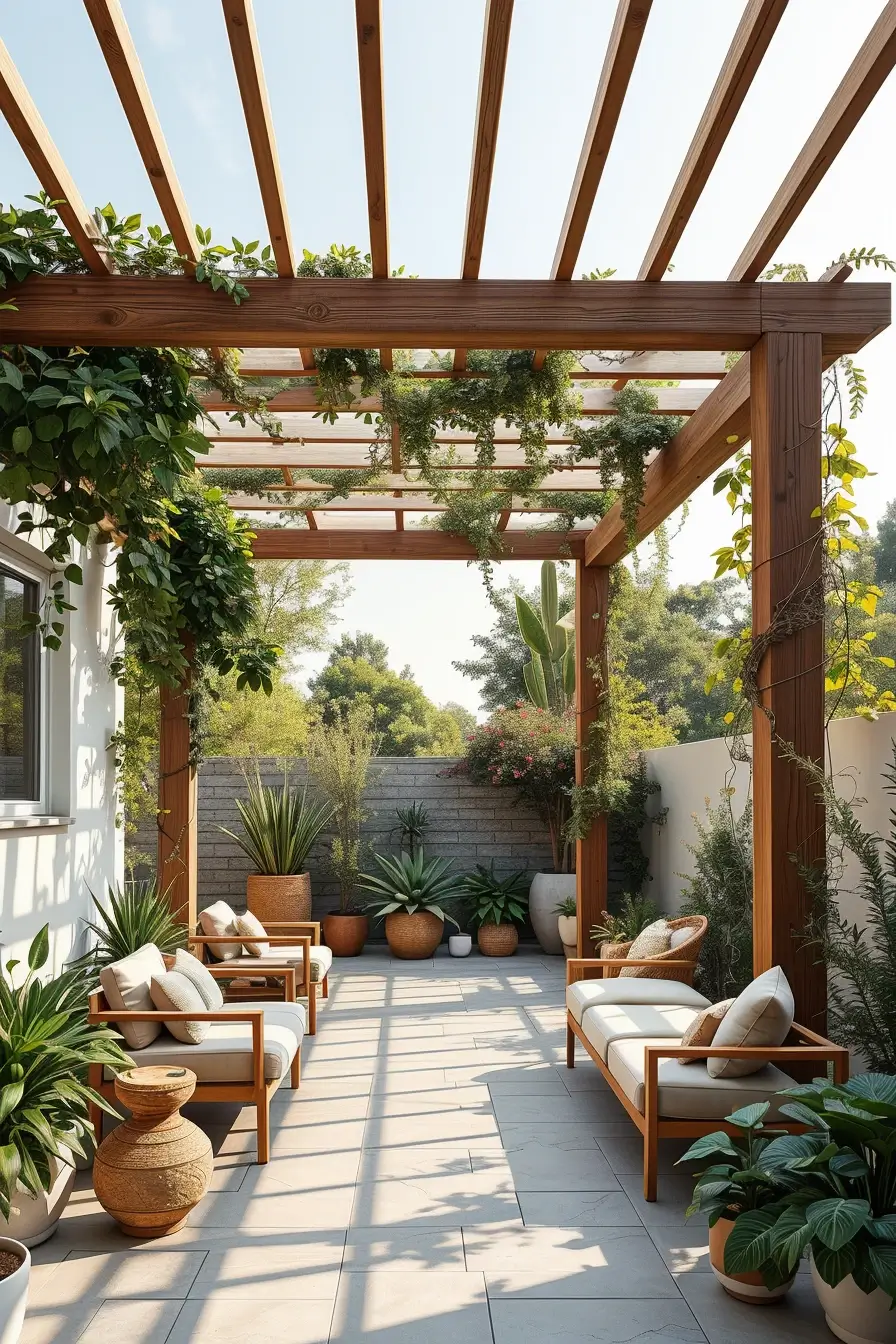
In these pergolas, I incorporate wooden slatted roofs, integrated planters, outdoor sofas with linen-like upholstery, and stone or porcelain flooring. Greenery is thoughtfully placed to frame views rather than overwhelm the structure. Each material is chosen to age gracefully and complement the surrounding landscape.
From my experience, designers at Better Homes and Gardens often highlight biophilic design as a long-term trend, and I agree with its application in pergola spaces. I have seen how greenery improves comfort, reduces visual stress, and enhances overall outdoor enjoyment.
What I would improve in this design is irrigation planning. Built-in drip systems for climbing plants ensure consistent growth and prevent maintenance issues that could detract from the pergola’s polished appearance.
15. Artistic Pergolas That Blend Structure And Sculpture
I consider artistic pergolas to be among the most unique and unusual pergolas emerging for 2026. These designs blur the line between functional shelter and outdoor sculpture, often featuring asymmetrical forms, curved beams, or custom metalwork. I value this approach when the pergola is intended as a focal point rather than a background element.
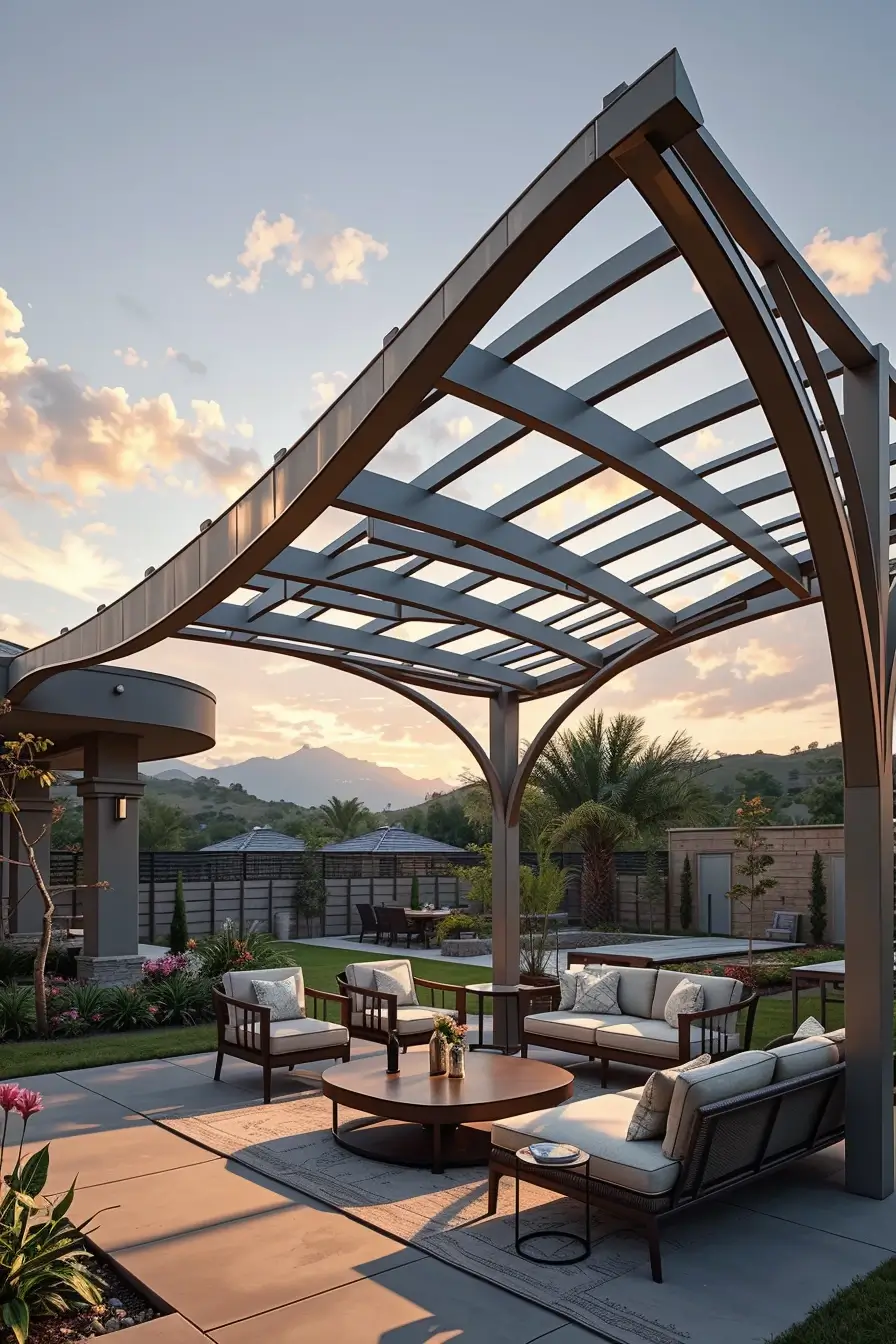
In these spaces, I keep furniture minimal and sculptural, such as curved lounge chairs, stone side tables, and low-profile seating. Materials like corten steel, custom-finished aluminum, and architectural concrete allow the pergola itself to command attention. Every element is selected to support the artistic vision rather than compete with it.
From my professional standpoint, projects showcased in Dezeen often demonstrate how sculptural outdoor structures can define a home’s identity. I believe artistic pergolas work best when surrounded by open space, allowing their form to be fully appreciated.
What I would add is subtle nighttime accent lighting to highlight the pergola’s shape. Proper illumination ensures the sculptural quality remains visible after dark without overwhelming the design.
16. Compact Designer Pergolas For Small Outdoor Spaces
When working with limited outdoor areas, I see compact designer pergolas becoming increasingly relevant for pergola ideas 2026. These pergolas focus on maximizing function without overwhelming the space, using slim profiles, precise proportions, and intentional layouts. I approach these designs as spatial solutions rather than decorative elements, ensuring they provide shade, privacy, and visual structure even in small patios or terraces.
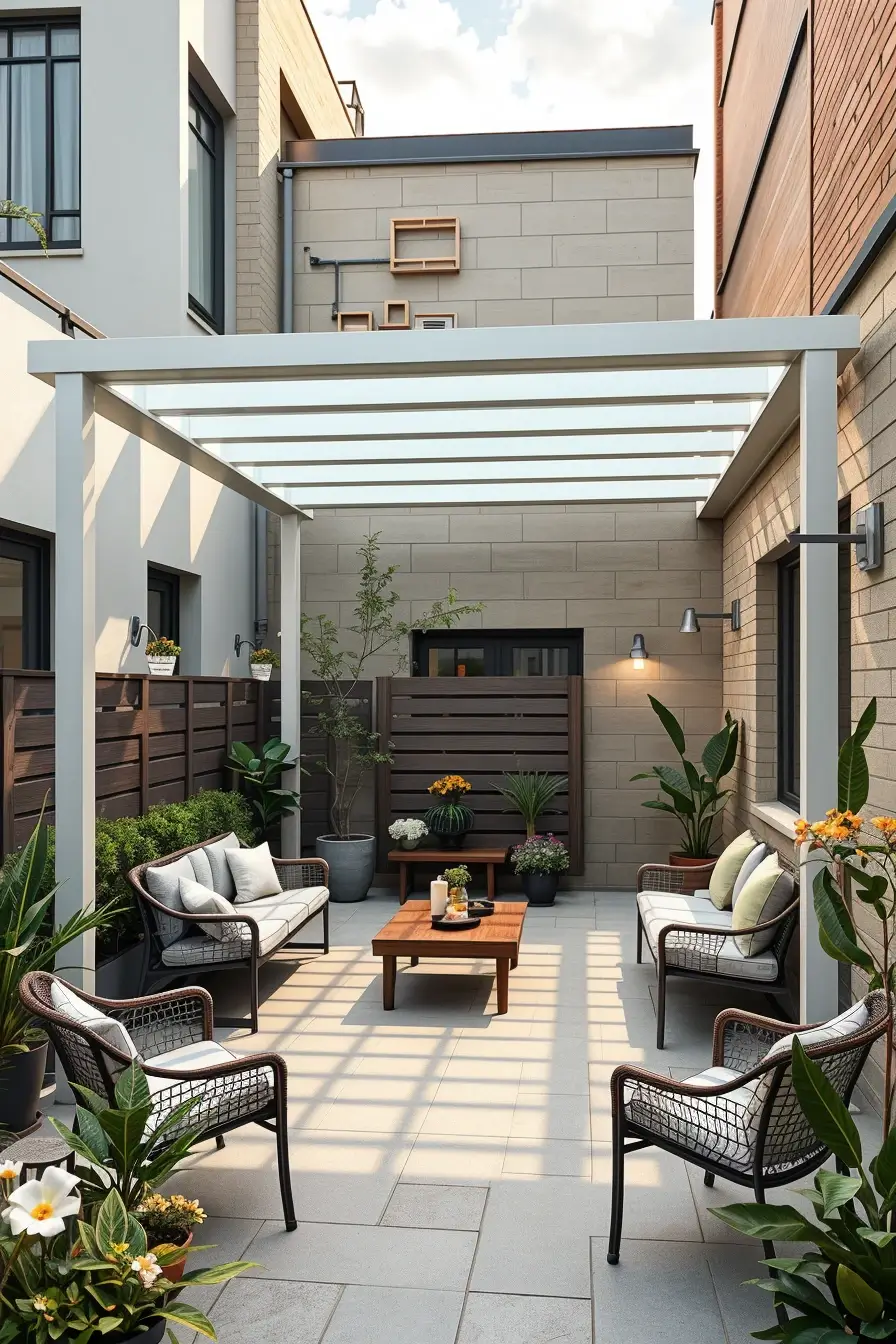
In compact pergola designs, I prioritize lightweight materials such as aluminum frames, narrow wooden slats, and retractable fabric canopies. Furniture choices are equally intentional: compact lounge chairs, slim coffee tables, and built-in benches that eliminate unnecessary bulk. Every piece serves a purpose, supporting usability while maintaining a clean, modern aesthetic.
From my professional experience, small-space outdoor design benefits greatly from restraint. Designers featured in Apartment Therapy often emphasize editing rather than adding, and I strongly agree. A well-designed compact pergola feels curated, not crowded, and allows homeowners to enjoy outdoor living without compromise.
What I would add to these designs is integrated storage, such as hidden compartments beneath benches or vertical shelving within pergola posts. These additions improve functionality without impacting visual simplicity.
17. Open-Concept Pergolas That Blur Indoor And Outdoor Living
I find that open-concept pergolas are redefining how we experience outdoor spaces in pergola ideas 2026. These structures are designed to dissolve boundaries between interior and exterior zones, often aligning flooring levels, ceiling heights, and materials with the home’s interior. I value this approach because it expands living space naturally and creates a seamless transition.
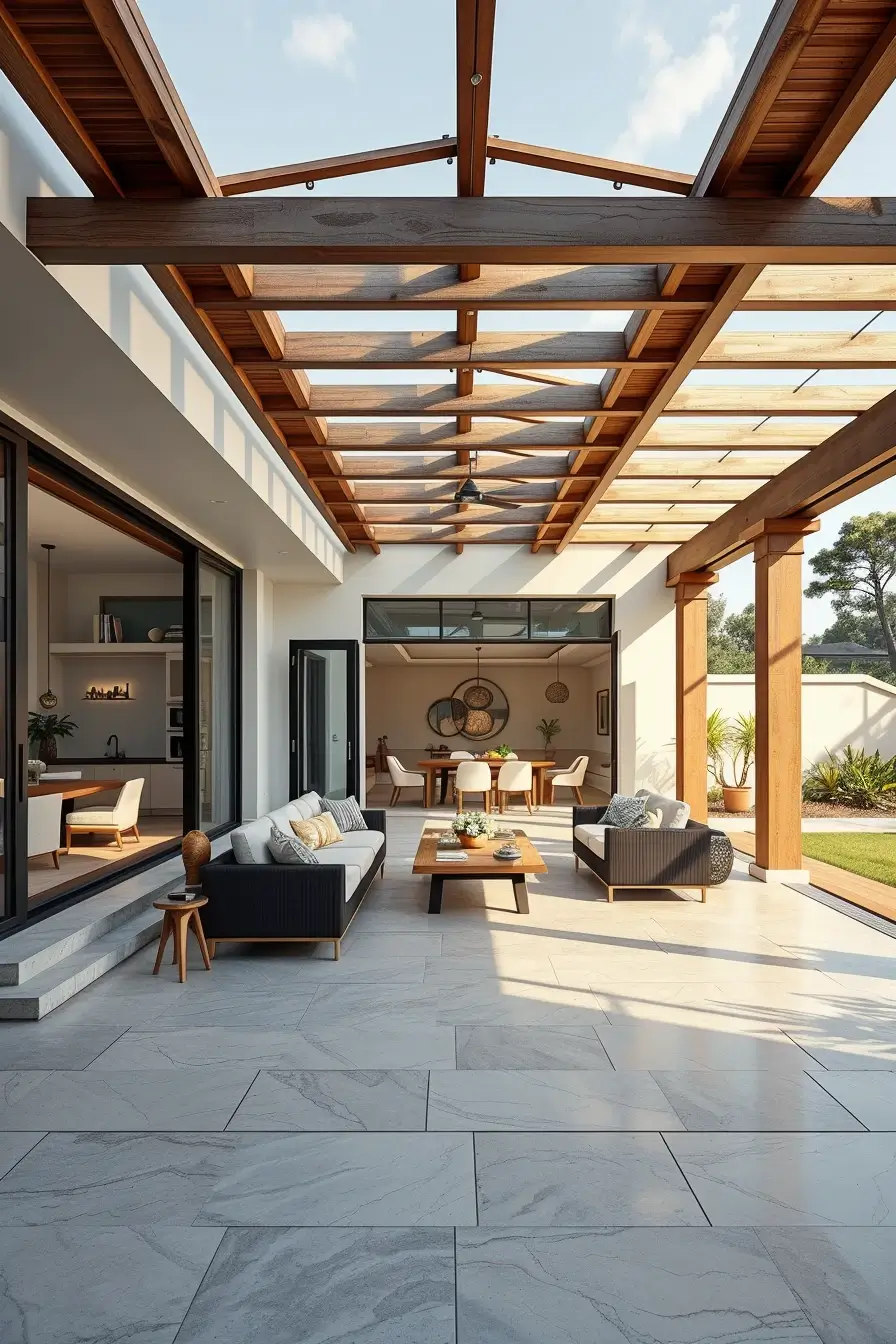
In these pergolas, I typically incorporate outdoor sofas that mirror indoor upholstery styles, large dining tables, and layered textiles such as outdoor rugs and cushions. Sliding glass walls or fully retractable panels further enhance flexibility, allowing the pergola to adapt to weather and seasonal use. Each design element reinforces continuity between inside and outside.
From my perspective, publications like Dwell consistently highlight indoor-outdoor integration as a core design principle for contemporary homes. I’ve seen firsthand how these pergolas become the most used spaces, especially when designed with comfort equal to interior rooms.
What I would further develop here is acoustic planning. Adding soft surfaces, ceiling panels, or outdoor curtains can significantly improve sound quality and comfort, making the pergola feel truly livable.
18. Pergolas With Mixed Materials For A High-Design Finish
One of the most stylish and designer directions I see for pergola ideas 2026 is the intentional mixing of materials. Combining wood, metal, stone, and fabric creates depth and visual interest while elevating the pergola from a simple structure to a design statement. I use this strategy to add complexity without excessive ornamentation.
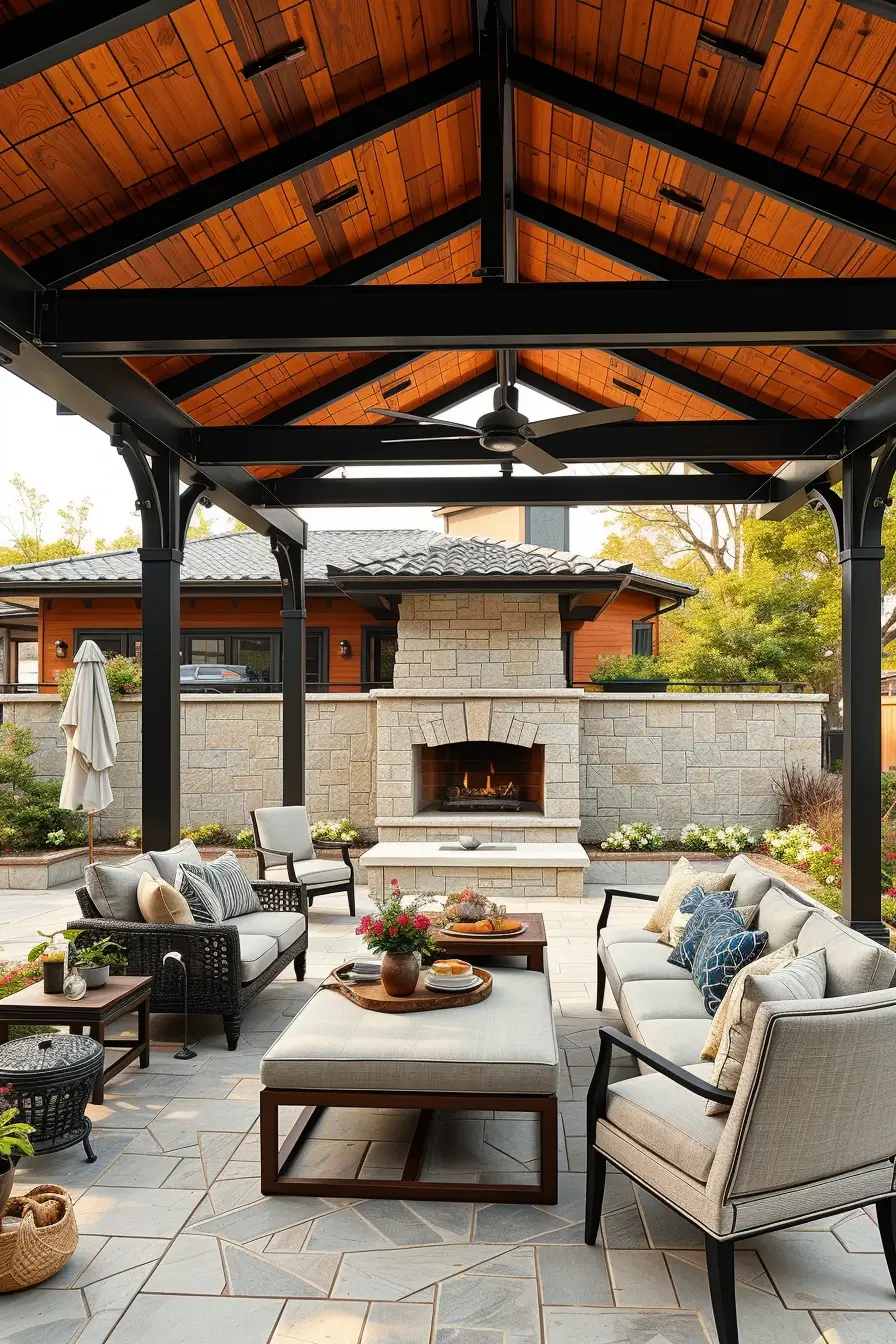
In these pergolas, I often pair warm wood beams with matte black metal frames, stone flooring, and soft textile canopies. Furniture choices include upholstered lounge seating, solid wood tables, and metal accent pieces. Each material contrasts yet complements the others, resulting in a layered, cohesive environment.
From my experience, Elle Decor frequently emphasizes material contrast as a hallmark of high-end outdoor design. I believe this approach allows pergolas to feel curated and intentional rather than mass-produced or generic.
What I would add is careful attention to material transitions. Clean junctions, concealed fasteners, and consistent finishes are essential to maintain a polished, professional look.
19. Experimental Pergola Designs For Creative Homeowners
For homeowners seeking creative, unusual, and unique pergolas, experimental designs are becoming increasingly visible in pergola ideas 2026. These pergolas challenge traditional forms through asymmetry, unconventional layouts, or innovative structural solutions. I see them as expressions of personality rather than purely functional elements.
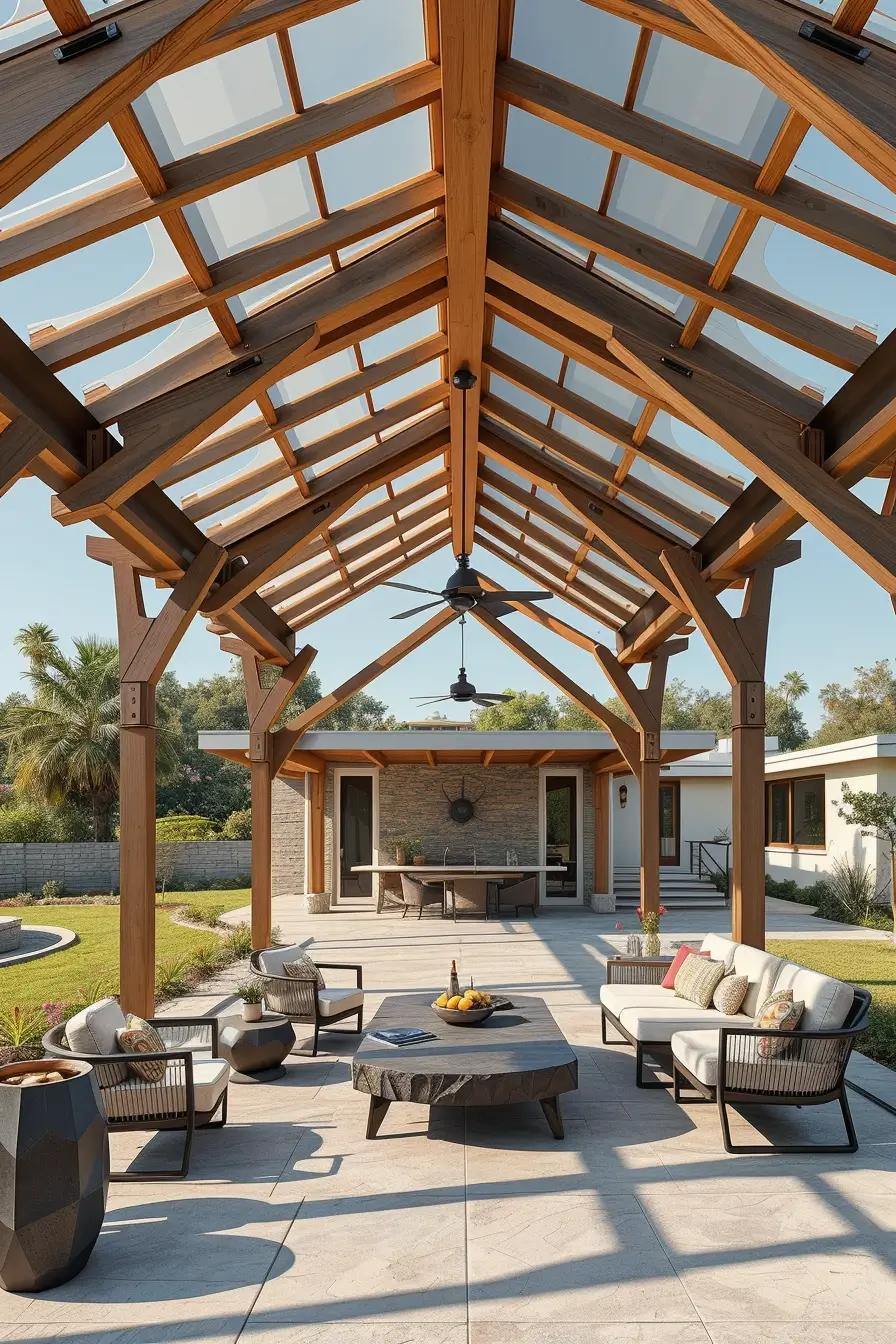
In experimental pergolas, furniture is often modular or custom-designed to complement the structure. I incorporate sculptural seating, movable platforms, and flexible shading systems. Materials may include translucent panels, perforated metal, or unconventional wood arrangements, all contributing to a bold visual identity.
From my professional standpoint, design platforms like Dezeen showcase how experimentation drives innovation in outdoor architecture. I believe these pergolas work best when the homeowner is fully engaged in the design process and open to long-term creative expression.
What I would add is professional engineering consultation early in the design phase. Experimental forms require structural precision to ensure safety and longevity without compromising artistic intent.
20. Pergolas Designed As Outdoor Lounge Statements
I increasingly see pergolas designed as outdoor lounge statements rather than secondary features. In pergola ideas 2026, these pergolas function as full-scale living environments, centered around relaxation, social interaction, and comfort. I approach them as outdoor living rooms with clear zoning and intentional flow.
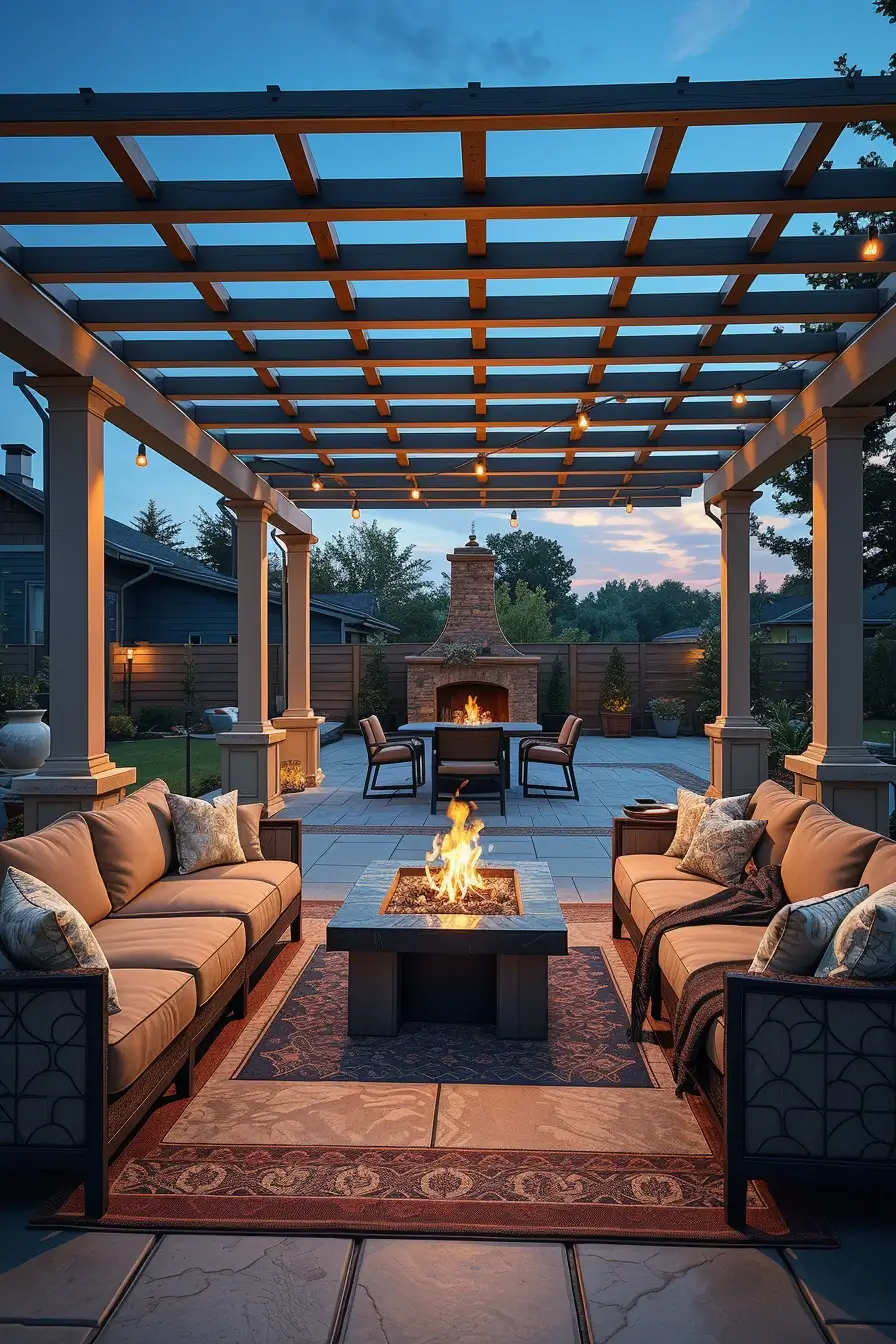
In these designs, I include deep lounge sofas, coffee tables, integrated fireplaces or fire pits, and layered lighting. Upholstery, cushions, and rugs are chosen for durability while maintaining a refined appearance. The pergola structure itself often frames the lounge area, enhancing intimacy and comfort.
From my experience, Better Homes and Gardens often emphasizes comfort-driven outdoor design, and I fully align with this philosophy. When designed correctly, these pergolas become year-round gathering spaces rather than seasonal features.
What I would add is weather-adaptive elements such as adjustable screens or heating solutions. These features extend usability and ensure the pergola remains inviting across different climates and seasons.
21. High-Contrast Pergola Designs For Dramatic Visual Impact
I see high-contrast pergola designs as one of the strongest visual trends shaping outdoor spaces in 2026. These pergolas rely on bold combinations such as dark metal frames paired with light stone flooring or pale outdoor textiles. This contrast is not only aesthetic but practical, as darker structural elements visually ground the pergola while lighter finishes keep the space feeling open and inviting. I often recommend this approach for homeowners who want their pergola to stand out as a deliberate architectural feature rather than a background element.
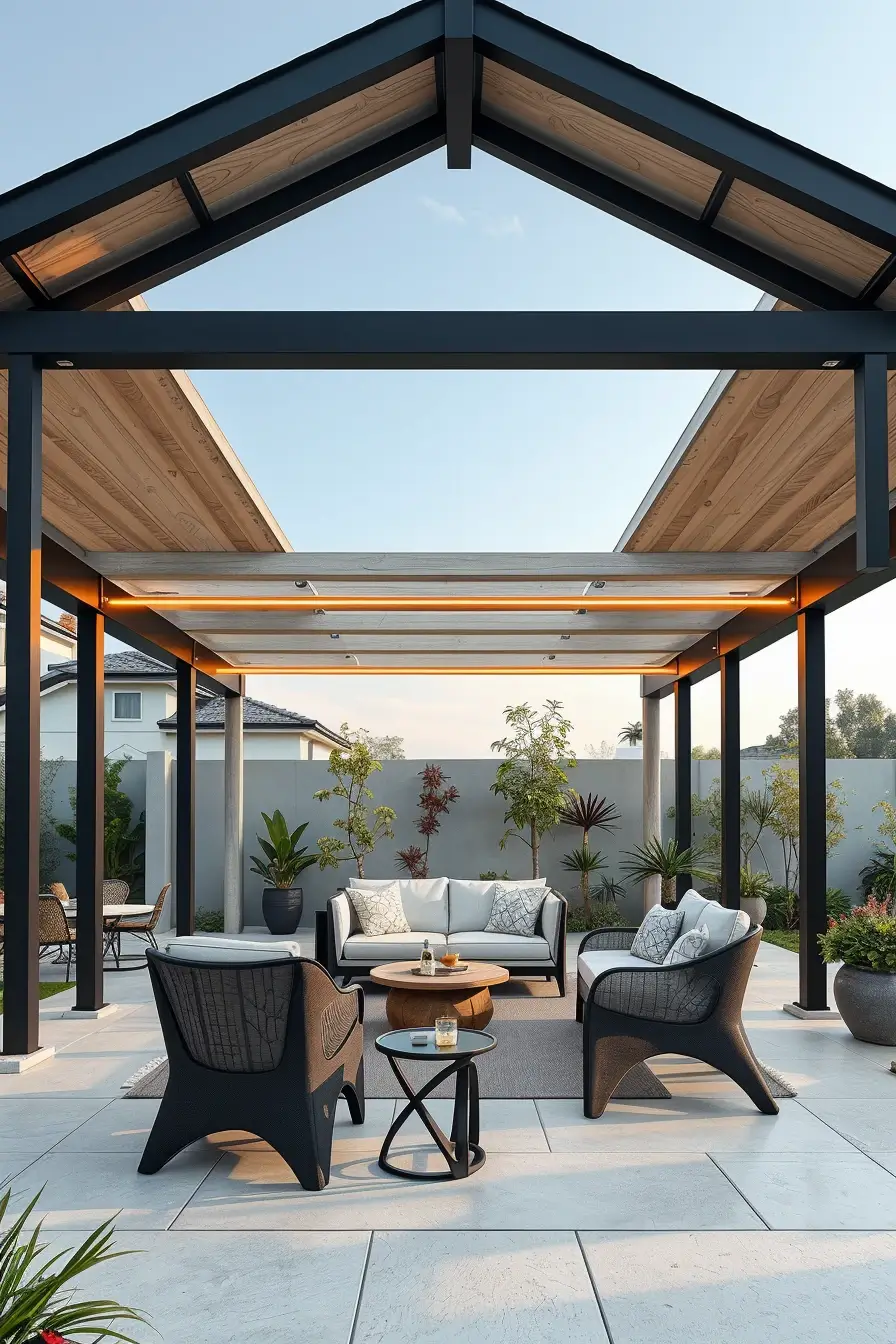
From a design perspective, I focus on using powder-coated steel or aluminum in charcoal or matte black for the structure, combined with light wood ceilings, porcelain pavers, or polished concrete floors. Outdoor sofas in neutral tones, sculptural lounge chairs, and minimalist coffee tables work especially well here. I include integrated LED strip lighting along beams to enhance the contrast after sunset, creating depth without overwhelming the space.
In my experience, designers featured in Architectural Digest frequently emphasize contrast as a tool for clarity in outdoor design, and I agree with that philosophy. A pergola with clear contrast feels intentional and timeless rather than decorative. If anything is missing in these designs, it is often soft landscaping. I always suggest adding planters with greenery or ornamental grasses to soften the sharp lines and complete the composition.
22. Sustainable Pergola Concepts With A Modern Aesthetic
Sustainability is no longer optional in pergola design, and in 2026 I see it fully integrated into modern aesthetics. I approach sustainable pergolas as systems rather than standalone structures, combining renewable materials, energy-efficient features, and long-term durability. These pergolas are ideal for homeowners who value environmental responsibility without compromising on contemporary style.
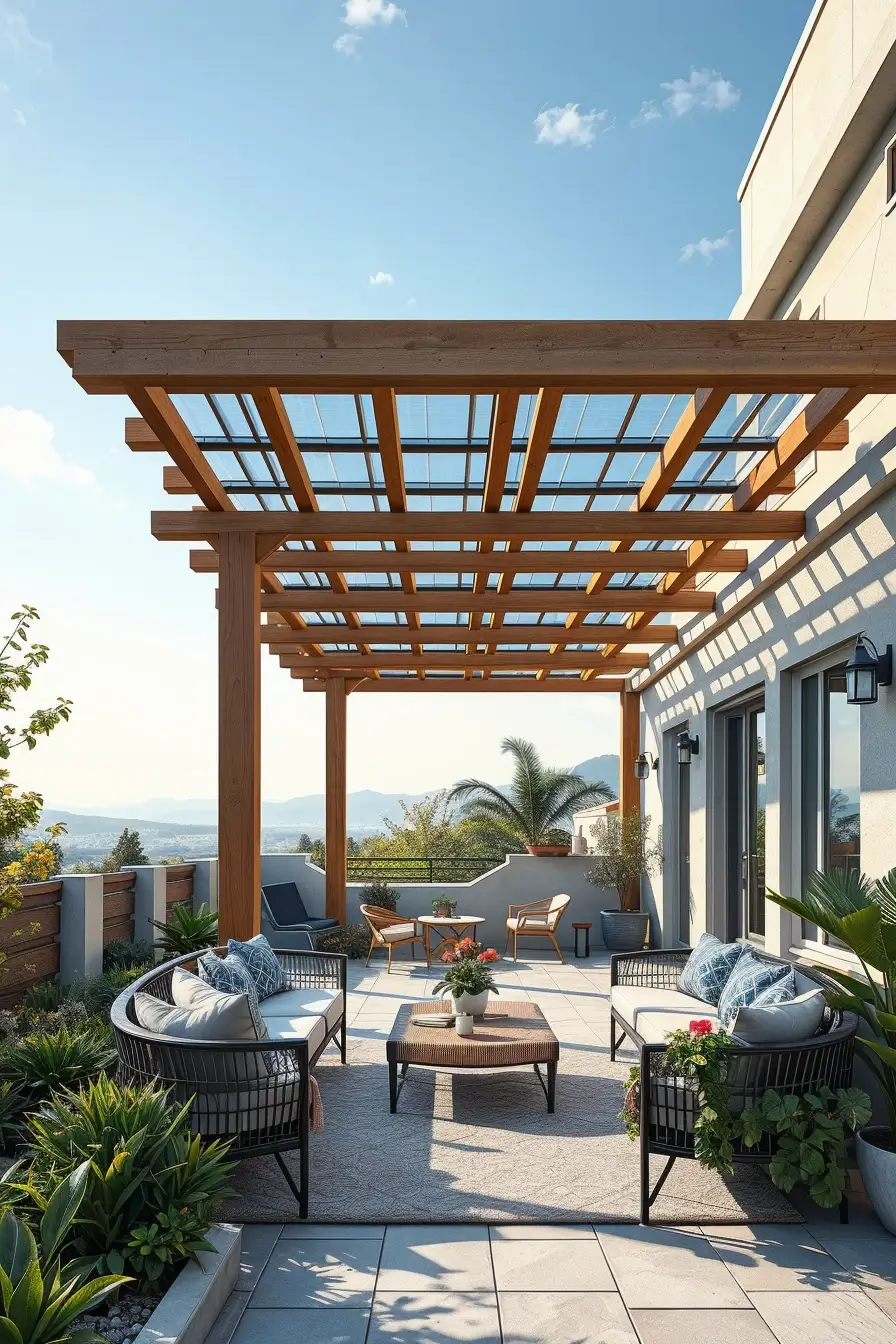
I usually specify FSC-certified wood, recycled aluminum, or composite materials that resist weathering while reducing environmental impact. Solar-integrated pergola roofs, rainwater collection channels, and adjustable louvers are elements I regularly include. Furniture choices tend toward modular outdoor seating made from recycled fabrics, paired with low-maintenance tables and planters designed for native plants.
Personally, I find that sustainable pergolas feel more future-proof than trend-driven designs. Publications like Dwell often highlight how sustainability enhances both property value and daily comfort, and I see this reflected in real projects. What is often missing from these pergolas is thoughtful lighting design.
I always recommend warm solar-powered lighting to balance the technical features with a welcoming atmosphere.
23. Pergolas With Built-In Seating And Functional Design
Built-in seating transforms a pergola from a visual structure into a truly functional outdoor room. In 2026, I see pergolas designed with integrated benches, corner seating, and even dining banquettes that maximize usable space. This approach is especially practical for smaller patios or gardens where every square meter matters.
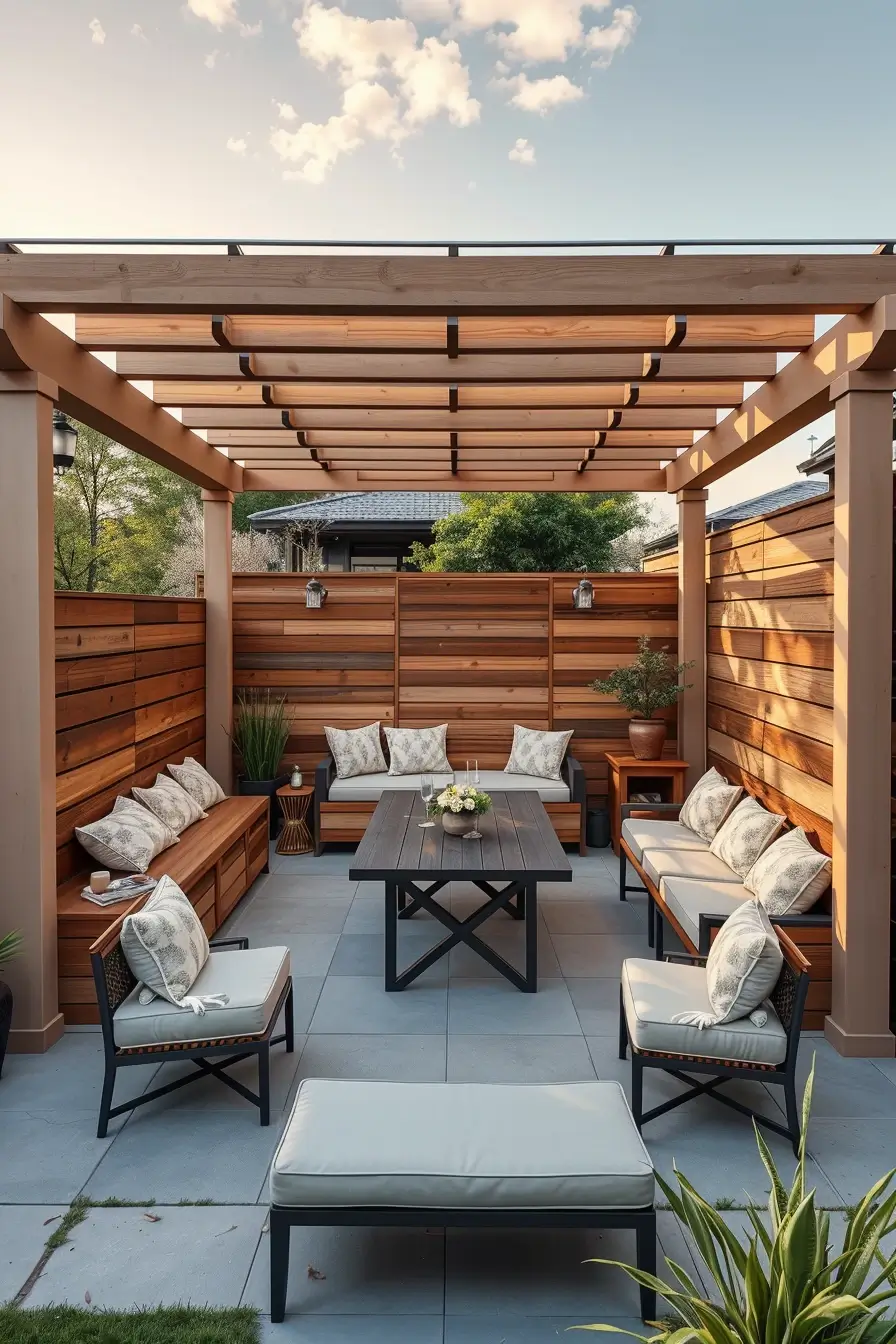
I design these pergolas with seating that follows the structure’s geometry, often using wood or stone bases topped with weather-resistant cushions. Storage compartments beneath benches are a key detail I include, allowing homeowners to store pillows or outdoor accessories discreetly. A central dining table or fire feature anchors the seating arrangement and encourages social interaction.
From my professional perspective, this type of pergola aligns with advice from Better Homes and Gardens, which emphasizes multi-functional outdoor spaces. Built-in seating creates a sense of permanence and cohesion. If anything needs improvement in these designs, it is flexibility. I often suggest adding movable accent chairs or side tables to adapt the space for different occasions.
24. Asymmetrical Pergola Designs For A Contemporary Edge
Asymmetry is becoming a defining feature of contemporary pergola design in 2026. I use asymmetrical layouts to create visual movement and to break away from traditional grid-based structures. These pergolas feel dynamic and architectural, making them ideal for modern homes or minimalist landscapes.
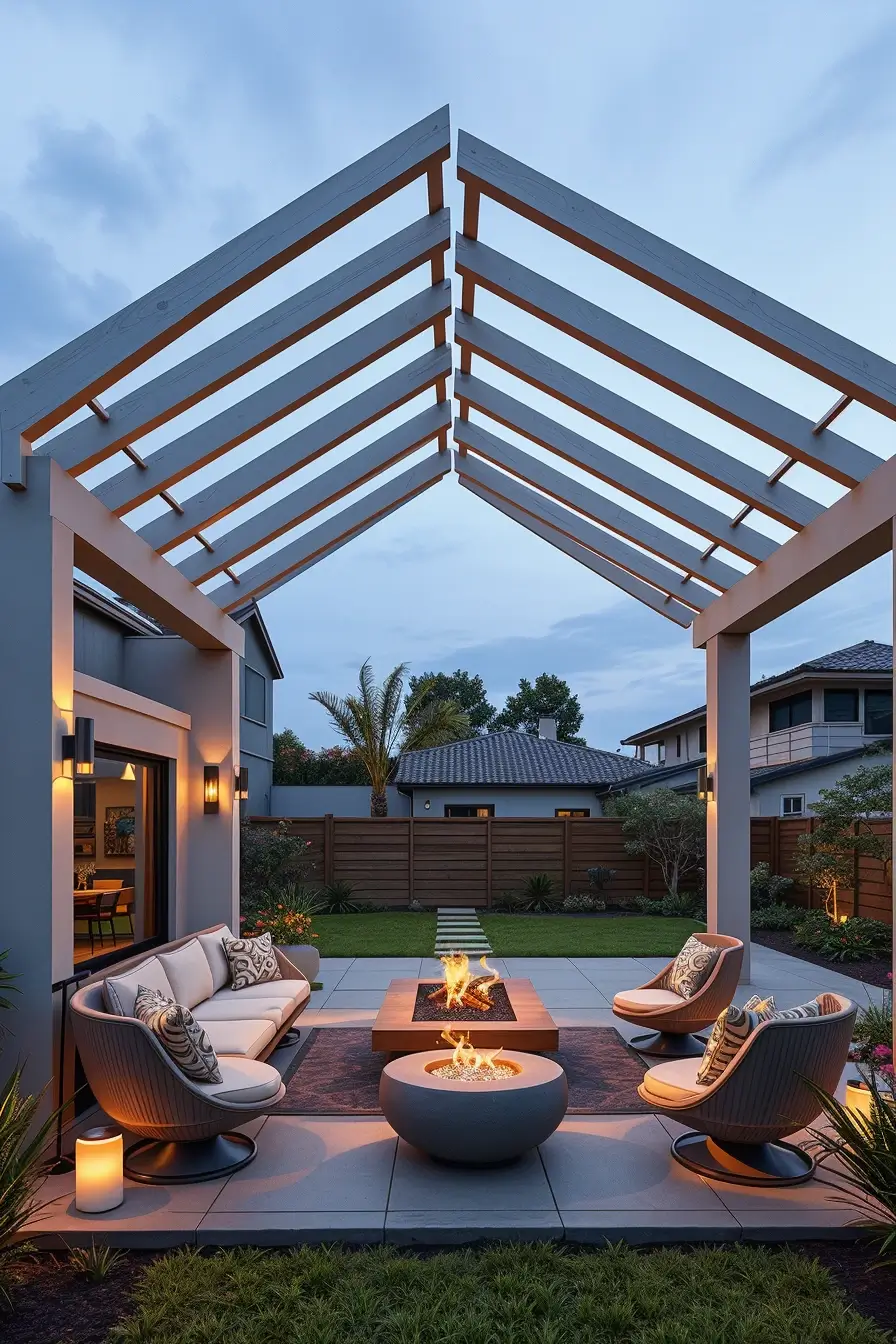
In these designs, I focus on offset beams, varying column heights, and partially open roofs. Furniture tends to be low-profile and sculptural, such as curved outdoor sofas, statement lounge chairs, and linear fire pits. I also incorporate layered lighting to highlight the irregular geometry without making the space feel chaotic.
In my experience, asymmetrical pergolas appeal to clients who want something truly unusual and expressive. Designers featured in Dezeen often note that asymmetry adds character without sacrificing function, and I fully agree. What is sometimes missing is a strong focal element, so I recommend adding a bold outdoor rug or a statement coffee table to anchor the design.
25. Pergolas That Act As The Focal Point Of The Landscape
In 2026, pergolas are increasingly designed as the visual centerpiece of the entire landscape. I approach these pergolas as outdoor pavilions that guide how the surrounding garden or patio is organized. Placement, scale, and sightlines are critical, ensuring the pergola draws attention from multiple angles.
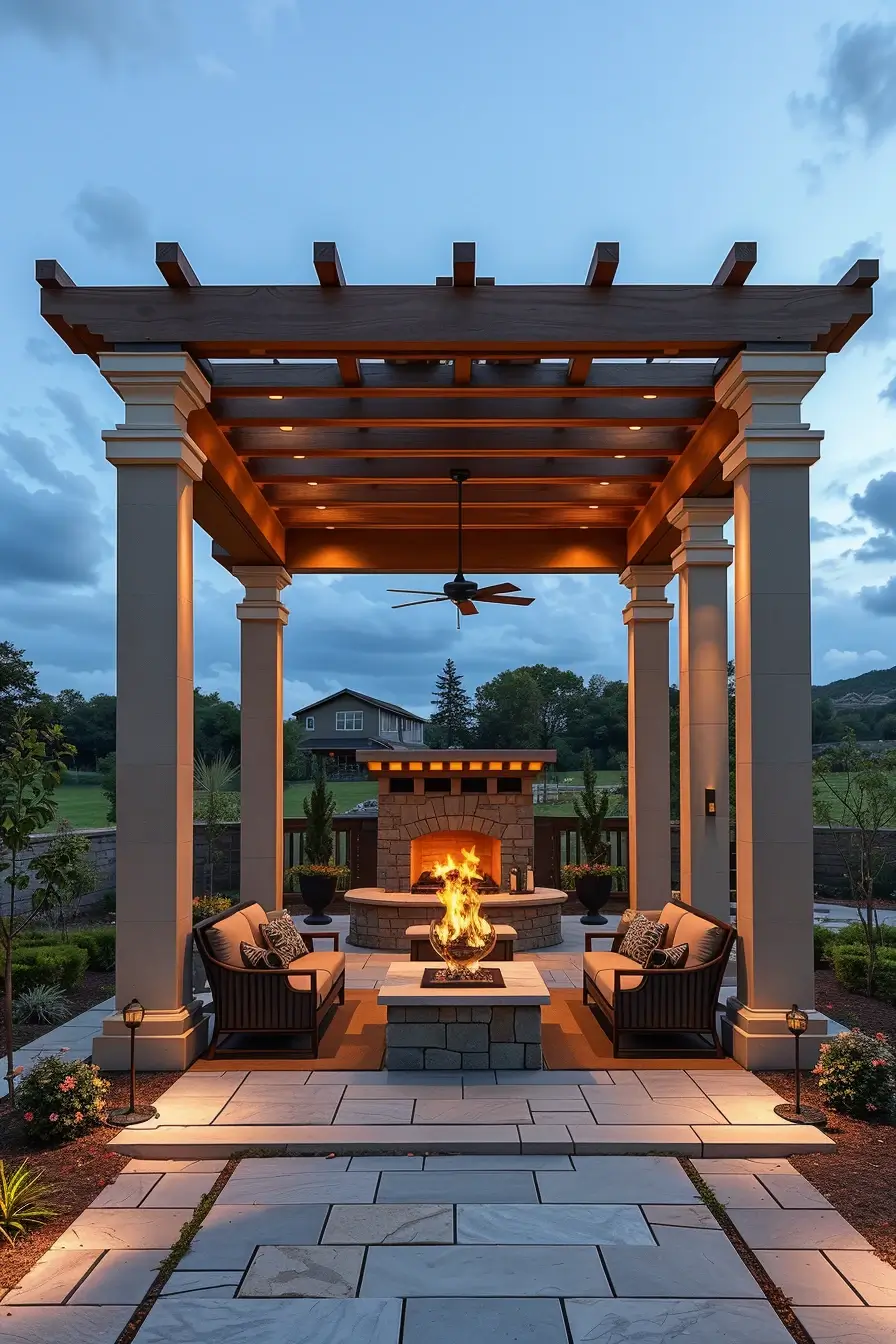
I typically design these focal pergolas with distinctive materials such as textured concrete columns, oversized timber beams, or architectural metal frames. Furnishings are curated rather than abundant, often including a central seating group, sculptural lighting, and a fire feature. The surrounding landscape is kept intentionally simple to avoid competing with the pergola.
From my professional standpoint, this strategy aligns with recommendations from Landscape Architecture Magazine, which emphasizes hierarchy in outdoor design. A pergola that serves as a focal point brings order and clarity to large outdoor spaces. If something is missing, it is often weather protection. I suggest adding retractable shades or adjustable louvers to ensure year-round usability.
26. Designer Pergolas For Rooftops And Urban Spaces
I consider rooftop and urban pergolas one of the most exciting directions in pergola ideas 2026, especially as outdoor space becomes more valuable in cities. These pergolas are designed to feel like elevated outdoor rooms rather than temporary structures. I focus on compact proportions, wind-resistant construction, and layouts that maximize views while maintaining privacy. In dense urban environments, pergolas help define a calm, functional retreat above the city.
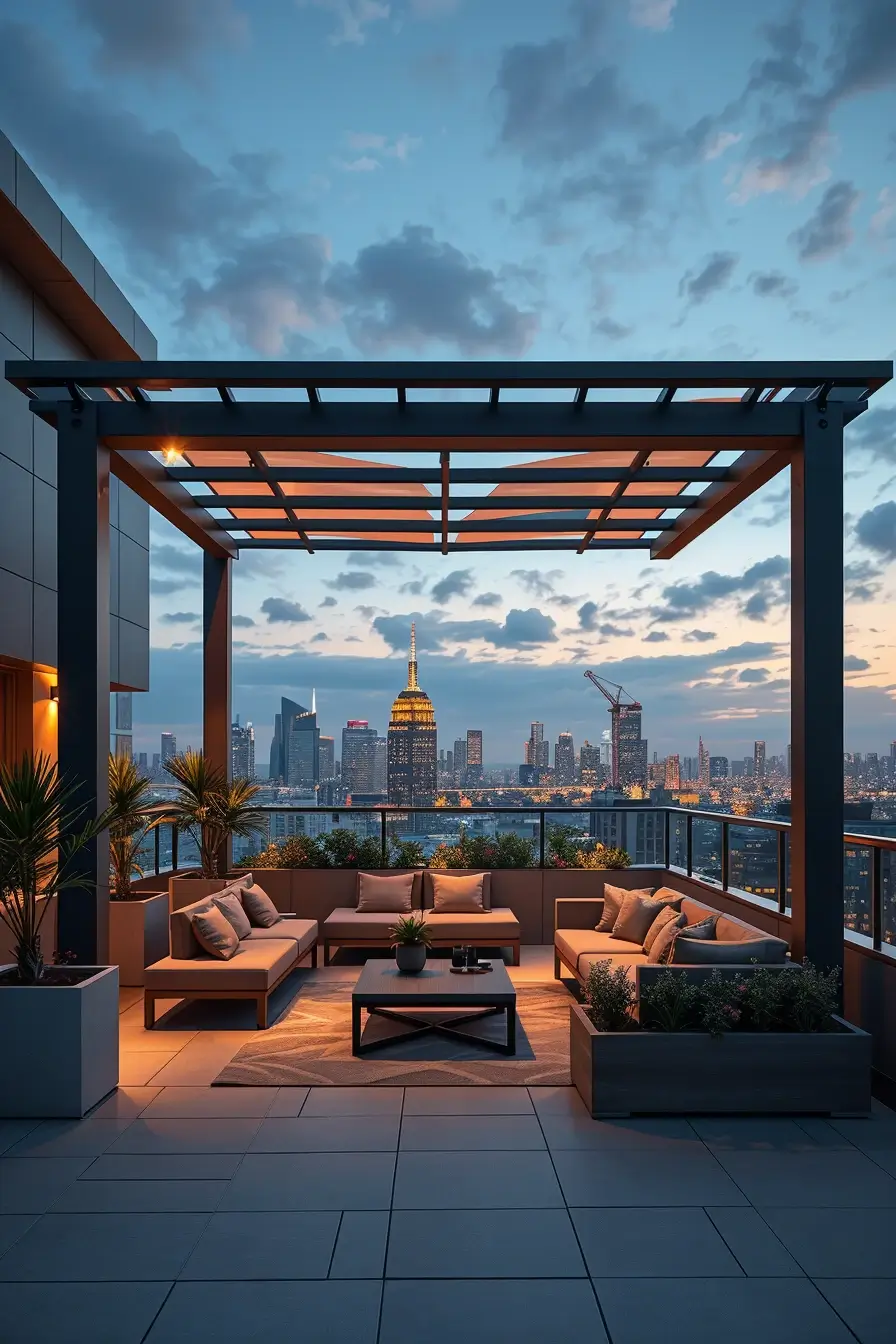
In my designs, I rely on lightweight aluminum or steel frames combined with retractable canopies or slatted roofs. Built-in planters, privacy screens, and modular seating are essential elements. I often include low-profile sofas, outdoor rugs, and slim coffee tables to keep the space visually open. Integrated lighting and heating systems ensure the pergola remains usable well into the evening and across seasons.
From my experience, media like The New York Times Real Estate section frequently highlights rooftop spaces as extensions of interior living, and I design with that mindset. A well-designed rooftop pergola feels intentional and permanent. What is often missing in these spaces is acoustic comfort, so I recommend adding textured wall panels or greenery to soften city noise.
27. Statement Pergolas For Poolside And Garden Areas
Poolside and garden pergolas in 2026 are designed to make a bold statement rather than blend in. I approach these pergolas as visual anchors that enhance relaxation while offering shade and structure. Their placement is strategic, often framing pool views or defining lounge zones within large gardens.
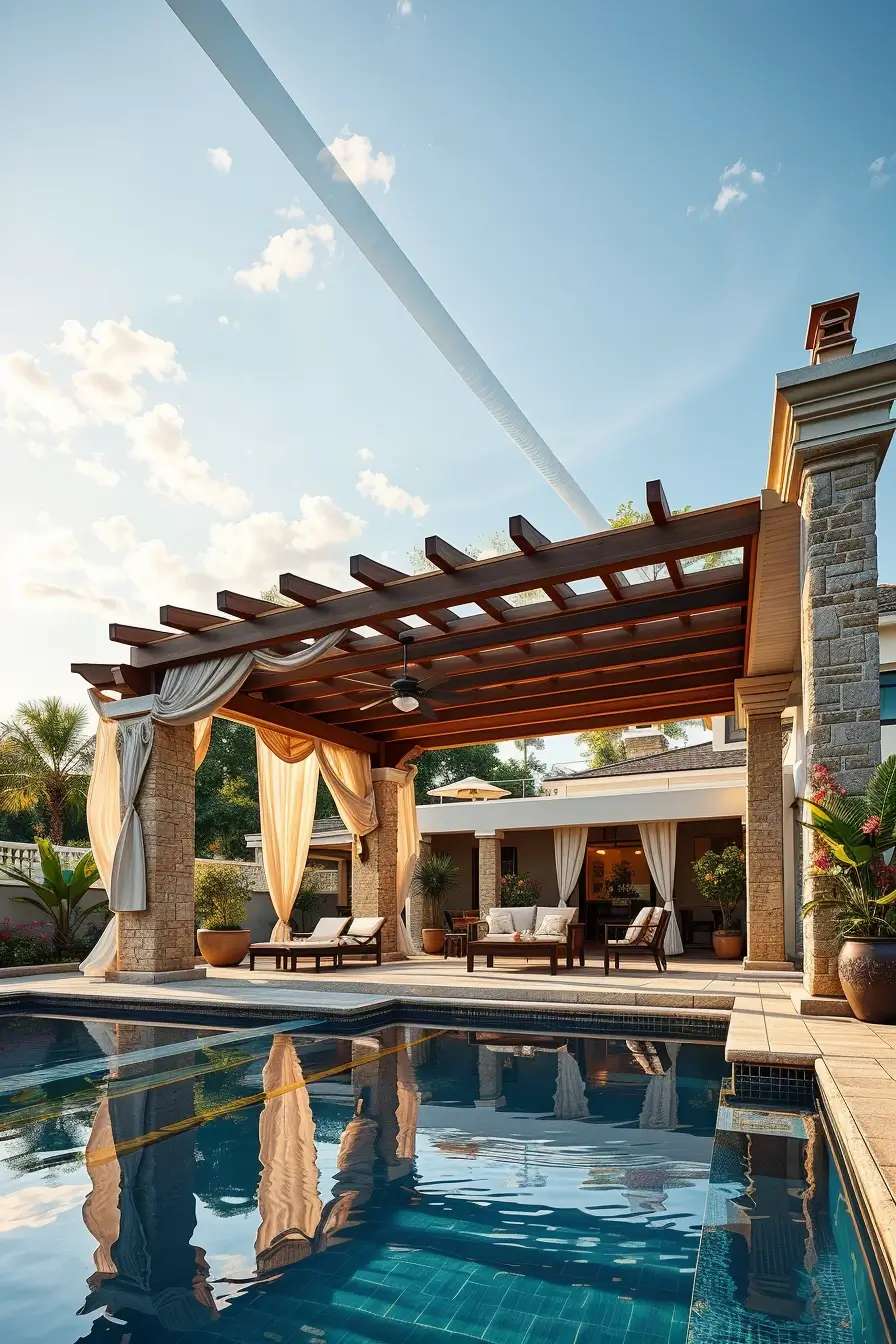
I typically design these pergolas using expressive materials such as natural stone columns, wide timber beams, or sculptural metal frames. Furniture includes sun loungers, deep seating sofas, and side tables in durable outdoor finishes. I also integrate sheer outdoor curtains or adjustable screens to control sunlight and privacy throughout the day.
Personally, I find that poolside pergolas benefit from restraint. As noted by House Beautiful, outdoor spaces near water should feel calm and cohesive. I always advise limiting decorative excess and focusing on comfort. If something is missing, it is often shade flexibility, which is why I recommend motorized louvers or fabric canopies.
28. Innovative Pergola Materials Shaping 2026 Trends
Material innovation is at the core of modern pergola design in 2026. I see pergolas evolving through the use of advanced composites, textured metals, and hybrid materials that combine durability with refined aesthetics. These materials allow for slimmer profiles, longer spans, and cleaner detailing.
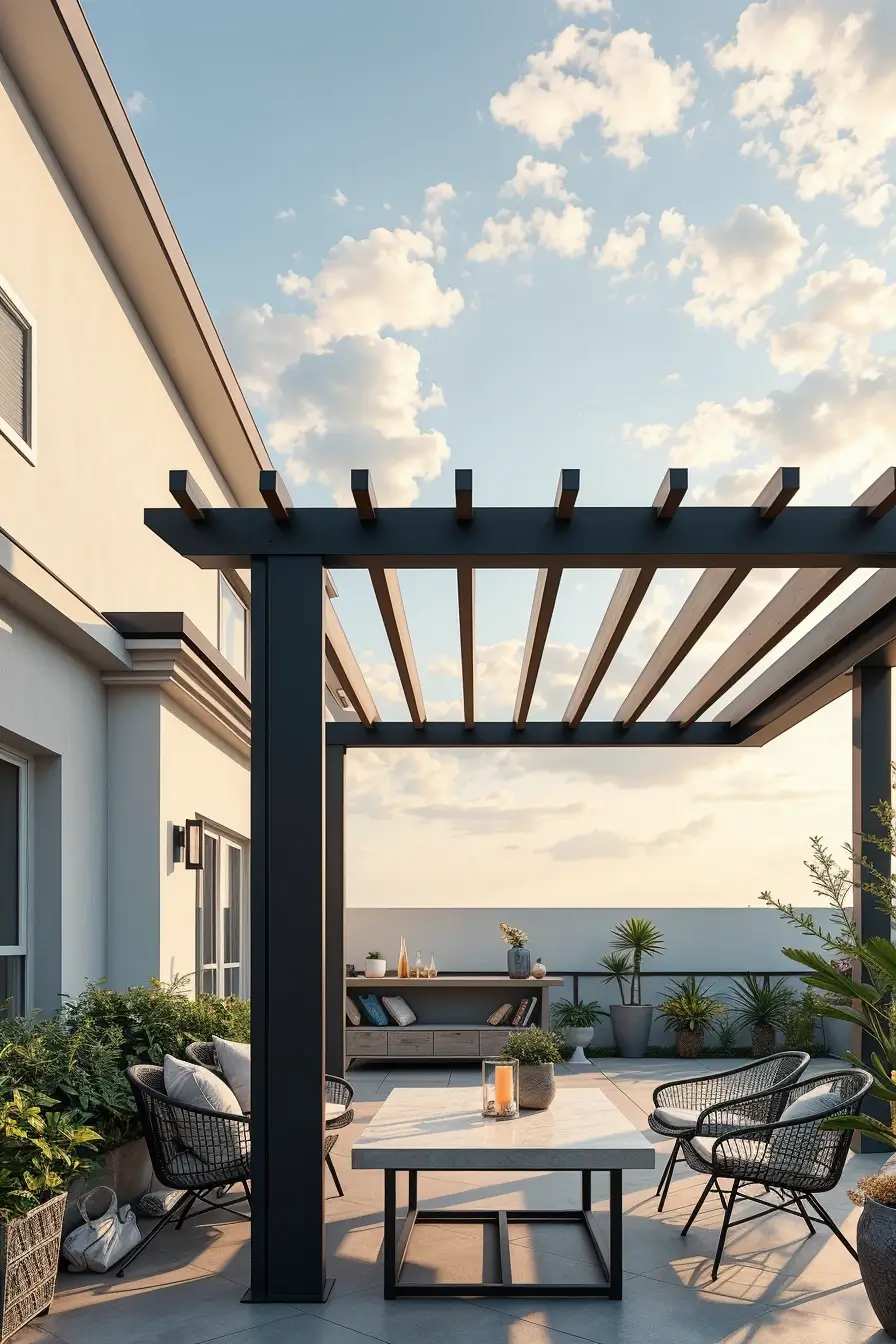
In my projects, I often specify aluminum with wood-look finishes, glass-reinforced concrete, or engineered timber that resists moisture and UV exposure. Furniture choices are intentionally minimal to highlight the structure itself, including streamlined seating, floating benches, and integrated lighting elements that emphasize material textures.
From my professional perspective, designers featured in Interior Design magazine consistently stress material performance as much as appearance. I fully agree with this approach. What is sometimes overlooked is tactile comfort, so I recommend pairing innovative materials with soft textiles and cushions to balance visual strength with usability.
29. Custom-Made Pergolas For One-Of-A-Kind Outdoor Design
Custom-made pergolas represent the most designer and unique pergolas trend for 2026. I design these pergolas without predefined templates, tailoring every dimension, material, and feature to the client’s lifestyle and architecture. This approach ensures the pergola feels like a natural extension of the home rather than an add-on.
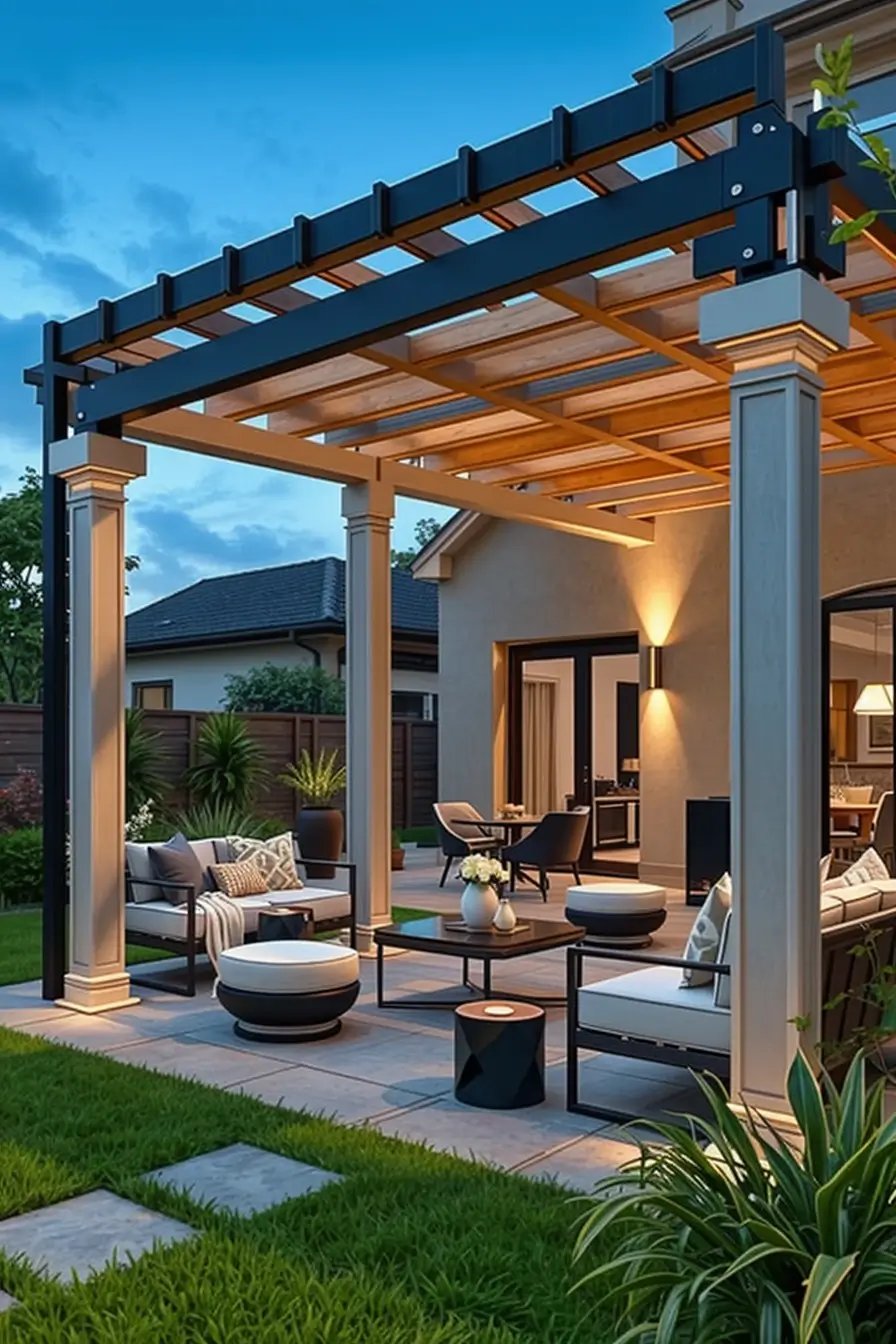
I work closely with clients to select bespoke materials, integrated seating, lighting, and even outdoor kitchens or fireplaces. Furniture is often custom-built as well, ensuring scale and proportions align perfectly. These pergolas frequently incorporate smart technology, such as automated shading and lighting controls.
In my experience, custom pergolas deliver the highest long-term satisfaction. Publications like Luxe Interiors + Design regularly highlight custom outdoor structures as investments rather than trends. If anything is missing, it is future adaptability, so I always suggest designing with modular components that can evolve over time.
30. The Future Of Pergola Design In 2026 Outdoor Living
Looking ahead, I see pergola design in 2026 focusing on flexibility, integration, and emotional comfort. Pergolas are no longer static structures; they adapt to weather, lifestyle changes, and evolving outdoor habits. I design future-ready pergolas as multifunctional environments that support dining, relaxation, and entertainment.
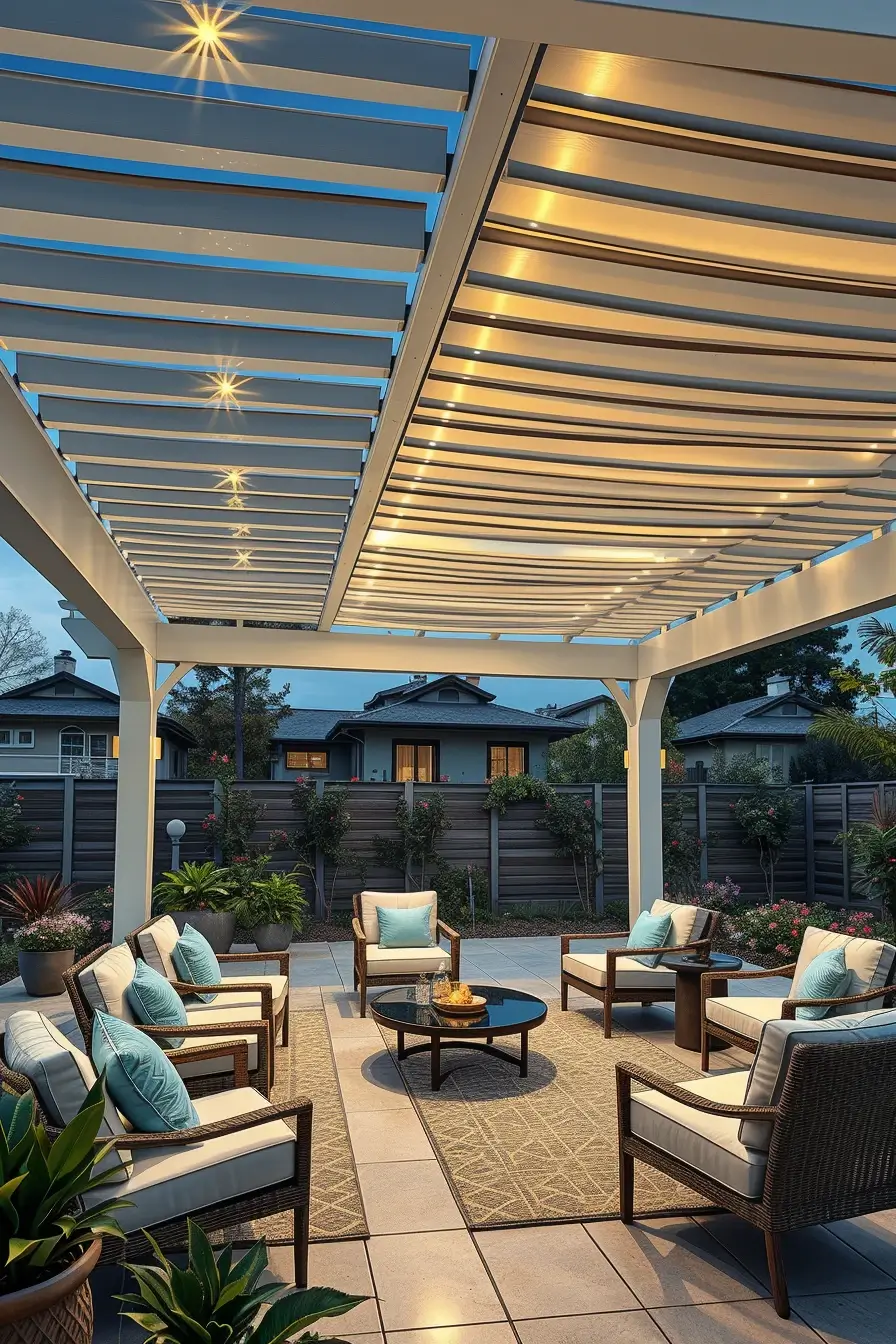
I emphasize adaptable roofs, integrated technology, and furniture that transitions easily between uses. Materials are chosen for longevity, while layouts remain open and fluid. Lighting, heating, and shading systems are discreetly embedded to preserve a clean aesthetic.
From my professional standpoint, the future of pergolas lies in balance. As highlighted by Architectural Digest, outdoor living should feel as considered as interior design. I believe the missing element in many projects is long-term planning, and I always encourage clients to think beyond trends toward lasting comfort and usability.
Pergola ideas 2026 highlight a new era of outdoor design where creativity, innovation, and individuality take center stage. These modern pergolas are more than structures — they are architectural features that shape how outdoor spaces are experienced and enjoyed. By embracing bold forms, designer details, and forward-looking concepts, pergolas in 2026 transform gardens, patios, and rooftops into stylish extensions of modern living.