Outdoor Vertical Garden Ideas 2026 are redefining the way we design and experience outdoor spaces. As homeowners look for smarter, greener, and more space-efficient solutions, vertical gardens have become one of the most innovative landscaping trends of the year. Whether you have a compact balcony, a small backyard, a courtyard, or a spacious patio, growing upward instead of outward allows you to maximize every square meter while creating a lush, eye-catching focal point.
In 2026, outdoor vertical gardens go far beyond simple wall planters. Modern designs incorporate modular systems, smart irrigation technology, sustainable materials, edible plant walls, and climate-adapted greenery that thrives year-round. From minimalist living walls and rustic wooden pallet arrangements to tropical statement panels and herb-filled kitchen gardens, vertical landscaping blends beauty with functionality.
This article explores the most inspiring Outdoor Vertical Garden Ideas 2026, helping you transform blank walls, fences, and unused corners into vibrant green installations. Whether your goal is to enhance privacy, improve air quality, grow fresh produce, or simply elevate your outdoor decor, these creative concepts will guide you toward a stylish and sustainable outdoor upgrade.
1. Living Wall Designs For Modern Outdoor Spaces
When I design a living wall for a modern outdoor space, I always begin by considering architecture first. Clean lines, large sliding glass doors, and neutral patio finishes create the perfect backdrop for a structured green wall. In 2026, living wall outdoor systems are becoming more modular and architectural, often covering an entire exterior wall from floor to ceiling. I focus on balance, layering foliage textures such as ferns, ornamental grasses, trailing vines, and structured shrubs to create depth while maintaining a contemporary aesthetic.
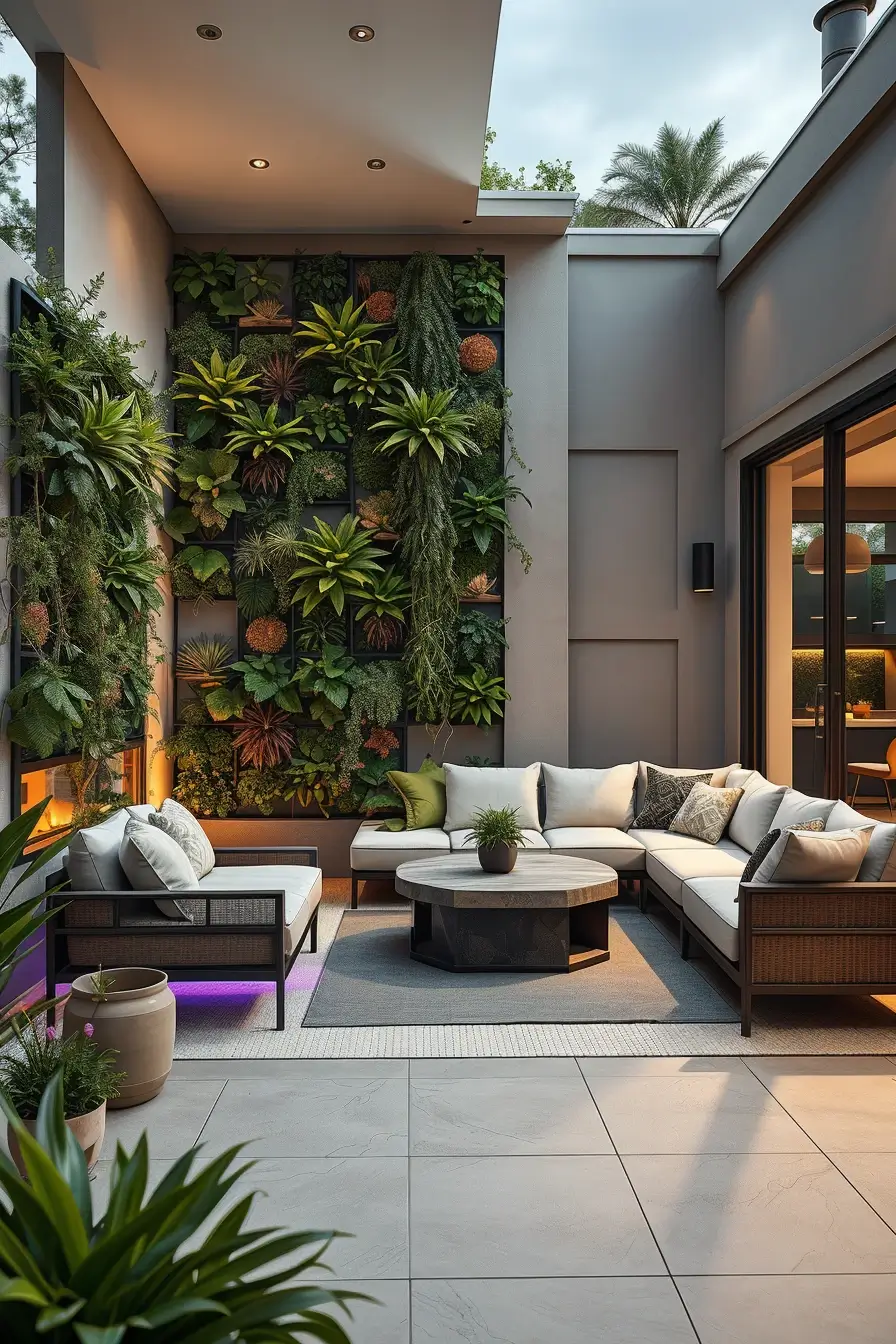
I typically include a built-in irrigation system, concealed metal framing, and a durable waterproof backing panel. A sectional outdoor sofa in weather-resistant fabric, a low concrete coffee table, and subtle LED strip lighting at the base of the wall complete the design. I recommend incorporating planters at ground level to visually connect the vertical surface with the patio floor. This integration ensures the vertical garden design feels intentional rather than decorative.
From my experience, Architectural Digest often highlights how greenery softens hard modern lines, and I strongly agree. A living wall not only enhances aesthetics but also improves microclimate conditions and privacy. I always advise clients to consult a horticulture specialist when selecting plant varieties for sun exposure and local climate.
What is often missing in these projects is seasonal planning. I recommend adding a mix of evergreen and seasonal flowering plants to maintain visual interest year-round, especially in climates with cold winters or hot summers.
2. Space-Saving Vertical Garden Ideas For Small Yards
In compact yards, every square meter matters. I use space-saving garden wall concepts to free up ground space while maximizing greenery. Narrow side yards, small courtyards, and townhouse patios benefit greatly from vertical planting systems attached to fences or exterior walls. By lifting plants upward, I create room for seating or a small dining area without overcrowding the space.
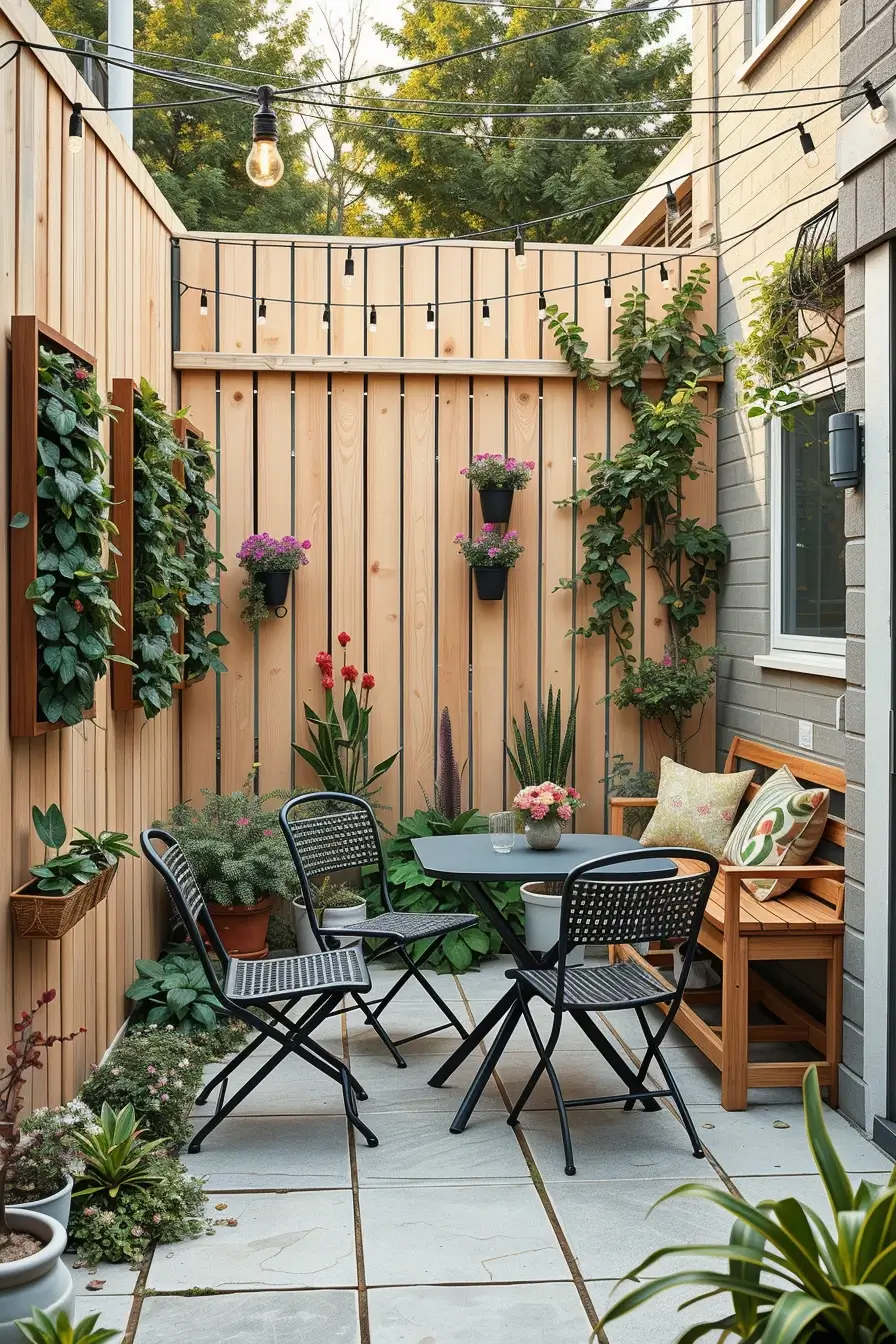
I prefer slim-profile wall planters, tiered shelving systems, or grid-mounted pots. A foldable bistro table, stackable chairs, and built-in bench seating with storage are practical additions. When working with small yards, I use lighter plant varieties such as herbs, trailing ivy, compact flowering plants, and climbing jasmine to avoid visual heaviness. The goal is to maintain openness while adding lushness.
Personally, I find that small spaces benefit most from thoughtful lighting. Soft wall sconces or string lights integrated around the vertical structure create warmth in the evenings. According to Better Homes & Gardens, layering lighting in small outdoor spaces increases both usability and perceived space, and I see this proven repeatedly in my projects.
What’s often overlooked is proper drainage. I always ensure that excess water is directed away from foundations and seating areas to avoid long-term structural issues.
3. Balcony Vertical Gardens For Urban Apartments
Urban balconies offer incredible opportunities for modern vertical garden solutions. When space is limited, I rely heavily on wall-mounted systems and railing planters to create privacy and greenery simultaneously. In 2026, balcony designs are leaning toward minimalist frames combined with abundant foliage for a soft, urban oasis feel.
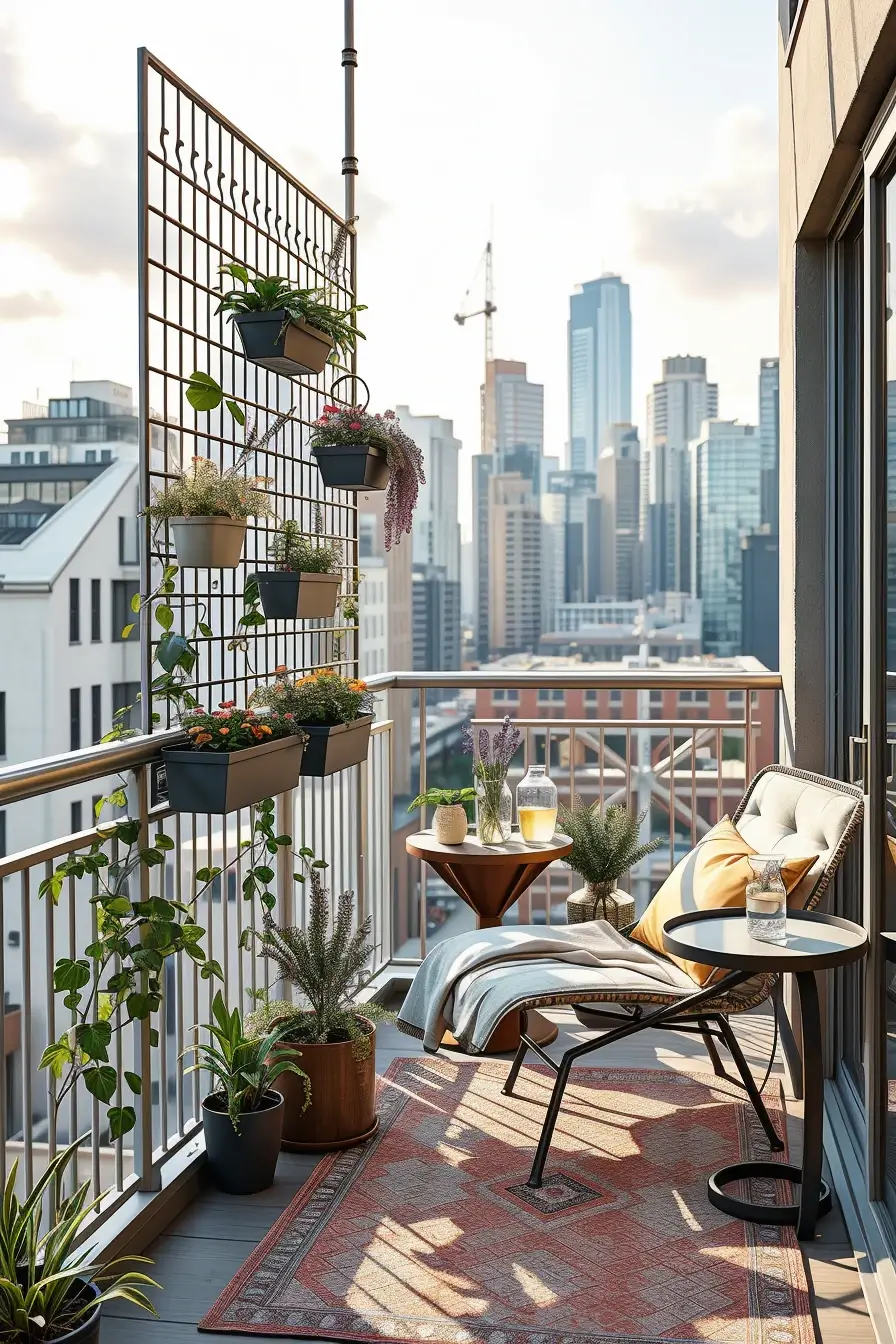
I usually incorporate slim metal grid panels secured to the wall, lightweight pots, and integrated drip irrigation. A compact outdoor lounge chair, small side table, and weather-resistant outdoor rug complete the space. I prefer layering trailing plants like pothos or ivy with upright plants such as lavender or small ornamental grasses to create dimension without overwhelming the balcony.
From my professional perspective, balcony vertical gardens significantly improve quality of life in dense cities. Publications like Dwell emphasize the importance of biophilic design in urban living, and I consistently see how greenery reduces stress and enhances relaxation. I always recommend selecting wind-resistant and sun-appropriate plants to ensure longevity.
What many people forget is weight capacity. I always advise checking balcony load limits before installing heavier systems, especially in older apartment buildings.
4. DIY Outdoor Vertical Garden Projects On A Budget
Not every vertical garden requires a large investment. I often design DIY-friendly projects that use affordable materials while still achieving a stylish look. A well-planned vertical garden design can be both economical and visually impressive when executed thoughtfully.
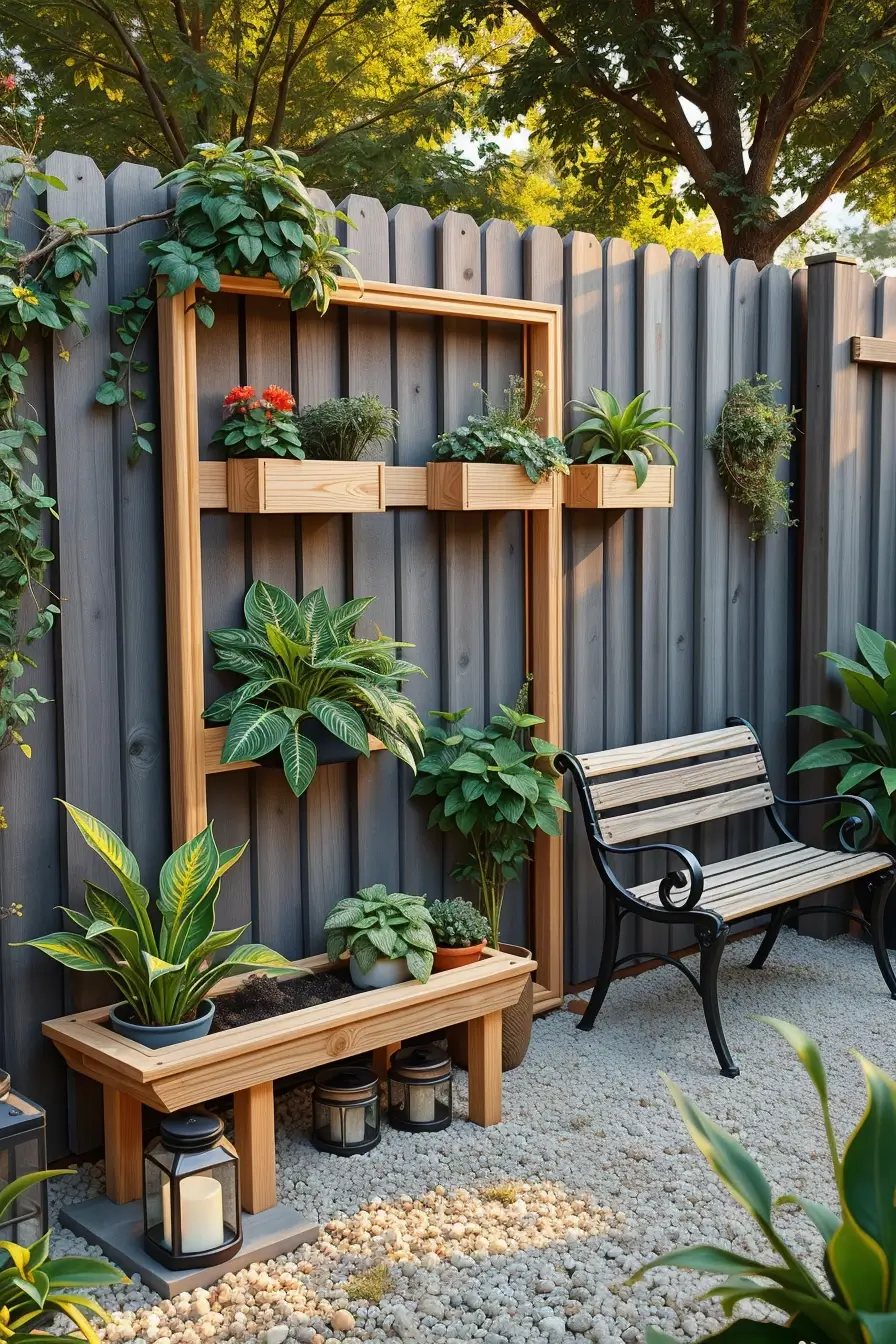
I commonly use wall-mounted planter boxes, repurposed shelving, or simple wooden frames combined with affordable nursery plants. Adding a small outdoor bench, gravel ground cover, and solar-powered lanterns creates a cozy atmosphere without high cost. I recommend choosing hardy, low-maintenance plants to reduce long-term expenses.
In my experience, budget projects succeed when simplicity leads the design. HGTV frequently highlights that thoughtful arrangement matters more than expensive materials, and I agree completely. Even a modest fence can become a striking green feature with proper plant placement.
What I would add here is a simple irrigation solution such as a manual drip hose system. Even in budget-friendly installations, consistent watering ensures plant health and prevents early replacement costs.
5. Wooden Pallet Vertical Garden Inspirations
Wooden pallet gardens remain one of the most versatile Outdoor Vertical Garden Ideas 2026. When treated properly for outdoor use, pallets offer a rustic yet modern framework that suits farmhouse, boho, and contemporary patios alike. I use them against fences, brick walls, or even as freestanding partitions.
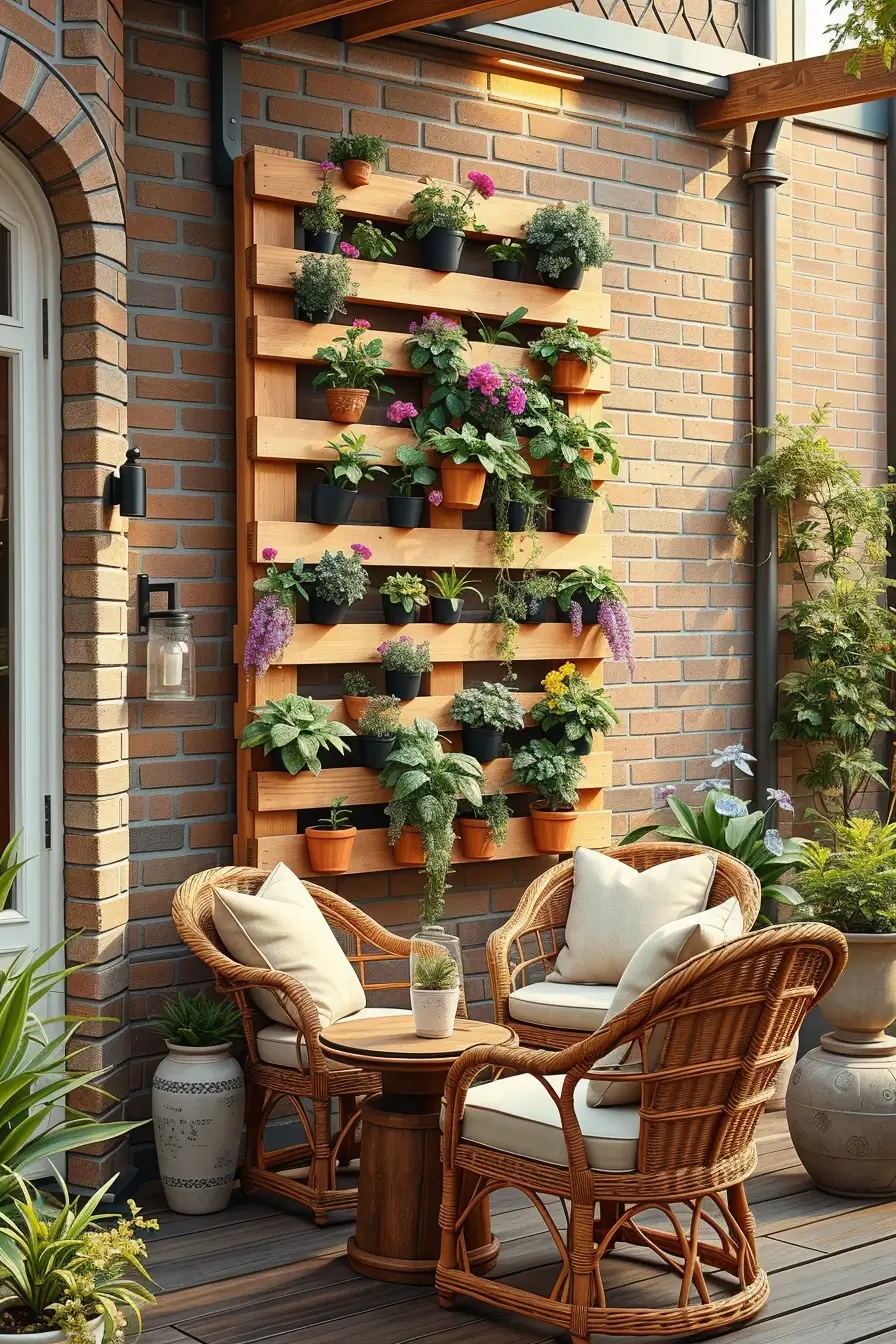
I typically line the back with landscape fabric, create planting pockets, and secure the pallet firmly to a wall or frame. Paired with rattan patio furniture, neutral cushions, and ceramic pots, the space feels warm and inviting. Mixing herbs, cascading flowers, and leafy greens adds visual contrast and functionality.
Personally, I appreciate how adaptable pallet gardens are. They can be painted in muted tones for a modern look or left natural for organic charm. Better Homes & Gardens often recommends sealing wood for longevity, and I always follow this practice to prevent rot and weather damage.
What is sometimes missing is structural reinforcement. I recommend adding additional wall anchors or a support frame to ensure safety, especially when soil and plants add significant weight.
6. Metal Frame Vertical Garden Structures For Contemporary Homes
When I design a modern vertical garden for a contemporary home, I often turn to metal frame structures because they provide clean geometry and long-term durability. Powder-coated steel or алюминиевые конструкции allow me to create a sharp architectural grid that complements glass façades, concrete patios, and minimalist landscaping. In 2026, I see more homeowners choosing black or charcoal frames that contrast beautifully with lush greenery, making the vertical garden design feel intentional and sculptural rather than decorative.
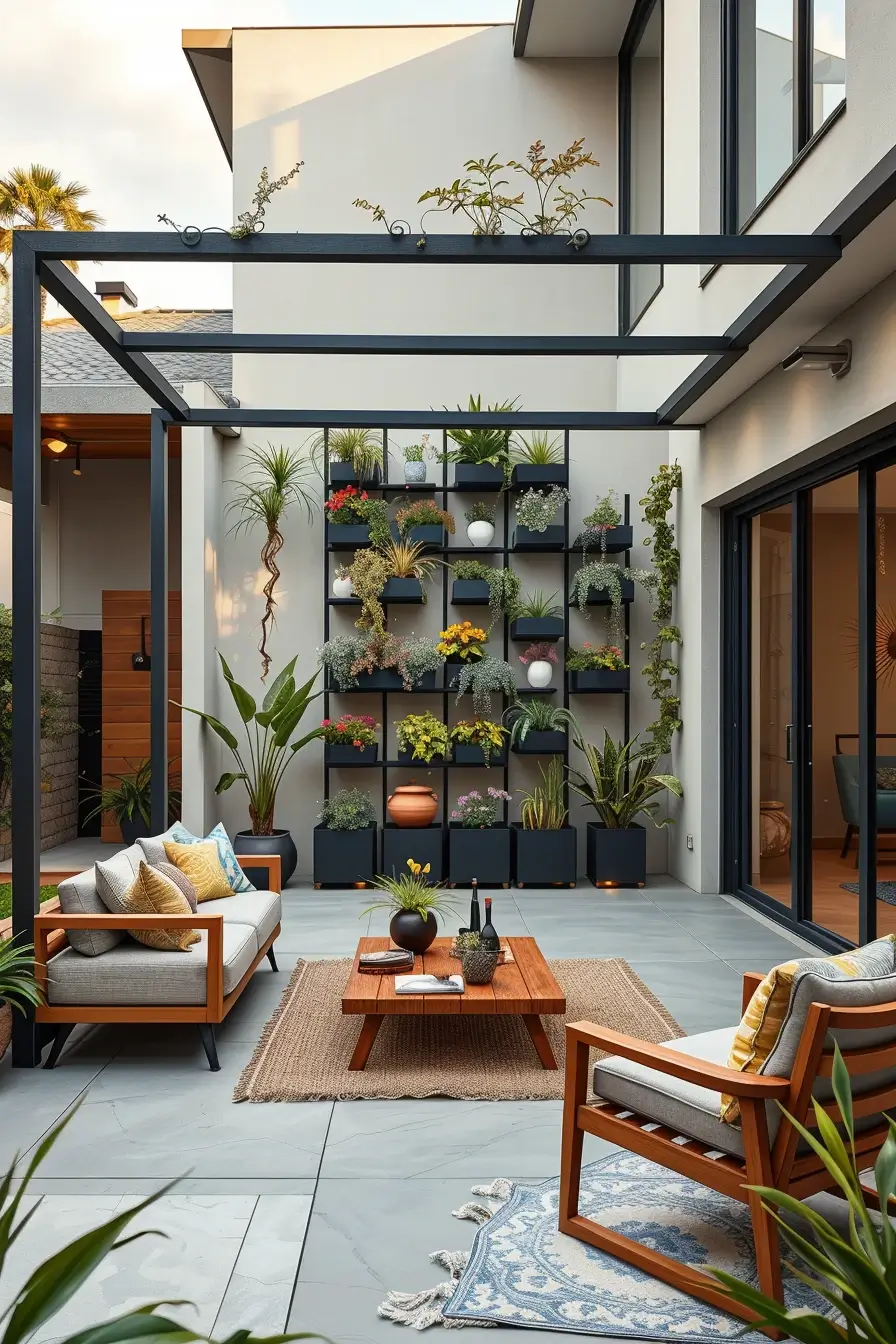
I typically incorporate modular metal panels with removable planting trays for easy maintenance. Beneath the structure, I like to place a streamlined outdoor sofa, a teak coffee table, and subtle ground lighting to enhance evening ambiance. Integrated drip irrigation hidden within the frame ensures consistent watering without visible tubing. I also pay attention to plant selection, combining structured plants like boxwood or ornamental grasses with trailing varieties to soften the rigid metal lines.
From my professional experience, contemporary outdoor spaces benefit from contrast. As frequently noted in Dwell magazine, mixing industrial materials with natural elements creates visual harmony. I’ve found that metal frames provide structural clarity, while greenery adds warmth and life.
What I always emphasize is corrosion resistance. Choosing weatherproof coatings and stainless hardware is essential, especially in humid or coastal climates, to ensure longevity and reduce maintenance costs.
7. Hanging Pocket Planters For Lush Outdoor Walls
Hanging pocket systems are one of the most flexible Outdoor Vertical Garden Ideas 2026, especially for transforming blank exterior walls into lush focal points. I use fabric or felt pocket panels when clients want a softer, organic look that feels layered and abundant. These systems work exceptionally well in covered patios or semi-shaded areas.
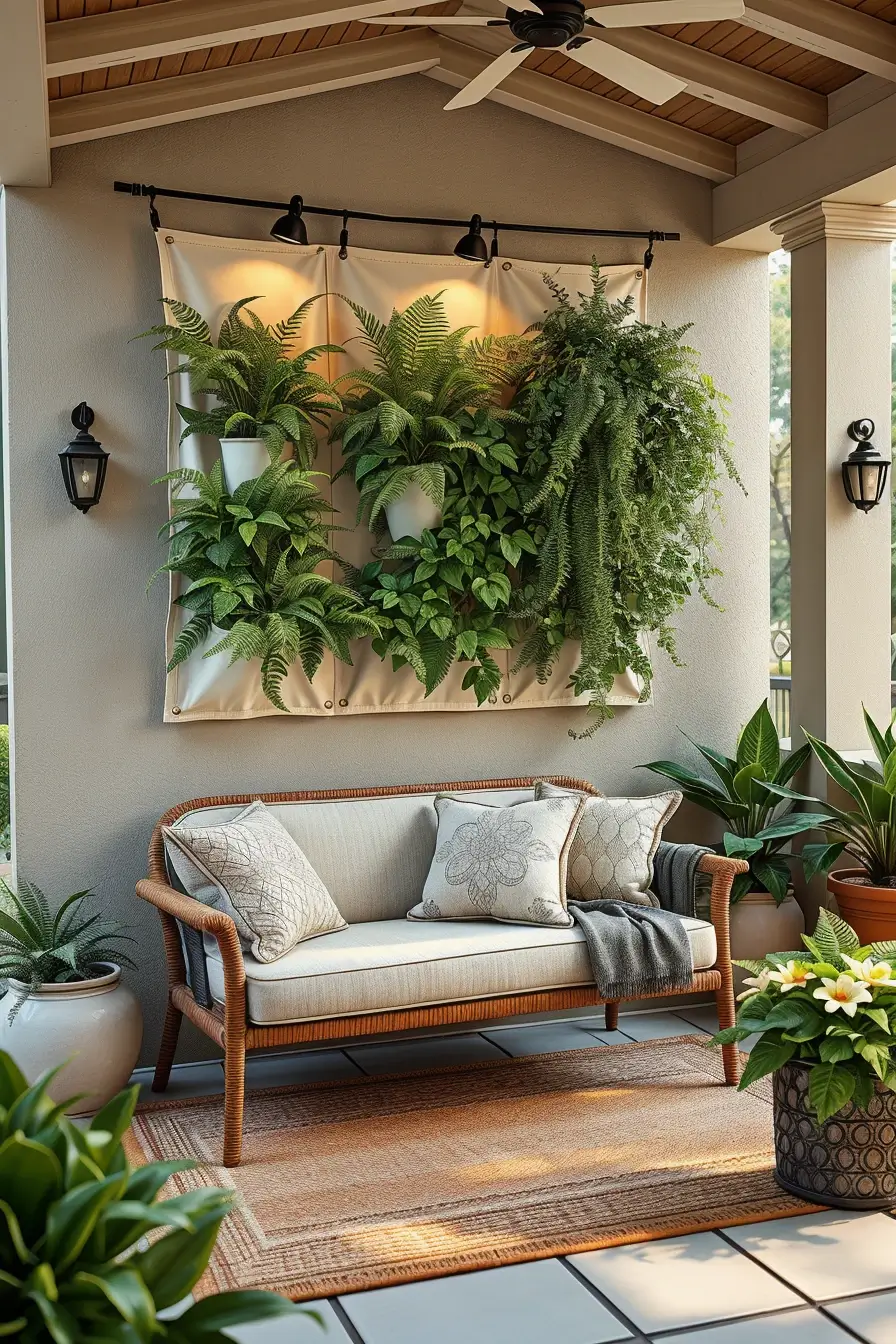
In my designs, I install reinforced wall-mounted pocket panels and fill them with cascading plants like ivy, ferns, and flowering annuals. Below the green wall, I often place a cozy outdoor loveseat, textured throw pillows, and a woven outdoor rug to create a relaxed seating zone. Wall-mounted sconces or string lights enhance the greenery’s texture in the evening.
Personally, I appreciate how pocket systems allow easy plant rotation. Better Homes & Gardens has highlighted the versatility of vertical fabric planters for seasonal updates, and I find that clients enjoy refreshing their displays throughout the year.
One important addition is proper waterproof backing. I always ensure there’s a moisture barrier behind the pocket system to protect exterior walls from water damage.
8. Outdoor Vertical Herb Garden Ideas For Fresh Cooking
An outdoor vertical herb garden combines beauty with everyday practicality. I frequently design herb-focused vertical walls near outdoor kitchens or dining areas, making fresh ingredients accessible while enhancing the aesthetic. This type of vertical garden design works well in both compact patios and larger backyard kitchens.
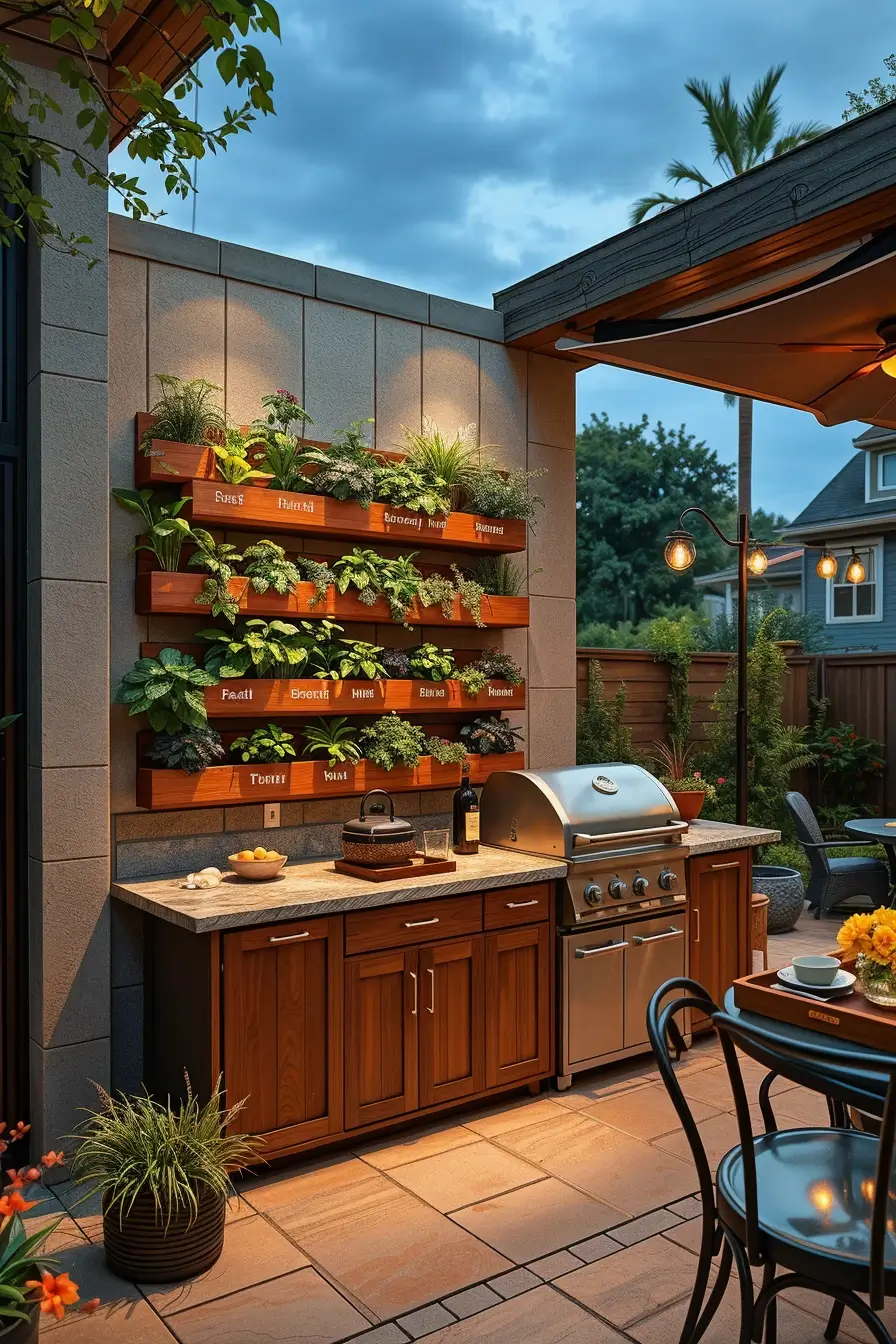
I prefer tiered wooden or metal planters labeled with herb names such as basil, rosemary, thyme, mint, and oregano. Positioned near a built-in grill, prep counter, and outdoor dining table, the garden becomes part of the cooking experience. I often add task lighting above the herb wall to allow harvesting even in the evening.
In my professional opinion, edible vertical gardens create a deeper connection between design and lifestyle. Architectural Digest often discusses the growing popularity of functional landscaping, and I see this trend accelerating in 2026. There is something uniquely satisfying about cooking with herbs grown just steps away.
What I always recommend adding is a simple irrigation timer. Herbs require consistent watering, and automation ensures they remain healthy during hot summer days.
9. Vertical Succulent Gardens For Low-Maintenance Landscapes
For homeowners seeking minimal upkeep, vertical succulent gardens are an ideal solution. I use shallow wall-mounted frames filled with well-draining soil and a curated mix of succulents to create striking geometric patterns. This approach aligns perfectly with modern landscaping trends focused on sustainability and water conservation.
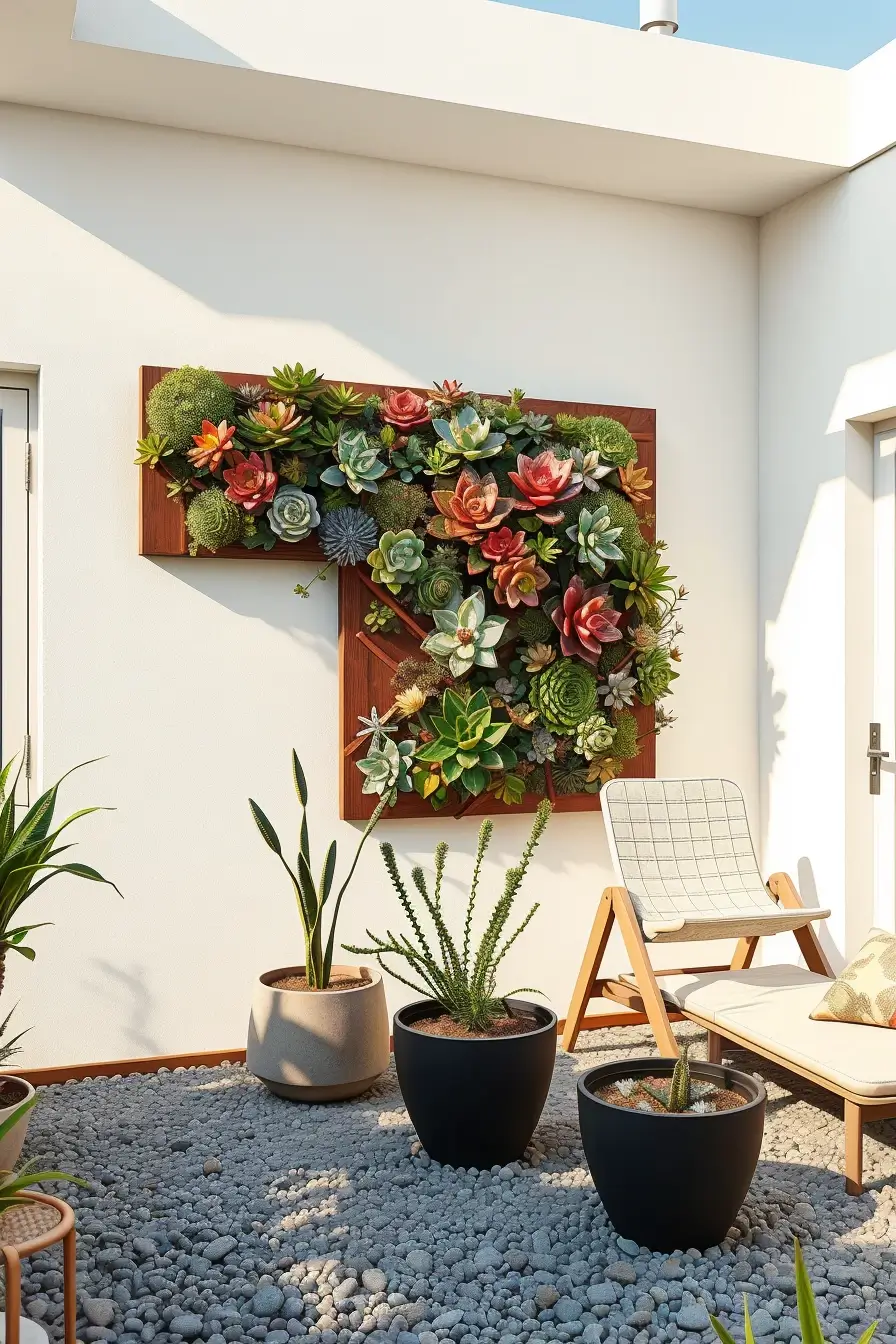
I typically choose varieties such as echeveria, sedum, and crassula, arranging them in repeating patterns for a contemporary effect. The wall is often paired with minimalist outdoor seating, gravel or stone ground cover, and sculptural planters to maintain a cohesive look. Because succulents require less water, they’re especially suitable for warm climates.
From my experience, these installations perform exceptionally well when positioned in areas with consistent sunlight. Drought-tolerant landscaping has been widely recommended by landscape professionals across the US, particularly in regions facing water restrictions. I always ensure proper drainage and airflow behind the structure to prevent moisture buildup.
What’s sometimes overlooked is seasonal frost protection. In colder climates, I advise choosing hardy succulent varieties or designing removable panels for winter storage.
10. Flower-Filled Vertical Gardens For Colorful Backyard Decor
When clients want vibrant energy in their backyard, I design flower-filled vertical gardens that act as living artwork. These installations transform fences and exterior walls into colorful focal points, enhancing patios, pool areas, or garden seating zones. In 2026, bold yet coordinated color palettes are becoming increasingly popular.
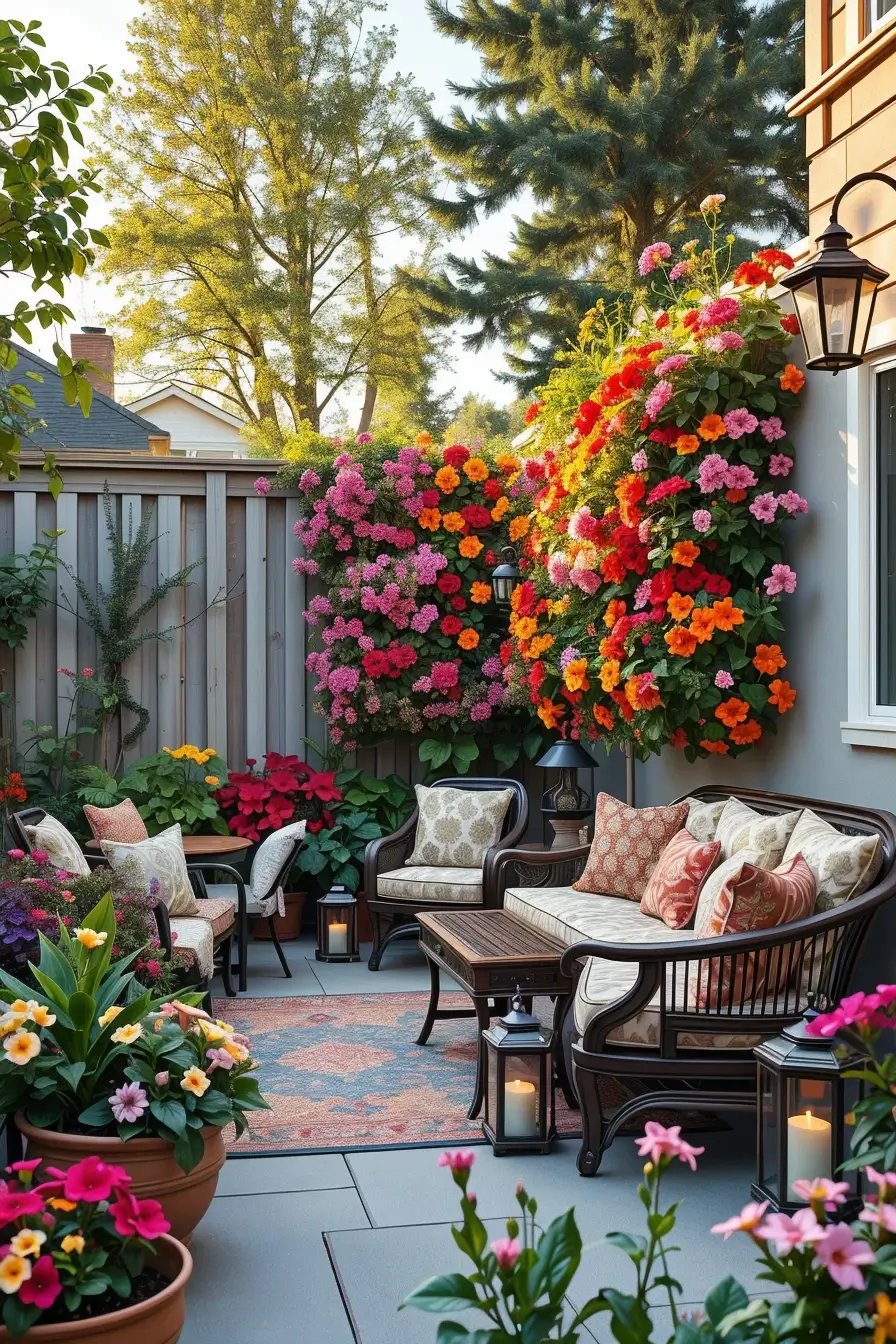
I combine flowering plants such as petunias, geraniums, begonias, and trailing lobelia to create layers of color and movement. Below the vertical garden, I often include a comfortable outdoor sectional, patterned cushions, and decorative lanterns to reinforce the lively atmosphere. Coordinating planter colors with outdoor textiles helps create a cohesive design.
Personally, I believe that flowers instantly elevate mood and make outdoor spaces more inviting. Better Homes & Gardens frequently emphasizes the emotional impact of color in garden design, and I have seen how a thoughtfully planned floral wall becomes the centerpiece of social gatherings.
I would add that seasonal rotation planning is crucial. Selecting spring, summer, and early fall bloomers ensures continuous color and prevents gaps in the display.
11. Edible Vertical Garden Walls With Vegetables And Greens
When I design edible vertical walls, I focus first on orientation, sunlight exposure, and access to water. An edible vertical garden should feel like a natural extension of the patio or terrace, not an afterthought. I typically position the structure along a south- or west-facing wall to maximize sunlight while ensuring airflow between planting pockets. In compact backyards, these vertical garden systems allow homeowners to grow lettuce, kale, strawberries, and herbs without sacrificing valuable floor space.
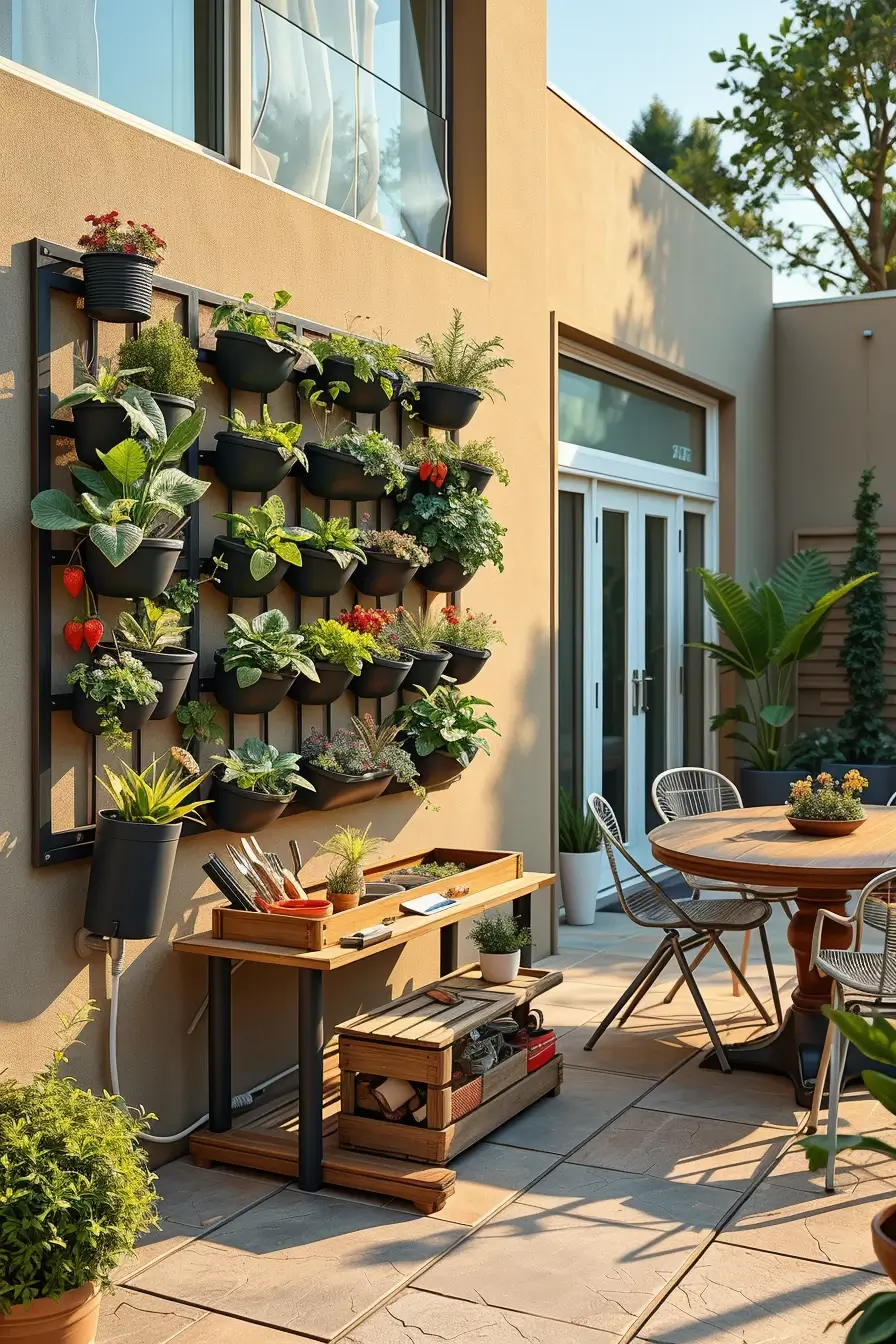
I prefer modular wall planters made from powder-coated steel or UV-resistant recycled plastic, as they withstand outdoor conditions. Integrated drip irrigation is essential to maintain consistent moisture for vegetables. I often include a slim potting bench nearby with storage for tools and organic fertilizers. Raised seating or a small outdoor dining set placed opposite the wall transforms the space into a functional garden-to-table zone.
Personally, I find edible walls to be one of the most rewarding Outdoor Vertical Garden Ideas 2026 because they merge sustainability with design. Architectural Digest has highlighted the growing trend of edible landscaping, emphasizing how productive gardens are becoming focal design features. I always advise selecting companion plants to naturally deter pests and rotating crops seasonally to maintain soil health.
To enhance this section further, I would recommend adding a planting calendar specific to climate zones and a short guide on soil depth requirements for different vegetables, as this significantly impacts success in vertical growing systems.
12. Privacy Screens Made From Vertical Garden Panels
In urban environments, privacy is often a primary concern. I use vertical garden panels to create living screens that soften boundaries while maintaining openness. Instead of solid fencing, layered greenery creates filtered privacy, reducing noise and visual intrusion. These outdoor vertical garden walls are especially effective on balconies, rooftop terraces, and narrow courtyards.
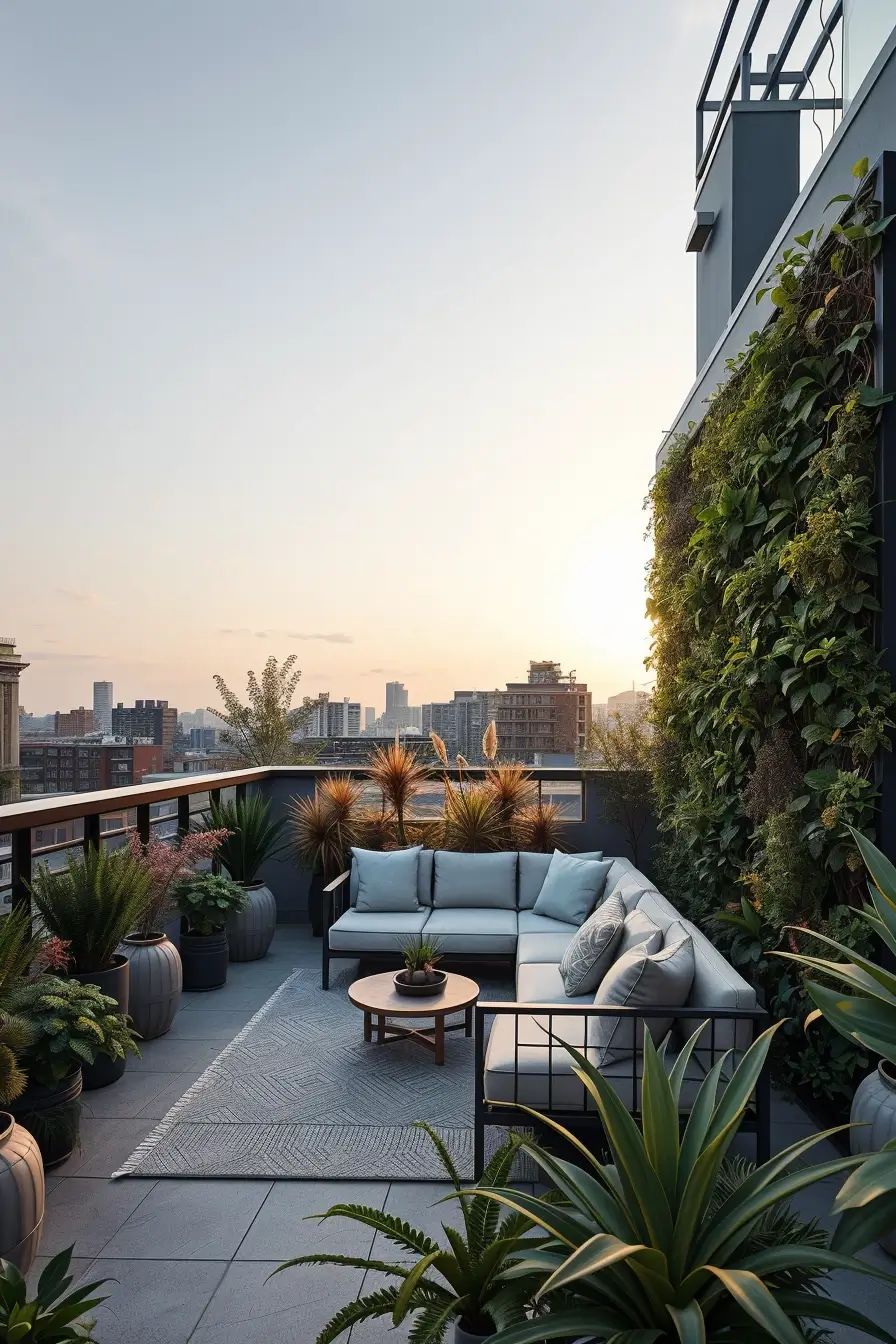
I typically select dense plants such as ferns, ornamental grasses, ivy, and flowering climbers. The structure may consist of freestanding steel frames with integrated planter boxes or wall-mounted modular panels. I complement the green screen with minimalist outdoor furniture, such as a low-profile sectional, textured cushions, and a neutral outdoor rug to maintain a cohesive design language.
From my experience, living privacy walls significantly improve comfort in outdoor spaces. Designers frequently featured in Dwell magazine emphasize biophilic design principles, noting that greenery enhances well-being and reduces stress. I have noticed that clients spend more time outdoors once privacy concerns are addressed through greenery rather than rigid barriers.
What could strengthen this concept further is the addition of acoustic insulation layers behind the panels for homes near busy streets, enhancing both privacy and noise reduction.
13. Fence-Mounted Vertical Garden Systems
Fence-mounted systems are practical solutions for homeowners who want to maximize existing structures. I often transform standard wooden or composite fences into vibrant living features by attaching modular planting grids. This approach turns otherwise unused surfaces into active growing areas and aligns perfectly with modern vertical garden systems trends.
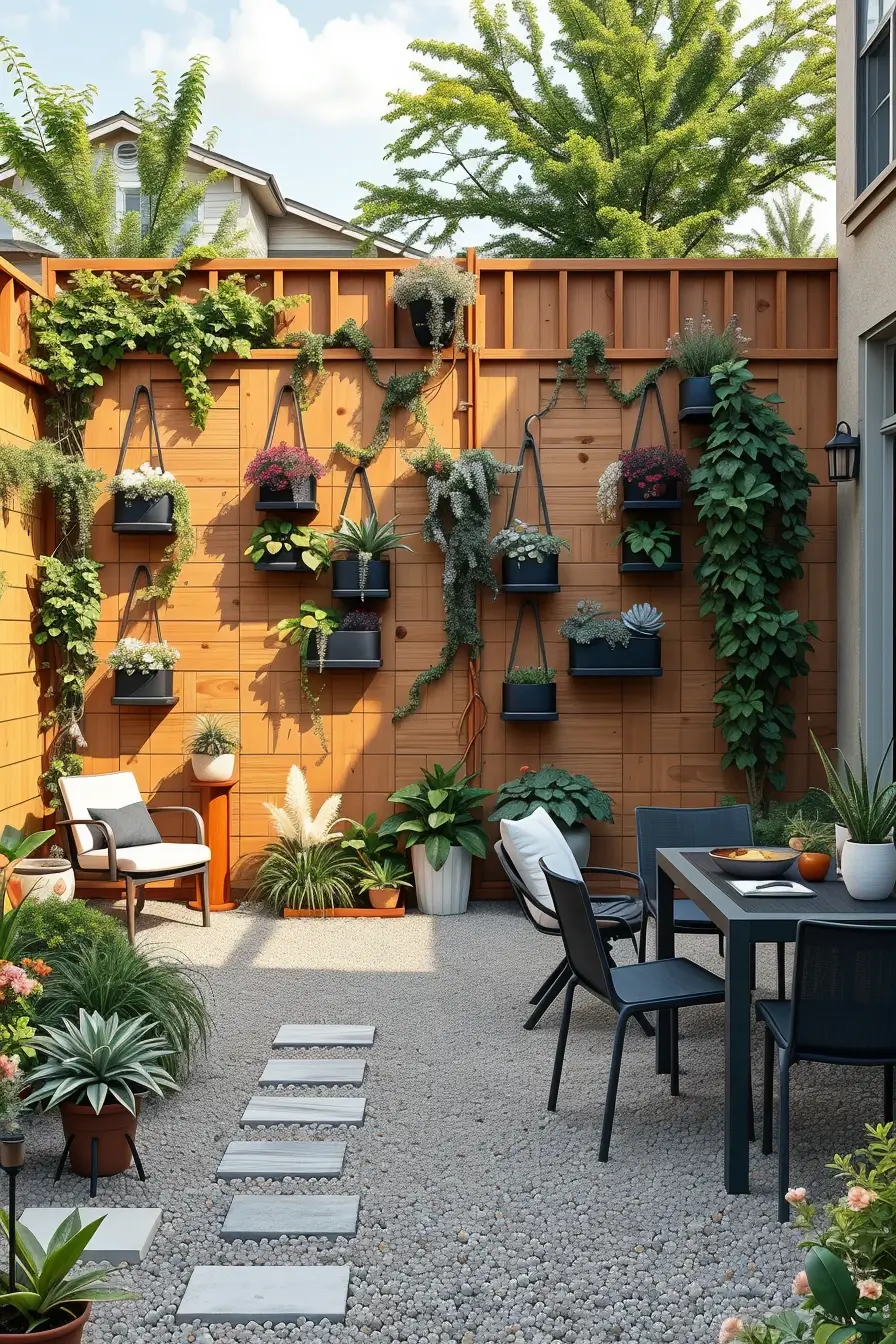
I recommend weather-resistant brackets, breathable planter pockets, and a drip irrigation line concealed along the top rail of the fence. Succulents, trailing vines, and compact perennials work particularly well here. A gravel pathway or minimalist decking below keeps maintenance manageable and enhances the overall exterior composition.
In my projects, I always ensure that fence integrity is assessed before installation. According to landscape experts frequently cited by Better Homes and Gardens, proper weight distribution and moisture control are critical to prevent structural damage. I advise installing waterproof membranes between planters and wooden fences to protect the material.
To complete this section, I would add guidance on weight calculations and structural reinforcement options, especially for older fences that may require additional support.
14. Freestanding Vertical Garden Towers For Patios
Freestanding garden towers are among the most flexible Outdoor Vertical Garden Ideas 2026 because they can be repositioned as needed. I use them in rental properties or dynamic patio layouts where permanent installation is not ideal. These towers create height variation and visual interest without altering walls or fences.
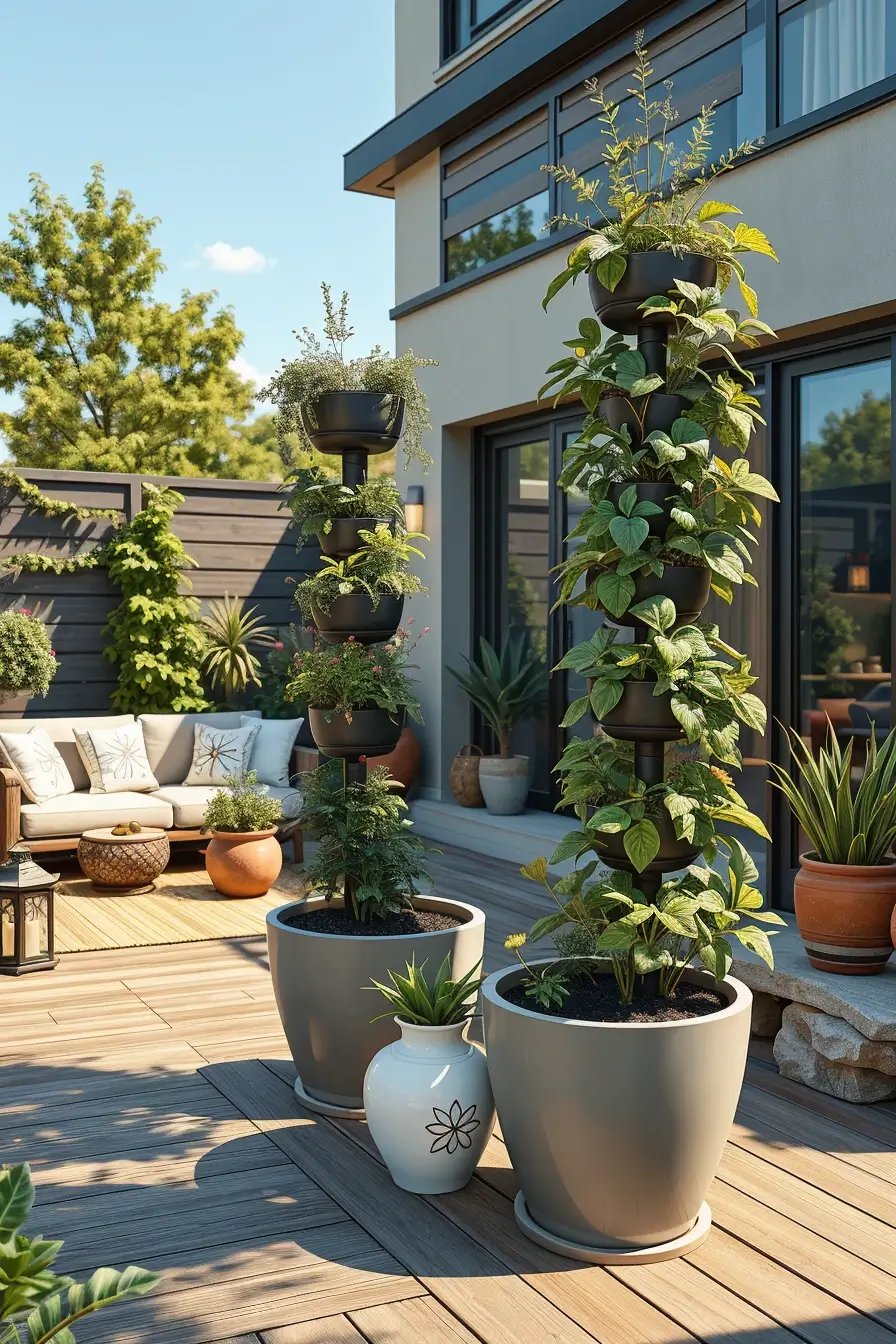
Most towers are cylindrical or tiered, made of durable resin, metal, or treated wood. I prefer models with integrated irrigation reservoirs to simplify maintenance. Placing them beside lounge seating or near an outdoor kitchen creates a functional layout where herbs and greens are within easy reach. I often combine towers with ceramic planters and lantern lighting to create layered depth.
In my opinion, vertical towers are perfect for beginners exploring vertical garden systems. They are easy to assemble and maintain. HGTV gardening experts often recommend starting small and scaling gradually, which aligns perfectly with tower systems.
To refine this section further, it would be beneficial to include maintenance schedules and seasonal plant rotation recommendations for different climate zones.
15. Smart Irrigation Systems For Outdoor Vertical Gardens
Efficient watering is critical for the longevity of outdoor vertical garden walls. Because vertical systems dry out faster than traditional beds, I always prioritize automated irrigation. In 2026, smart irrigation systems with moisture sensors and mobile app integration are becoming standard components of advanced vertical garden systems.
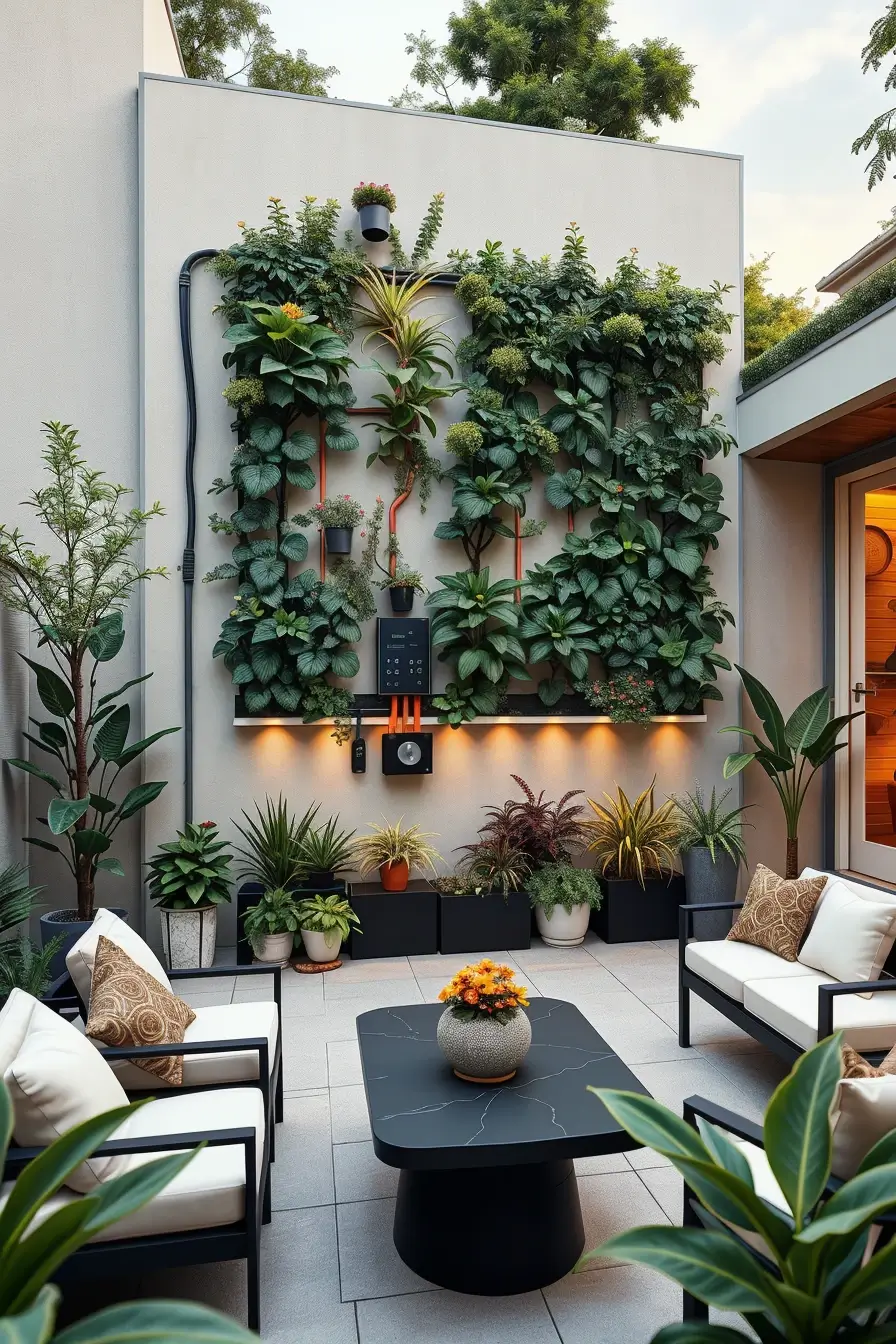
I typically install drip lines connected to a programmable controller. Many systems now include weather-based adjustments that reduce water use during rainy periods. Concealing tubing behind panels ensures the design remains clean and modern. A small weatherproof cabinet nearby houses the controller, keeping the aesthetic organized.
From my professional perspective, investing in smart irrigation dramatically reduces plant stress and maintenance time. Landscape architects frequently featured in The Spruce emphasize that automation increases plant survival rates in vertical installations. I always advise clients to choose systems compatible with their local water pressure and filtration requirements.
To improve this section further, I would suggest adding a comparison table of leading irrigation brands and a brief explanation of water-saving certifications to help readers make informed decisions.
16. Eco-Friendly Recycled Materials For Vertical Garden Designs
When I work on sustainable projects, I always explore how reclaimed and recycled materials can shape truly innovative Outdoor Vertical Garden Ideas 2026. Outdoor spaces today are not just about aesthetics; they reflect environmental responsibility. I often design vertical garden systems using repurposed wood pallets, recycled composite panels, reclaimed metal frames, or even upcycled plastic modules. These solutions reduce environmental impact while giving the garden a distinctive character that feels authentic and modern.
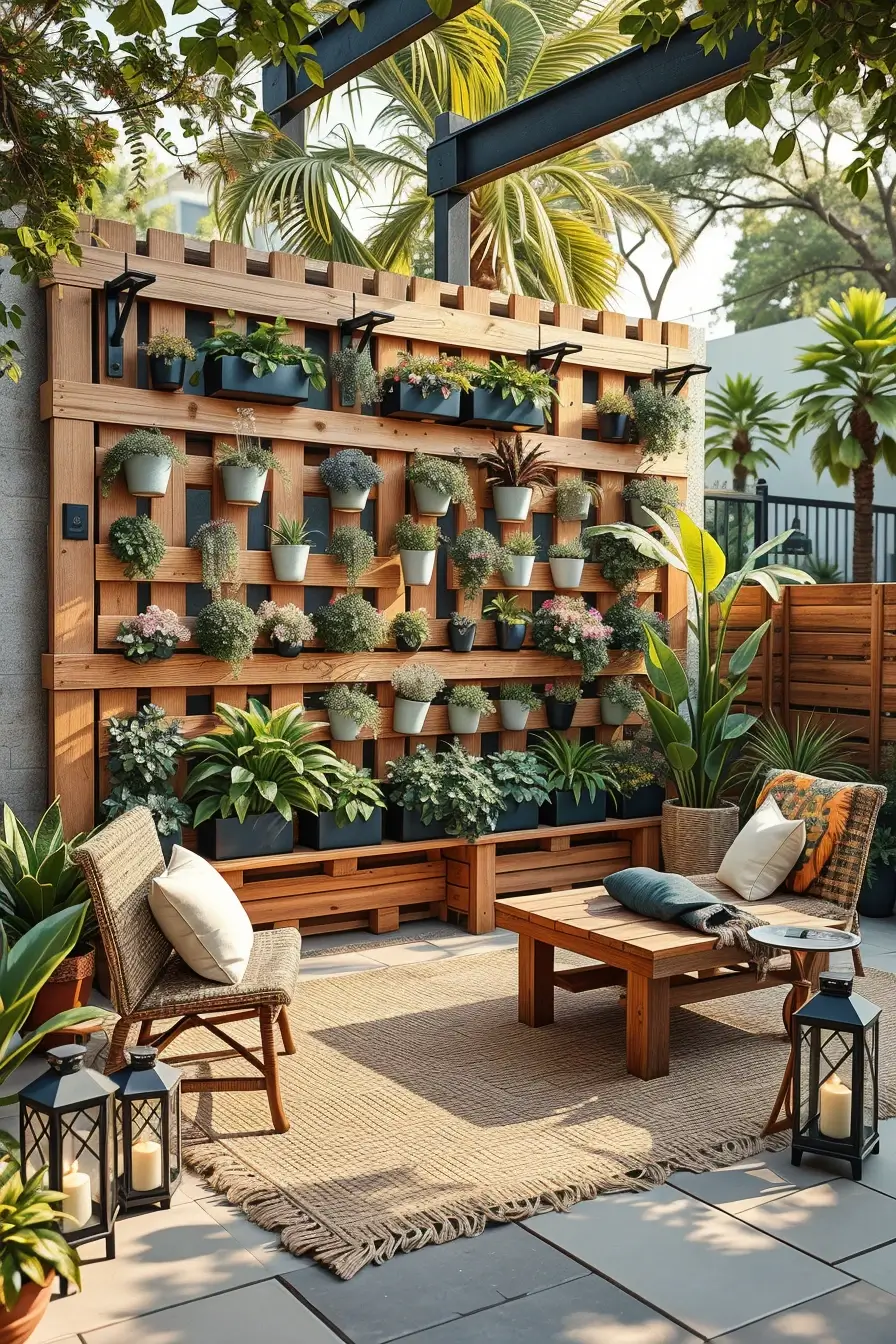
In my experience, reclaimed wood creates warmth and texture, especially when paired with galvanized steel brackets for durability. I also incorporate recycled felt planting pockets made from post-consumer plastic, which provide excellent drainage and insulation for roots. Adding sustainable outdoor furniture such as FSC-certified wood benches, woven recycled-fiber rugs, and solar-powered lighting completes the composition and reinforces the eco-conscious narrative of the space.
Personally, I believe sustainability is no longer optional in exterior design. Better Homes and Gardens frequently emphasizes that eco-friendly landscaping increases long-term property value while reducing maintenance costs. I always recommend sealing reclaimed wood properly and ensuring that recycled plastics are UV-resistant to prevent premature degradation.
To strengthen this concept, I would include a short materials comparison chart outlining durability, maintenance requirements, and environmental benefits, helping readers make informed design decisions.
17. Tropical-Inspired Outdoor Vertical Garden Concepts
Tropical vertical gardens instantly transform patios and courtyards into immersive retreats. When I design this type of outdoor vertical garden wall, I focus on layering large-leaf plants, varying textures, and vibrant greens to recreate a lush atmosphere. These gardens work particularly well in sheltered patios or poolside areas where humidity levels naturally support tropical species.
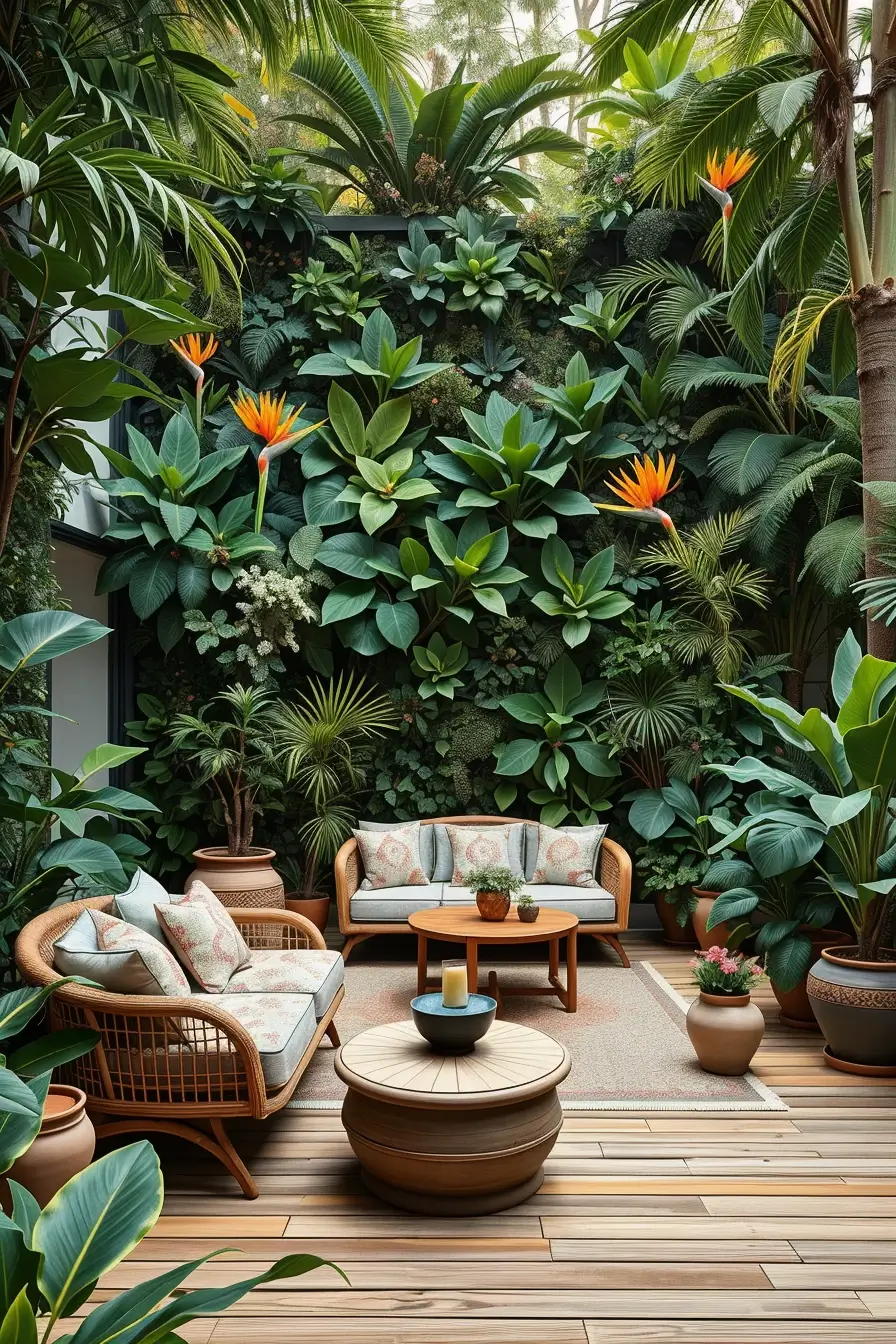
I typically select plants such as philodendrons, monstera, bird of paradise, and ferns, arranging them in staggered modular panels to create depth. To complement the greenery, I incorporate rattan lounge furniture, teak side tables, patterned outdoor cushions, and ceramic planters in earthy tones. Natural stone flooring or wooden decking enhances the resort-like aesthetic, while subtle water features amplify the sensory experience.
From my perspective, tropical vertical gardens offer one of the most visually impactful Outdoor Vertical Garden Ideas 2026. Architectural Digest often highlights tropical layering as a way to blur the line between architecture and nature. I always advise ensuring proper drainage and considering wind exposure, as large tropical leaves can be sensitive to strong gusts.
What could further improve this section is guidance on selecting cold-hardy tropical alternatives for regions with seasonal temperature drops, ensuring year-round visual appeal.
18. Minimalist Vertical Garden Ideas For Modern Exteriors
Minimalist vertical gardens are perfect for contemporary homes with clean architectural lines. In these designs, I prioritize structure, symmetry, and limited color palettes. A well-planned vertical garden system can act as a living art installation against concrete, stucco, or metal facades, enhancing rather than overpowering the architecture.
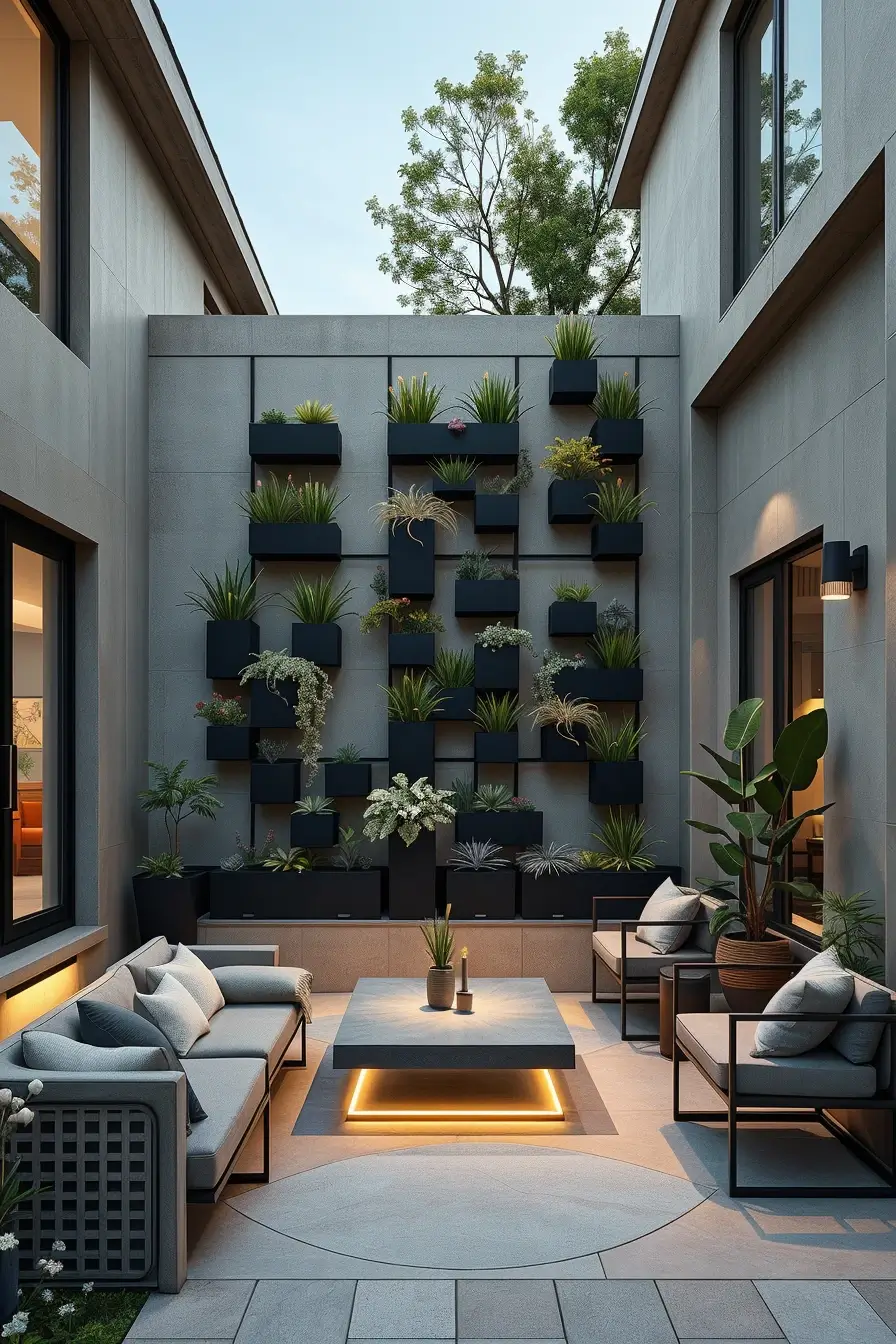
I often use sleek black or white modular panels arranged in geometric grids. Plant selection is intentional and restrained, typically featuring ornamental grasses, boxwood, succulents, or monochromatic foliage. Outdoor furniture is low-profile and sculptural, such as powder-coated metal chairs, streamlined sectionals, and neutral-toned cushions. Integrated LED strip lighting subtly outlines the vertical garden at night, emphasizing form and texture.
In my opinion, minimalism in exterior greenery requires discipline and careful plant maintenance. Dwell magazine frequently notes that restraint in landscaping allows architectural features to stand out. I recommend choosing slow-growing plants to maintain clean lines and scheduling regular pruning to preserve the structured aesthetic.
To enhance this concept, I would suggest including a maintenance guide focused specifically on trimming schedules and seasonal plant replacement strategies for minimalist layouts.
19. Rustic Outdoor Vertical Garden Styles With Natural Textures
Rustic vertical gardens bring warmth and authenticity to outdoor environments. When designing this style, I rely on natural textures such as aged wood, stone, and wrought iron to frame the greenery. These outdoor vertical garden walls feel organic and blend seamlessly with cottage-style homes, farmhouse patios, or countryside properties.
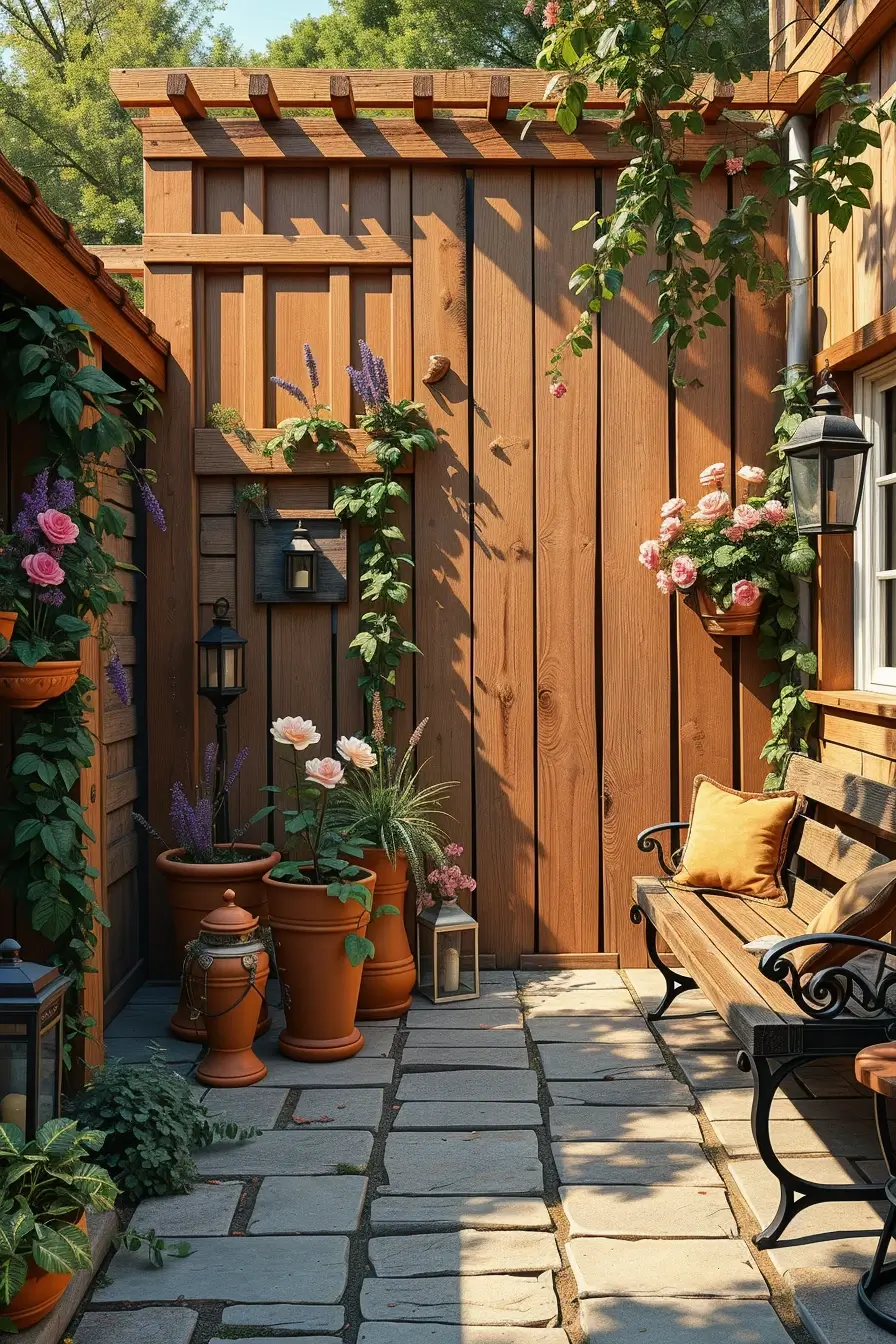
I frequently use wooden trellises, reclaimed barn wood panels, and clay or terracotta pots attached to vertical supports. Climbing roses, lavender, thyme, and trailing ivy enhance the rustic charm. Complementary furniture might include wooden benches, iron lanterns, and textured outdoor textiles in earthy tones. Gravel paths or flagstone patios reinforce the grounded, natural aesthetic.
Personally, I appreciate how rustic vertical gardens age gracefully over time. Many landscape designers featured in Southern Living highlight the beauty of patina and imperfection in garden design. I always recommend weatherproofing wood while allowing some natural aging to maintain authenticity.
To complete this section, I would add advice on protecting plants from excessive moisture retention behind wooden panels, which can affect both plant health and structural integrity.
20. Vertical Garden Lighting Ideas For Evening Ambiance
Lighting transforms vertical gardens after sunset, extending usability and creating dramatic visual impact. In my designs, I treat lighting as an integral component of vertical garden systems, not an afterthought. Proper illumination enhances texture, highlights plant layers, and ensures safety in pathways and seating areas.
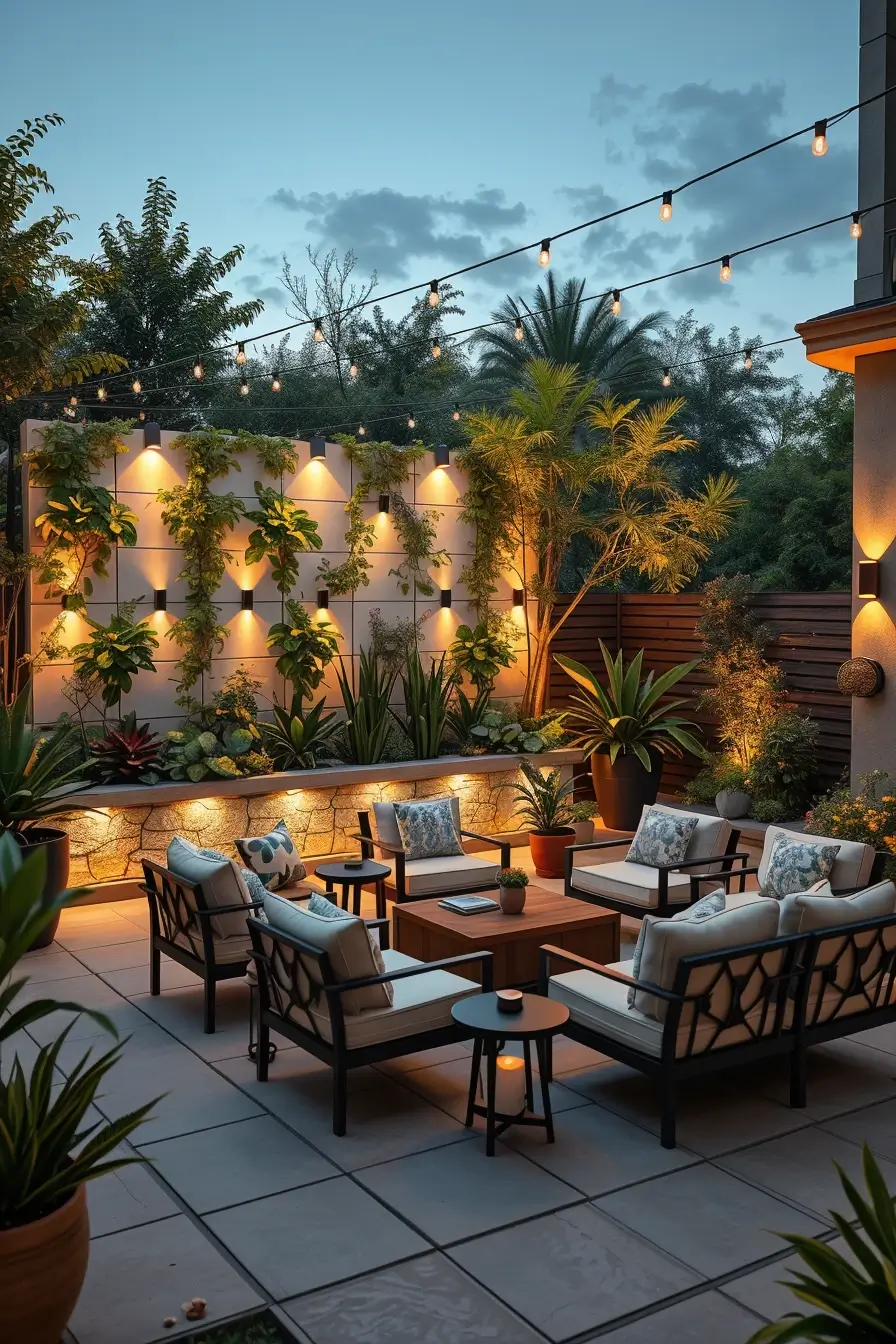
I typically integrate warm LED uplights at the base of the garden wall to emphasize foliage depth. Solar-powered wall sconces, string lights, and discreet spotlights mounted within the panels add layered illumination. Outdoor seating areas positioned nearby benefit from soft ambient lighting that complements the greenery without overpowering it.
From my professional experience, lighting dramatically increases the functional value of Outdoor Vertical Garden Ideas 2026. The Spruce often recommends layered lighting in landscape design to create balance between task and accent illumination. I always advise using weather-rated fixtures and considering energy efficiency when selecting lighting systems.
To refine this section further, I would include a lighting placement diagram and recommendations for lumen levels based on garden size, ensuring both aesthetics and safety are optimized.
21. Weather-Resistant Plants For Outdoor Vertical Gardens
When designing an outdoor vertical garden, I always begin with climate resilience. In 2026, the emphasis in Outdoor Vertical Garden Ideas 2026 is durability without compromising aesthetics. Weather-resistant plants ensure that the green wall remains vibrant despite wind, rain, frost, or intense sun exposure. I typically assess wind direction, seasonal temperature shifts, and wall orientation before selecting plant species. A properly designed weather-adapted vertical garden reduces long-term maintenance and protects the structural system from excess moisture stress.
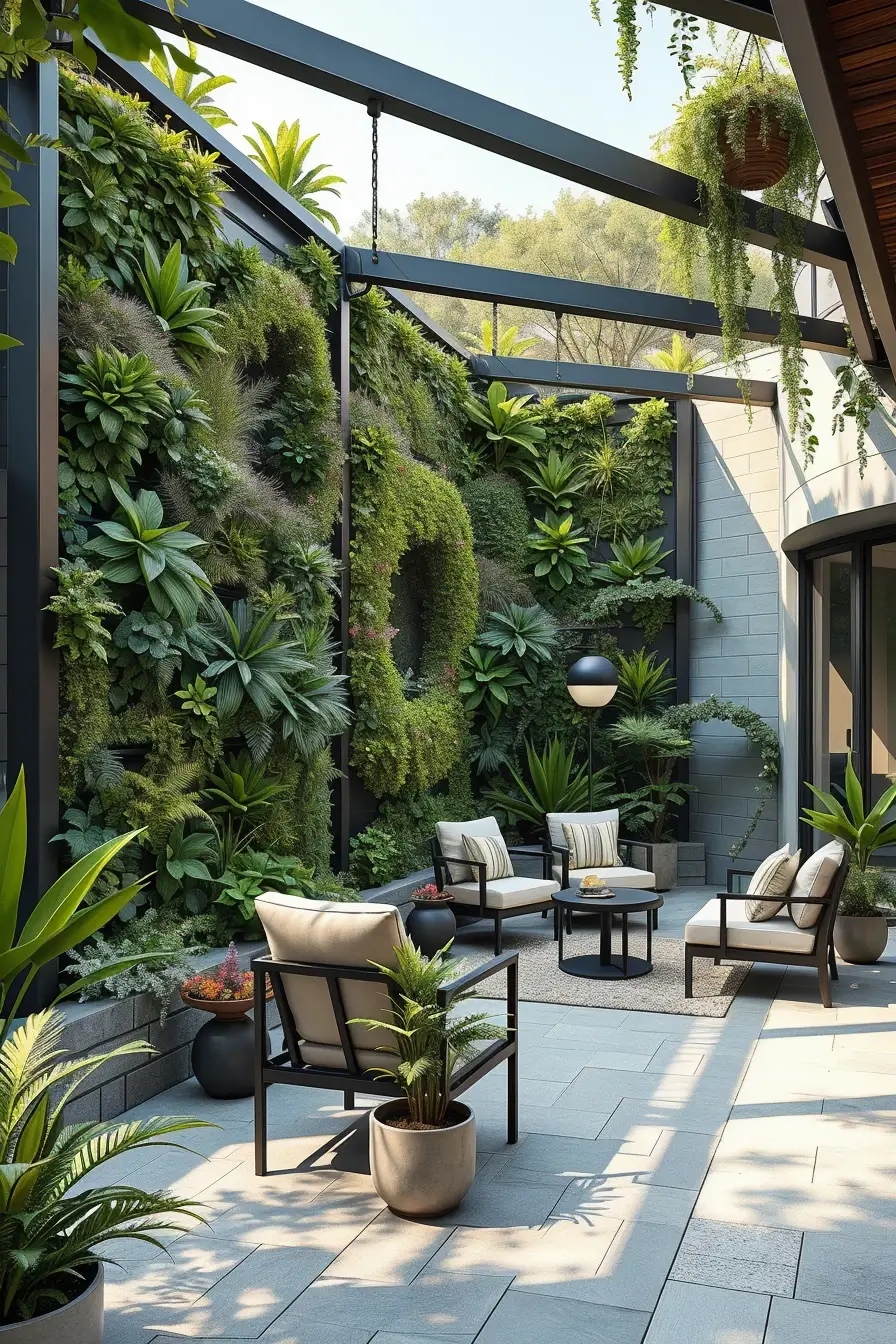
In my projects, I frequently use hardy perennials such as sedum, heuchera, ornamental grasses, and evergreen ferns. For colder climates, I include boxwood, ivy, and winter-hardy succulents. For coastal areas, salt-tolerant varieties are essential. I pair these plants with powder-coated steel frames, UV-resistant planting pockets, and integrated drip irrigation systems to ensure consistent hydration. A discreet drainage layer behind the panels prevents water accumulation and preserves the integrity of the wall surface.
From my experience, resilience is what separates a decorative installation from a sustainable investment. Architectural Digest has repeatedly highlighted the importance of climate-adapted landscaping for longevity, and I strongly agree. Choosing plants that naturally thrive in your region creates a healthier ecosystem and reduces replacement costs. I always advise clients to think long-term rather than seasonally.
What is often missing in this section is a clear irrigation zoning plan. I recommend dividing the vertical garden into moisture zones based on plant needs. This prevents overwatering some species while underwatering others and ensures the entire installation performs efficiently year-round.
22. Modular Vertical Garden Systems For Flexible Design
Flexibility defines many of the leading vertical garden design trends 2026. Modular systems allow homeowners to expand, rearrange, or update their green walls without dismantling the entire structure. I find this especially useful for patios and terraces where space evolves over time. Modular panels create a clean architectural rhythm while offering practical installation benefits.
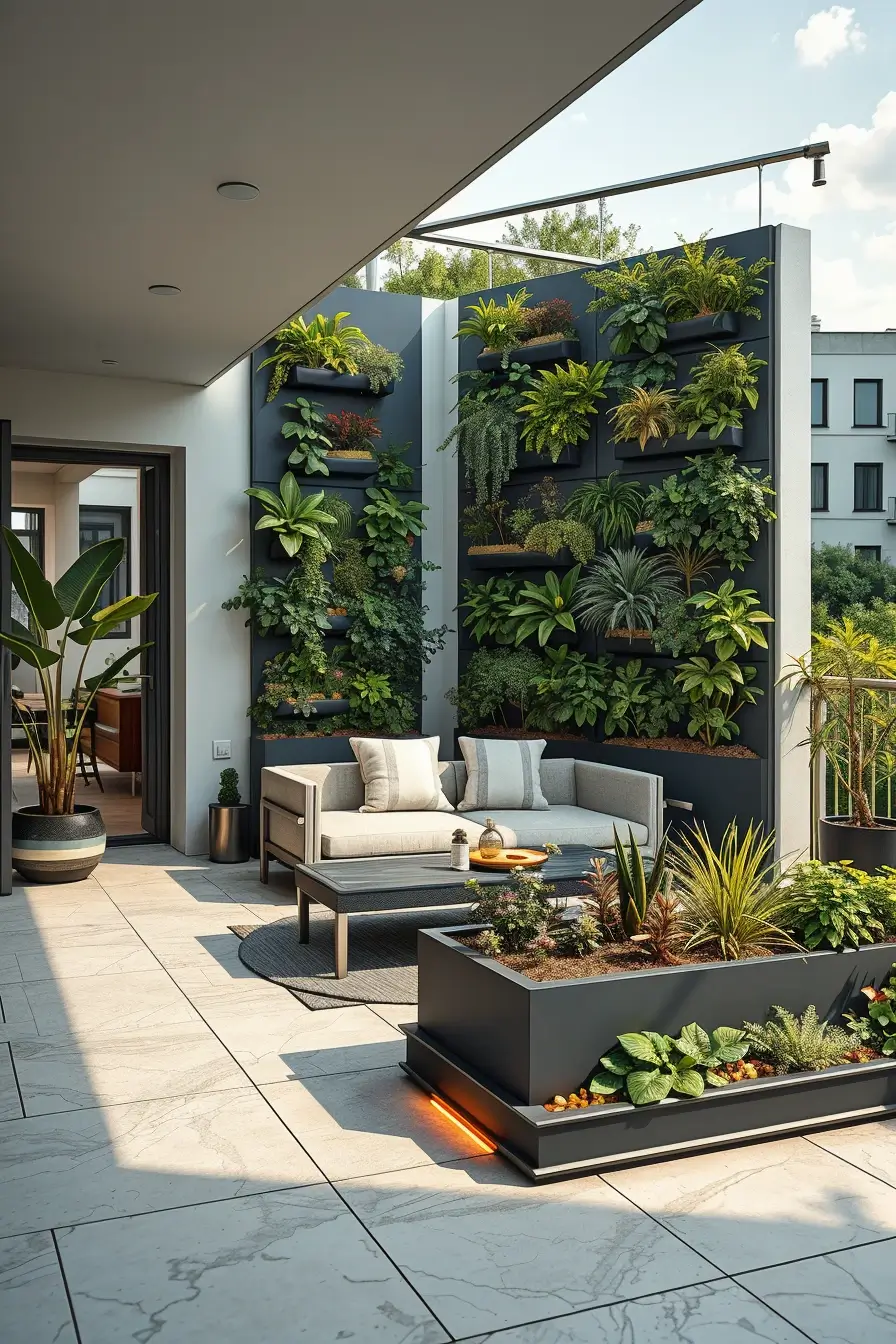
I prefer lightweight aluminum or recycled composite modules with built-in planting trays. These systems often include clip-on irrigation lines and replaceable planting cartridges, which make seasonal updates simple. I combine modular greenery with outdoor lounge seating, minimal planters, and weatherproof lighting to create a cohesive environment. Neutral-toned frames in matte black or soft gray align well with modern exteriors and highlight the greenery itself.
In my practice, modular systems are ideal for clients who enjoy experimenting with plant compositions. As Elle Decor has noted, adaptable design solutions are becoming central to outdoor living spaces. I appreciate how modular gardens allow for creativity while maintaining structural precision.
What should be added here is a discussion about load-bearing calculations. I always verify wall strength and weight distribution before installation. Even modular systems can become heavy once saturated with water, so structural assessment is essential for safety.
23. Outdoor Vertical Garden Ideas For Courtyards
Courtyards offer intimate settings where vertical gardens truly shine. When working on compact outdoor spaces, I treat vertical greenery as both a privacy solution and a design focal point. In Outdoor Vertical Garden Ideas 2026, courtyard walls are no longer blank surfaces but living architectural elements that soften hard materials like concrete and brick.
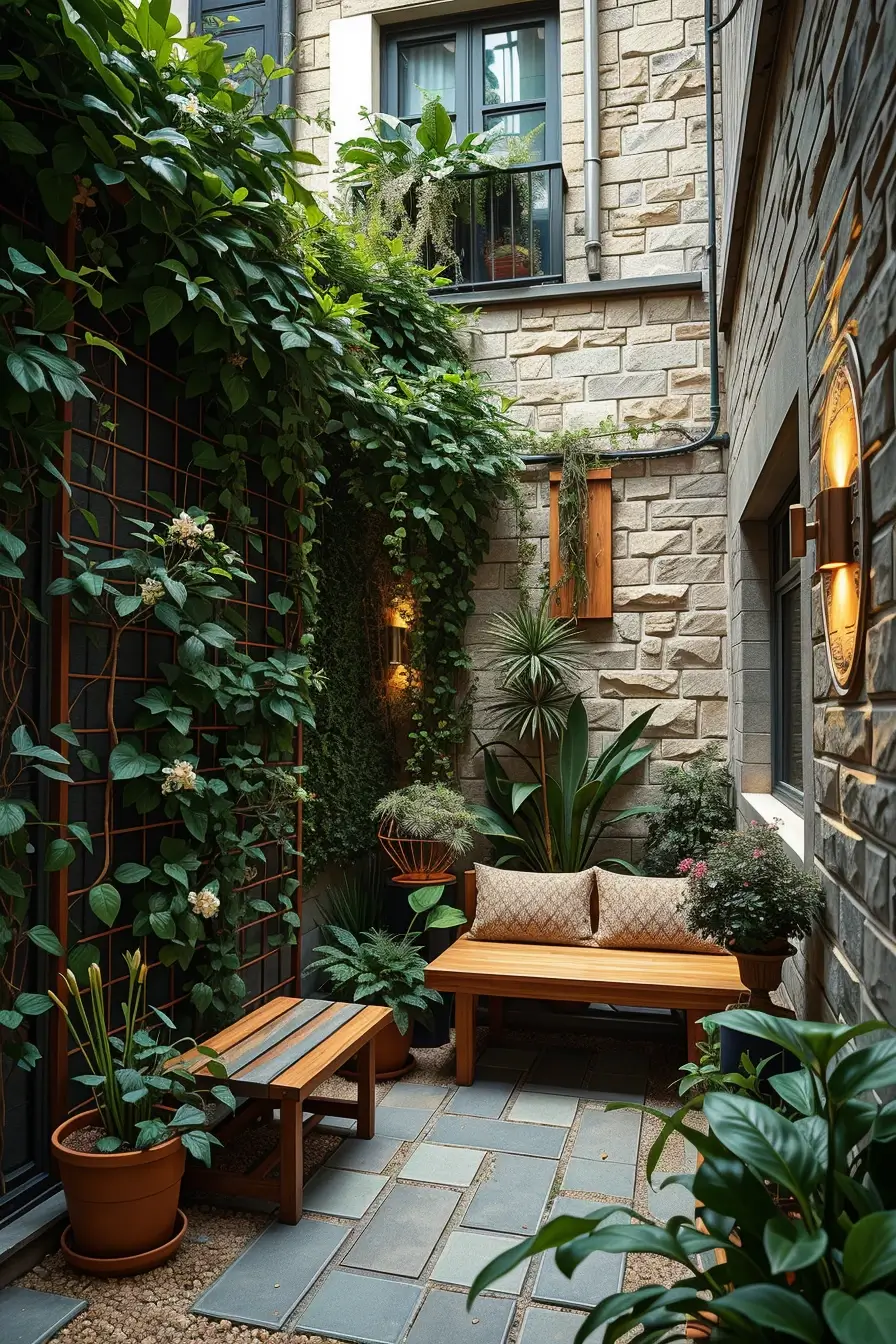
I often combine climbing plants such as jasmine or clematis with structured wall-mounted planting grids. Built-in bench seating, natural wood decking, and warm LED wall washers enhance the atmosphere. Adding textured stone tiles or microcement finishes behind the greenery increases depth and contrast. I carefully position seating to face the green wall, ensuring it becomes the primary visual anchor of the courtyard.
Personally, I find courtyard vertical gardens incredibly calming. The New York Times has discussed how small urban gardens significantly improve mental well-being, and I see this reflected in client feedback. Even limited square footage can feel expansive when vertical greenery is introduced thoughtfully.
One element that should not be overlooked is acoustic improvement. Dense foliage can help absorb city noise. I recommend incorporating thicker leaf varieties or layered planting zones to enhance sound reduction in urban courtyards.
24. Rooftop Vertical Gardens For Sustainable City Living
Rooftop spaces are central to modern green wall solutions in 2026. In urban environments, I see rooftops transformed into eco-friendly retreats that combine sustainability with sophisticated design. Vertical gardens on rooftops help regulate temperature, reduce heat absorption, and create natural insulation.
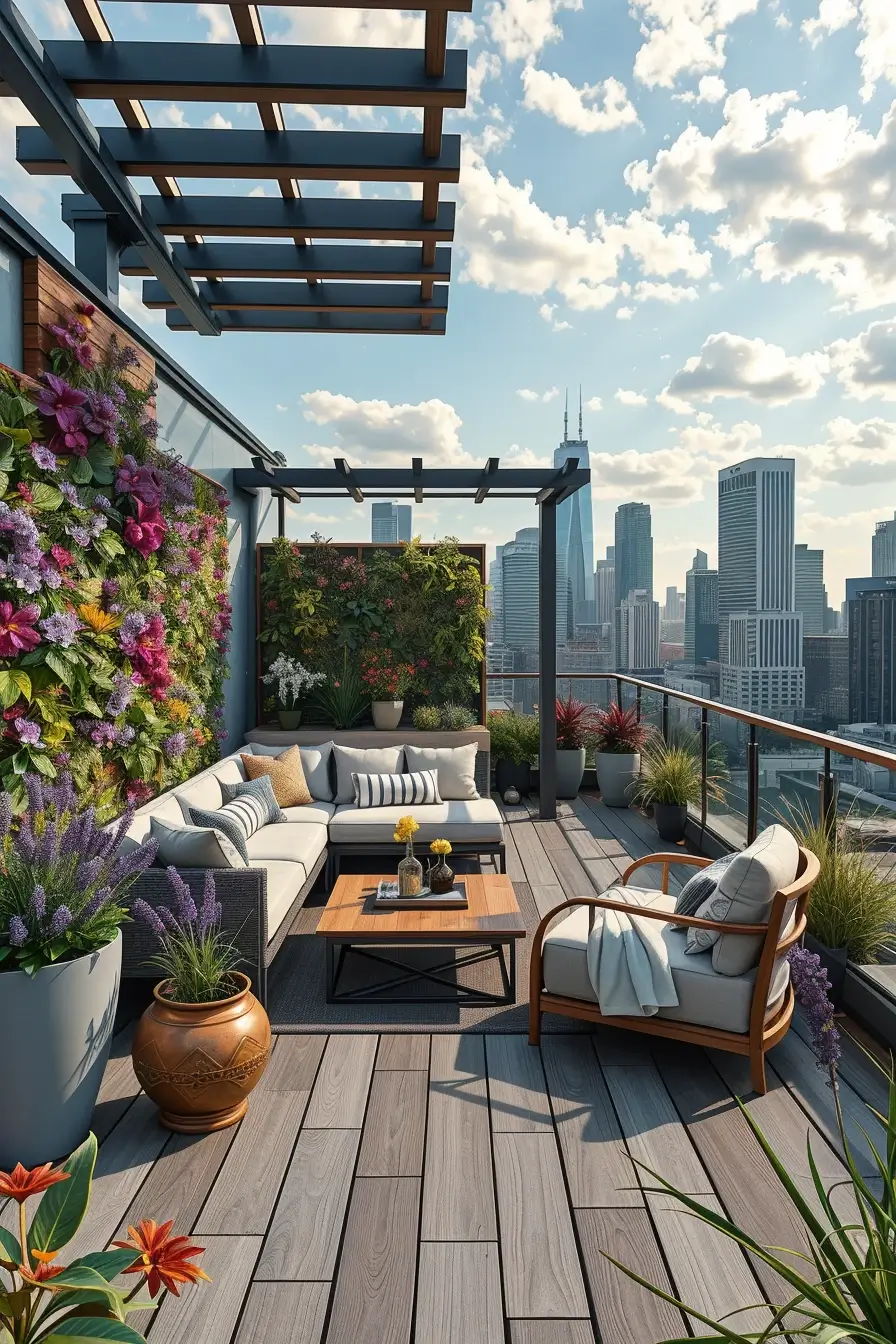
I typically design rooftop vertical gardens with lightweight modular panels and drought-tolerant species such as lavender, rosemary, ornamental grasses, and hardy succulents. These are paired with composite decking, weather-resistant outdoor sofas, and pergolas for shade. Integrated solar lighting enhances energy efficiency. Wind barriers or glass railings protect plants without obstructing views.
From a professional perspective, rooftop vertical gardens are an investment in long-term sustainability. Many U.S. green building initiatives highlight the environmental benefits of vertical greenery in urban planning. I always emphasize proper waterproof membranes and drainage systems to prevent structural damage.
What should be added here is a wind-resistance strategy. Rooftops experience stronger gusts than ground-level installations, so anchoring systems and plant selection must account for wind load to ensure longevity.
25. Vertical Garden Water Features For Relaxing Outdoor Spaces
Combining greenery with water elements creates a multisensory experience. In Outdoor Vertical Garden Ideas 2026, integrated water walls are becoming increasingly popular for patios and luxury outdoor lounges. I approach these designs by balancing moisture management with aesthetic harmony.
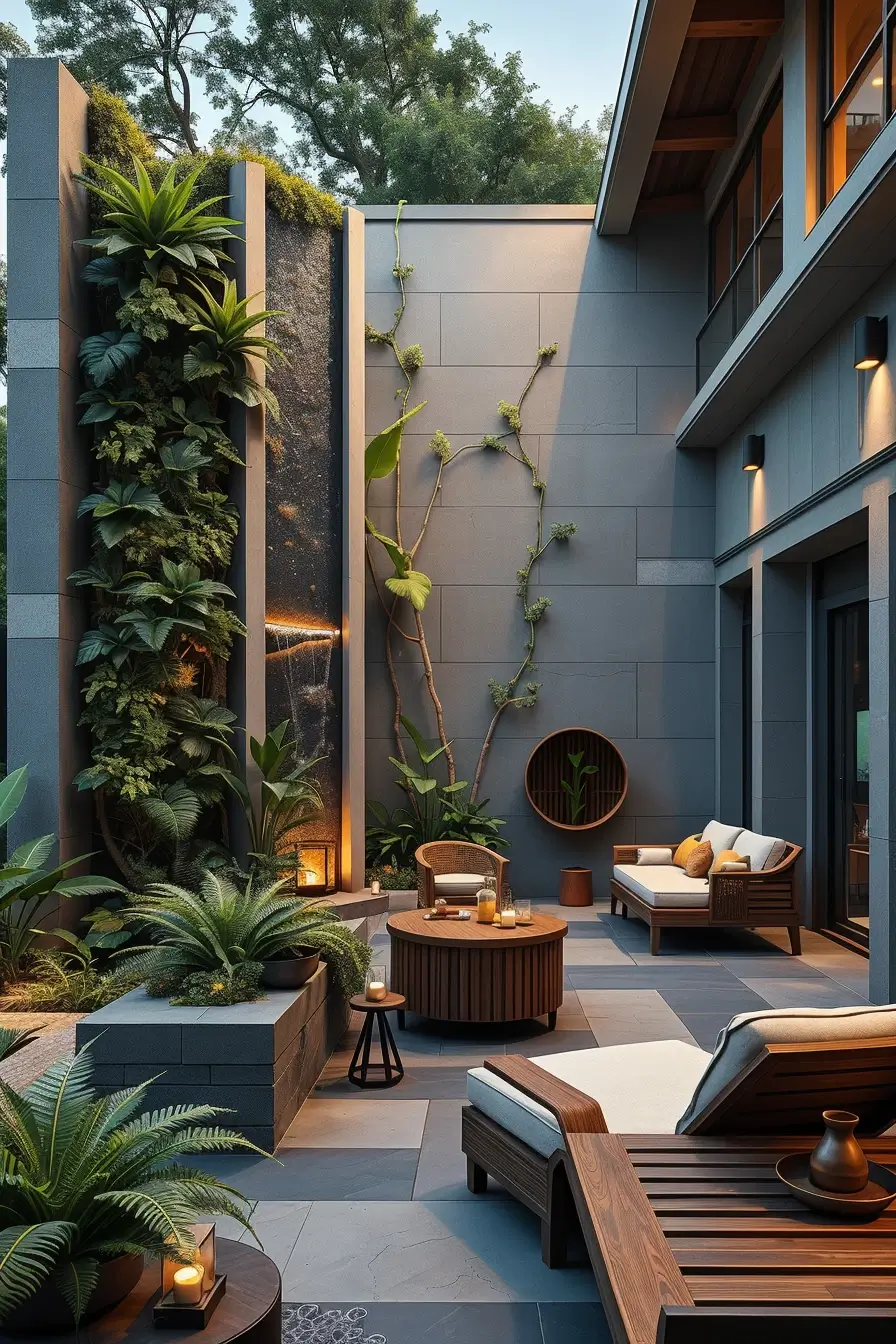
I typically install slim recirculating water panels framed by lush foliage such as ferns, philodendrons, and moss varieties suited for humid microclimates. Hidden pumps, filtration systems, and waterproof backing are essential technical components. I complement the installation with stone flooring, teak furniture, and soft outdoor cushions to create a spa-like setting.
In my opinion, the gentle sound of flowing water significantly enhances relaxation. Landscape professionals frequently note the psychological benefits of water features, and I have observed how clients gravitate toward these areas during gatherings. The sensory dimension elevates the overall outdoor experience.
What should be added is a maintenance access plan. Water features require regular cleaning and pump inspection. I always design discreet access panels so the aesthetic remains uninterrupted while ensuring functionality.
26. Shade-Loving Plants For North-Facing Vertical Gardens
When I design north-facing green walls, I focus on plant species that thrive in indirect light and stable moisture conditions. In many Outdoor Vertical Garden Ideas 2026, shaded walls are often overlooked, yet they offer incredible potential for lush, layered compositions. I analyze how much reflected light the wall receives from surrounding surfaces and adjust plant density accordingly. Proper planning ensures the vertical garden remains full and vibrant rather than sparse and uneven.
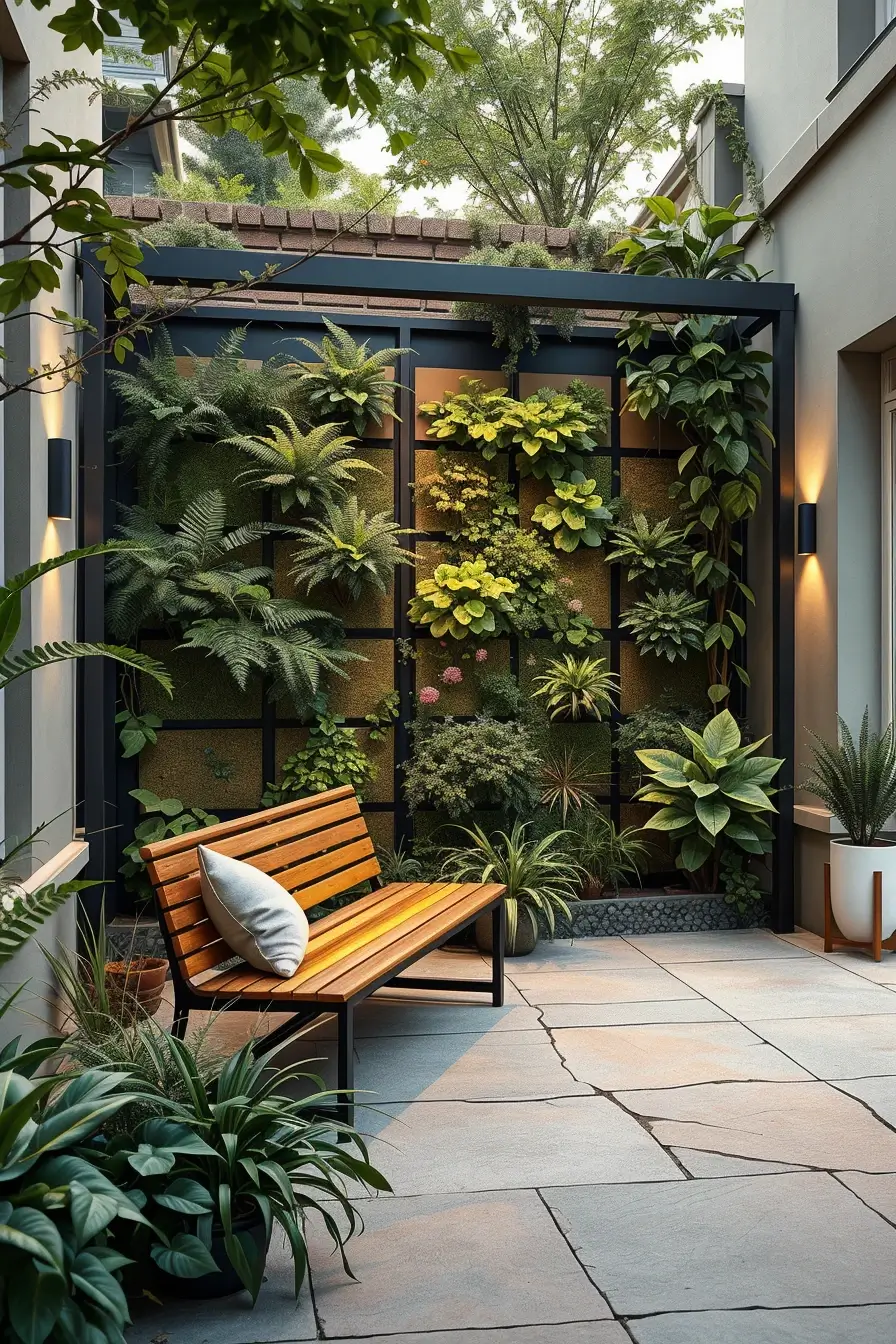
For shade-oriented installations, I typically select ferns, hostas, heuchera, moss panels, and shade-tolerant ivy varieties. I pair these with moisture-retentive growing mediums and automated drip irrigation calibrated to prevent overwatering. Matte charcoal or deep bronze frames help enhance the rich green tones of shade plants. In courtyard or patio settings, I often complement the vertical garden with textured stone flooring, minimalist benches, and subtle wall lighting to highlight foliage depth.
From my professional experience, shade gardens feel calming and refined. Better Homes and Gardens has frequently emphasized the beauty of layered foliage in low-light landscapes, and I find this especially relevant for vertical applications. I recommend focusing on texture contrasts rather than bright blooms in shaded environments.
What should be added here is a lighting enhancement plan. I always consider installing soft, warm LED grow lights or accent lighting to maintain plant vitality during darker months and visually amplify the depth of the greenery.
27. Sun-Loving Plant Combinations For South-Facing Walls
South-facing walls provide abundant sunlight, which opens exciting possibilities within vertical garden design trends 2026. However, I approach these installations strategically to avoid heat stress and excessive evaporation. I evaluate daily sun exposure hours and surface heat reflection before selecting plant combinations.
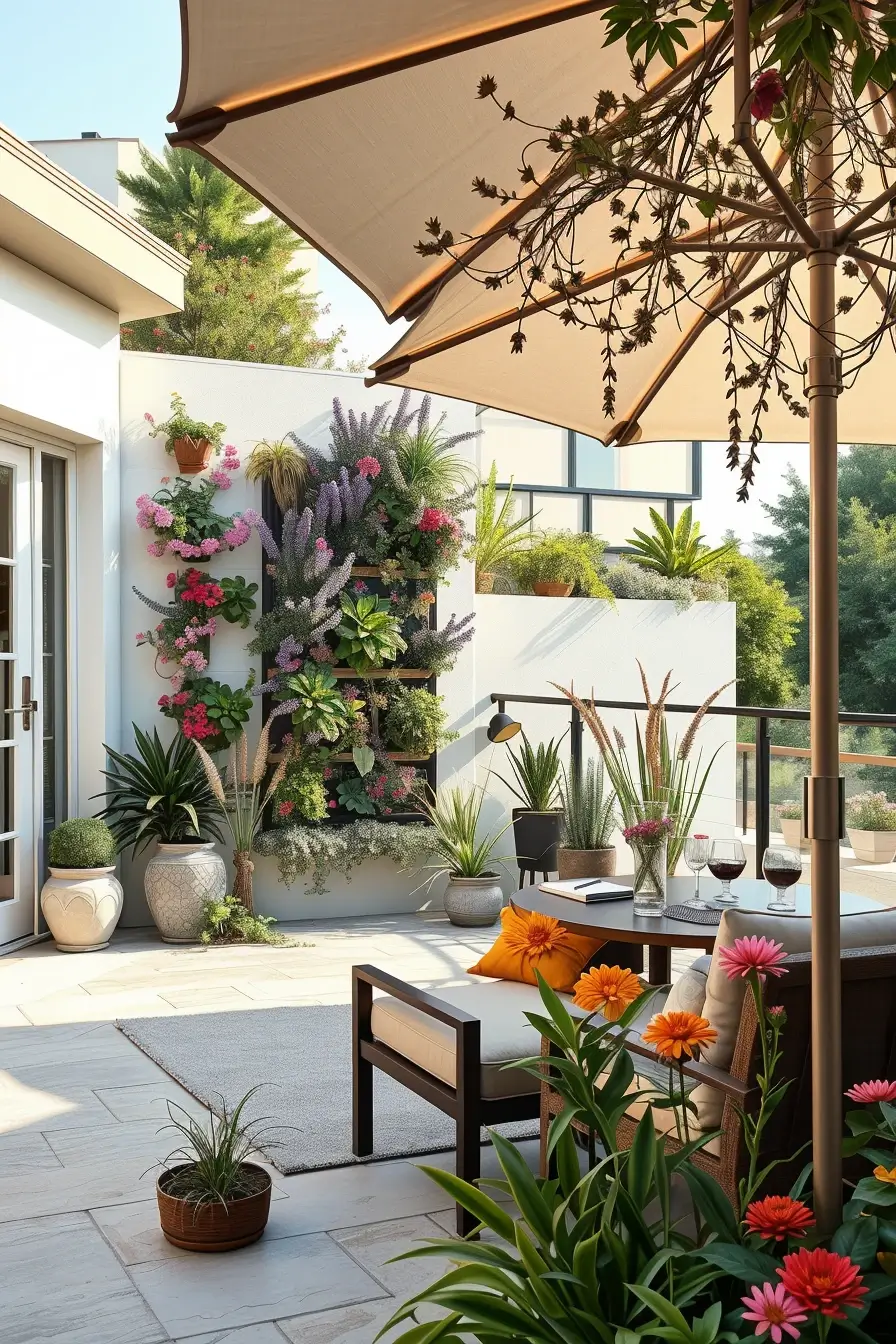
In full-sun vertical gardens, I prefer drought-tolerant plants such as lavender, rosemary, succulents, sedum, ornamental grasses, and flowering perennials like echinacea. I use light-colored planting modules to reduce heat absorption and install efficient irrigation systems with moisture sensors. Pairing these vibrant green walls with light stone patios, woven outdoor seating, and neutral umbrellas creates a Mediterranean-inspired outdoor setting that feels warm yet balanced.
Personally, I find sun-facing vertical gardens the most visually dynamic. The bold textures and seasonal blooms create strong architectural impact. Landscape architects often highlight plant layering for sun exposure to ensure consistent growth, and I always arrange taller grasses or trailing plants to protect more delicate species beneath them.
One crucial element that should be added is a wind and sun barrier strategy. I often integrate pergolas or slim shade screens to protect the installation during peak summer heat, extending plant longevity and maintaining visual harmony.
28. Seasonal Plant Rotation Ideas For Year-Round Green Walls
To keep Outdoor Vertical Garden Ideas 2026 fresh and dynamic, I recommend planning for seasonal rotation. A vertical garden should evolve throughout the year rather than remain static. I map out plant transitions for spring, summer, autumn, and winter to ensure continuous visual interest and ecological balance.
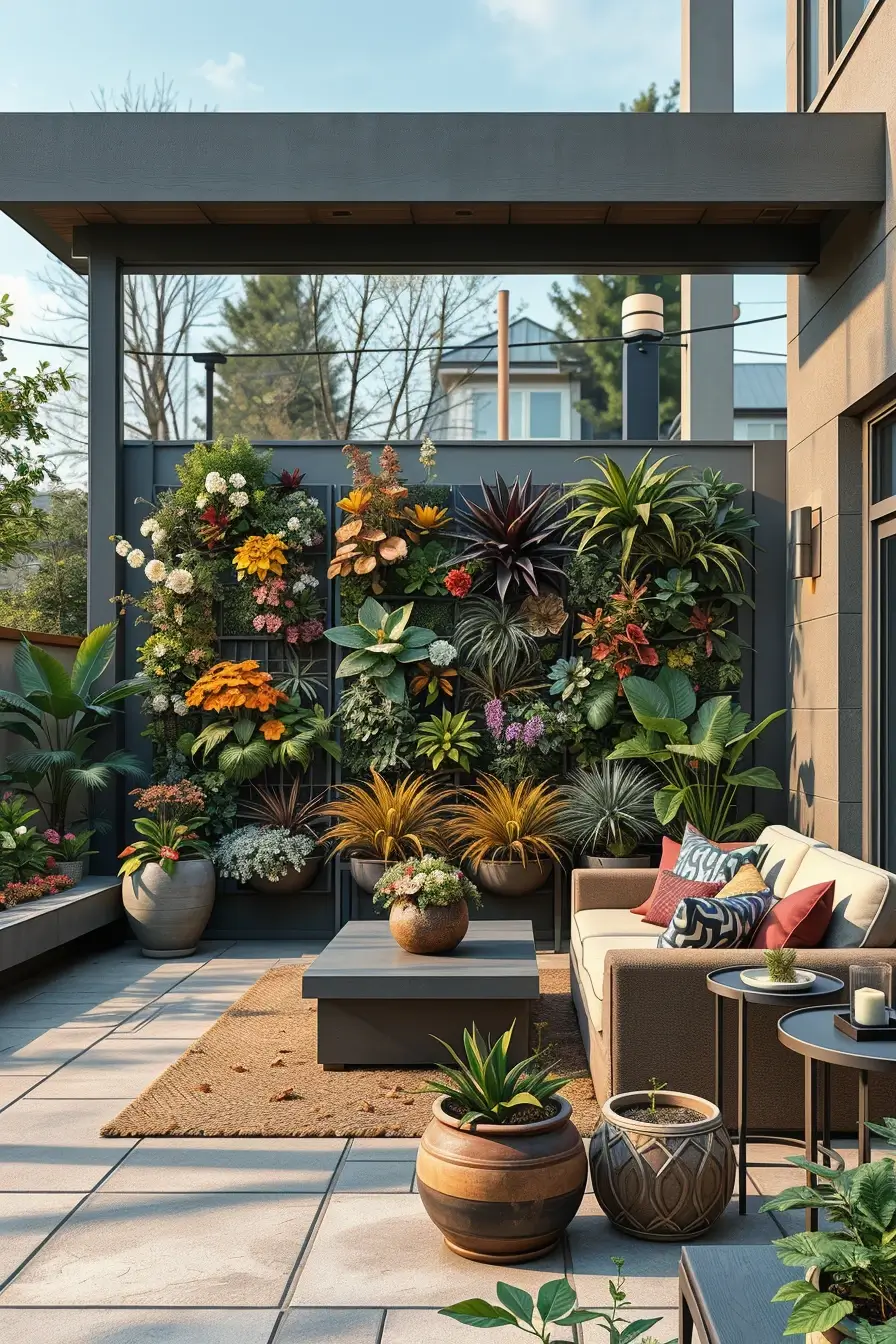
I design modular systems that allow easy replacement of select plant trays. In spring, I incorporate fresh herbs and flowering annuals. Summer brings vibrant perennials and ornamental grasses. Autumn introduces warm-toned foliage such as coral bells, while winter features evergreens and hardy structural plants. I coordinate these rotations with outdoor furniture textiles and seasonal décor to maintain cohesion across the entire patio or terrace.
From my perspective, seasonal rotation keeps clients engaged with their outdoor spaces. Garden designers frequently advise thinking in four-season cycles rather than single-season aesthetics. I have observed that this strategy reduces plant fatigue and encourages healthier root systems.
What should be included here is a seasonal maintenance calendar. I recommend documenting planting dates, fertilization schedules, and pruning timelines to ensure smooth transitions between seasonal displays.
29. Outdoor Vertical Garden Maintenance Tips And Care Guide
Even the most sophisticated modern green wall solutions require structured maintenance. I always explain to clients that a vertical garden is a living system that demands consistent care. Proper drainage, irrigation monitoring, and plant health inspections are fundamental to preserving the investment.
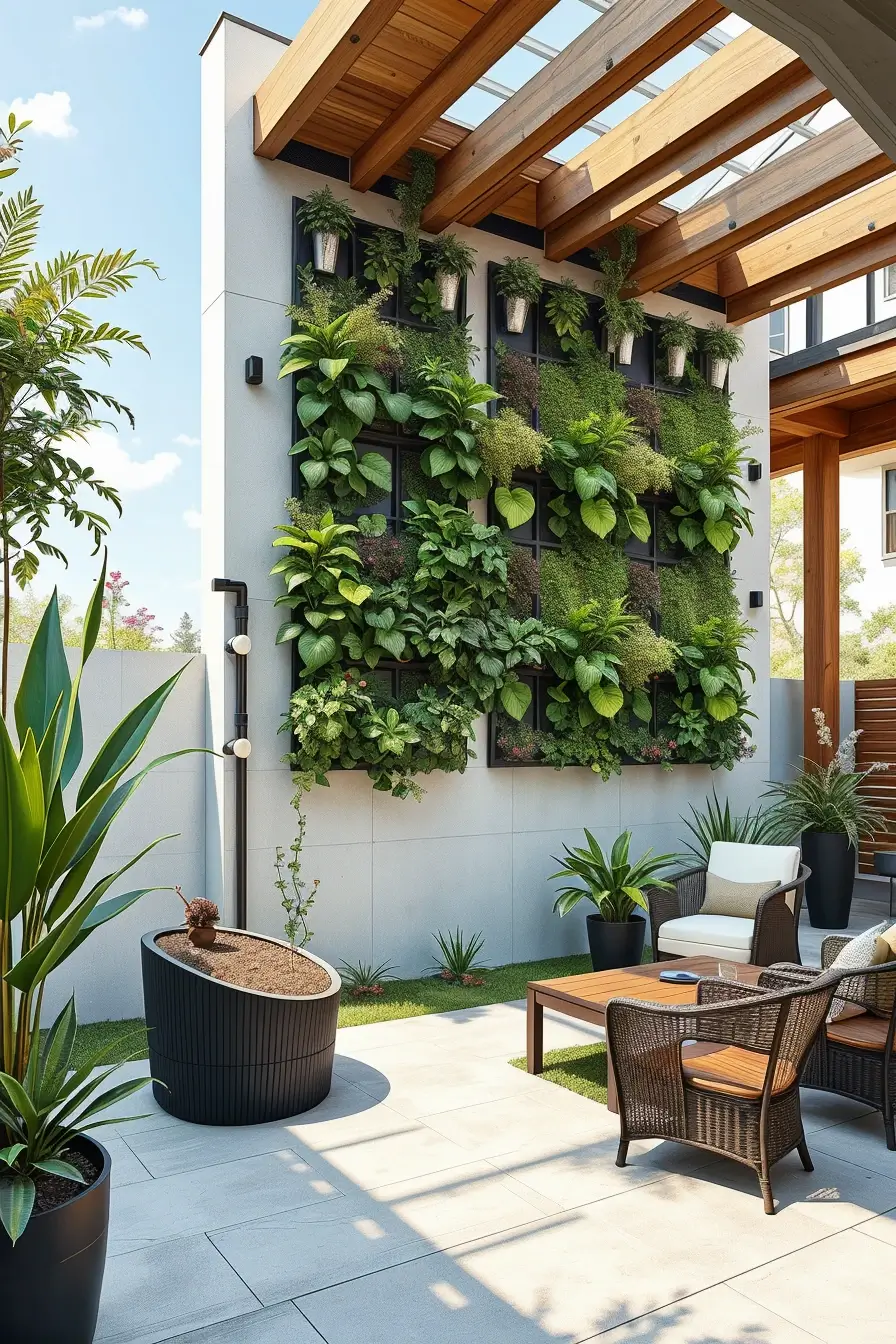
I install automated drip irrigation systems with programmable timers and moisture sensors to ensure even watering. I also recommend quarterly structural inspections of frames, anchors, and backing panels. Fertilization should be adjusted according to plant type and season. Using slow-release organic fertilizers helps maintain soil health without overwhelming delicate roots. I pair maintenance routines with accessible service panels to simplify repairs.
In my experience, consistent small efforts prevent major long-term issues. Many landscape professionals advise a proactive rather than reactive approach to garden care. I strongly support creating a maintenance checklist tailored to the specific vertical garden design.
One missing component in many projects is proper drainage auditing. I always verify that excess water flows freely through the system to prevent wall damage or root rot.
30. Combining Vertical Gardens With Outdoor Furniture And Decor
A vertical garden should feel integrated into the overall outdoor design, not added as an afterthought. In Outdoor Vertical Garden Ideas 2026, the most successful projects balance greenery with furniture, lighting, and decorative accents. I approach the vertical wall as a backdrop that defines the mood of the entire outdoor room.
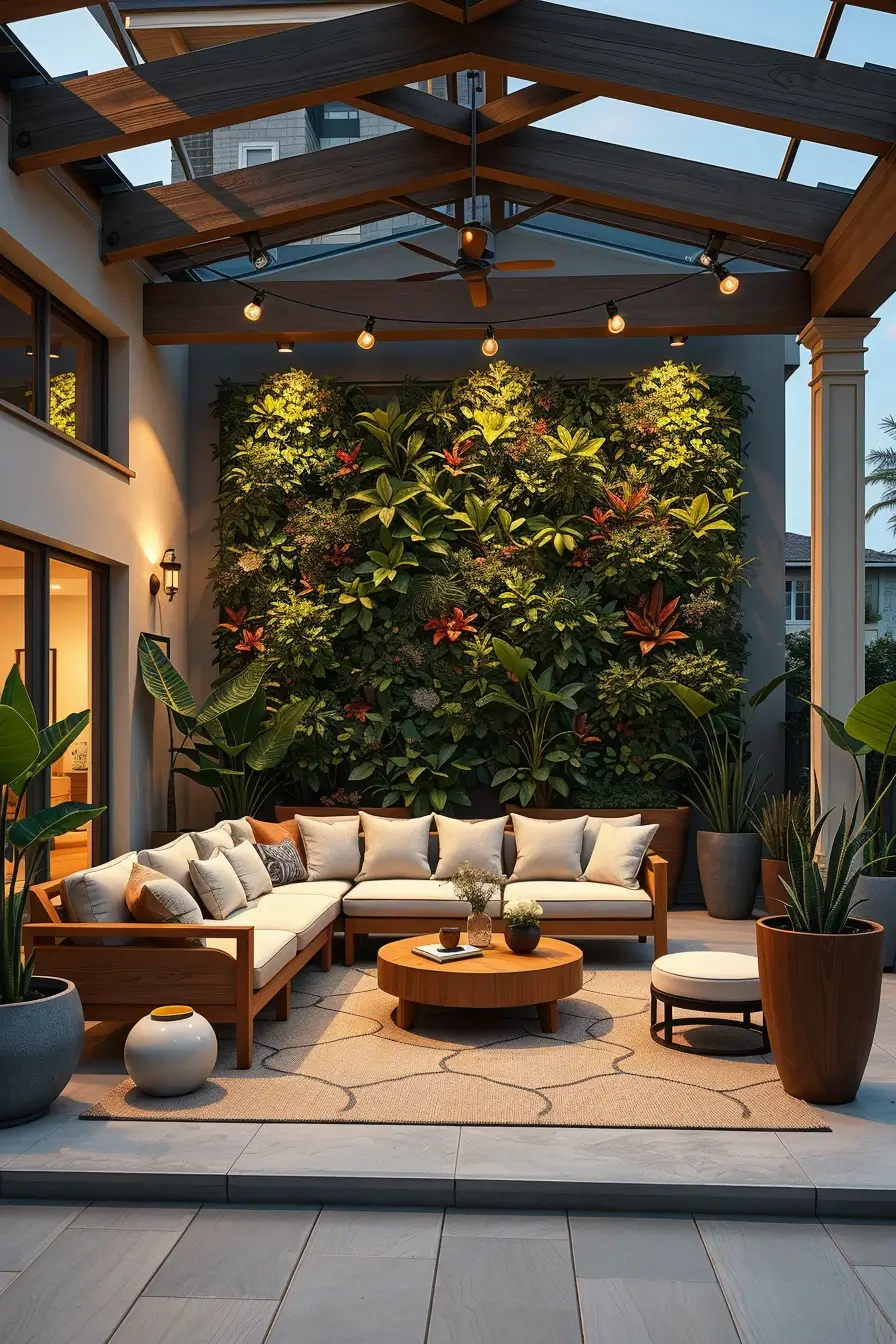
I carefully select outdoor furniture materials that complement the greenery. Teak and powder-coated aluminum pair beautifully with lush foliage. Neutral cushions allow the green wall to remain the focal point. I incorporate layered lighting, including wall washers, lanterns, and pathway lights, to highlight texture at night. Outdoor rugs and ceramic planters further unify the design.
From my professional viewpoint, harmony between greenery and furnishings creates a cohesive living space. Interior design publications often emphasize continuity between architecture and landscaping, and I fully agree. A vertical garden becomes far more impactful when it interacts with seating layouts and social zones.
What should be added here is a zoning strategy. I recommend defining conversation areas, dining spaces, and relaxation corners around the vertical garden to maximize both functionality and aesthetic impact.
Outdoor Vertical Garden Ideas 2026 prove that even the smallest outdoor spaces can be transformed into vibrant, living works of art. By combining smart design, sustainable materials, and thoughtfully selected plants, vertical gardens offer a practical and stylish way to maximize space while enhancing privacy, comfort, and visual appeal.
Whether you prefer a modern living wall, a rustic pallet garden, or a lush edible installation, growing upward is one of the most innovative landscaping solutions of the year. With the right planning and creativity, your outdoor vertical garden can become a refreshing green sanctuary that feels both contemporary and timeless.