Backyards in 2026 are no longer just open lawns with a swing set in the corner — they are becoming curated, design-forward spaces where play meets art. When it comes to sandbox ideas backyard 2026, the focus has shifted dramatically from simple square wooden boxes to sculptural, modern, and architecturally inspired creations that transform children’s play areas into statement features.
This year’s trends celebrate curved lines, round silhouettes, oval layouts, and fluid, streamlined forms that feel soft, organic, and visually harmonious. Think artistic sand pits that resemble miniature amphitheaters, animated-themed designs inspired by storybook worlds, and designer installations that double as backyard sculptures. In 2026, a sandbox is not just a place to dig — it’s an immersive environment that sparks imagination while complementing contemporary landscape design.
Parents are increasingly looking for unique sandbox ideas that blend safety, creativity, and aesthetics. Sustainable materials, integrated seating, subtle lighting, and multifunctional layouts are redefining what a children’s play zone can look like. Whether you prefer minimalist concrete curves, whimsical cartoon-inspired forms, or luxury landscaped installations, modern sandbox concepts offer endless possibilities.
In this guide, we’ll explore the most unusual, artistic, and designer sandbox ideas for backyards in 2026 — all focused on round, curved, oval, and animated styles that elevate outdoor play to a whole new level.
1. Round Sandbox Designs That Create A Soft, Safe Play Environment
When I design round sandboxes, my primary goal is to create a soft, safe, and visually calming play environment. Circular layouts eliminate sharp corners, which significantly reduces the risk of accidental injuries. In backyard planning for 2026, I see more families choosing fully integrated round sand areas positioned within lawns or framed by low greenery. This layout creates a smooth visual flow and allows the sandbox to feel like a natural extension of the landscape rather than a separate object.
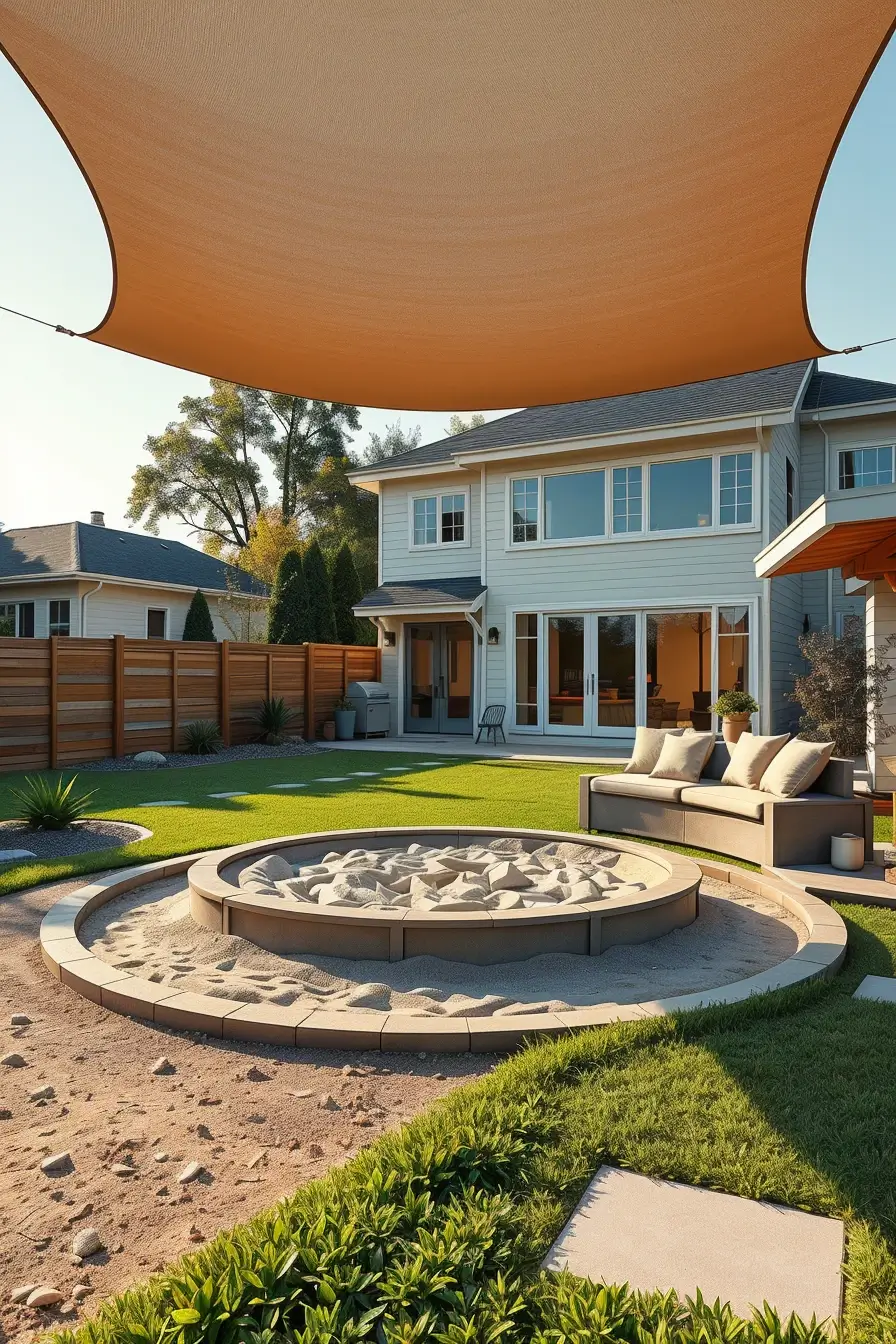
I usually recommend smooth composite or sealed hardwood edging with rounded profiles. The interior base should include proper drainage layers, landscape fabric, and fine, certified play sand. Around the sandbox, I often add curved built-in benches or low upholstered outdoor cushions in weather-resistant fabrics. These seating elements are not decorative only; they allow parents to comfortably supervise children. A circular shade sail or pergola above enhances comfort and UV protection while reinforcing the soft geometry of the space.
From my experience, round sandbox designs encourage more cooperative play because there is no defined “corner territory.” According to recommendations from the American Academy of Pediatrics on safe play environments, open sightlines and soft edges support safer interaction. I have noticed that parents appreciate how round designs look intentional and architectural rather than temporary.
To complete this concept, I would add integrated drainage solutions and a custom-fitted circular cover to protect the sand from debris and rain. I also recommend subtle landscape lighting around the perimeter to enhance safety during early evening hours.
2. Curved Wooden Sandboxes With Seamless Built-In Seating
Curved wooden sandboxes offer warmth and a handcrafted aesthetic while maintaining a contemporary appeal. When I design these, I focus on fluid lines that follow the natural shape of the backyard. Instead of rigid frames, I prefer steam-bent or segmented curved wood panels that create a seamless appearance. This approach makes the sandbox feel like custom outdoor furniture rather than playground equipment.
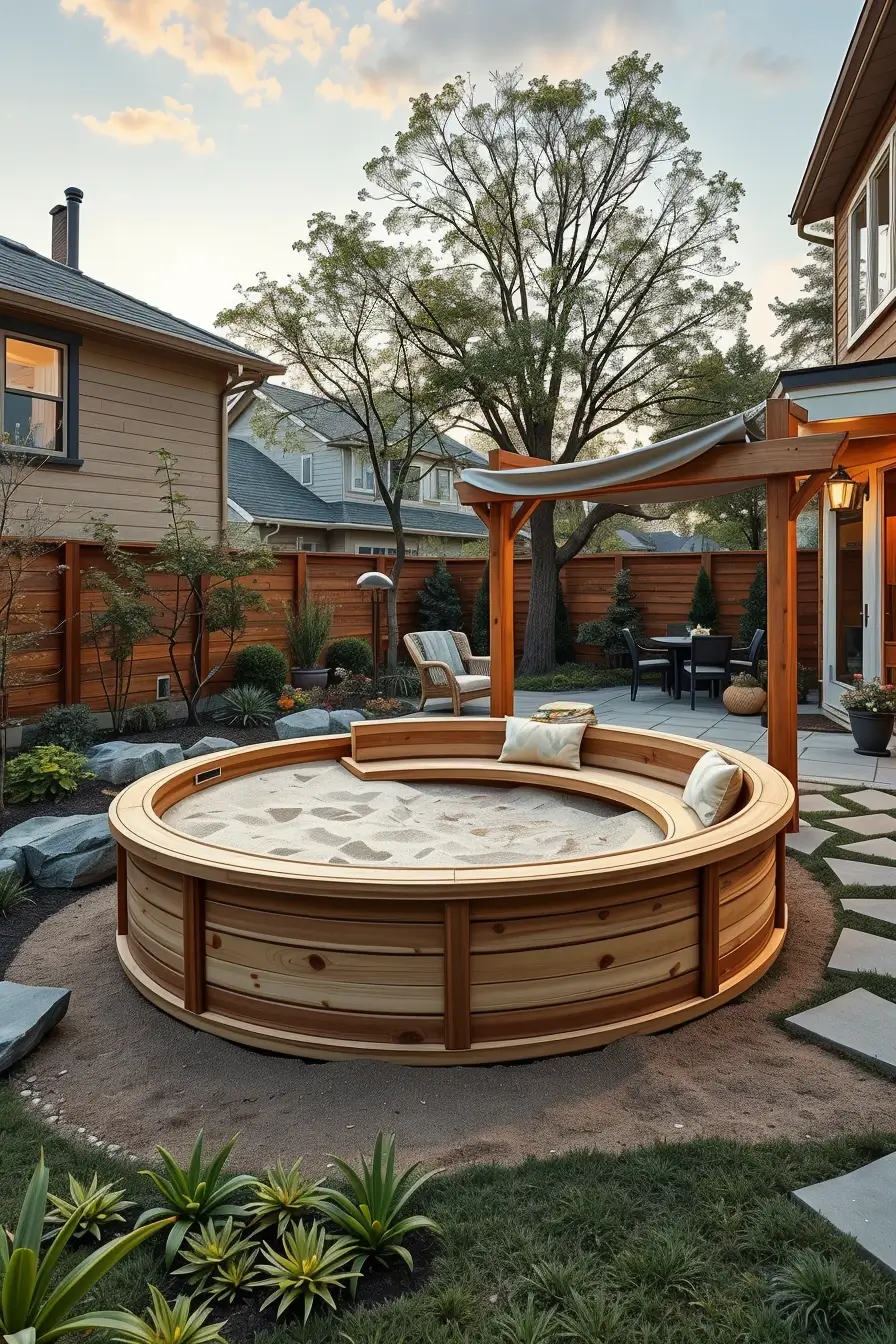
Built-in seating is essential in this concept. I incorporate continuous curved benches attached directly to the sandbox frame. These benches serve as seating for adults and as balance edges for children. I use weather-treated cedar or thermally modified wood because of its durability and resistance to moisture. Adding hidden storage compartments under the seating allows space for toys, buckets, and covers without cluttering the yard.
Personally, I find that wood softens the overall look of modern backyards, especially those with concrete patios or minimalist landscaping. Architectural Digest has repeatedly highlighted the importance of blending natural materials into outdoor spaces to create balance. In my projects, curved wooden sandboxes achieve that balance beautifully while maintaining a sculptural quality.
What I would further enhance in this section is a protective canopy system that mirrors the curve of the seating. A retractable fabric canopy or adjustable wooden slats would provide shade and elevate the architectural coherence of the entire structure.
3. Oval Sand Pits With Layered Terraces For Creative Play
Oval sand pits introduce dynamic movement into backyard design. I often use layered terraces within the oval form to create varying heights and play zones. This multi-level concept supports imaginative construction games and sensory development. The gentle transitions between levels make the space accessible while still visually engaging.
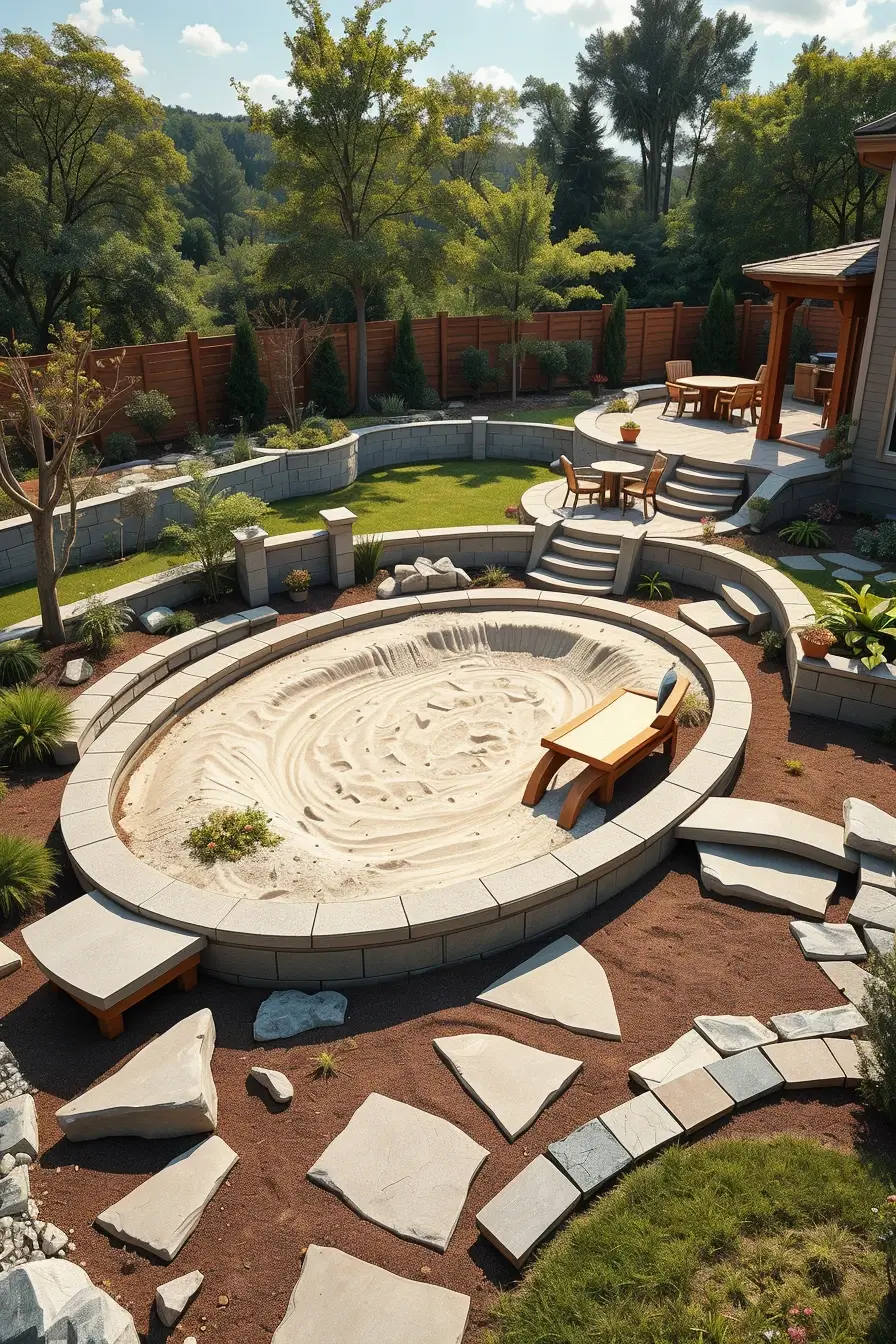
Each terrace can be framed with smooth stone edging or sealed timber borders. I recommend integrating small ramps rather than steps to maintain safety. Within the oval layout, I frequently add sculptural stepping stones, low climbing logs, or curved retaining walls that double as seating. The layered structure encourages role-playing scenarios such as building “castles” or “mountain landscapes.”
In my professional opinion, layered oval sandboxes stimulate more complex play patterns compared to flat surfaces. Research from child development specialists often emphasizes the importance of varied terrain for motor skill development. I have observed children spending longer periods engaged in creative storytelling when the sandbox includes height variations.
To refine this concept further, I would integrate subtle color variation in the sand layers or include embedded water channels for controlled water play. Proper drainage and slip-resistant materials are critical to ensure safety when combining sand and moisture.
4. Streamlined Concrete Sandboxes With Modern Minimalist Appeal
For clients who prefer a bold architectural statement, streamlined concrete sandboxes are a sophisticated solution. I design these with smooth, curved concrete forms that echo contemporary outdoor architecture. The minimalist approach works especially well in urban or modern homes where clean lines dominate the landscape.
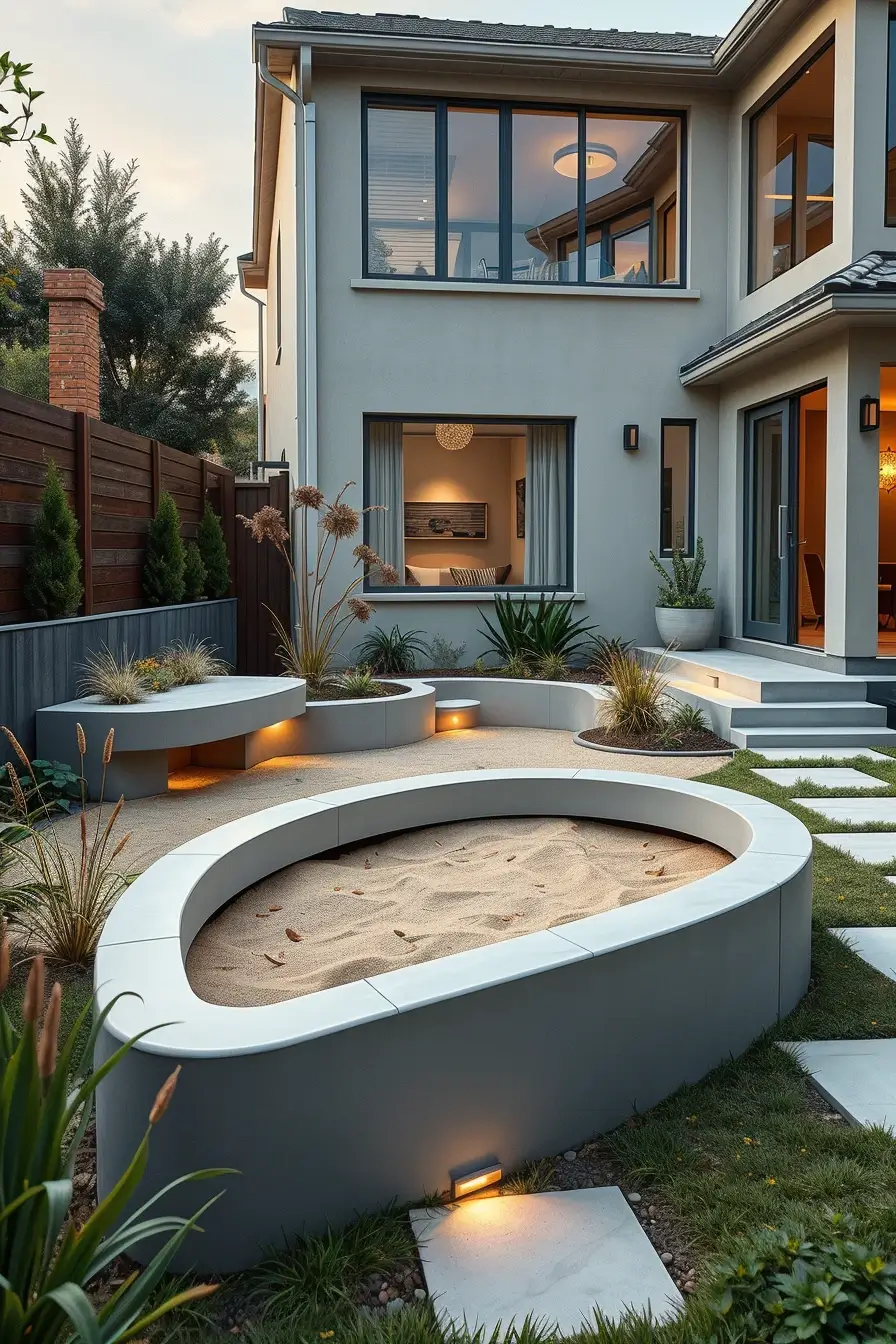
The concrete frame should have softened, rounded edges and a polished or microcement finish to prevent rough surfaces. I typically combine the sandbox with integrated planters or continuous concrete benches to create a cohesive outdoor zone. Neutral tones such as light gray or warm beige help maintain a soft atmosphere despite the use of a solid material.
From my perspective, concrete sandboxes represent the evolution of sandbox ideas backyard 2026 toward sculptural landscaping. When properly designed, they do not feel harsh. Instead, they become a refined outdoor feature. Publications like Dwell often showcase how concrete, when paired with greenery and natural textures, creates balance rather than coldness.
In this concept, I would add softening elements such as surrounding ornamental grasses, integrated LED strip lighting beneath the seating edge, and a concealed drainage system. These additions enhance both functionality and visual appeal.
5. Animated-Themed Sandbox Concepts Inspired By Storybook Worlds
Animated-themed sandboxes in 2026 are far from cartoonish plastic structures. I approach them as immersive environments inspired by storybook landscapes. Using round or oval foundations, I create sculpted edges that resemble rolling hills, waves, or whimsical shapes. The goal is to maintain elegance while introducing imagination.
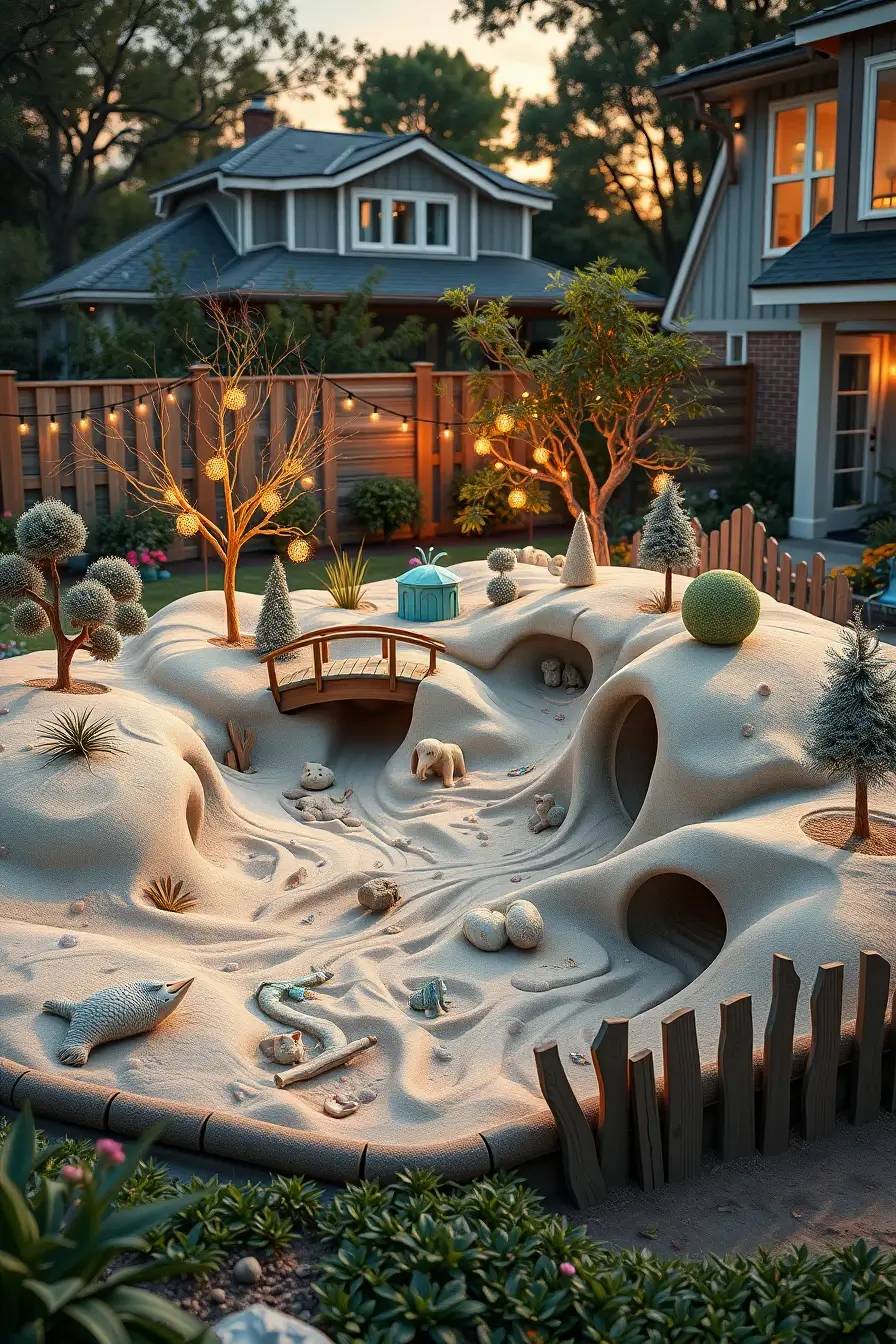
I incorporate hand-painted weather-resistant panels, sculptural wooden elements shaped like trees or abstract characters, and subtle pastel color palettes. Soft curved fencing can define the area without isolating it. Integrated play props such as miniature bridges, tunnels, or stylized “castle walls” encourage storytelling while maintaining safety standards.
In my experience, children respond strongly to narrative environments. However, I always ensure that the design remains timeless so it grows with the child. Instead of overly specific characters, I prefer abstract animated forms. This aligns with advice from landscape designers featured in Better Homes and Gardens, who often recommend adaptable themes over trend-based decorations.
To complete this concept, I would add layered outdoor lighting to create a magical evening atmosphere and incorporate weatherproof storage disguised as part of the themed design. This keeps the space functional while preserving its artistic identity.
6. Sculptural Sandboxes That Double As Backyard Art Installations
When I design sculptural sandboxes, I approach them as functional landscape art. In 2026, outdoor play zones are increasingly treated as architectural statements, and I often collaborate with landscape designers to create sculptural, artistic, designer forms that feel intentional and refined. These sandboxes typically feature bold curved silhouettes, asymmetrical round basins, or flowing, streamlined designs that look like contemporary garden sculptures. The goal is to ensure that even when the sandbox is not in use, it enhances the overall aesthetic of the backyard.
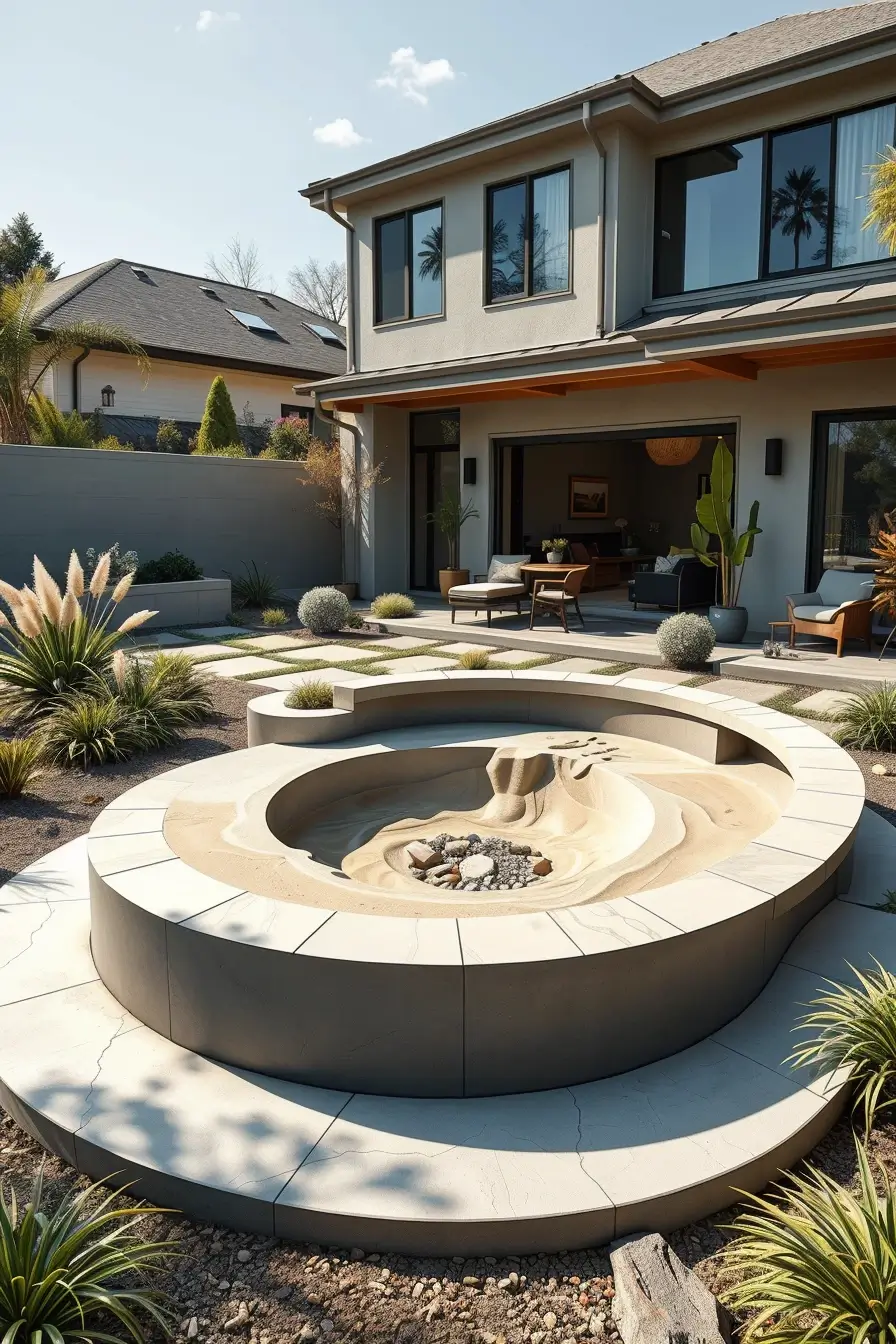
I carefully select materials that emphasize form and durability. Cast concrete, fiberglass-reinforced composites, or smooth stone are ideal for creating seamless curves. I frequently integrate built-in seating that follows the sculptural lines, along with subtle recessed storage compartments hidden within the structure. Surrounding the sandbox, I add ornamental grasses or low architectural shrubs to frame the installation and soften the edges. Every detail, from drainage channels to edge finishing, must be invisible yet effective.
From my professional experience, families appreciate when a sandbox feels permanent and curated rather than temporary. Publications like Dwell and Architectural Digest often emphasize the value of outdoor features that double as art. I have found that when the sandbox becomes part of the design narrative of the home, it elevates the entire property. It transforms play into a design experience.
To complete this section, I would add a custom-fit protective cover designed in the same material palette as the sculpture itself. This ensures longevity while preserving the artistic integrity of the installation.
7. Designer Sandbox Ideas With Architectural Geometry
Architectural geometry is becoming central to sandbox ideas backyard 2026, especially in contemporary homes. While the focus remains on curved and oval shapes, I sometimes integrate subtle geometric layering within those rounded forms. For example, a circular sandbox may sit within a larger oval patio inset or be framed by curved stone pathways that echo the house’s architectural rhythm. This approach creates cohesion between the play area and the structure of the home.
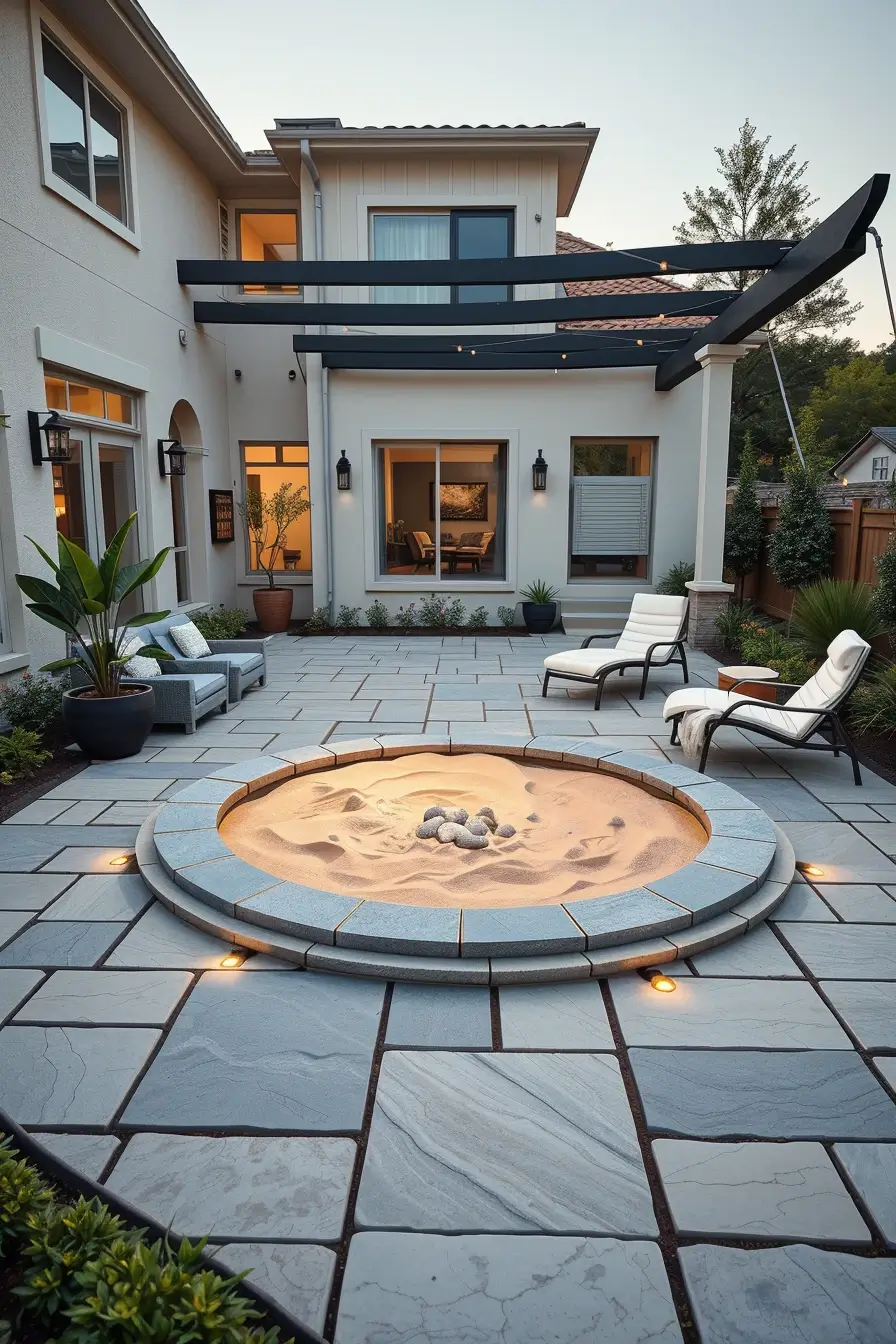
In these designs, I include precision-cut stone, custom metal edging with rounded corners, and integrated lighting strips embedded into the surrounding paving. I often recommend pairing the sandbox with minimalist outdoor furniture such as curved lounge chairs or modular seating that complements the geometry. A partial pergola or arched trellis above can reinforce the visual symmetry while providing shade. Each element is selected to maintain harmony with the home’s façade.
Personally, I believe architectural sandbox designs are ideal for families who value clean lines and modern landscaping. When done correctly, the sandbox becomes an extension of the terrace or garden room. According to trends highlighted in Better Homes and Gardens, outdoor spaces are increasingly designed as functional living areas. In my projects, I ensure that the sandbox aligns with this philosophy.
To strengthen this concept further, I would incorporate concealed storage integrated into nearby architectural elements, such as a curved bench wall or raised planter, ensuring the area remains uncluttered and visually consistent.
8. Organic-Shaped Sandboxes Inspired By Nature Forms
Organic-shaped sandboxes draw inspiration from pebbles, ponds, and flowing riverbanks. When I design these, I focus on asymmetrical, rounded outlines that feel naturally formed rather than engineered. These unique sandbox ideas for children’s backyards blend seamlessly with soft landscaping, especially in gardens filled with native plants and natural stone pathways.
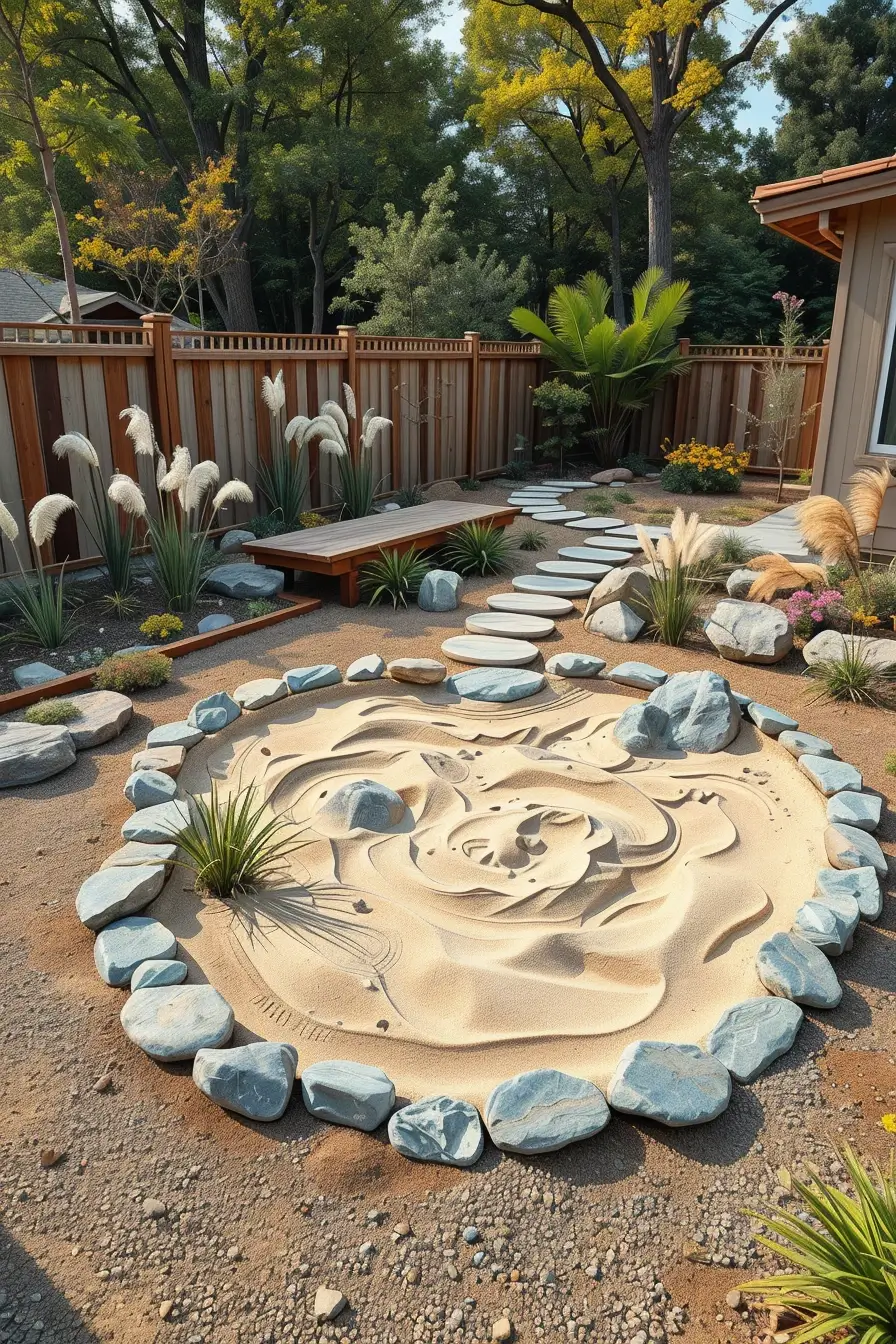
I often use natural wood, smooth river stones, and compacted earth edging to define the sandbox perimeter. The interior may include subtle contouring to mimic dunes. Surrounding the sandbox, I incorporate low plantings such as ornamental grasses or flowering perennials that soften the boundaries. A curved wooden footbridge or stepping stones can enhance the organic narrative while adding interactive elements for children.
In my opinion, organic forms create a calming sensory experience. I have observed that children engage more freely in imaginative play when the environment feels like a miniature natural landscape. Landscape architects frequently recommend biophilic design principles, which connect users to natural forms and textures. I find this especially relevant in family backyard design.
To enhance this section, I would recommend adding a discreet irrigation management system and proper drainage beneath the sand to prevent moisture accumulation, particularly in gardens with dense planting.
9. Sunken Round Sandboxes For A Luxury Landscape Look
Sunken round sandboxes create a refined, integrated appearance that feels almost like a conversation pit adapted for children. I design these by lowering the sandbox slightly below lawn or patio level, ensuring smooth curved retaining edges. This subtle level change defines the play area while maintaining visual elegance.
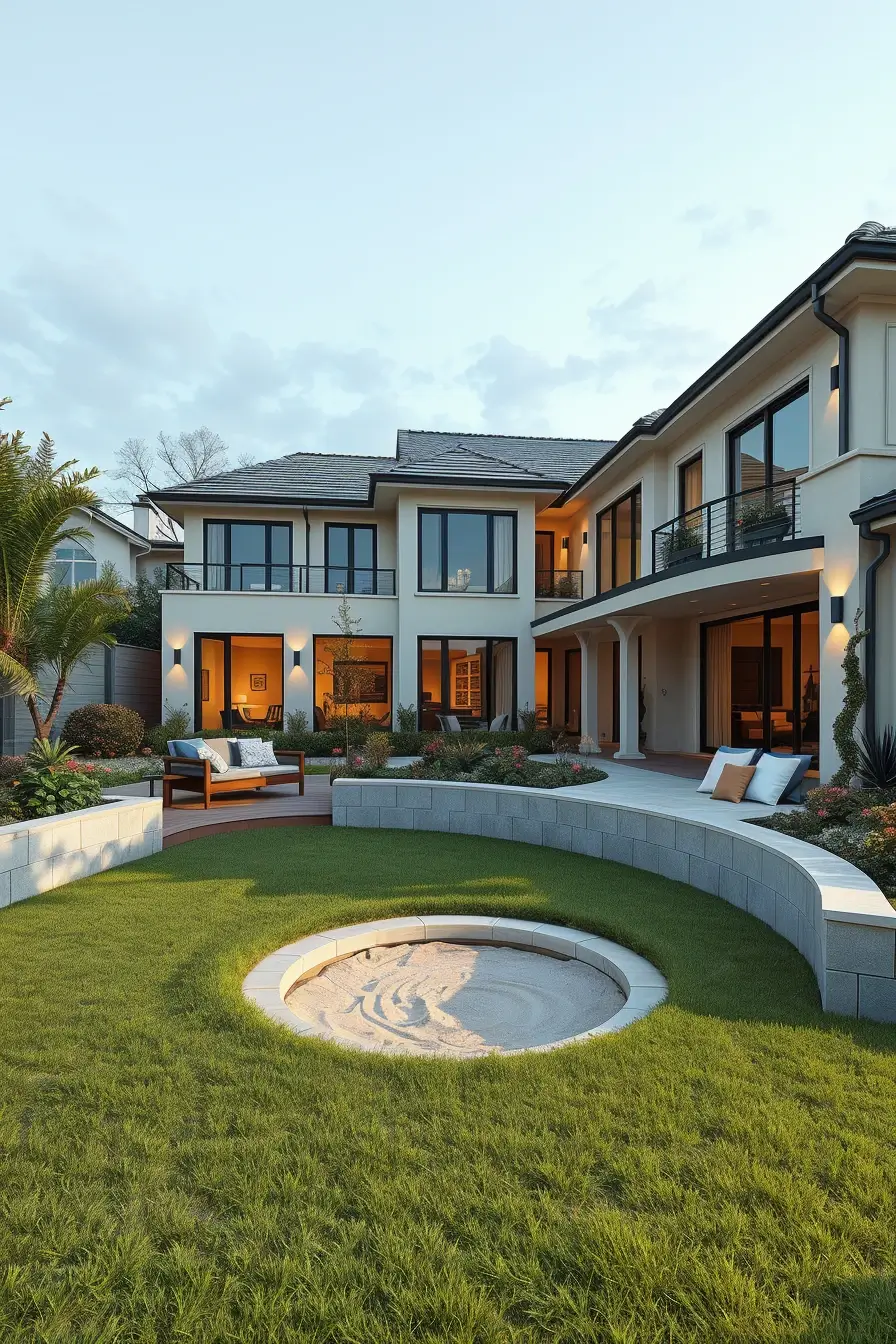
The retaining wall is typically constructed from smooth concrete, stone, or curved timber panels. I add built-in wraparound seating at ground level so adults can comfortably supervise. Soft outdoor cushions and weather-resistant fabrics make the space inviting. Access is provided through a gently sloped entry rather than steps, maintaining safety and accessibility.
From my experience, sunken sandboxes create a sense of intimacy and enclosure without feeling restrictive. They also reduce sand displacement into surrounding areas. Designers featured in Architectural Digest often emphasize the importance of level changes in landscape design to create defined zones. I find this approach highly effective in family backyards.
To finalize this concept, I would integrate perimeter drainage, a fitted cover system, and subtle recessed lighting along the retaining wall to enhance safety and elevate the luxury atmosphere.
10. Raised Curved Sandbox Platforms With Integrated Lighting
Raised curved sandbox platforms are ideal for modern patios and smaller backyards. I elevate the sandbox slightly above ground level using a rounded platform that doubles as a design feature. This approach keeps the sand contained while creating a clear architectural boundary.
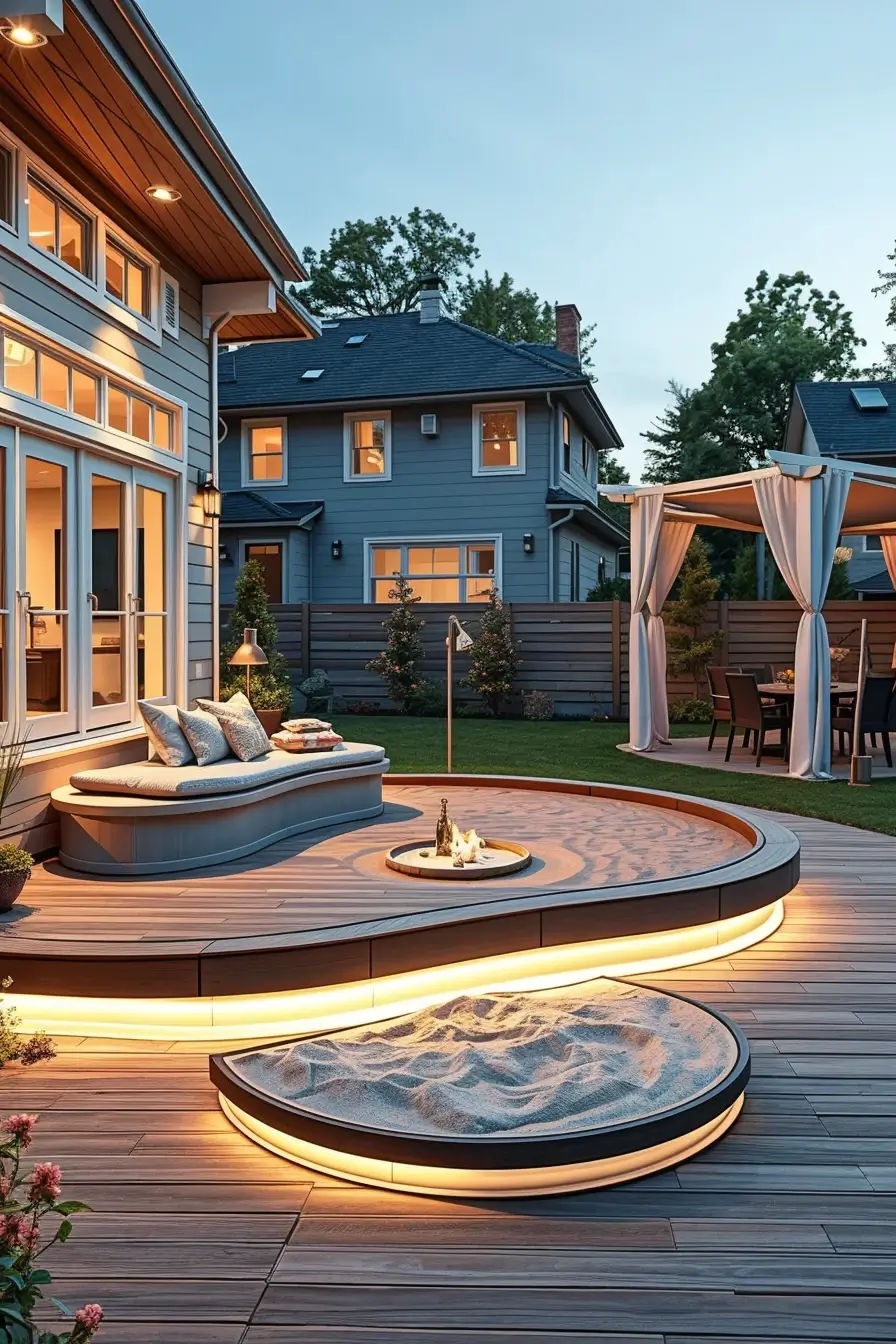
The platform is usually constructed from composite decking, sealed hardwood, or smooth concrete with softened edges. I integrate concealed LED strip lighting beneath the platform lip to create a floating effect in the evening. Built-in curved benches and storage compartments are incorporated directly into the raised structure. The lighting not only enhances safety but also transforms the sandbox into a glowing focal point after sunset.
In my professional view, this is one of the most adaptable sandbox ideas backyard 2026 concepts because it combines practicality with visual drama. I have implemented similar lighting strategies in outdoor kitchens and lounge areas, and the effect translates beautifully to children’s play zones. Properly installed low-voltage lighting ensures energy efficiency and durability.
What I would add here is a weather-resistant, custom-shaped cover and a nearby water source for easy cleaning. Including a soft shade element such as a curved pergola or sail would complete the composition and make the raised platform comfortable throughout the day.
11. Two-Tone Sand And Border Combinations For Visual Contrast
When I design a sandbox with two-tone sand and contrasting borders, I focus on visual clarity and spatial organization. In 2026, curved and oval sandbox layouts are especially popular because they soften the backyard composition and create a sculptural focal point. By using two shades of sand such as natural beige and light gray, I can visually divide play zones without physical barriers. A rounded concrete or composite border in a contrasting tone defines the perimeter and prevents sand from spilling into surrounding landscaping.
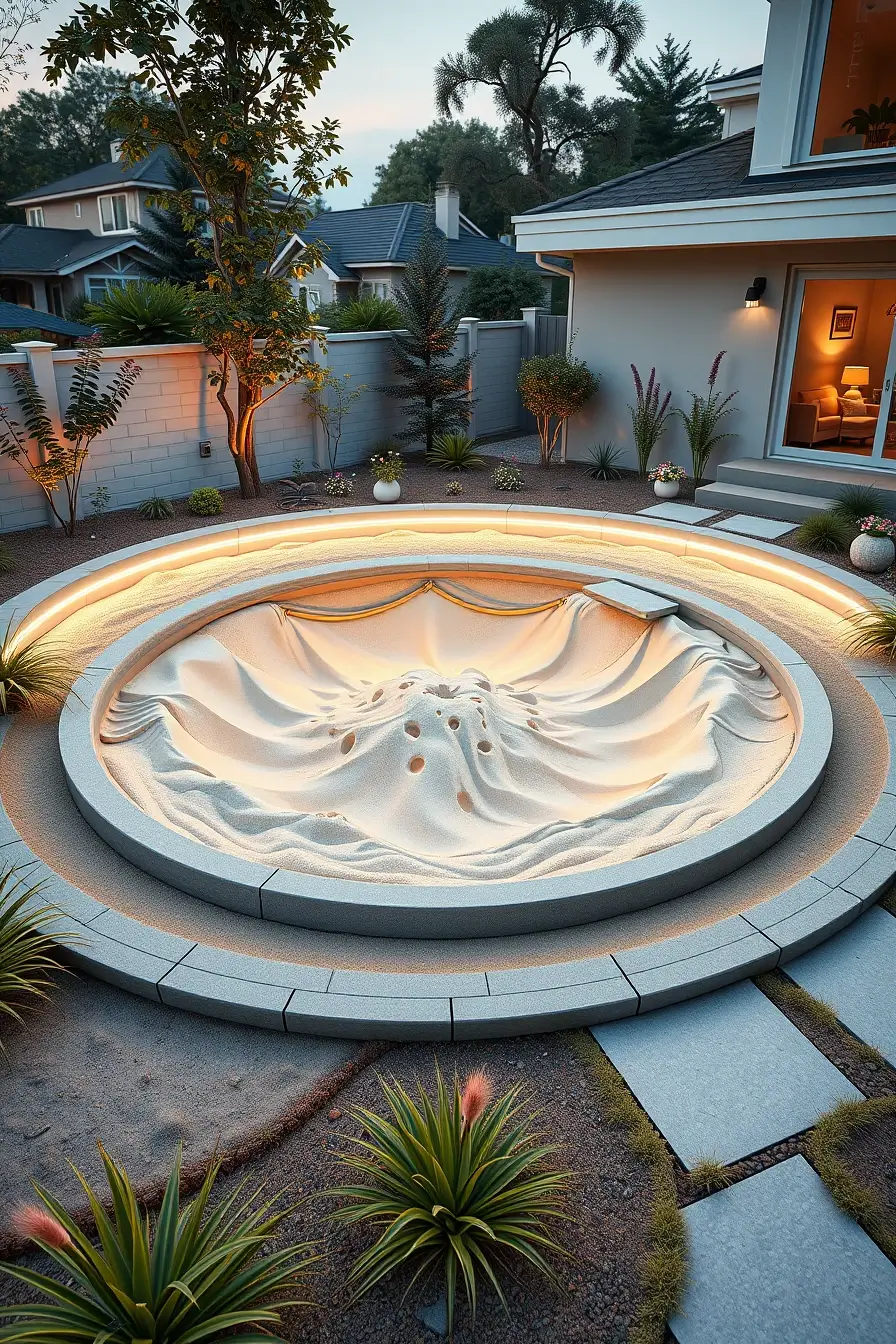
I carefully select materials for the border such as smooth powder-coated steel, rounded cedar planks, or molded recycled plastic with streamlined edges. I always recommend slightly raised curved edges that double as seating. This eliminates the need for extra outdoor furniture and keeps the design cohesive. Integrated LED strip lighting beneath the curved border enhances the contrast in the evening while maintaining a soft, child-friendly atmosphere.
From my experience, subtle contrast increases children’s engagement because it encourages imaginative play. Designers featured in Architectural Digest often emphasize that contrast creates visual rhythm in outdoor spaces, and I see this principle working perfectly in sandbox layouts. I believe that combining function and artistic expression is what makes these sandbox ideas truly modern.
To complete this section, I would add drainage layers beneath each sand tone and a geotextile base to prevent mixing. I would also incorporate surrounding low-maintenance landscaping such as ornamental grasses arranged in soft curved lines to reinforce the sculptural theme.
12. Eco-Friendly Sandbox Ideas Using Sustainable Materials
Sustainability is no longer optional in 2026 backyard design. When creating eco-friendly sandbox concepts, I prioritize responsibly sourced wood, recycled composites, and natural finishes. A round or oval sandbox made from FSC-certified cedar with a smooth, curved silhouette fits beautifully into a modern backyard while maintaining environmental responsibility.
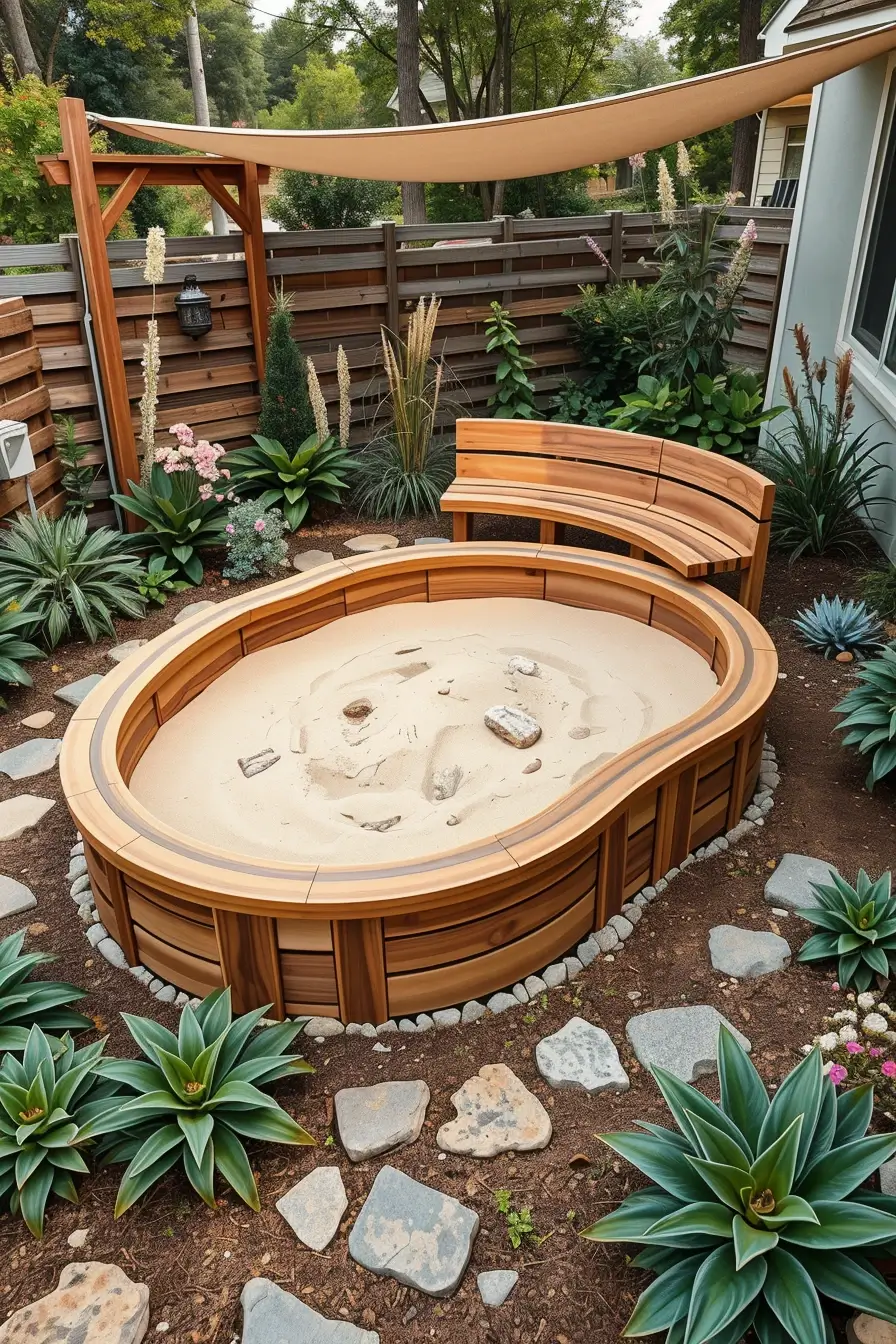
I typically include a permeable gravel base for drainage, non-toxic play sand, and water-based sealants that protect the wood without releasing harmful chemicals. Surrounding the sandbox with native plants not only reduces maintenance but also supports local biodiversity. I prefer integrated curved benches made from reclaimed wood so parents can supervise comfortably without adding unrelated furniture pieces.
In my professional opinion, sustainability enhances both aesthetics and longevity. Well-known US publications such as Dwell regularly highlight how natural materials age gracefully, and I have observed that cedar and thermally modified wood develop a warm patina over time. This reinforces the organic, sculptural quality of modern sandbox ideas.
What I would add here is a retractable organic cotton canopy in a soft neutral shade. It provides UV protection while preserving the streamlined look. I would also suggest installing a rainwater collection feature nearby to lightly moisten the sand in dry climates without waste.
13. Smart Sandbox Designs With Hidden Storage Solutions
In many backyards, clutter quickly becomes a problem. That is why I often design smart sandbox systems with concealed storage. A circular sandbox with a hinged curved lid that transforms into bench seating keeps toys protected while maintaining a clean aesthetic. The smooth, oval shape feels intentional and designer rather than improvised.
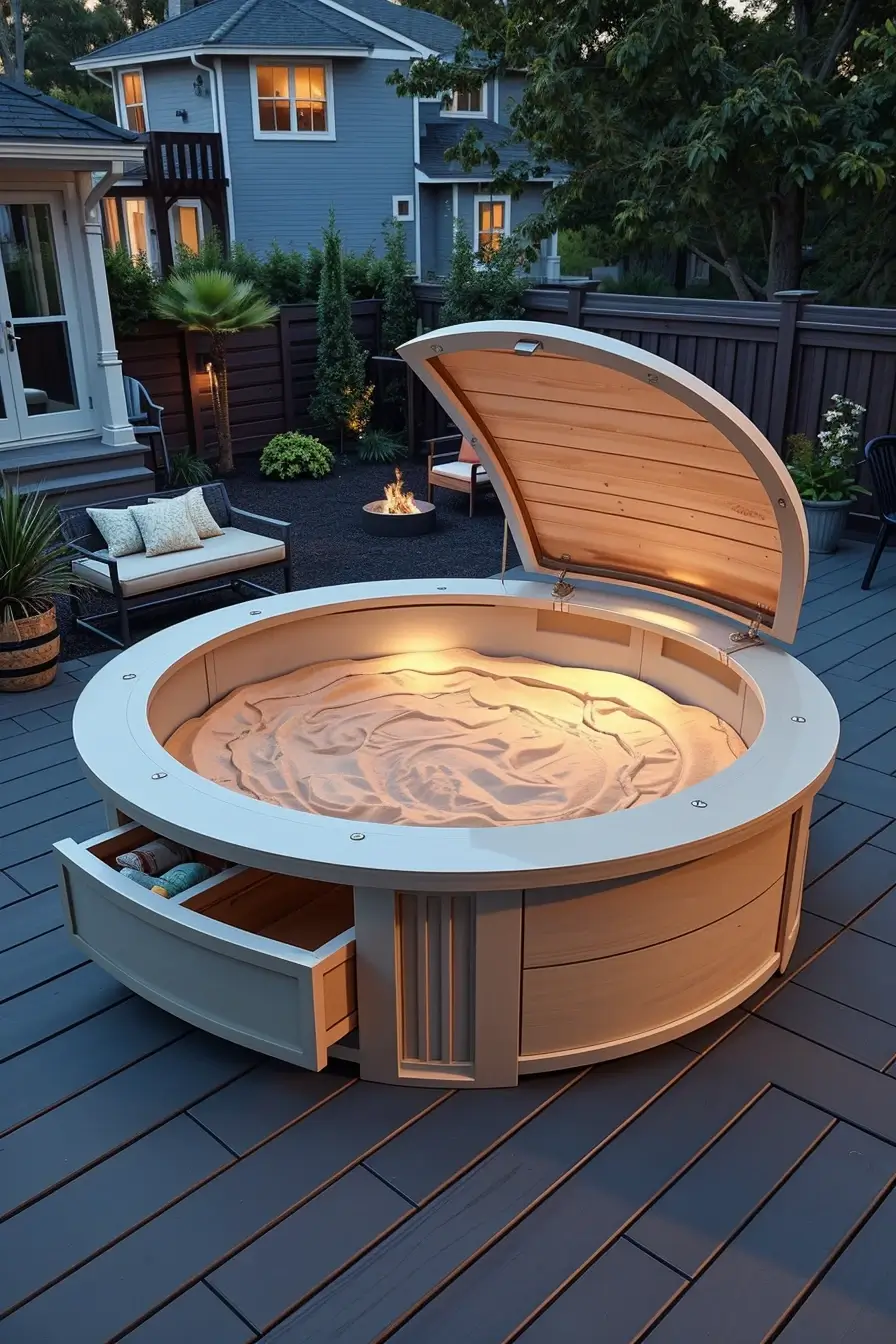
Inside the base, I include waterproof storage compartments divided into sections for tools, buckets, and molds. I use soft-close hinges for safety and durable weather-resistant hardware. The lid panels are typically finished in composite decking material so they withstand rain and temperature changes. I also incorporate subtle drainage gaps that prevent water accumulation.
From my experience, hidden storage significantly increases the lifespan of play equipment. According to Better Homes and Gardens, organized outdoor spaces reduce visual stress and improve usability. I have found that families are more likely to maintain a sandbox area when everything has a designated place.
To improve this concept further, I would add modular dividers inside the storage compartments and a discreet locking mechanism for additional safety. Solar-powered interior lighting could also be integrated for evening accessibility without compromising the modern design.
14. Modular Round Sandbox Systems For Growing Families
Families evolve, and backyard play zones should adapt accordingly. I design modular round sandbox systems that can expand over time. Starting with a compact circular core, additional curved segments can be attached to create oval or organic shapes as children grow or as space allows.
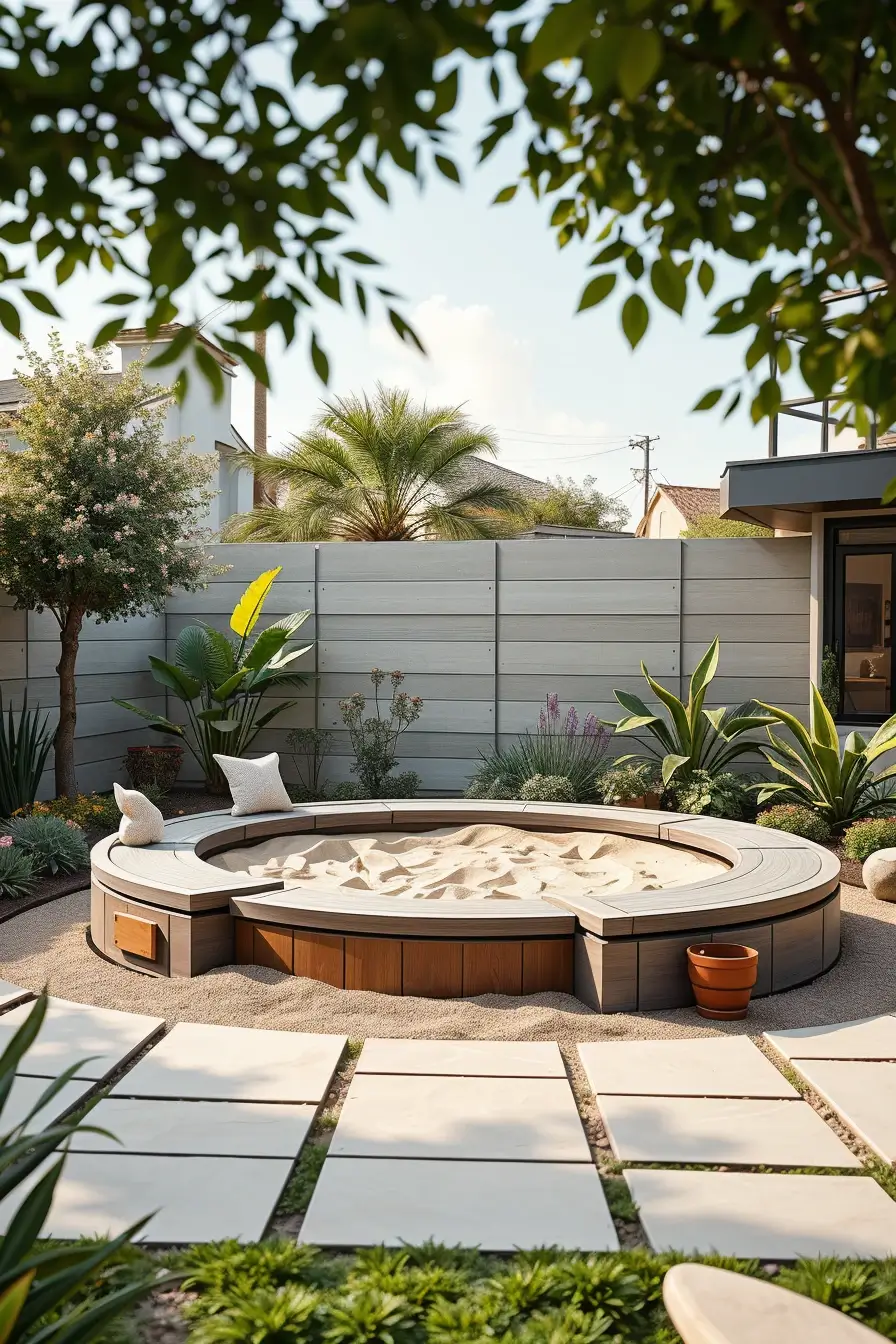
Each module is built with interlocking panels made of durable composite or treated hardwood. I ensure that connection points are hidden to maintain a seamless sculptural appearance. Some modules include built-in seating, while others can be converted into planter sections, creating a multifunctional backyard feature.
I believe flexibility is one of the most important elements in modern outdoor design. Publications like HGTV frequently highlight adaptable outdoor solutions, and I agree that modular systems provide long-term value. In my projects, clients appreciate knowing that their investment can evolve with their family’s needs.
What I would add to this section is a design plan that anticipates future upgrades such as shade sails, pergolas, or integrated water play elements. Preparing foundational spacing in advance simplifies expansion later and preserves the aesthetic harmony of the yard.
15. Artistic Mosaic-Trimmed Sandboxes With Custom Patterns
For homeowners who want something truly artistic, I recommend mosaic-trimmed sandbox borders. A rounded or oval sandbox with custom ceramic or stone mosaic detailing along the outer curve becomes a sculptural art piece within the backyard. The animated style patterns can reflect nature themes, abstract waves, or geometric motifs.
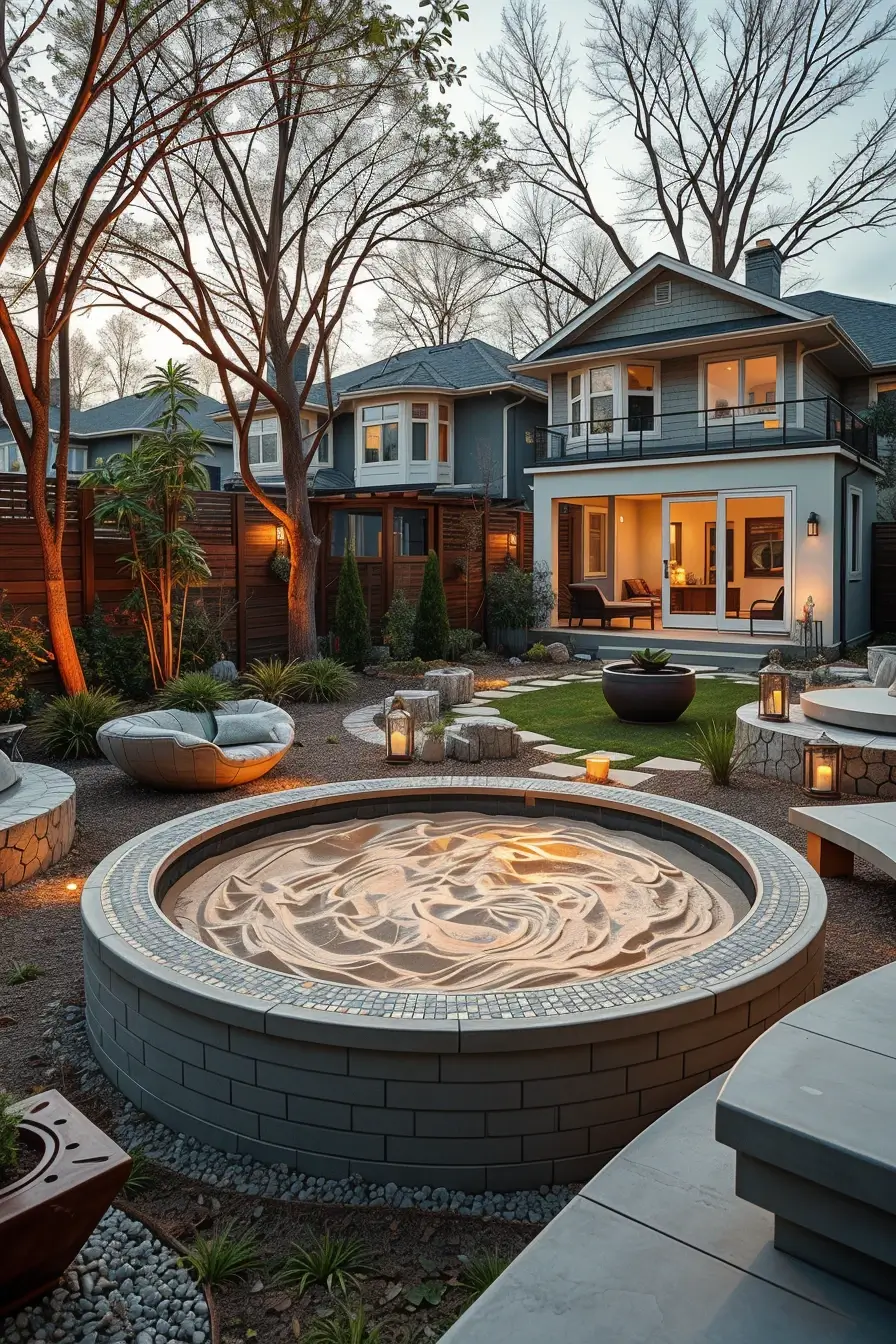
I carefully select frost-resistant tiles and smooth grout finishes to ensure durability and safety. The mosaic trim is placed along the vertical exterior surface so children do not sit directly on textured areas. I often pair this with smooth concrete seating edges and surrounding curved pavers to maintain balance between art and practicality.
In my opinion, artistic details elevate a simple play structure into a designer feature. Architectural Digest has long emphasized the importance of craftsmanship in outdoor environments, and mosaic detailing embodies that principle. I have seen how children respond positively to vibrant yet tasteful patterns that stimulate imagination.
To enhance this concept, I would incorporate subtle integrated lighting that highlights the mosaic patterns at dusk. A nearby sculptural bench or curved planter in a matching tone would also reinforce the cohesive artistic theme.
16. Modern Pergola-Covered Sandboxes With Flowing Lines
When I design pergola-covered sandboxes in 2026, I focus on soft, flowing lines that complement round or oval sandbox shapes. A curved pergola structure above the sandbox not only provides shade but also reinforces the sculptural composition of the backyard. I prefer powder-coated aluminum or laminated wood beams bent into gentle arcs to create a streamlined silhouette. This approach transforms the sandbox into a defined outdoor room rather than a simple play corner.
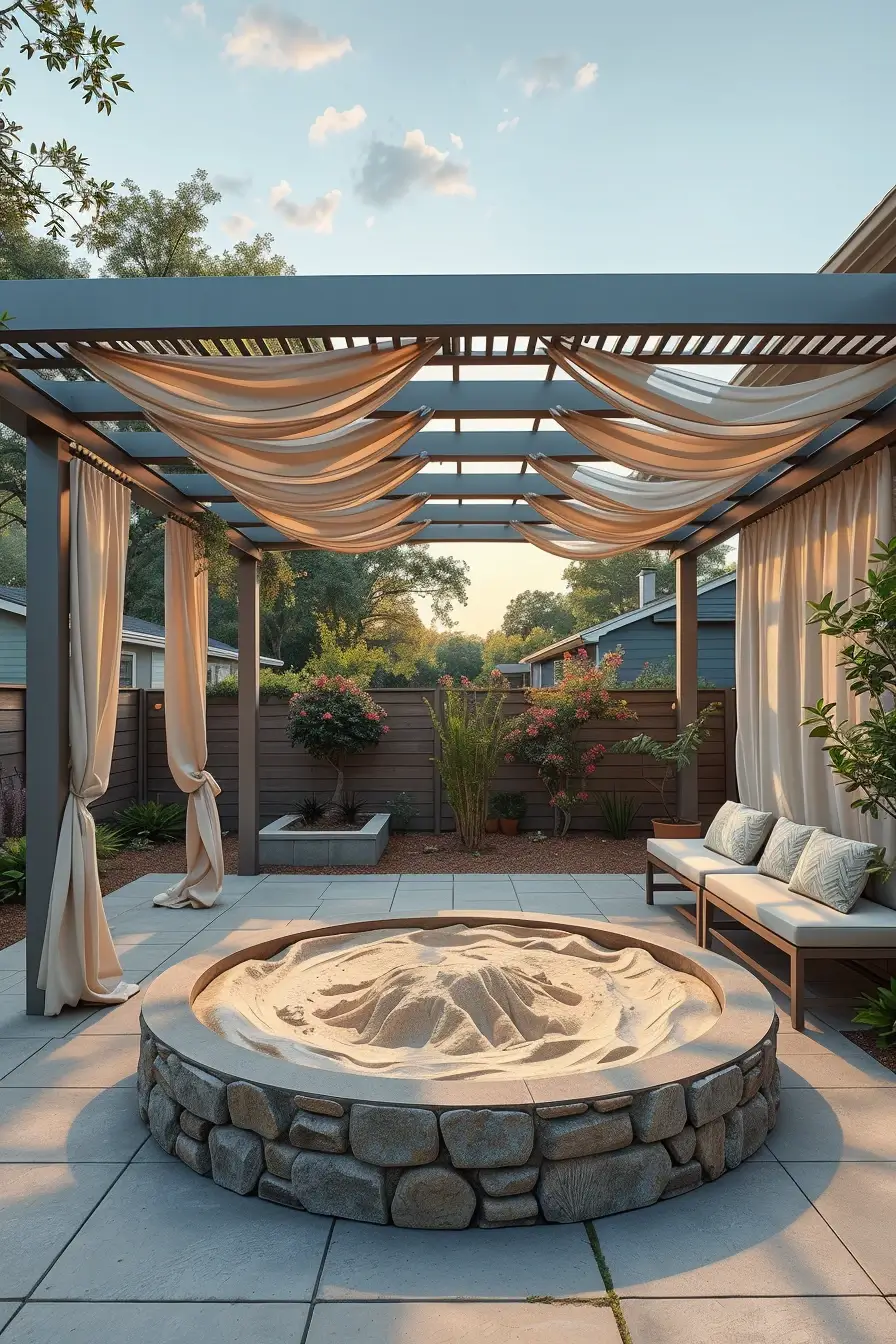
I usually incorporate integrated slatted roofing that filters sunlight while maintaining airflow. Sheer outdoor curtains in neutral tones can be added for additional UV protection and visual softness. I often include built-in curved bench seating along the sandbox perimeter, matching the pergola’s material for cohesion. Subtle ground lighting and climbing plants such as jasmine or clematis enhance the animated yet refined look of the space.
From my professional experience, defined outdoor zones increase both usability and aesthetic appeal. Designers frequently featured in Dwell emphasize that outdoor structures should feel like architectural extensions of the home. I agree with this principle and find that a pergola with rounded forms creates a balanced transition between landscape and play area.
To strengthen this concept further, I would add weather-resistant outdoor cushions and a small side storage niche built into one of the pergola columns. I would also recommend ensuring proper anchoring and drainage to maintain long-term structural integrity.
17. Interactive Sandbox Landscapes With Sculptural Climbing Elements
In 2026, sandbox areas are evolving into interactive micro-landscapes. I design sculptural climbing elements that curve organically around or partially within the sandbox, creating an immersive play environment. Rounded climbing arches made from coated steel or molded composite materials introduce movement and dimension without sharp angles. The goal is to maintain safety while enhancing physical engagement.
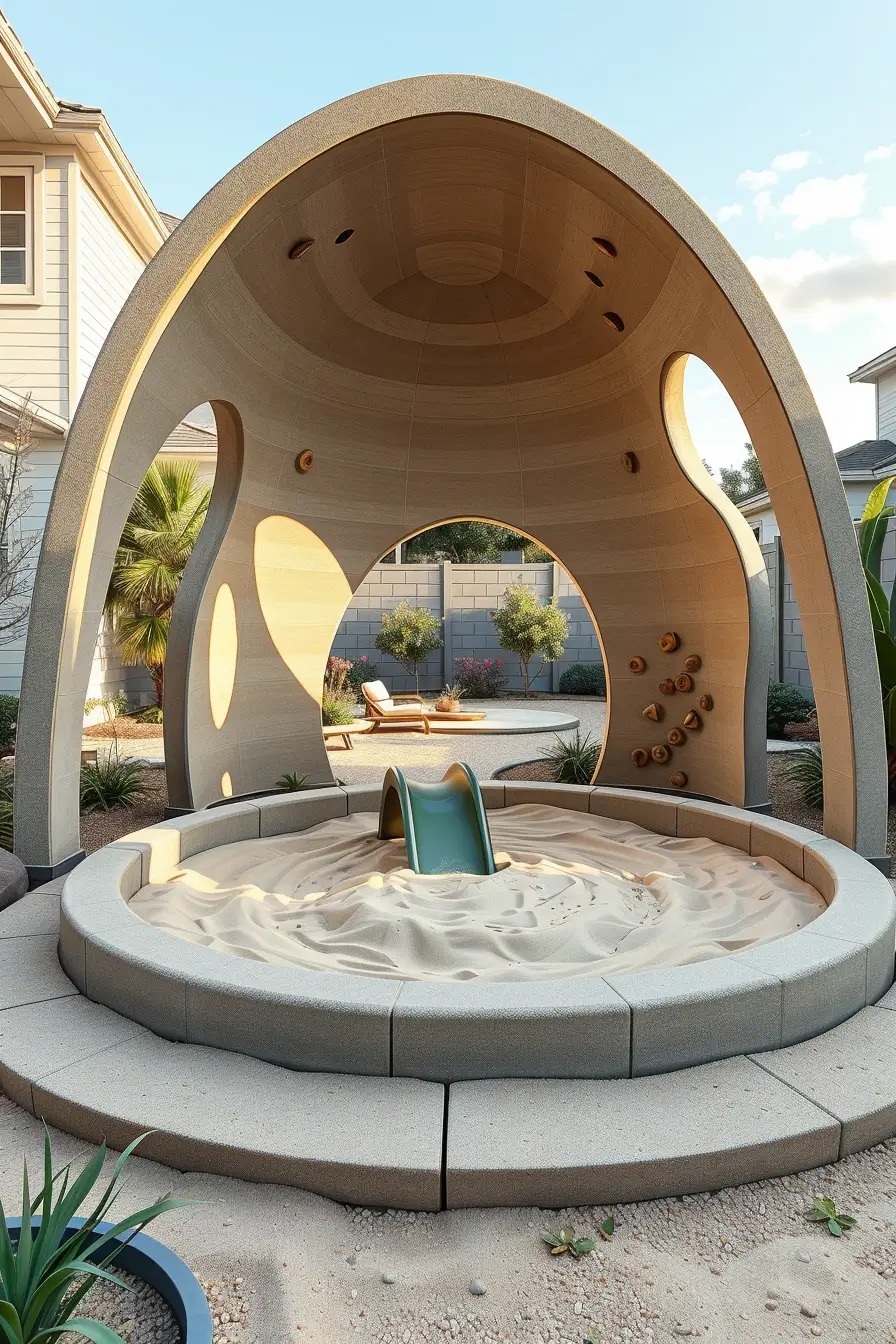
I typically include low-profile climbing domes, curved stepping stones embedded into the sand, and smooth sculptural slides that integrate directly into the sandbox edge. Each element is placed strategically to avoid overcrowding while allowing clear circulation paths. Soft rubberized surfaces around climbing zones improve safety, and neutral color palettes maintain a cohesive designer aesthetic.
From my perspective, combining movement and imaginative play significantly increases developmental benefits. Publications like HGTV often highlight multifunctional backyard designs, and I have found that parents appreciate spaces that support both creative and physical activity. I personally ensure that all climbing elements meet safety standards while maintaining an artistic appearance.
To enhance this layout, I would integrate subtle topographic shaping of the sand itself, forming gentle dunes or raised mounds. I would also include shaded seating nearby so caregivers can comfortably supervise active play.
18. Minimalist Japanese-Inspired Zen Sandbox Gardens For Kids
A Japanese-inspired Zen sandbox garden offers a calm and balanced interpretation of modern sandbox ideas. I design these spaces with smooth oval boundaries, natural wood or stone borders, and carefully arranged gravel or sand patterns. The focus is on simplicity, mindfulness, and texture rather than bright colors. This approach creates a serene yet playful environment within the backyard.
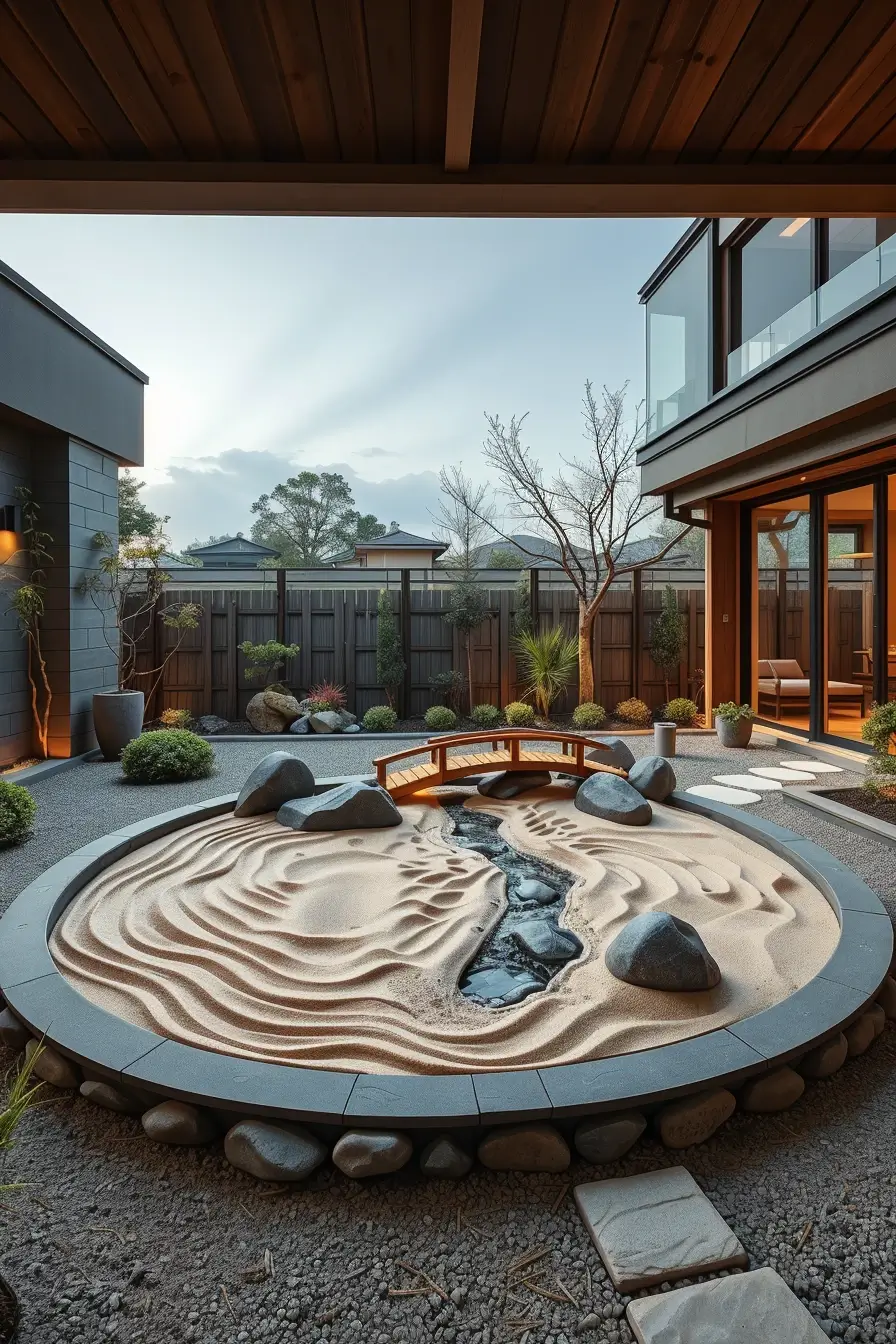
I incorporate smooth river stones, small wooden bridges with curved lines, and low bamboo fencing to define the space. A few sculptural shrubs such as boxwood spheres or dwarf maples provide subtle greenery without overwhelming the design. I often add child-sized wooden rakes so children can create patterns in the sand, encouraging creative expression while maintaining the Zen aesthetic.
In my professional opinion, simplicity often enhances functionality. Architectural Digest frequently emphasizes restraint in modern landscape design, and I believe that minimalist principles can successfully translate into children’s spaces. I have observed that children respond surprisingly well to calm, structured environments where they can shape the landscape themselves.
To complete this concept, I would add discreet drainage layers beneath the sand and a shaded corner created by a curved pergola or tree canopy. Soft pathway lighting would maintain visibility while preserving the tranquil atmosphere.
19. Coastal-Themed Curved Sandboxes With Soft Neutral Palettes
For families who love light and airy aesthetics, I design coastal-themed curved sandboxes inspired by natural shorelines. Rounded or oval sandbox forms mimic the fluid shapes of dunes and waves. I select soft neutral palettes such as sandy beige, driftwood gray, and pale blue accents to maintain harmony with the outdoor environment.
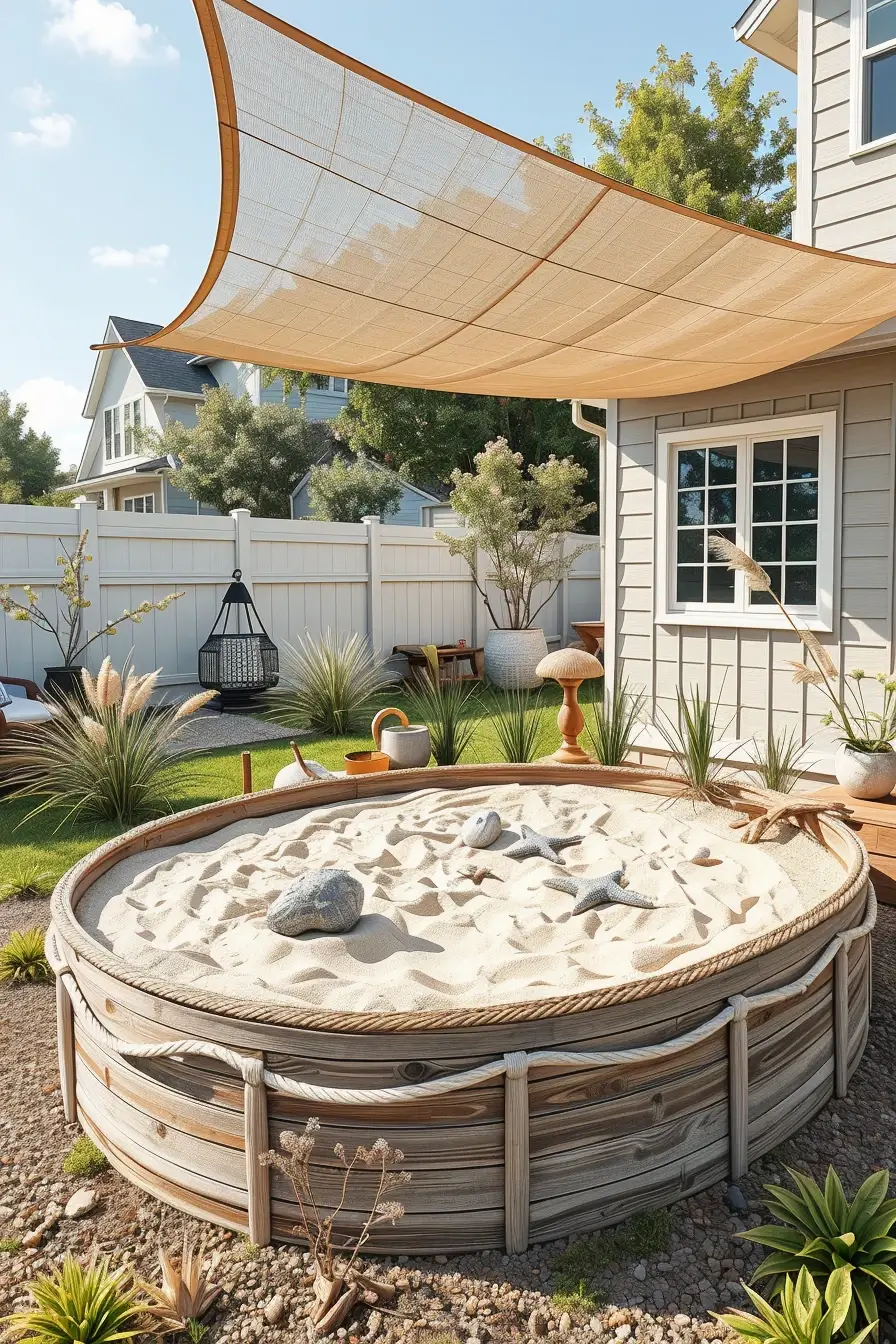
Materials play a crucial role in achieving authenticity. I use weathered wood finishes, rope detailing along the curved border, and smooth white composite seating edges. Nautical-inspired shade sails in light linen tones provide sun protection while reinforcing the theme. Decorative elements such as sculptural driftwood pieces or subtle shell inlays add personality without overwhelming the space.
In my experience, coastal designs feel timeless and inviting. Better Homes and Gardens frequently highlights the calming effect of neutral outdoor palettes, and I find that these tones create a relaxing atmosphere for both children and adults. I always ensure that decorative elements remain securely attached and child-safe.
To elevate this design further, I would incorporate surrounding ornamental grasses that sway in the wind to echo the seaside aesthetic. A nearby outdoor storage chest in matching tones would keep toys organized while maintaining stylistic consistency.
20. Futuristic Sandbox Pods With Dome And Bubble Shapes
One of the most unusual and artistic sandbox ideas for children’s backyards in 2026 is the futuristic pod concept. I design dome or bubble-shaped sandbox enclosures with transparent or semi-transparent materials that create a playful, animated effect. These rounded forms feel sculptural and innovative while offering weather protection.
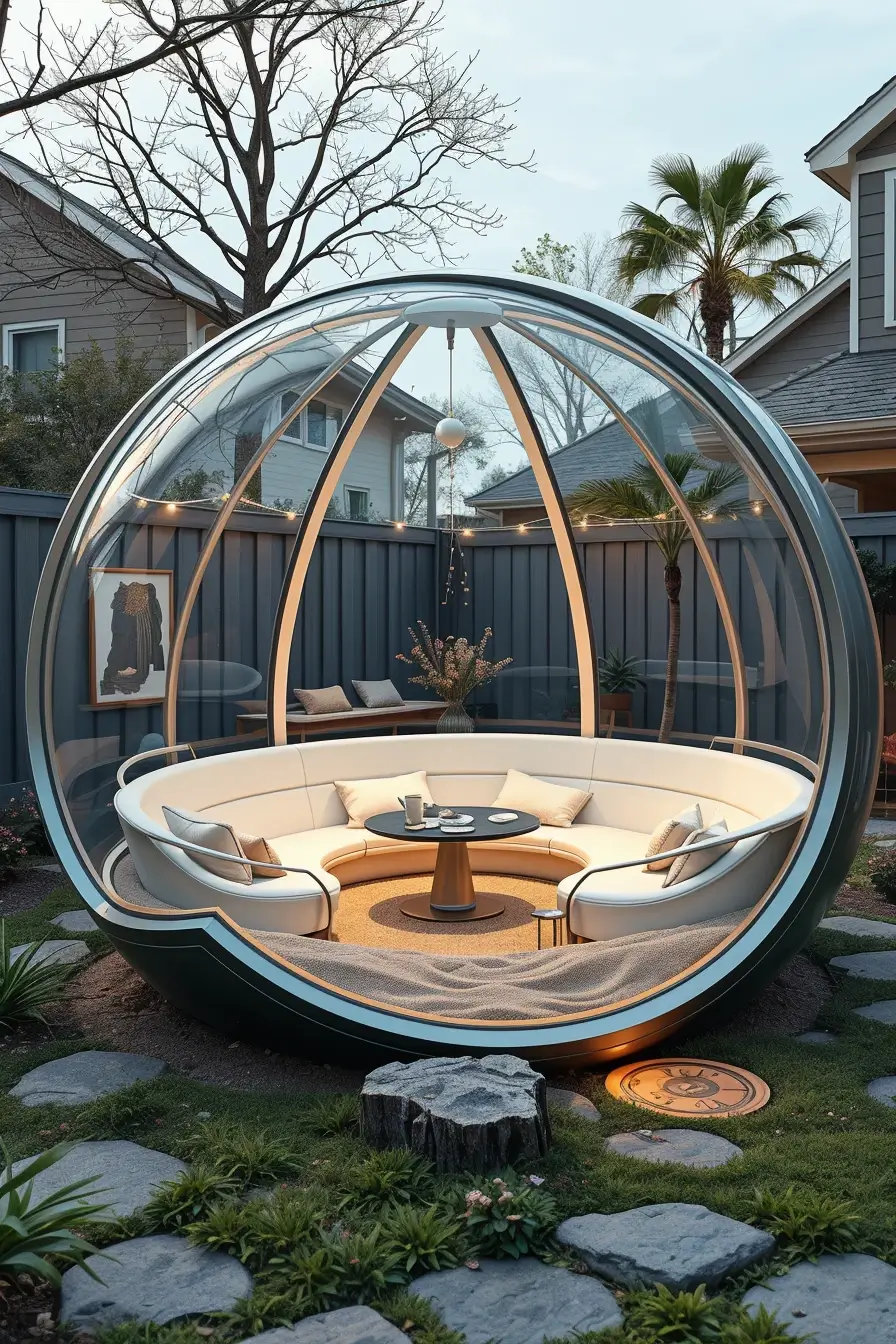
I typically use durable polycarbonate panels supported by curved aluminum frames. The dome structure may include circular ventilation openings and soft interior lighting integrated along the base. Inside the sandbox, smooth molded seating curves along the perimeter, maintaining the streamlined aesthetic. Neutral sand tones contrast beautifully with the modern structural shell.
From my perspective, futuristic pods represent the evolution of outdoor play design. Publications like Dwell have highlighted the rise of bold architectural forms in residential landscapes, and I believe this trend naturally extends to children’s areas. When executed thoughtfully, such designs remain safe, functional, and visually striking.
To enhance practicality, I would incorporate sliding access panels for easy entry and maintenance. Proper ventilation and heat control systems are essential to prevent overheating during warmer months. With these considerations, futuristic sandbox pods can become a signature focal point in any modern backyard.
21. Multi-Level Oval Sandbox Designs With Slides And Ramps
In my experience, multi-level oval sandbox designs instantly transform a backyard into a dynamic play landscape. Instead of a flat, traditional rectangle, I recommend creating gently tiered, curved platforms that flow into one another. The oval footprint softens the visual impact and integrates seamlessly with lawns, patios, and modern landscaping. These elevated forms encourage physical development, offering children subtle climbing challenges while maintaining safe, rounded edges.
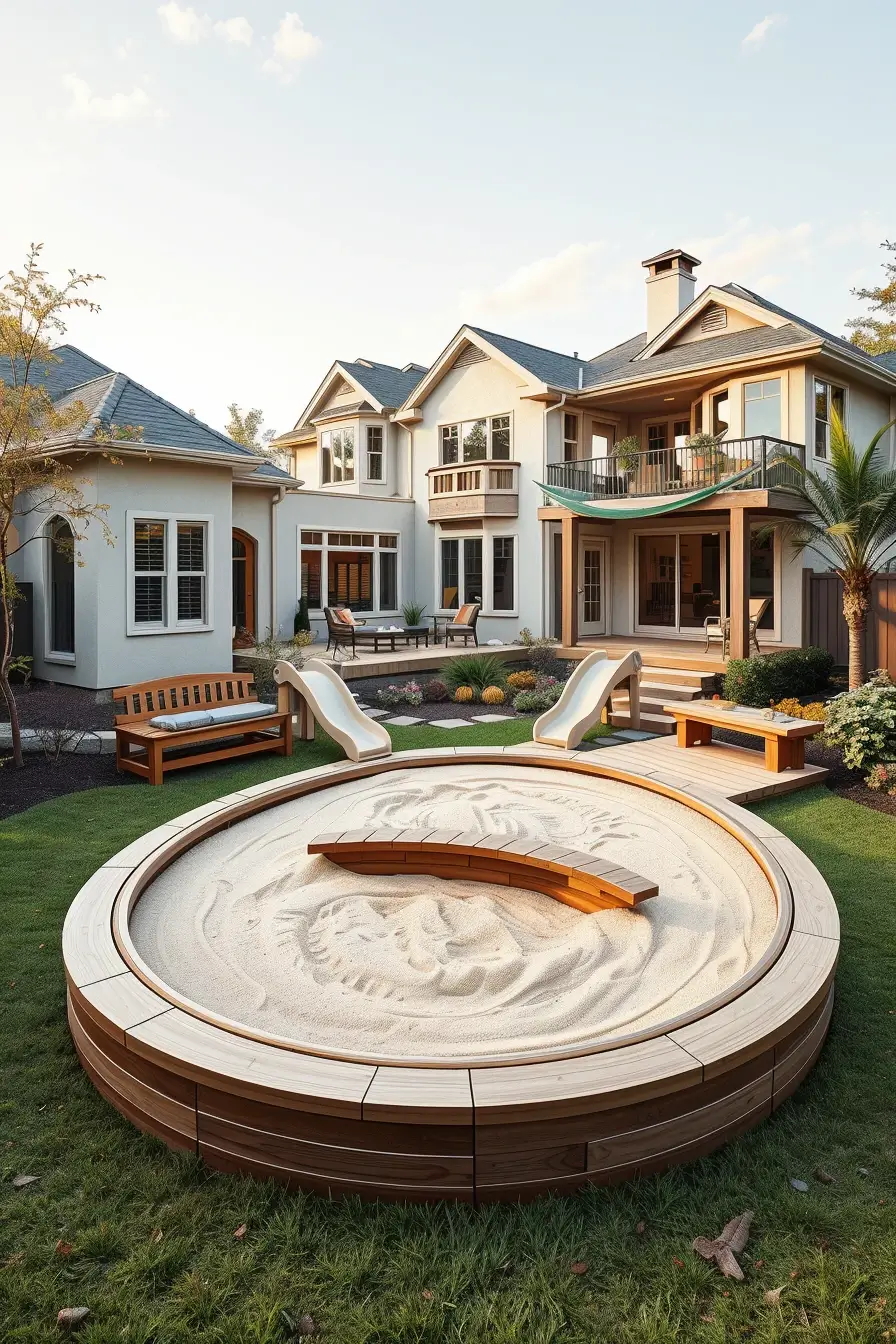
I typically incorporate built-in slides that curve along the contour of the sandbox and low-gradient ramps that connect each level. The frame can be constructed from sealed marine-grade plywood or composite decking with smooth, sculptural edges. I prefer adding integrated bench seating along the perimeter for parents, plus hidden storage compartments beneath the upper level for toys. Non-slip surfacing on ramps and soft-close lids for storage improve both safety and usability.
Personally, I’ve found that parents appreciate designs that grow with their children. Architectural Digest often highlights the importance of multifunctional outdoor spaces, and this principle absolutely applies here. A multi-level sandbox is not just a play area; it becomes an interactive structure that encourages imagination and physical engagement. I always advise clients to choose neutral, modern tones like sand beige, warm gray, or muted terracotta to keep the space timeless.
To complete this concept, I would add subtle landscape lighting around the perimeter and a shade sail positioned above the oval structure. Without overhead shading, even the most beautiful sandbox becomes impractical in summer heat.
22. Built-In Water And Sand Hybrid Play Zones With Rounded Edges
One of the most practical sandbox ideas backyard 2026 includes combining water and sand into a single sculptural play zone. I design these layouts with curved partitions that separate wet and dry areas while maintaining a cohesive aesthetic. The rounded transitions reduce harsh lines and improve safety, especially for younger children. This hybrid concept extends playtime and supports sensory development.
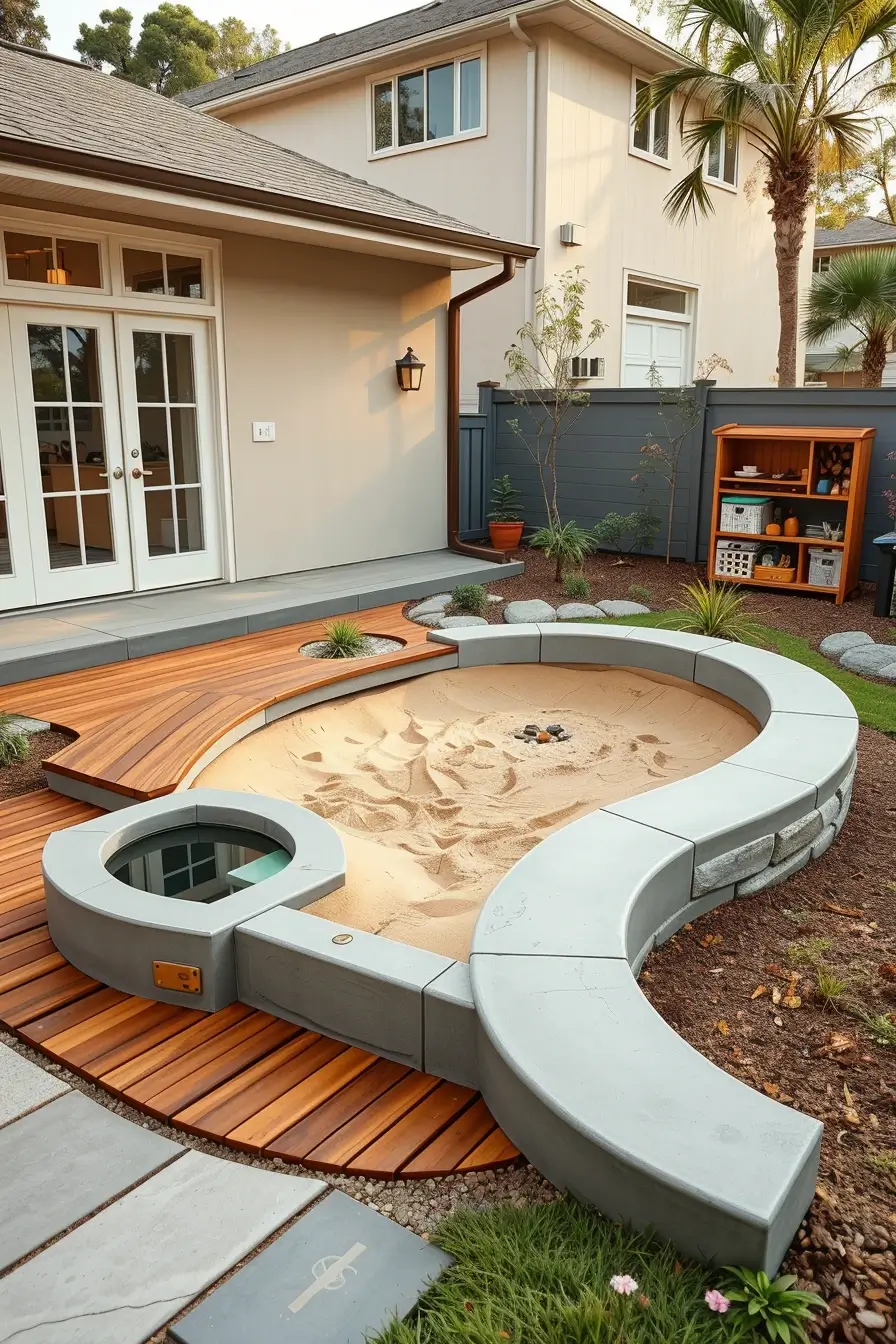
I usually incorporate a shallow, built-in water basin made from sealed concrete or molded fiberglass with softened edges. Between the water zone and the sand area, I install a gently curved divider that doubles as seating. Integrated drainage systems are essential, and I recommend concealed plumbing with a child-safe drain plug. Surrounding the play zone, I prefer adding teak or composite decking to prevent mud buildup and create a clean transition to the yard.
From my professional perspective, hybrid play spaces are some of the most forward-thinking unique sandbox ideas for children’s backyards. Better Homes and Gardens frequently emphasizes the importance of sensory-rich outdoor environments, and combining sand and water supports exactly that philosophy. I always remind homeowners to include a hose connection and proper drainage planning from the beginning to avoid costly adjustments later.
What is often missing in these installations is adequate storage for towels and water toys. I would include weatherproof cabinetry nearby to keep the area organized and visually clean.
23. Luxury Backyard Sandbox Ideas With Designer Finishes
For homeowners seeking something more refined, luxury sandbox concepts elevate outdoor play into a design statement. I approach these as architectural features rather than children’s equipment. Sculptural oval frames, smooth concrete borders, and custom wood inlays allow the sandbox to harmonize with high-end patios and pool areas. The key is balance between elegance and child-friendly functionality.
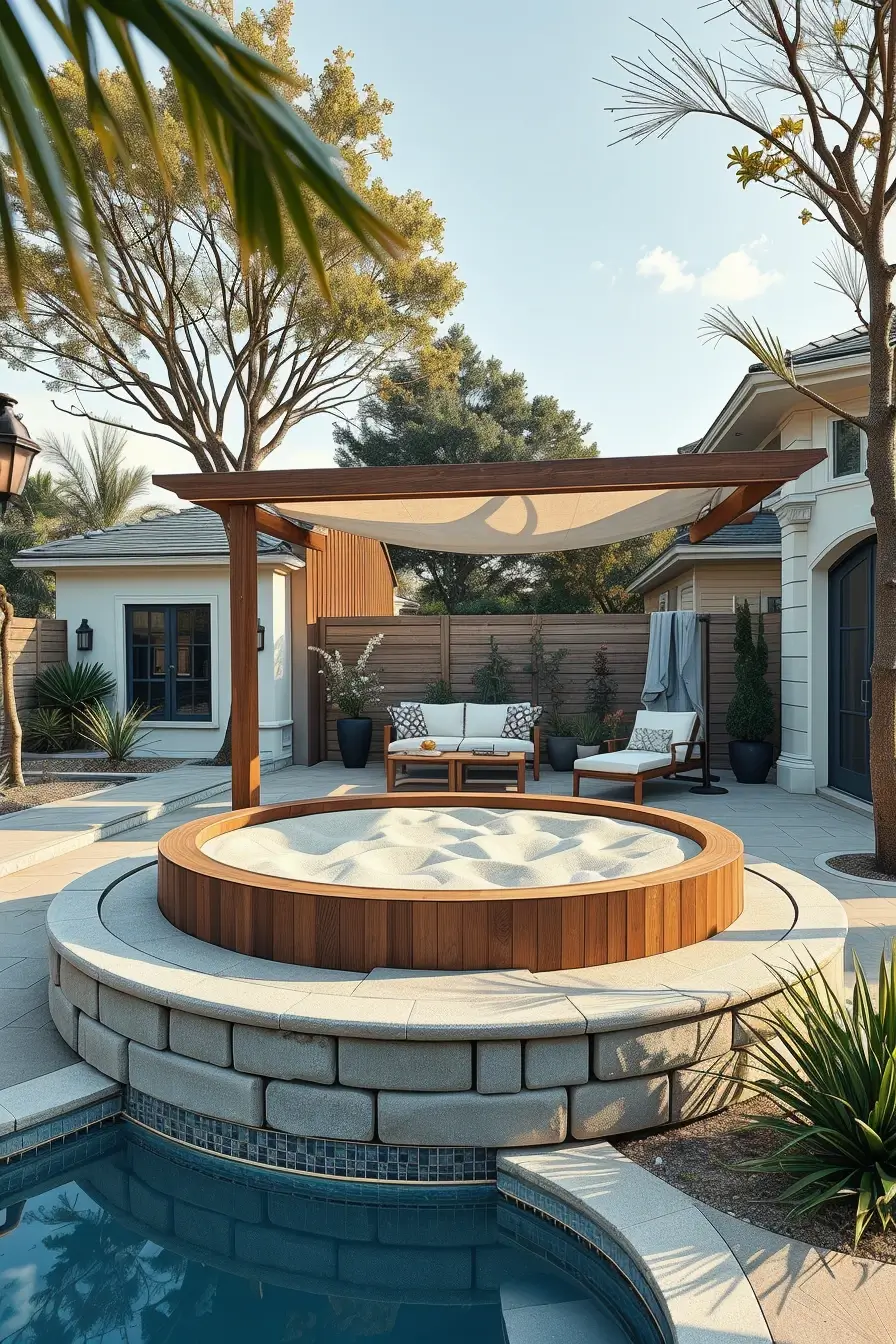
I prefer using materials such as natural stone edging, thermally treated wood, and powder-coated aluminum frames with rounded corners. Built-in upholstered outdoor cushions can line the perimeter, creating lounge-style seating for adults. Sometimes I incorporate a retractable canopy with minimalist metal supports to maintain clean lines. Every element should feel intentional and cohesive with the surrounding landscape design.
In my practice, I’ve noticed that clients are increasingly interested in blending play areas with modern outdoor living spaces. Design professionals featured in Elle Decor often stress the value of consistency in materials and color palettes, and I fully agree. A luxury sandbox should feel like an extension of the patio, not a separate afterthought.
To enhance this concept further, I would integrate subtle branding details such as laser-cut patterns or sculptural decorative panels that reflect the family’s personal aesthetic.
24. Glow-In-The-Dark And LED-Enhanced Sandbox Concepts
As we move deeper into sandbox ideas backyard 2026, lighting innovation plays a major role. LED-enhanced sandbox designs allow children to safely extend playtime into early evening while creating a magical atmosphere. I design these with concealed LED strips embedded beneath curved seating edges and along the outer frame of the sandbox.
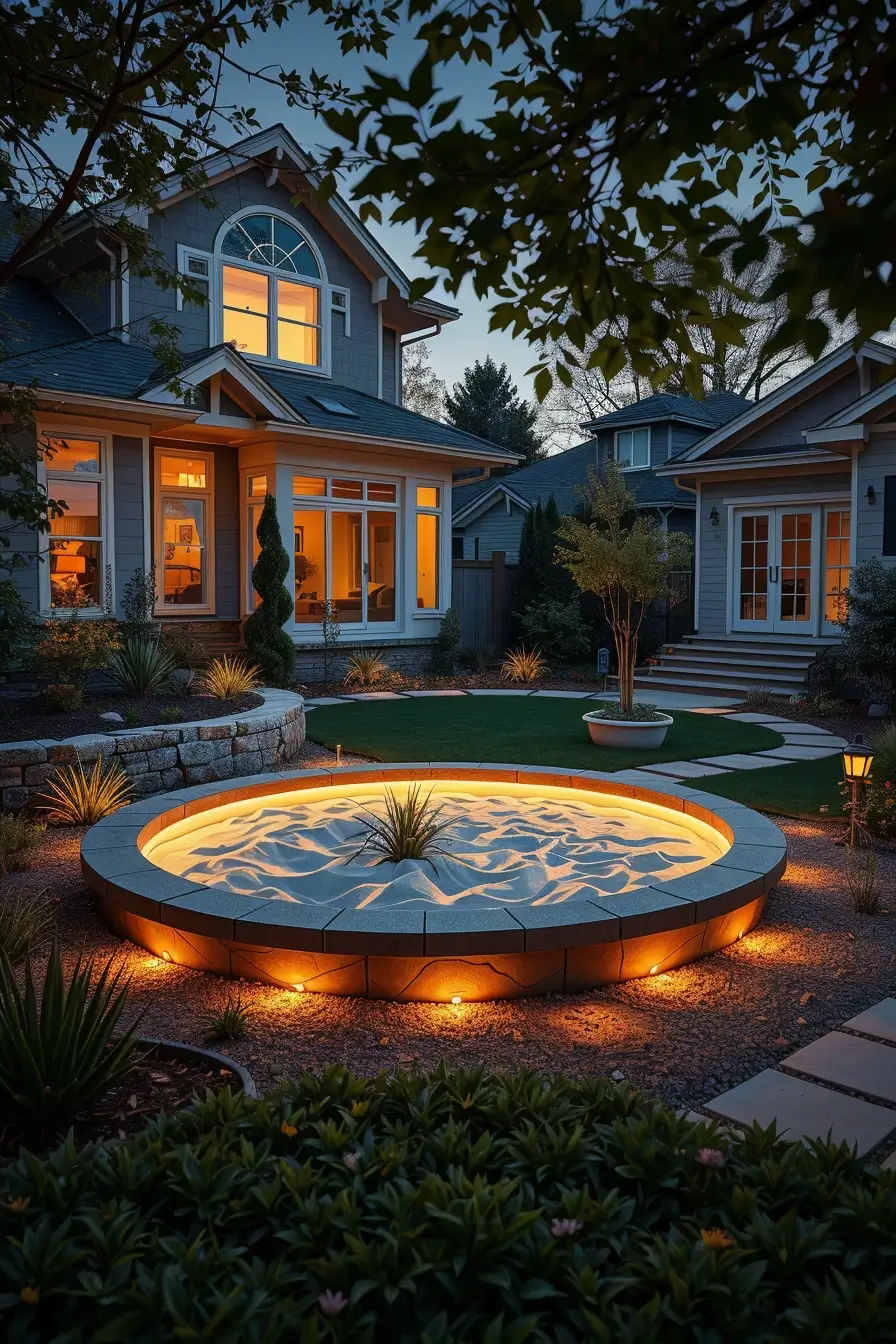
The structure itself often features smooth, oval walls made from composite materials with integrated channels for waterproof lighting. I recommend warm-white LEDs for everyday ambiance and optional color-changing settings for special occasions. Solar-powered fixtures can be installed along the surrounding pathway, reinforcing both sustainability and practicality.
From my perspective, lighting transforms the sandbox into a sculptural centerpiece after sunset. Landscape designers frequently highlight layered lighting as essential for modern yards, and I apply that same principle here. The glow should feel subtle and architectural rather than overwhelming.
To complete this concept, I would ensure that all electrical components are fully weather-sealed and child-safe. Smart controls accessible via smartphone add convenience for parents.
25. Custom 3D-Printed Sandbox Frames With Fluid Silhouettes
One of the most innovative designer approaches I’ve worked with involves custom 3D-printed sandbox frames. These allow for truly artistic and sculptural forms with flowing, curved, and oval silhouettes that would be difficult to achieve using traditional carpentry. The result is a seamless, almost animated appearance that feels futuristic yet playful.
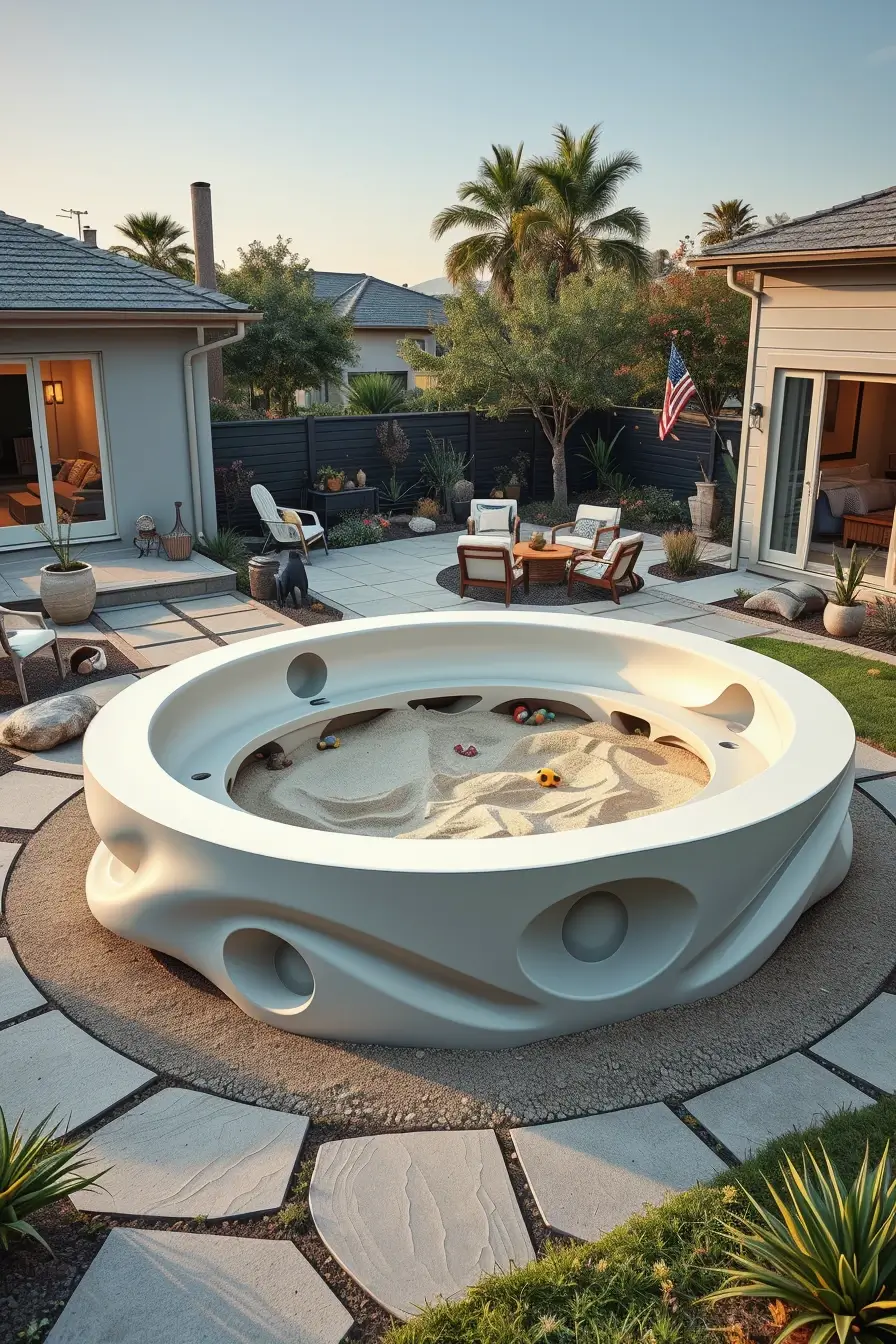
I typically collaborate with fabrication specialists to produce durable recycled composite or reinforced polymer frames. These materials allow for organic curves, integrated seating, and even built-in toy compartments formed directly into the structure. The smooth, continuous edges eliminate sharp corners and create a visually striking focal point in the yard.
In my opinion, 3D printing opens a new chapter in modern backyard design. As highlighted in various architectural innovation reports, additive manufacturing allows for personalization without sacrificing structural integrity. Families can choose custom colors, engraved patterns, or flowing shapes that reflect their personal style.
What I would add to strengthen this concept is professional site preparation. A stable, leveled base with proper drainage is essential to ensure longevity and structural performance.
26. Whimsical Cartoon-Inspired Sandbox Sculptures For Playful Yards
When clients ask me for something truly expressive and joyful, I often suggest whimsical, cartoon-inspired sandbox sculptures. These artistic and animated style concepts bring personality into the landscape while still respecting modern design principles. Instead of sharp corners and rigid frames, I design rounded, bubble-like forms that resemble clouds, waves, or playful characters. The goal is to create unique sandbox ideas for children’s backyards that feel imaginative yet architecturally intentional.
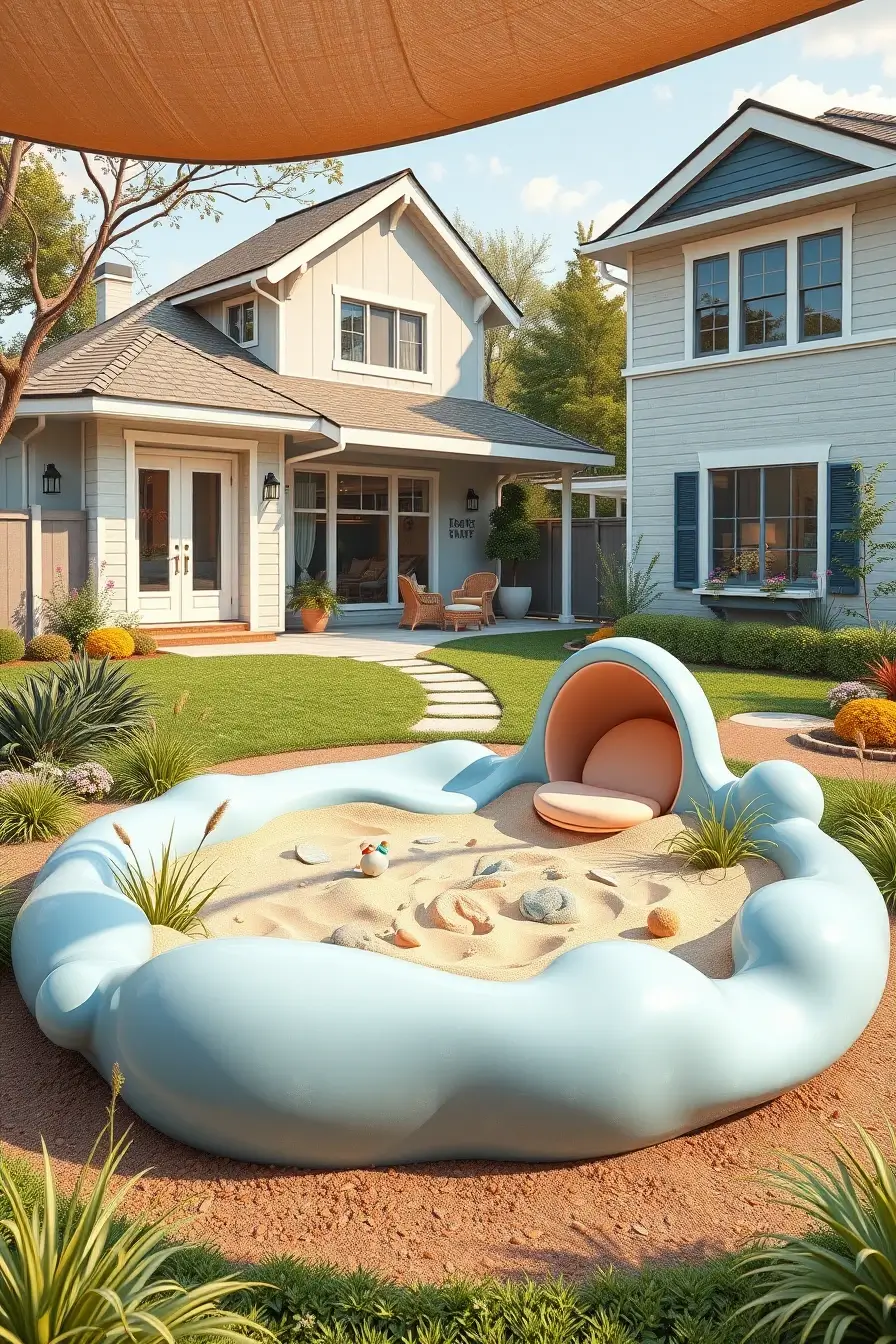
I usually work with molded composite panels or carved foam cores finished with durable outdoor coatings. These materials allow us to shape soft curves, oversized arches, and sculptural sidewalls that double as seating or climbing elements. I incorporate pastel tones such as sky blue, soft coral, or buttery yellow to maintain a cheerful yet refined aesthetic. Safety remains essential, so all surfaces are smooth, edges are rounded, and the sand depth meets recommended play standards. I also include hidden drainage layers beneath the sand to prevent moisture buildup.
From my professional perspective, playful design does not mean chaotic design. Designers featured in Dwell often emphasize harmony between bold forms and cohesive landscaping, and I apply that philosophy here. I encourage homeowners to frame these sculptural sandboxes with simple greenery, ornamental grasses, or low hedges so the form stands out as a focal feature rather than overwhelming the yard.
To strengthen this section, I would recommend adding a shade structure that complements the whimsical form, such as a curved canopy or sculptural pergola. Without proper shading, vibrant materials can fade and children may not be comfortable during peak sun hours.
27. Compact Curved Sandbox Ideas For Small Modern Backyards
Not every home has expansive outdoor space, but that does not limit creativity. In smaller properties, I prioritize compact, curved sandbox layouts that maximize functionality without crowding the yard. I design streamlined oval or circular forms that tuck neatly into corners or integrate into patio edges. These modern configurations make even a modest backyard feel intentional and thoughtfully planned.
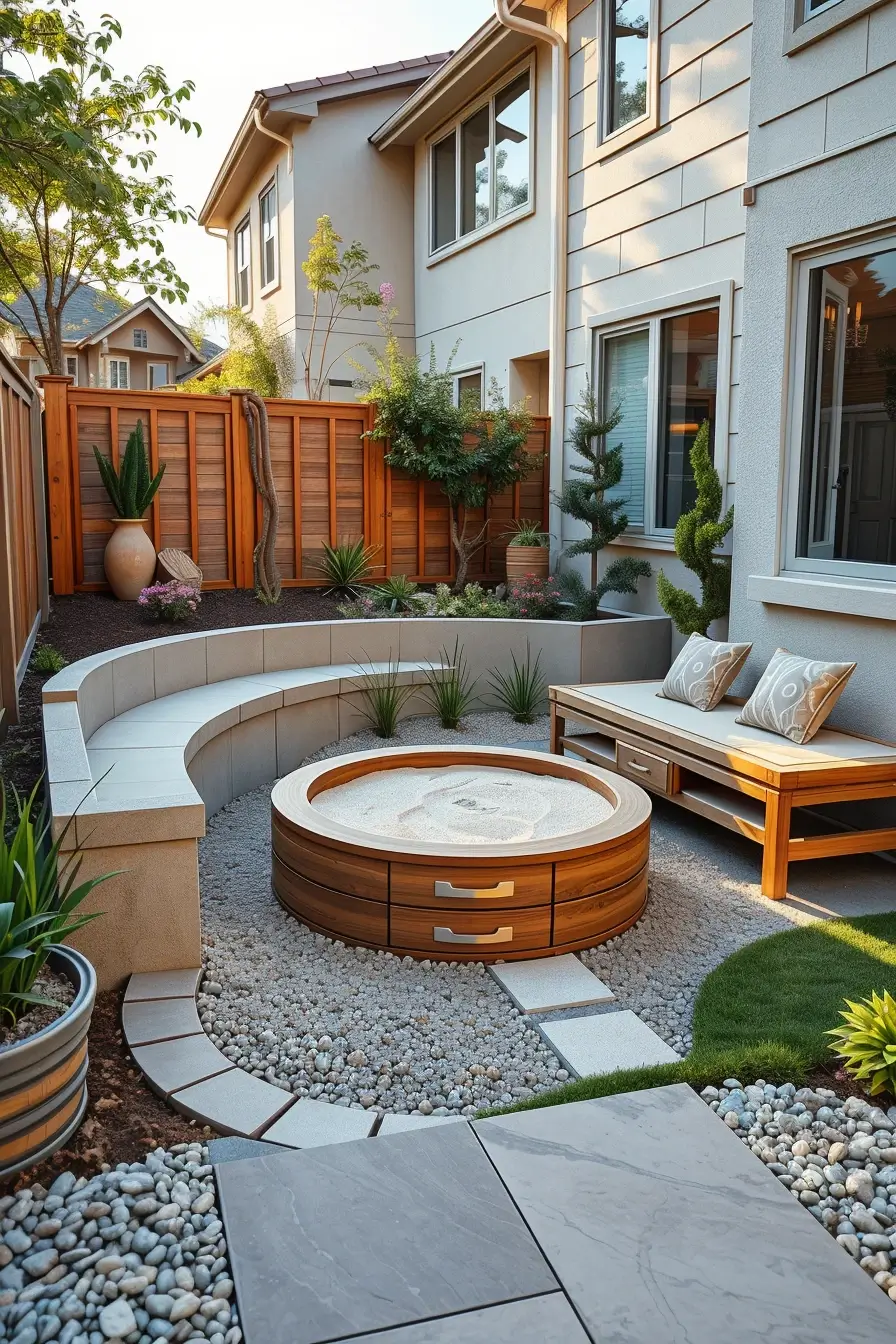
I often recommend built-in seating along the outer curve, which eliminates the need for additional chairs. Storage drawers can be discreetly integrated beneath the seating, keeping toys organized and reducing clutter. For materials, I prefer weather-resistant composite wood or sealed plywood with smooth, rounded profiles. Surrounding the sandbox with decorative gravel or artificial turf creates visual separation without requiring bulky borders.
In my experience, scale is everything in small-space design. As frequently highlighted by Better Homes and Gardens, proportion and flow are critical when planning compact outdoor areas. I advise clients to maintain a consistent color palette, using neutral shades that visually expand the space. A light sand tone paired with soft gray decking keeps the backyard feeling open and airy.
What is often overlooked in small designs is vertical integration. I would add a curved vertical panel or low sculptural backdrop that doubles as both safety enclosure and design statement, giving the sandbox depth without increasing its footprint.
28. Backyard Sandbox Islands Surrounded By Decorative Gravel Or Grass
A particularly striking trend within sandbox ideas backyard 2026 is the “sandbox island” concept. Rather than placing the sandbox against a fence or patio, I position it centrally within a defined circular or oval landscape zone. This creates a sculptural island surrounded by decorative gravel, ornamental grass, or manicured lawn. The effect is both practical and visually dramatic.
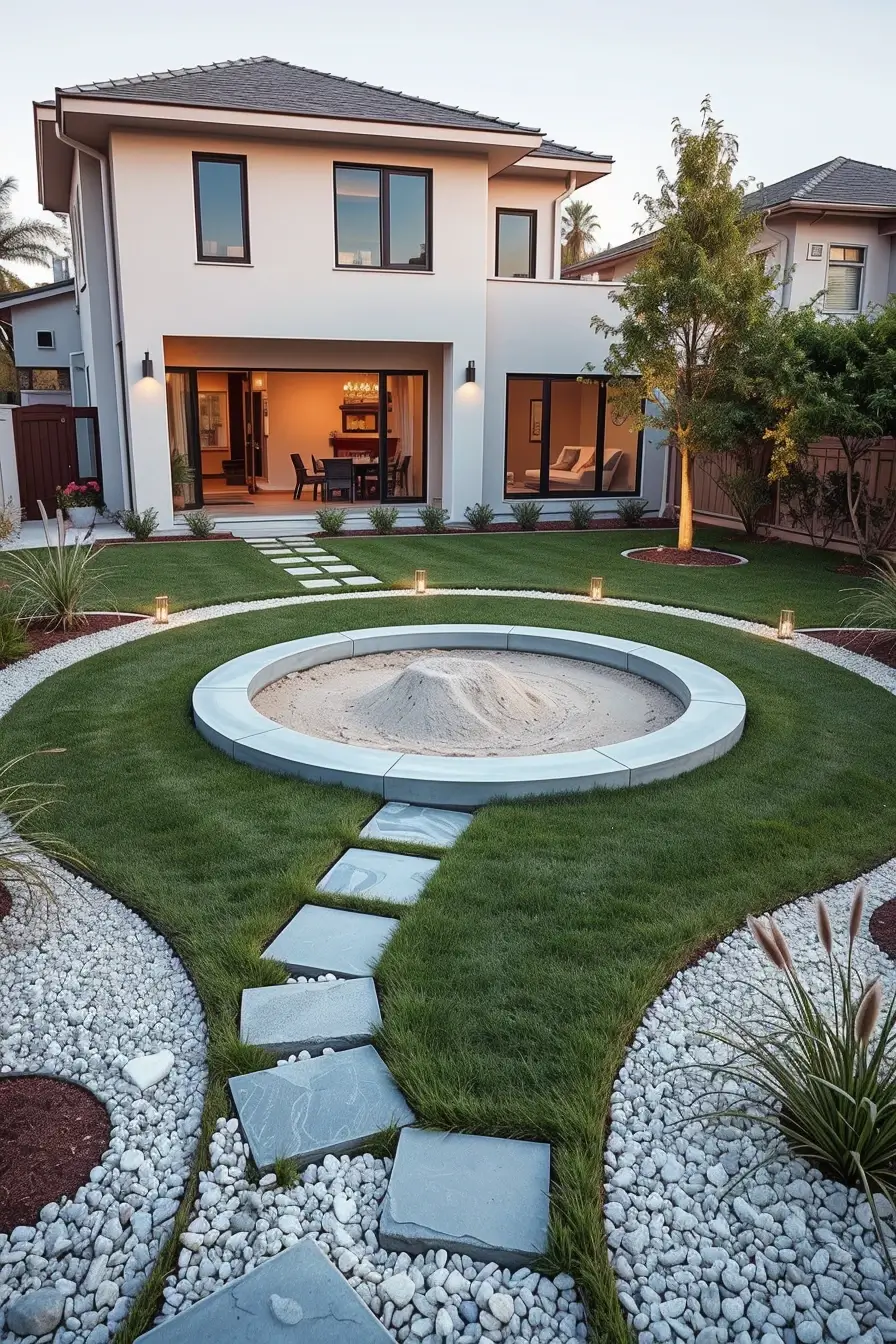
I typically construct the sandbox with a raised, rounded border made from smooth concrete or curved timber. Around it, I install a contrasting material such as white gravel, river stones, or neatly edged turf. This buffer zone improves drainage and prevents sand from spreading into the rest of the yard. Subtle edging and concealed landscape lighting enhance the architectural quality of the design.
From my point of view, this layout turns a simple play feature into a landscape centerpiece. Landscape architects often recommend creating focal zones within a yard to improve flow and hierarchy, and the sandbox island achieves exactly that. I encourage clients to incorporate stepping stones or curved pathways leading to the island for added visual interest and accessibility.
To refine this concept further, I would ensure proper sub-base preparation beneath both the sandbox and surrounding gravel. Without stable groundwork, the structure may shift over time.
29. Statement Sandbox Centerpieces That Anchor The Entire Landscape
For homeowners who want bold impact, I sometimes design statement sandboxes that anchor the entire backyard composition. These are not secondary features; they are sculptural installations with flowing, curved, or oval forms that define the surrounding layout. In this approach, patios, garden beds, and seating areas are arranged around the sandbox as the primary focal element.
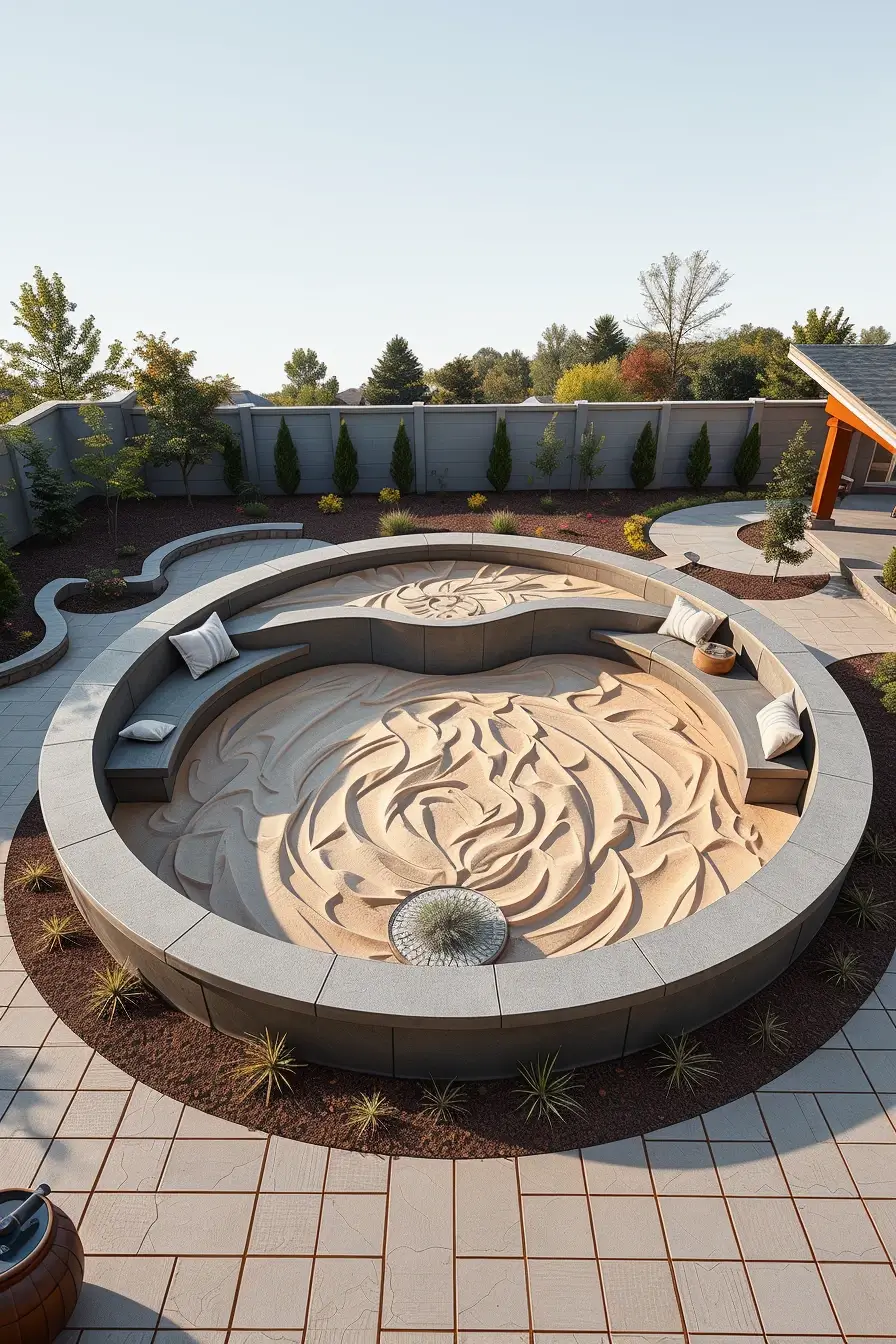
I design these structures using durable materials such as reinforced concrete with softened edges, powder-coated steel accents, or layered composite panels shaped into streamlined designs. Built-in benches, integrated planters, and even subtle water features can be incorporated into the outer perimeter. The sandbox itself becomes part of a cohesive outdoor living concept rather than a separate play structure.
Personally, I find that these projects require careful collaboration between landscape designers and homeowners. Architectural Digest frequently notes that successful outdoor design depends on balance between aesthetics and usability. I always remind clients that while bold design is exciting, the sandbox must remain safe, accessible, and easy to maintain.
What I would add to perfect this section is a maintenance plan. Regular sand replacement, seasonal inspection of materials, and surface sealing are essential to preserve both beauty and hygiene.
30. How To Choose The Perfect Unique Sandbox Design For Your Backyard In 2026
Selecting the right design among so many unusual, modern, sculptural, artistic, designer, unique sandbox ideas for children’s backyards with round, curved, oval, streamlined designs in an animated style can feel overwhelming. I always begin by assessing the size of the yard, sun exposure, and how the family intends to use the space. A sandbox should complement existing landscaping and outdoor furniture rather than compete with it.
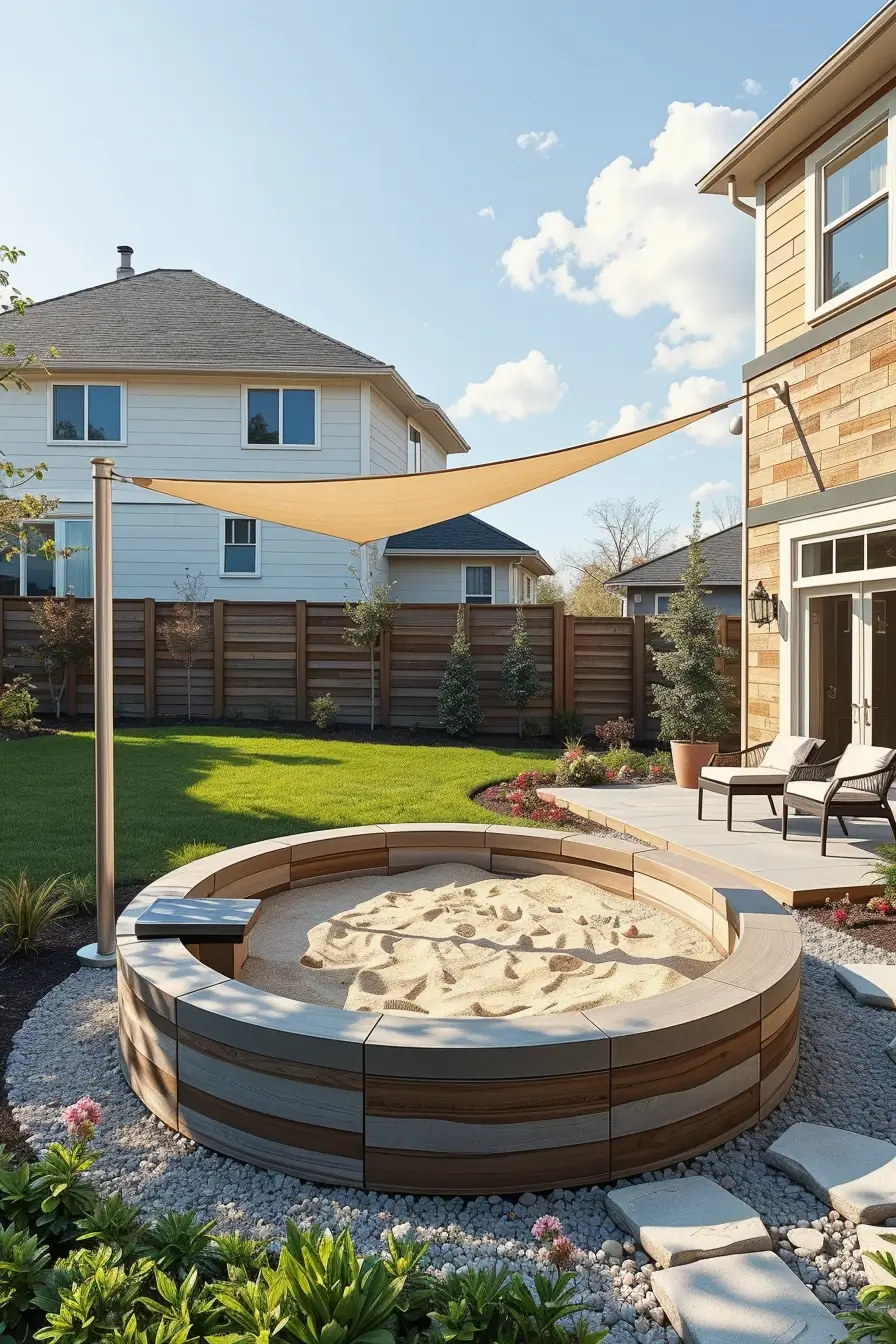
I advise considering materials first. Composite and sealed wood offer warmth, while concrete and polymer frames deliver sleek minimalism. Drainage systems, shading solutions, and safe surfacing are non-negotiable elements. Storage integration is equally important to keep the yard organized and functional.
In my professional opinion, the best sandbox designs balance creativity with practicality. Trends for 2026 emphasize fluid shapes, integrated lighting, and sustainable materials. However, I encourage homeowners to focus on long-term usability rather than temporary aesthetics. A well-designed sandbox should evolve with the family and remain visually relevant for years.
Ultimately, the perfect choice is one that enhances both your child’s imagination and your backyard’s architectural harmony. If you are planning a redesign, I would love to hear which concept resonates with you most. Share your thoughts and ideas in the comments, and let’s explore how to transform your backyard into a truly inspiring play environment.
In 2026, backyard sandboxes are no longer simple play boxes — they are sculptural, artistic elements that redefine outdoor design. From round and curved silhouettes to animated, story-inspired concepts, modern sandbox ideas blend creativity, safety, and architectural beauty into one seamless space.
Whether you choose a minimalist oval design, a whimsical cartoon-inspired structure, or a luxury landscaped installation, the right sandbox can become the heart of your backyard. By embracing innovative materials, fluid forms, and unique designer details, you can create a play environment that inspires imagination while elevating the entire outdoor aesthetic. In 2026, a sandbox isn’t just for play — it’s a statement.